

Pfizer’s JAK3/TEC Dual Inhibitor Ritlecitinib Under FDA and EMA Review for Alopecia Areata with Significant Scalp Hair Regrowth

Pfizer
Pharmaceutical R&D Developer

FDA
U.S. Food and Drug Administration

European Medicines Agency
The European Medicines Agency (EMA) is a decentralized agency of the European Union (EU), located in London. It began operations in 1995. The agency is responsible for the scientific evaluation, supervision, and safety monitoring of medicines developed by pharmaceutical companies for use in the EU. By ensuring that all medicines available on the EU market are safe, effective, and of high quality, the EMA protects public and animal health in the 28 EU Member States and countries of the European Economic Area.
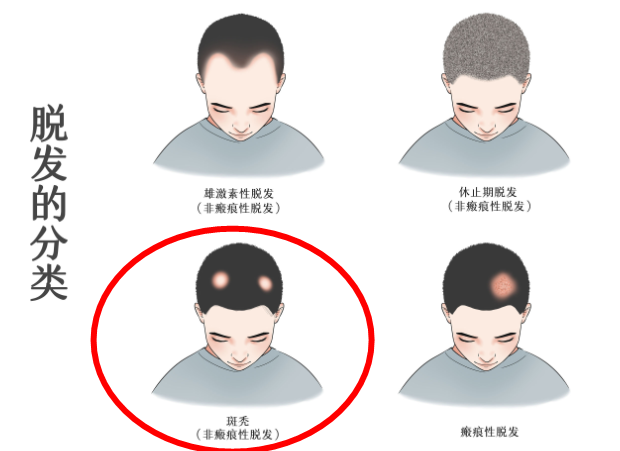
Image Source: Shutterstock
News / BIOON / --- Pfizer recently announced that the U.S. Food and Drug Administration (FDA) has acceptedOral JAK3/TEC Inhibitor RitlecitinibNew Drug Application (NDA):For adolescent and adult patients aged 12 years and above, for the treatment of alopecia areata.In addition, the European Medicines Agency (EMA) has also accepted the Marketing Authorization Application (MAA) for ritlecitinib in the same patient population. The FDA and EMA are expected to make review decisions in the second quarter and fourth quarter of 2023, respectively.
Ritlecitinib is an investigational once-daily oral medication and the first in a new class of orally available, highly selective covalent kinase inhibitors. It is a dual inhibitor of the TEC family of tyrosine kinases and Janus kinase 3 (JAK3).In laboratory studies, ritlecitinib has been shown to block the activity of signaling molecules and immune cells that are believed to be responsible for hair loss in patients with alopecia areata.
Alopecia areata is an autoimmune disease with an inherent immune-inflammatory pathogenesis. The condition occurs when the immune system attacks the body's hair follicles, leading to hair loss. This type of hair loss typically occurs on the scalp but can also affect eyebrows, eyelashes, facial hair, and other parts of the body. It is estimated thatAlopecia areata affects approximately 6.8 million people in the United States and about 147 million people worldwide.
In September 2018, the U.S. FDA granted ritlecitinib Breakthrough Therapy Designation (BTD) for the treatment of alopecia areata. In addition to alopecia areata, ritlecitinib is currently also being evaluated for its efficacy in treating vitiligo, rheumatoid arthritis, Crohn's disease, and ulcerative colitis.
Dr. Michael Corbo, Chief Development Officer of Inflammation and Immunology at Pfizer Global Product Development, stated: "Alopecia areata is an autoimmune disease that can affect people of all ages, genders, and ethnicities, often impacting daily life beyond just hair loss. We believe that if ritlecitinib is approved, it will represent an important new treatment option. We will continue to work closely with regulatory agencies to bring ritlecitinib to adult and adolescent populations with alopecia areata in the United States and the European Union."
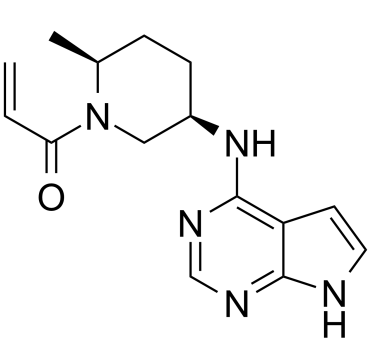
Chemical Structure of Ritlecitinib (Source: medchemexpress.com)
The regulatory application for ritlecitinib in the treatment of alopecia areata is based on the topline results from the pivotal and dose-ranging Phase 2b/3 ALLEGRO study (NCT03732807) and the ongoing Phase 3 ALLEGRO-LT (NCT04006457) open-label long-term study. The results of the ALLEGRO study were presented at the 2021 European Academy of Dermatology and Venereology (EADV) Congress and the 2022 American Academy of Dermatology (AAD) Annual Meeting. Preliminary data from the ALLEGRO-LT study will be presented at the 2022 EADV Congress.
ALLEGRO is a randomized, placebo-controlled, double-blind study conducted in patients (n=718) aged 12 years and older with alopecia areata. Patients enrolled in the study had ≥50% scalp hair loss, including those with alopecia totalis (complete scalp hair loss) and alopecia universalis (complete scalp, facial, and body hair loss), who were experiencing an episode of alopecia areata lasting 6 months to 10 years. In the study, patients were randomly assigned to receive ritlecitinib 50mg or 30mg (with or without an initial one-month treatment of once-daily oral ritlecitinib 200mg), ritlecitinib 10mg, or placebo for 24 weeks. This was followed by a 24-week extension period during which all patients initially randomized to ritlecitinib continued on the same regimen, while patients who received placebo during the first 24 weeks were switched to one of two regimens: 200mg for 4 weeks followed by 50mg for 20 weeks, or 50mg for 24 weeks.
The primary endpoint of the study is: the proportion of patients with a response to ritlecitinib treatment for scalp hair regrowth, as determined by an absolute SALT score ≤20 at Week 24 of treatment. SALT is a tool used to measure the amount of scalp hair loss, dividing the scalp into multiple standardized areas, with a total SALT score ranging from 0 to 100 for each area. A score of 0 indicates no hair loss on the scalp, while a score of 100 indicates complete absence of hair on the scalp.
The results showed,After 24 weeks of treatment, both doses of ritlecitinib (50mg, 30mg) achieved the primary efficacy endpoint of improving scalp hair regrowth compared to placebo: a significantly higher proportion of patients achieved scalp hair loss ≤20% (absolute SALT score ≤20) compared to the placebo group.The study also included a 10mg treatment group, which evaluated the dose range and did not undergo statistical significance testing for efficacy compared to the placebo group.
In the study, the safety of ritlecitinib was consistent with previous research. Overall, the proportions of patients experiencing adverse events (AE), serious adverse events (SAE), and discontinuation due to adverse events were similar across all treatment groups. The most common adverse events in the study were nasopharyngitis, headache, and upper respiratory tract infections. There were no major adverse cardiac events (MACE), deaths, or opportunistic infections reported in the study. Mild to moderate herpes zoster occurred in eight patients treated with ritlecitinib. One case of pulmonary embolism was reported on day 169 in the ritlecitinib 50mg group. Two cases of malignancy (both breast cancer) were reported in the ritlecitinib 50mg group, occurring on days 68 and 195, respectively, and both patients had discontinued the study. (Bioon.com)
Source: FDA and EMA Accept Regulatory Submission for Pfizer’s Ritlecitinib for Individuals 12 Years and Older with Alopecia Areata