

BioBAY: The Flow of People, The Transformation of a City

Sirnaomics
RNA Interference New Drug Developer

In 2007, if you took a taxi from Suzhou Railway Station, the driver most likely wouldn't know where BioBAY was. In 2010, driving south along Xinghu Street, you wouldn’t encounter any traffic lights. For nearly two years, in the entire underground garage of Building C1 at BioBAY, there were only two cars belonging to Nanomicro Technology.
Modern people's memories of urban changes are often related to roads and vehicles. However, the increase in both people and vehicles has been gradual, making it difficult to pinpoint an exact timeline. Zhang Peizhuo, founder of Genechem, also can't recall from which year Xinghu Street began experiencing traffic jams or when it started becoming difficult to find a parking space at BioBAY.
Jiang Binwang's Nano Micro Technology took over an entire standalone building C1 upon entering the park. "We didn't need all of it; initially, one floor was enough, but later we added one floor each year and used it up in about three years." Three years ago, Jiang Binwang wanted to establish another subsidiary, but it was already difficult to find space in BioBAY.
When the first batch of entrepreneurs like Zhang Peizhuo and Jiang Binwang settled in Suzhou Industrial Park, the housing prices in the park were only five to six thousand yuan. When the first houses were built around the Moon Bay by Dushu Lake, the housing price was just over ten thousand yuan. At that time, many people thought it was too remote and didn't buy. Now, the price has risen to four or fifty thousand yuan, and the area around Dushu Lake has become one of the most concentrated regions for scientific and technological talents in Suzhou.
Over the past 20 years, China has been at the center of the world's urban construction boom, and Suzhou Industrial Park has been at the heart of Suzhou’s city-building surge. Most of the urban landscape around Dushu Lake is newly constructed, and this new district needs to welcome the arrival of the scientific industry while meeting the demands and aspirations of an ambitious middle class.
Over the 15 years, dreamers came one after another, and skyscrapers were built one by one. Looking back, that was truly the golden age of urban development—an innocent era for entrepreneurs and builders that will never return.
114 Years of Convenience Stores
A convenience store of several dozen square meters is the best witness to the flow of people over the past 15 years.
In 2008, Cai Xuan, a graduate of Suzhou University, grew tired of the daily office worker life after just half a year. She loved adventure. Convenience stores were an emerging concept, and at BioBAY, she opened the first convenience store.
At that time, BioBAY was too desolate for a direct store to succeed. Cai Xuan invested her own money and opened a franchise store. When she came to see the site in person, the investment promotion officer showed her the sand table and told her that the park was well-planned and would become a hub for the biopharmaceuticals industry in the future. After seeing it, he said solemnly, "Opening a store here has one characteristic: no rent." At that time, in the bustling downtown area, the annual rent for a convenience store had already reached hundreds of thousands of yuan.
Cai Xuan doesn't understand the industry; he only cares about how much foot traffic the future park can attract. At the very beginning, there were only three to four hundred people in the entire park. Cai Xuan's first store was opened on the first floor of Building A2, inside the cafeteria. The area was only a few dozen square meters with a few shelves placed inside.
A few months after opening, it moved to Xiancheng Plaza, the newly built business district, which is the only commercial plaza in BioBAY so far. Later, as more restaurants appeared in Xiancheng Plaza, the convenience store relocated to Unit 101 on the B2 floor. When it first moved there, there wasn’t even a road in front of the door. Cai Xuan informed the person in charge of BioBAY, and without anyone noticing, the road was completed overnight.
In the first year, Cai Xuan felt that he had been continuously breaking new ground. In 2010, the convenience store began to see an increase in customer traffic and sales; by 2012, more people were coming in; in 2015, Cai Xuan opened his second store; now, a single store averages seven to eight hundred customers per day.
The demand is increasing, and the level of customers' needs is also changing. Over the past 10 years, the convenience store has changed its decoration 5 times. At first, it was like a small supermarket, selling daily necessities. Gradually, there were fewer shelves and more food, mainly serving breakfast for office workers in the park.
For a period of time, coffee shops in Suzhou were in vogue, and Cai Xuan also bought several sets of large red sofas to place in her store. She found that many entrepreneurs in the park were willing to sit down and chat on the red sofas.
Before Cai Xuan gave birth to her child in 2012, she was the one handling the cash register. She felt an emotional connection with her customers, saying, "We all went through pregnancy and childbirth together." Some of her long-time customers didn’t even need to speak—she already knew what they wanted to buy. She became close to a young woman from the company’s administrative department and had heard some “gossip” within the company, like the inspiring story of administrative staff gradually working their way up to become company partners. Of course, there were also stories of companies failing and suddenly moving away.
Looking back now, "Many of the people who came to buy things at that time were big shots." Cai Xuan also saw another side of these big shots' lives.
The founder of a company always buys the most expensive cigarettes whenever he comes. Her convenience store sells them at a higher price than outside, 700 yuan per carton. Other people would haggle upon hearing the price of 700 yuan, but this founder never says a word. The clerks joke among themselves and call him "Mr. Moneybags."
Cai Xuan also found that senior leaders often eat simple and consistent meals, even maintaining the same diet for years. What impressed her most was Dr. Zhenkun Ma, the founder of Darnor Pharmaceuticals. Dr. Ma works very hard, arriving at work around 7:30 every morning and working late into the night. When he visits a store, he buys just one corn cob—something he has done consistently for seven or eight years.
Among all the bosses Cai Xuan has ever met, "he is the most like a scientist."
Dr. Ma's corn has always been sold for three yuan and ninety cents. The specialty Guandong stew has also been sold up to now, still with the same taste. Fourteen years ago, it was one yuan per piece, and now it is still one yuan per piece.
The big shots from the early years gradually stopped coming. The "rich guys" who bought cigarettes moved to Phase II. Many companies, after growing bigger, migrated to Phase II and Phase III. In the summer, Cai Xuan delivered drinks in bulk to some companies, only to find out as he went along that they had changed locations.
Only in her social circle, she still sees some updates from companies within the park, especially when they go public, which creates the most buzz.
2The dinner parties in Chefang have become a thing of the past.
About 3 kilometers away from Cai Xuan Convenience Store, Chefang holds many entrepreneurial and striving memories of BioBAY people.
Recalling the early days of entrepreneurship, Tong Youzhi, founder of Kintor Pharmaceuticals, said that they were short of money. In order to slow down the burn rate, the company couldn’t conduct experiments too quickly. He and Xu Min, founder of PegBio, almost always clocked out at five or six o’clock every day. After work, three or four of them would meet at a food stall in Chefang for dinner.
Chefang was originally a famous water town on the banks of the Wusong River and was once the third largest town in Wuxian County. Due to its proximity to BioBAY, being only about three kilometers away, it has become the first stop for many people who rent accommodation after starting work at BioBAY.
Around 2010, a two-bedroom apartment in Chefang's relocation housing could be rented for just four to five hundred yuan per month. Tong Youzhi and another entrepreneurial partner rented a two-bedroom apartment and lived there until around 2015 before buying a house.
Frequent attendees of these dinner gatherings also include Jiang Binwang, founder of NanoMicro Technology, Yu Qiang, founder of SinoThera Innovation, and Xu Min, founder of PegBio. They are mostly university graduates from the late 1980s to early 1990s who later went abroad for further studies, worked at large American multinational corporations or biopharmaceutical companies, and then returned to China to start their own businesses, establishing their companies within BioBAY.
A group of people with similar experiences and ideas gathered together, it was easy to resonate. Especially at that time, the general situation for entrepreneurs was quite difficult. Yu Qiang remembered that it was Tong Youzhi who suggested they should band together for warmth, “We didn’t have money to support each other, so we gave mental massages, encouraged one another, shared our troubles, and provided emotional support.”
The dinner gatherings at Chefang could be considered a form of psychological massage. At the time, NanoMicro Technology, which specializes in nano-microspheres, achieved profitability within two to three years of entering the park and had to pay taxes. While everyone else was struggling for survival, Jiang Biwang "complained" about paying too much in taxes. "So pretentious, always making us feel annoyed," Tong Youzhi recalled with a laugh, reminiscing about those days.
Of course, there was also practical mutual assistance. PegBio received two rounds of investment from Legend Star in 2011 and 2014, totaling 2 million US dollars. Afterwards, Xu Min introduced Legend Star to Tong Youzhi, and during Kintor Pharmaceuticals’ angel round of financing in 2012, Legend Star was a very important investment institution.
Jiang Binwang, Tong Youzhi, and Yu Qiang are all graduates of Peking University. In the entrepreneurial circle of BioBAY, there are quite a few Peking University alumni, such as Yuan Jiandong, the founder of BrightGene, Peizhi Luo of Adagene, Hui Ren, the founder of BeaverBio, and Minhua Chen, the founder of Crystal Pharmatech.
"Four companies founded by Peking University alumni in the park have been listed on the STAR Market, and another two have been listed on the Hong Kong stock market and the US stock market," Jiang Binwang said proudly. The Nano City where he is now located, including Nanomicro Technology, MEMSensing Microsystems, and Novosense Microelectronics, all three listed companies were founded by Peking University alumni.
Why Have Peking University Alumni Succeeded in Suzhou Industrial Park? In addition to the strong capabilities in chemistry and biology, it is also inseparable from the networking effect of talent attraction. Just Jiang Binwang alone brings in some Peking University alumni to Suzhou for entrepreneurship each year, "At least a dozen so far."
Activities of Peking University Social Circle and Chamber of Commerce are becoming increasingly vibrant, with the circle effect bringing in a large pool of talent and resources.
Of course, with the influx of talent, the growth of companies, and the rise of the industry, housing prices in the park have also started to soar. The dense demolition and resettlement housing in Chefang, Songze Home, has expanded to its 8th phase and remains an affordable choice for many industrial park workers looking to rent. However, monthly rents have increased more than fivefold, with two-bedroom units now reaching around 2,500 yuan.
People have witnessed how a piece of wasteland by Dushu Lake has transformed into a forest of high-rise buildings, with residential complexes such as Boyue Xihu, Huayu Jiangnan, and Xinghu Apartments emerging one after another, forming a high-end community. Surrounding the talent apartments at No. 1 Qiyue Street, Dushu Lake, known as the Jingying Apartments, this area has become one of the most concentrated living districts for scientific and educational talents in Suzhou.
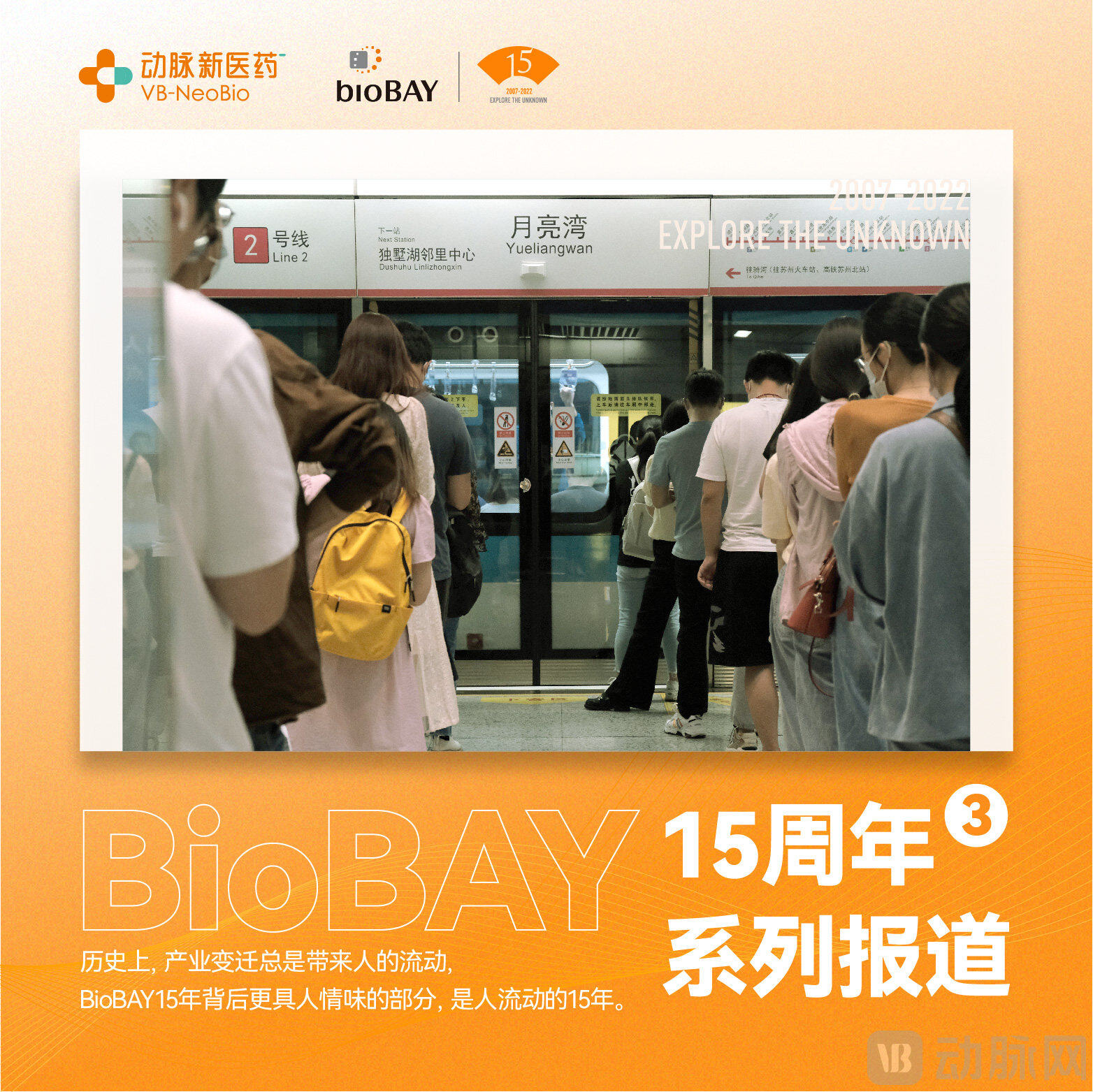
Later on, the Yishanhu Lake area in the southwest rose to prominence, with more houses being built side by side. The extension of Metro Line 2 also reached Dushu Lake, and from Yishanhu Lake to Moon Bay, there are only 3 stops, taking less than 10 minutes. Yishanhu Lake has become a more affordable choice for more industrial park commuters.
The dinner parties at Chefang have become a thing of the past. Many entrepreneurs lament that when everyone first arrived, relationships were much closer than they are now. It’s not that people forget each other in wealth, but as companies grow larger, entrepreneurs have also become busier, with their schedules packed full, making it impossible to clock out at 5 p.m. anymore.
"Before, we could still drink and chat, but now these executives in the park are always on the go. It's not that we don't meet, it's just that the time cost is very high," said Liang Bo, founder of BaseCare Medical. "The further you go, the lonelier you may become."
Amid the rapid urbanization process, as industrial parks expand southward, the ancient town of Chefang, as an administrative place name, has also "ceased to exist" — after December 2012, it officially became "Xietang Street."
These seem to be the price that has to be paid in terms of warmth as a park expands.
3Departed, Remaining
Sirnaomics, Inc. has two employees with 13 years of service in the park.
Vicky, who is responsible for human resources and administration, and Kelly, who is in charge of preclinical research and development, arrived at BioBAY in May and July 2009, respectively.
Kelly is from Shandong and graduated from Southeast University in 2009. Most of her classmates joined traditional pharmaceutical companies after graduation, especially Simcere Pharmaceutical, which was the most popular choice in Nanjing. However, she chose to join a small nucleic acid innovative drug company.
Her job is to develop projects that can be pushed towards IND, which in her view, is "pure new drug development." Kelly personally experienced the clinical IND application for Sirnaomics' first small nucleic acid drug, a process that took two and a half years. As one of the contacts on the application materials, she checked the CDE website daily, paying attention to the latest updates. She clearly remembers every update point in the approval progress. It's fair to say that she was fully involved in the entire process from the first experiment to the submission, which gave her a sense of accomplishment like nothing else.
After 13 years at Sirnaomics, she still has a small persistence in her heart: to push the drug onto the market. "I can proudly say in the future that this drug was developed by me."
Vicky, a native of Yangzhou, graduated from China Pharmaceutical University. In charge of human resources and administrative work, she is most aware of the company's changes. Over more than 10 years, the number of employees at Sirnaomics has grown from an initial seven or eight to over 60 people today.
They experienced many firsts: the first group of employees formally recruited after Sirnaomics was established, when the company only had 12 workstations, not all of which were occupied; the first residents of the Suzhou Park Talent Apartments—back then, the JINGying Apartments had just been completed, and BioBAY organized employees to visit and apply. The newly decorated two-bedroom apartments rented for about 1,000 yuan per unit. After seeing them, everyone thought, "This is really nice."
Kelly's child was also one of the first group of children to enter Dushu Lake Kindergarten. Later, when the parents were chatting together, they discovered that many of them work at BioBAY.
Of course, over the span of 15 years, people have come and gone—some have stayed, while others have left. But most individuals have been moving around within Suzhou's biopharmaceutical circle.
Especially 11 years after its establishment, in 2018, BioBAY reached a small development peak. Talent began to flow more frequently among biotech companies, various enterprises, and capital.
In the same year, a McKinsey consulting report introduced domestic industrial park cases, mentioning only BioBAY. This report led to an employee from China Resources coming to Suzhou for research. This impressive research experience planted a seed in the mind of the China Resources employee. Later, she resigned from the veteran state-owned enterprise, and Suzhou became her first choice for engaging in emerging industries.
Most感慨的是,15年,BioBAY的人才吸引力,已经发生了巨大的改变。早年,张佩琢在招聘网站上,很少看到有医药领域的中高级科技人才把苏州作为首选工作地,不得已,他招人的时候只能先在上海入职,再慢慢吸引到苏州。
By 2018, Sheng Guangji, the founder of Snibe Diagnostics, moved from Beijing to Suzhou to start his business, and nearly 30 employees from the Beijing office followed him to Suzhou. "There was also a group of friends who started businesses together, and coincidentally, we all came to Suzhou," he recalled. "At the beginning, we worked in both Beijing and Suzhou. There was a period when we ran into each other on the high-speed train by chance, which was quite surprising, and only then did we realize that everyone was heading to Suzhou."
The talent circle of Suzhou's biopharmaceutical industry is expanding. The city's talent structure and demographic composition have also undergone significant changes.
4Stories always have different versions, but some feelings belong only to individuals.
Now, when people talk about the past 15 years of BioBAY, there are always different versions of the story. But no matter how curious outsiders are about what happened during these 15 years, some feelings belong only to those who have personally participated.
"As the founder of a new drug company, Tong Youzhi’s biggest感慨 is, 'It's always tough. Unlike other entrepreneurs, you may not make a penny in ten years, and you don’t even know if you will ever turn a profit or when that day will come. This is an extremely painful industry.'"
But precisely because of this, every founder of an innovative pharmaceutical company is constantly seeking a way out for their enterprise. "The desire to pursue innovation is very strong, and the desire to seek opportunities is extremely intense." As he spoke these words, his eyes were full of spirit. More than 10 years ago, at a café in Shanghai's Xintiandi, he met Xu Min, the founder of PegBio, for the first time. Xu Min advised him firmly against starting a business. In the blink of an eye, more than 10 years have passed, and now his company has gone public, but it is still searching for innovative solutions.
Jiang Binwang recalls that when he first arrived in Suzhou, he was still very young and was often mistaken for a student. Later, when he started his business, he began to worry so much that it turned some of his hair white. Especially after the company went public, he worried even more, finding little time to release his emotions.
Some feelings belong only to Liang Bo: "For our group of people returning to China, it’s been a trial-and-error process. If you try 100 times, maybe 99 times you fail and one time you succeed— if you persist, you win." His biggest takeaway from 10 years of entrepreneurship is, "Ability is forced out, success is endured into existence."
Yu Qiang shared a story with us that had a profound impact on him.
Teriflunomide is the first generic drug developed by Shengshi Taike for the treatment of the rare disease multiple sclerosis. At the time, Yu Qiang estimated that the scale of the patient population in China might be only a few ten thousand people. However, in 2014, when the drug had just been submitted for IND, local media such as Suzhou TV reported on it. "Many patients called Suzhou TV, and were even supported to walk to our company to ask for the drug. When we were preparing to submit our first generic drug for NDA, our contact number at the drug regulatory authority was overwhelmed with calls from patients asking when the drug would be available on the market."
Later, the importance of the biopharmaceutical industry to public life was made clearer due to an unexpected major epidemic. Companies such as NanoMicro, Kaituo, and Haibei Biotech, along with products related to COVID-19, began to have a close connection with people's daily lives during the pandemic.
For ordinary employees like Kelly and Vicky, who have worked in the park for more than 10 years, from graduation to starting a family and establishing a career, BioBAY represents their entire youth and hard work.
No one can count how many people in this city, within the industrial park, are engaged in jobs directly or indirectly related to biopharmaceuticals like Kelly and Vicky. The available data shows that enterprises within BioBAY alone have provided employment for approximately 35,000 people.
Historically, industrial shifts have always triggered human migration. Whether it was the gold rush immigration, mining immigration, or later the rise of manufacturing in Suzhou, which turned it into a major labor-importing city. Behind the 15 years of BioBAY lies a more humane aspect — 15 years of human movement — a group of people heading to Suzhou, proving themselves through science while helping science gradually replace physical manufacturing.
Suzhou Industrial Park is not a traditional industrial zone. In this new urban area where the technology park and surrounding communities are closely integrated, everyone—whether they are entrepreneurs, scientists, or participants in the industry ecosystem and supply chain—hopes to enjoy an environment that is simple yet conducive to living and working happily.
They have indeed built their lives in this new urban district: their children have grown up here and become new Suzhou residents. Their memories of the development of the city’s biopharmaceuticals industry will also be incorporated into the scale of Suzhou's urban memory in the future.
A scientific city construction is built on the foundation of human touch. On the banks of Dushu Lake in the southeast of Suzhou, a new urban area has undergone tremendous changes in 15 years, where a brand-new way of life may unfold—this is the most touching aspect of BioBAY’s 15-year development landscape.