

Antai MicroPrecision Completes Hundreds of Millions RMB Series A Funding Round, Pioneering China's First Ultra-Micro, High-Precision Surgical Robotics Platform

Qiming Venture Partners
Healthcare Investment Institutions
KouTech
Developer of Microsurgical Robots
The already heated surgical robot market has experienced a significant shake-up.
VCBeat learned at the first time,Ultra-Micro, High-Precision Surgical Robotics Platform Company KouTech (Shanghai) Co., Ltd. ("KouTech") recently completed a multi-hundred million yuan Series A round of financing. This round of financing was led by Qiming Venture Partners, with participation from B-Labs Ventures, Dongjiu Xinyi Capital, Lingang Blue Bay Fund, and Ruihua Holdings. Existing shareholder TF Capital continued to participate in the investment. VCBeat served as the exclusive financial advisor for this round of financing.The funds will be mainly used for the company's product development, team expansion, and GMP facility construction.
As the builder of the world's first robotic platform focused on small-scale precision surgeries, and the company that successfully achieved full-process non-tremor operation in surgical robot systems.This massive influx of funds not only provides tremendous momentum for KouTech's future development but also injects vitality into the surgical robotics industry and the evolution of minimally invasive surgical techniques.
KouTech will continue to refine the core technologies of its general-purpose microsurgical robot, ophthalmic surgical robot, and endoscopic robot products while exploring more application scenarios for master-slave microscopic manipulation surgical robots. It aims to further iterate its surgical robot product pipeline, progressing from single technology applications to the development of a comprehensive technology ecosystem.
Review the Development of Surgical Robotics in China. From laparoscopic surgical robots, orthopedic surgical robots, pan-vascular interventional surgical robots, natural orifice transluminal surgical robots, to percutaneous puncture surgical robots, startups have achieved innovative breakthroughs and gained market recognition in a relatively short period of time.
However, surgeries involving the eye, blood vessels, and nerves require highly precise and stable operations within narrow spaces filled with intricate anatomical structures such as blood vessels and nerves. Robotic systems for these surgeries not only involve more complex technical pathways but also incorporate additional precision components, setting a high threshold in terms of manufacturing and design processes.In the field of microsurgery, or in fields with high requirements for refinement, the development of surgical robot systems has thus once fallen into a bottleneck.
After all, to meet the requirements of surgical operations with a high degree of refinement, it is necessary to ultimately achieve microsurgical movements with small amplitude, precise operation, and minimal applied force. The surgical robot system must first have a mechanical structure design with high rigidity, a large range of motion, high degrees of freedom, and high precision. Secondly, it needs a stable and robust base. Finally, it must ensure that the end-effector tools are compact, finely structured, and capable of precise positioning.
This single hurdle alone is enough to stop a large number of people.
Looking internationally, in the field of microsurgical operation robots, only the Symani system developed by the Italian company Medical Micro Instruments and the MUSA system developed by the Dutch company Microsure have obtained CE certification. Meanwhile, in China, the markets for robotic systems in microsurgery, ophthalmology, and other fields are nearly空白, with few technologies successfully implemented.
But microsurgical robot companies are scarce, and the track is almost blank. What did KouTech do right to be the first to break through this problem?
To break through the various issues mentioned above, developers must redefine the two key elements of precision and minimally invasive.This is not only a must-have for microsurgical robots but also the cornerstone of future iterations of surgical robots. However, this technical aspect is often overlooked and presents significant technical challenges.
KouTech recognized the value of this direction at its inception, focusing on precision and minimally invasive approaches, and through decades of accumulated research achievements,Breakthrough in the core technology of ultra-micro surgical robots, while achieving self-production and self-research of underlying components, as well as servo systems, transmission, and consumable components.Based on four core underlying capabilities, the company pioneered the KouTech processing system, continuously iterating existing processing technologies to make them more precise and finer.
The reason why enterprises can gain market favor is largely due to their pursuit of refinement, miniaturization, and more precise operations, as well as a clear implementation path, including breakthroughs in core underlying technologies, supply chain integration, and product production and process optimization.
As an angel round investor of KouTech, Zhang Yibo, Director of TF Capital, told VCBeat"Only when technology is implemented can growth be possible. KouTech is the first company in the Chinese market to independently develop a master-slave microsurgery robotic system, but even before this technological breakthrough, we recognized the development potential of this enterprise. The Japanese team at KouTech had long ago overcome the core underlying technology and held significant advantages in precision machining, component development, secondary development of parts, and processing. We believe that based on the above technical capabilities, the company will have inexhaustible momentum whether in refining existing products or driving future innovation."
Zhang Ao, Executive Director of Qiming Venture Partners, said"Designing and developing super-micro robots is extremely challenging and involves numerous processes. However, we see that the entire team at KouTech has already done an excellent job prior to this. The company's proprietary intellectual property and 'know-how' in technology can ensure its products are internationally leading, while the freedom of IP provides a foundation for the company’s future international and commercial development. Therefore, we believe that KouTech’s future will not only be a Chinese story but also a global one. This is also one of the major reasons why we are optimistic about this company."
Sylvia Siu, Managing Director of Life Capital, the exclusive financial advisor for this round, stated"KouTech is a typical 'enter through the narrow door, walk the long road, and see the faint light' enterprise. After targeting a blue ocean market with significant clinical value, it has been down-to-earth and tirelessly working on difficult yet correct endeavors. After more than a decade of technological accumulation, KouTech presents to everyone products that have achieved breakthroughs worldwide, occupied technological high ground, truly expanded the boundaries of surgery, fully utilized the core value of robotics, and are highly disruptive products that benefit all humanity!"
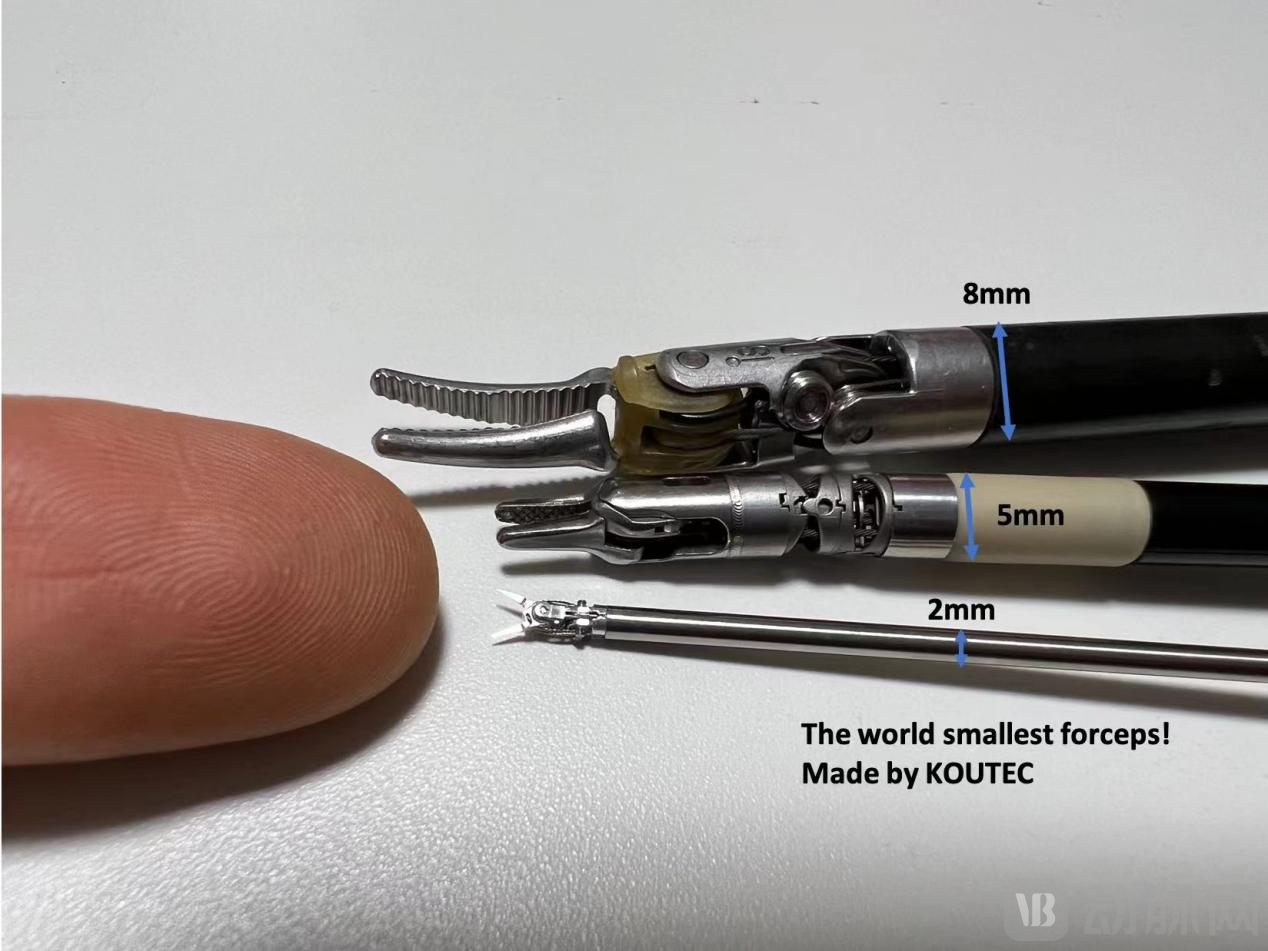
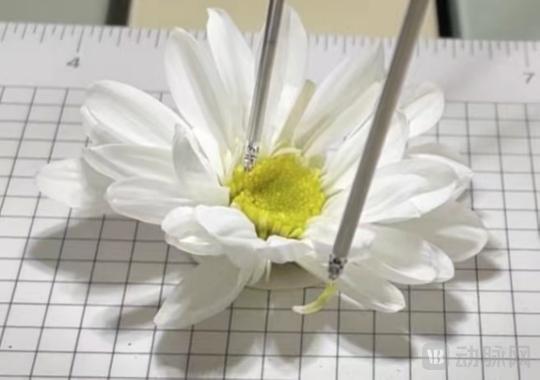
Currently, the microsurgical robot developed by KouTech is the world's most sophisticated surgical robot capable of performing the finest surgical procedures. It features delicate, long-lasting consumables. Its master-slave teleoperated soft tissue robot offers multiple degrees of freedom and a compact size for rapid deployment in various operating rooms. The instrument with a wrist-like structure at the tip has a diameter of less than 3mm, the smallest in the world, enabling anastomosis of blood vessels and lymphatic vessels as small as 0.3mm.
The implementation of core technology is the foundation. The deployment of solutions, however, is the skyscraper.
Solutions Provided by KouTech, which can not only help doctors overcome the impact of hand tremors, but also significantly reduce doctors' operational fatigue, while shortening their learning curve, further improving the accuracy and quality of surgery. Moreover, based on KouTech's core technology, its surgical robot product pipeline can be iterated to extend this technology to cover more application scenarios of surgical robots that require master-slave microscopic operations, achieving a leap from a single technology application to a technological ecosystem.
Based on core底层 technologies, the company has currently developed three main surgical robots: a general-purpose microsurgical robot, an ophthalmic surgical robot, and a gastrointestinal endoscopy robot.Among them, the general-purpose microsurgical robot and the ophthalmic surgical robot have started preparing relevant type inspection documents and are expected to be submitted for type inspection this year. The gastrointestinal endoscopy robot will be submitted for type inspection next year.
Its general-purpose microscopic robot, covering the entire surgical field, including otolaryngology, neurosurgery, vascular surgery, plastic surgery, etc.,Assist existing medical robots (such as orthopedic robots, endoscopic robots, vascular interventional robots, etc.) in completing procedures that require high precision and are otherwise unachievable.
Targeting the clinical pain points of limited manpower in ophthalmic surgeries and insufficient precision of conventional robots,KouTech's self-developed ophthalmic surgical robot has achieved micron-level single-step motion, fully meeting the operational requirements for high-precision retinal surgery.
At the same time, it is noted that with the rise of endoscopic mucosal dissection, existing instruments have only three degrees of freedom, complex operation methods, a long learning curve, and improper operation can lead to irreparable risks such as perforation.KouTech develops gastrointestinal endoscopy robots, utilizing flexible arms smaller than 3mm and multi-degree-of-freedom clamps.The surgical robot can rotate up to 180 degrees, enabling the world's smallest and most precise surgeries. While ensuring surgical accuracy and safety, it effectively shortens the learning curve for doctors.
In addition to the core technology breakthroughs in surgical robot systems, KouTech believes that performing surgical operations in deep intracranial spaces requires more precise and agile surgical instruments. Therefore,The company has also independently developed surgical robot-related instruments, conducting in-depth research on both software and hardware.
In the process of communicating with investors and enterprises, VCBeat attempted to find out why KouTech was able to take the lead in making a breakthrough in the almost blank ultra-micro surgical robot market.Among many clues, it can be seen that their winning points include the team's focus on technology and accurate judgment of clinical needs, as well as finding the right position at the right time.
The founder of KouTech once studied at Tokyo Institute of Technology, which has profound research accumulation in the robotics field. This experience has given him greater control over the most crucial components of robotics and the judgment of relevant machinery product development paths and directions. As early as 2011, KouTech's current R&D team began exchanging and interacting on cutting-edge technologies with medical giants from Japan and the United States.
According to the recollection of the founder of KouTechEven medical giants from Japan and the United States still have many shortcomings and room for improvement in the production processes of mature products that have already gained market recognition. In these areas, KouTech collaborates with these medical giants to design and develop equipment for manufacturing and testing the quality of their existing medical products, assisting partner companies in their subsequent development.
Due to the mechanized intelligent operation features of the equipment developed by the company itself and its similarity to robotic systems, as well as the overlap in most technical pathways, KouTech has also accumulated a large number of core technologies through this experience, providing support for subsequent efforts in ultra-micro surgical robots.
KouTech's entrepreneurship was inspired by a renowned Japanese neurosurgeon.In neurosurgical procedures, especially in areas of the skull base where nerves are densely intertwined and space is limited, the precision required for fine operations is difficult to achieve due to human physiological tremors and the limitations of manual dexterity. This often results in many surgeries that require high precision being impossible to complete, thus creating so-called "surgical no-go zones." Recognizing this challenge, KouTech ultimately decided to implement ultra-microsurgery robotic technology.
After determining the R&D direction, the founder of KouTech gathered Japan's top optoelectronic team. The R&D direction is guided by cutting-edge technologies from prestigious universities such as the University of Tokyo and Tokyo Institute of Technology. Combined with feedback from doctors in China who have rich clinical experience, KouTech continues to explore the possibilities of this technology through a high degree of integration between medical and engineering expertise.
After more than a decade of technical exploration and accumulation, KouTech has made breakthroughs in related technologies by entering the field of minimally invasive microscopic technology. It has become the world's first robotic platform focusing on small-scale precision surgery, while successfully achieving non-tremor operation throughout the entire surgical robot system.
According to reports,The product is compact in size and can be placed in operating rooms and wards of any size, or even in ambulances and space stations, with very low requirements for application scenarios and a short setup time.
This not only can become a powerful tool to expand the greater possibilities of surgical procedures, but also help doctors shorten the learning curve and solve clinical pain points in multiple ways. The non-shaking drive system, combined with delicate and nimble forceps, can even anastomose capillaries and lymphatic vessels with a diameter of 0.3mm.
Since the birth of surgical robots, they have been highly anticipated.
Compared with open surgery and traditional minimally invasive surgery, surgical robots, through robotic assistance, overcome the shortcomings of traditional methods such as large incisions, long operation times, insufficient precision, and high risk of infection for patients. They effectively improve the accuracy and stability of surgeries, reduce the risk of operational errors, decrease the risk of postoperative complications, and simultaneously shorten the learning curve for doctors.
But the development of surgical robots is a long process that requires clinical and market validation. Due to factors such as patent monopolies, development in China started relatively late. Currently, laparoscopic surgical robots, percutaneous puncture surgical robots, and joint replacement surgical robots are more widely used in the market. With breakthroughs in corresponding technologies, vascular interventional surgical robots have also gradually developed.
However, in specialized departments such as plastic surgery, ophthalmology, and pediatric internal medicine, where there is a demand for refined surgical procedures, doctors currently still mainly perform surgeries manually. Corresponding surgical robot products are relatively scarce, with only two established products available on the market currently: MUSA or Symani, both developed by foreign manufacturers.
The contradiction lies precisely in this. On the one hand, the development of current visual navigation systems and medical imaging technology has enabled doctors to view clearer images. However, on the operational end, the traditional mode of manual operation remains dominant for performing delicate surgeries, with related technological advancements lagging behind. On the other hand, from the perspective of surgical procedures themselves, operations involving fine anatomical structures demand higher precision. But due to physiological tremors in humans and the limitations of fine motor control, manual operations at small scales are restricted, resulting in lower success rates.
In the entire field of surgery or in fields that require highly refined operations, super-micro robots can perform surgeries that were previously impossible, offering a strong alternative to existing clinical methods. In regions where high-quality medical resources are relatively scarce, this technology, due to its small footprint and wide adaptability to different surgical procedures, can benefit more patients. The advent of a general-purpose super-micro surgical robot will undoubtedly meet some of the unmet needs in clinical practice to a certain extent, making it a technological pathway that must be achieved in the future.
Therefore, replacing some manual operations with surgical robot technology to reduce the impact of tiny movements such as hand tremors on surgery, while expanding the boundaries of surgery, is not only a necessity but also highly valuable.
Despite the current scarcity of mature products in this field and the potentially long journey ahead, with the first steps now taken by domestic manufacturers like KouTech, we can believe that after the product value is market-validated, the ultra-micro surgery robot sector will also see the rise of many outstanding companies, and giants akin to the Da Vinci Surgical Robot will emerge.