

First Immune Therapy for Biliary Tract Cancer: Imfinzi Plus Chemotherapy Demonstrates Significant Survival Benefit in Phase III TOPAZ-1 Trial

AstraZeneca
Biopharmaceutical Manufacturer
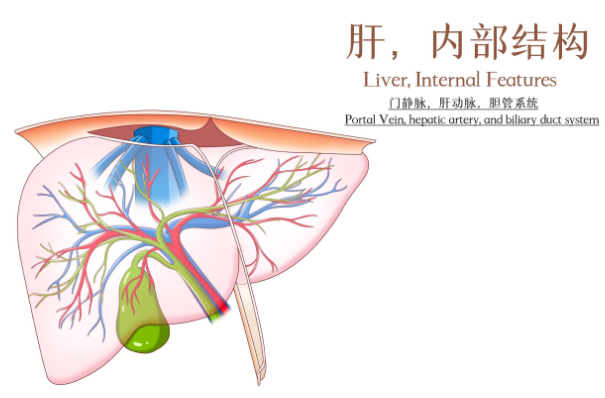
Image Source: Shutterstock
News on September 22, 2022 / BIOON / -- AstraZeneca recently announced the latest results of the TOPAZ-1 Phase 3 trial, which showed:In patients with advanced biliary tract cancer (BTC), compared with standard-of-care (SoC) chemotherapy, the anti-PD-L1 therapy Imfinzi (generic name: durvalumab) combined with SoC chemotherapy as a first-line treatment provides clinically meaningful and durable overall survival (OS) benefits.Moreover, compared with chemotherapy, the combination therapy did not increase discontinuation due to adverse events.
TOPAZ-1 is the first Phase III clinical trial: showing that a first-line immunotherapy combination can improve survival in patients with advanced BTC. Meanwhile, in the global randomized trial for treating advanced BTC, Imfinzi + chemotherapy is the first immunotherapy combination that has demonstrated significantly superior efficacy compared to standard of care.
Earlier this month,Based on the results of the TOPAZ-1 trial, Imfinzi in combination with chemotherapy (gemcitabine + cisplatin) regimen received approval in the United States.FDAApproved for the treatment of adult patients with locally advanced or metastatic BTC. It is worth mentioning that,Imfinzi + chemotherapy is the first approved immunotherapy regimen for the treatment of advanced BTC.Currently, the treatment regimen is also undergoing regulatory review in Europe, Japan, and several other countries.
TOPAZ-1 is a randomized, double-blind, placebo-controlled, multi-center, global Phase III trial conducted in 685 adult patients with unresectable, locally advanced or metastatic BTC (including intrahepatic and extrahepatic cholangiocarcinoma and gallbladder cancer; excluding ampullary cancer). The trial is evaluating Imfinzi in combination with SoC chemotherapy (gemcitabine + cisplatin) and placebo in combination with SoC chemotherapy as first-line treatment options.The trial was conducted across 105 clinical centers in 17 countries worldwide, including China.
In October 2021, in a pre-specified interim analysis, the trial met the primary endpoint of OS: compared with the chemotherapy group, the risk of death in the Imfinzi + chemotherapy group was reduced by 20% (HR=0.80, 95%CI:0.66-0.97; two-sided p=0.021), OS was significantly improved (median OS: 12.8 months vs 11.5 months), and the 2-year survival rate was higher (25% vs 10%).
The latest results released this time show:After an additional 6.5 months of follow-up, clinical efficacy further improved. Compared with the chemotherapy group, the Imfinzi + chemotherapy group showed a 24% reduction in the risk of death (HR=0.76, 95% CI: 0.64-0.91), significant improvement in OS (median OS: 12.9 months vs 11.3 months), and an estimated 2-year survival rate more than doubled (23.6% vs 11.5%). Improvements were observed across all pre-specified subgroups, regardless of disease status, tumor location, or PD-L1 expression. Additionally, OS benefits were observed in patients with stable tumor volume (stable disease) as well as in those with reduced or disappeared tumor volume (responders).
In the trial, the safety of Imfinzi + chemotherapy remained favorable, and no new safety signals were observed with extended follow-up. Treatment-related adverse events of grade 3/4 were experienced by 60.9% of patients in the Imfinzi + chemotherapy group and 63.5% in the chemotherapy group.Compared with chemotherapy alone, the addition of Imfinzi to chemotherapy did not increase the discontinuation rate due to adverse events (8.9% in the combination group vs. 11.4% in the chemotherapy group).
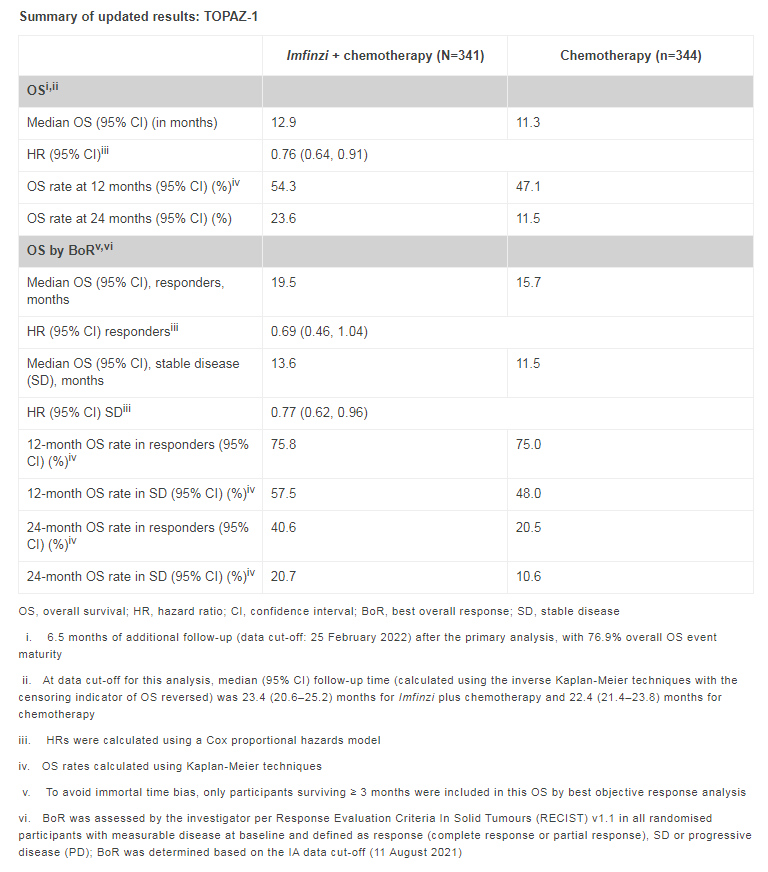
Latest Results of TOPAZ-1 Trial
Do Youn Oh, M.D., Ph.D., Professor of Medical Oncology at Seoul National University College of Medicine and principal investigator of the TOPAZ-1 Phase III trial, said: "It's exciting that after nearly two years of follow-up, Imfinzi plus chemotherapy has improved overall survival for patients with advanced biliary tract cancer beyond the current standard of care. For the past decade, these patients have faced poor prognoses due to limited treatment advancements."For the first time, a combination regimen based on immunotherapy has shown that the survival rate of patients with advanced biliary tract cancer is higher than the current standard of care, and this regimen should become the new standard of care.”
Approximately 50,000 people in the United States, Europe, and Japan, and around 210,000 people worldwide are diagnosed with BTC each year. These patients have a poor prognosis, with only about 5%-15% of BTC patients surviving five years. In December 2020, Imfinzi was granted Orphan Drug Designation (ODD) for the treatment of BTC in the United States.
Imfinzi (Yingfanyan, Durvalumab) is a human monoclonal antibody that targets and binds to the programmed cell death ligand 1 (PD-L1), blocking the interaction between PD-L1 and PD-1 and CD80, countering the tumor's immune evasion strategies and releasing the suppression of the immune response.
Based on the results of the Phase 3 PACIFIC study, Imfinzi is the only approved immunotherapy for curative treatment in patients with unresectable locally advanced (Stage III) non-small cell lung cancer (NSCLC) following chemoradiotherapy, and has now become the global standard of care.
Based on the results of the Phase 3 CASPIAN study, Imfinzi has also been approved in many countries around the world (including the United States, the entire European Union, China, and Japan) for the treatment of extensive-stage small cell lung cancer (ES-SCLC). In addition, Imfinzi has also been approved in multiple countries for the treatment of patients with previously treated advanced bladder cancer. (Bioon.com)
Source: Imfinzi plus chemotherapy further improved overall survival benefit in advanced biliary tract cancer in the TOPAZ-1 Phase III trial, reducing the risk of death by 24% in additional follow-up