

EU Approves Ultomiris (ravulizumab), the First and Only Long-Acting C5 Inhibitor, for Generalized Myasthenia Gravis

AstraZeneca
Biopharmaceutical Manufacturer

European Commission
The European Commission, abbreviated as the EU Commission, is a supranational body under the European Union. Within the EU political system, the European Commission primarily undertakes executive tasks, thus being roughly equivalent to the government in a national system. However, the European Commission has other functions as well. In particular, except for the few circumstances specified in the treaties, the European Commission is the only institution with legislative power in the EU legislative process.

Image Source: Shutterstock
News on September 27, 2022 / BIOON / -- AstraZeneca recently announced that the European Commission (EC) has approvedLong-Acting C5 Complement Inhibitor Ultomiris (Ravulizumab): As an add-on therapy to standard treatment, used for the treatment of adult patients with generalized myasthenia gravis (gMG) who are positive for anti-acetylcholine receptor (AChR) antibodies.
Previously, Ultomiris was approved in the United States in April 2022 and in Japan in August 2022 for specific adult patients with gMG. Currently, the application for Ultomiris in treating gMG is undergoing regulatory review in other countries.
It is worth mentioning that,Ultomiris is the first and only long-acting C5 complement inhibitor approved for the treatment of gMG.gMG is a rare and debilitatingChronic AutoimmuneImmunitySexual neuromuscular disease, characterized by loss of muscle function and severe muscle weakness。In gMG patients, 80% are AChR antibody positive.It is estimated that there are 89,000 patients with gMG in the EU and 64,000 patients with gMG in the US.
Ultomiris is the first and only long-acting C5 inhibitor that has demonstrated early onset, sustained clinical efficacy, and an 8-week dosing regimen, with the potential to reduce patients' treatment burden. Data from the Phase 3 clinical trial indicate,Ultomiris can help a broader range of patients, including those with milder symptoms or at an earlier stage of their treatment journey, as well as patients who remain symptomatic despite receiving initial standard-of-care therapy.. After receiving Ultomiris treatment,The patient's ability to perform activities of daily living showed continued improvement.
This approval was based on the results of the Phase 3 CHAMPION-MG trial (NCT03920293). Relevant data were published in April 2022 in the prestigious international medical journal, The New England Journal of Medicine (NEJM), see: Terminal Complement Inhibitor Ravulizumab in Generalized Myasthenia Gravis. In this trial,Ultomiris demonstrated efficacy as early as the first week of treatment and maintained it for 60 weeks (26 weeks in the randomized controlled period + 34 weeks in the open-label extension period for long-term follow-up).
The main endpoint data shows:From baseline to Week 26 of treatment, the Ultomiris group showed a change in the total score of the Myasthenia Gravis Activities of Daily Living (MG-ADL) scale relative to baseline compared with the placebo group.StatisticsSignificant change in academic terms (-3.1 vs -1.4, treatment difference: -1.6, p<0.001)The MG-ADL is a patient-reported scale used to assess the patient's ability to perform daily activities. Additionally, in the long-term follow-up results during the open-label extension period, the clinical efficacy of Ultomiris was observed to persist up to Week 60. In this trial, Ultomiris was well-tolerated, and its safety profile was consistent with the Phase 3 clinical trials for paroxysmal nocturnal hemoglobinuria (PNH) and atypical hemolytic uremic syndrome (aHUS).
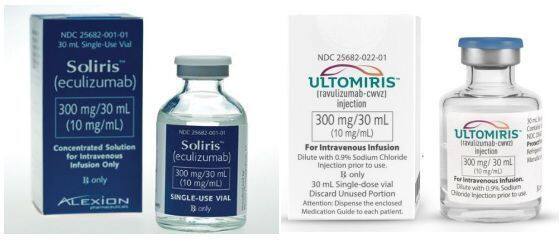
Ultomiris is a long-acting C5 complement inhibitor and the long-acting version of Soliris (eculizumab).Both drugs work by inhibiting the C5 protein in the terminal part of the complement cascade. The complement cascade is part of the immune system, and its uncontrolled activation plays a significant role in severe rare and ultra-rare diseases, including: paroxysmal nocturnal hemoglobinuria (PNH), atypical hemolytic uremic syndrome (aHUS), generalized myasthenia gravis (gMG), and neuromyelitis optica spectrum disorder (NMOSD).
Ultomiris and Soliris are two leading products of Alexion. In December 2020, AstraZeneca announced a $39 billion cash-and-stock acquisition of Alexion. This acquisition was successfully completed in July 2021. It is the largest acquisition by AstraZeneca since its establishment in 1999 through the merger of two pharmaceutical companies from the UK and Sweden. The successful completion of this acquisition marks AstraZeneca's entry into the rare disease drug sector, opening a new chapter for the company.
Soliris was first approved for marketing in 2007 and has since been approved for various ultra-rare diseases, including: PNH, aHUS, gMG, NMOSD. Ultomiris is the long-acting version of Soliris and is a second-generation, long-acting C5 complement inhibitor. It was first approved for marketing at the end of 2018, and its approved indications include: PNH, aHUS, gMG. (Bioon.com)
Source: Ultomiris Approved in Europe for the Treatment of Adults with Generalised Myasthenia Gravis