

Nanovis Announces IPO: Pioneering Nanotechnology-Driven Implant Solutions with 37% Revenue Growth and 8 NIH Research Grants

Elevate Ventures
Investment and Consulting Services Firm

Nanovis
Cervical and Lumbar Interbody Fusion Device Developer

Commenda Capital
Commercial Bank

Purdue Foundry
Venture Capital Firms

Ellipsis Ventures
Venture Capital Firms

Commenda Securities
Financial Investment Institutions
To improve the performance of spinal implants, Nanovis, located in Indiana, USA, is committed to developing cutting-edge nanotechnology and obtaining clinical and market validation. With its top-tier portfolio of nanotechnologies, its subsidiary Nanovis Spine set a sales record in 2021. In 2022, Nanovis continued its strong revenue growth, with first-quarter results increasing by 37% compared to the same period in 2021.
In 2015, Nanovis applied for a Small Business Innovation Research (SBIR) grant from the National Institute of Arthritis and Musculoskeletal and Skin Diseases (NIAMS) of the U.S. National Institutes of Health (NIH), and announced on September 22 of the same year that it had received the research funding.
For startups, their innovative technologies often struggle to attract venture capital, making the SBIR program particularly crucial. In addition to funding research on nano-surface implants, the SBIR grant also helped Nanovis gather the data necessary for FDA approval, driving the commercialization of Nanovis' products.
Nanovis used the funds to evaluate the effects of combining FortiCore implant technology with nanotube surface technology to enhance spinal segment stability after spinal fusion surgery. The research results indicate that, compared to non-surface implants, Nanovis' nano-surface implants can act as scaffolds for bone and bone stem cells, promoting faster bone growth.
In 2016, Nanovis received SBIR funding from the National Institute on Aging and the National Cancer Institute, both part of the U.S. National Institutes of Health (NIH). With this support, Nanovis developed regenerative bladder transplantation technology for bladder cancer repair. To date, Nanovis's spinal nanotechnology platform and soft tissue regeneration nanotechnology platform have secured eight grants from the NIH and other research institutions.
As the most important source of early-stage funding in the U.S. life sciences R&D sector, the NIH provides over $1.2 billion annually to support small business R&D projects. To promote the development of innovative technologies and improve public health, the NIH has now established collaborations with universities and research institutions, small businesses, trade associations, angel investors, venture capitalists, and more.

NIH Seed Fund
Image source: NIH official website
On August 21, 2018, Nanovis, a U.S. nanotechnology company, announced the completion of a $5.5 million financing round. This round was led by Commenda Securities, with participation from Elevate Ventures, 1st Source Capital Corporation, Purdue’s Foundry Investment Fund, Commenda Capital, and Ellipsis Ventures.
For more than a decade, Nanovis has been committed to reducing implant fixation and infection-related complications, focusing on the sustainable growth of the spinal market by dedicating itself to the research, development, and commercialization of related technologies. It now owns 33 proprietary and licensed patents and has established multiple proprietary regenerative technology platforms and technology portfolios.
1. Nanotechnology Platform
Nanovis owns the only nanotechnology in the spinal market that allows scientists to customize and control nanospacing — nanoVIS Ti Surface Technology.
nanoVIS Ti Surface is a bio-ceramic bone growth nanotube surface composed of nanotube arrays with an average pore diameter between 60-80 nanometers, suitable for CP titanium and titanium alloys, specifically designed for fixing implants in the intervertebral space. The size and shape of the pores can be adjusted, allowing the ceramic coating to release drugs over a longer period and enhance infection resistance.
Through its subsidiary Nanovis Spine, Nanovis has applied nanoVIS Ti Surface Technology to a series of spinal implants, including open and minimally invasive pedicle screws (Nano FortiFix), as well as PEEK+titanium hybrid interbodies (Nano FortiCore), while utilizing Sites Medical’s titanium scaffold material Osteosync for reinforcement, thereby commercializing the technology.
Now, nanoVIS Ti Surface Technology has been validated by multiple parties.
Clinical Certification:Clinically proven, compared with other surfaces commonly used in orthopedics, the nanotube array of nanoVIS Ti Surface Technology can improve the production efficiency of calcified extracellular matrix on human osteoblasts and mesenchymal stem cells in vitro at 21 days.
Regulatory Verification:PEEK+Titanium Hybrid Interbody (Nano FortiCore) and Minimally Invasive Pedicle Screw System (Nano FortiFix), which utilize nanoVIS Ti Surface Technology, have received FDA approval and nanotechnology designation, both as world-firsts.
Operation Verification:It has been verified that the manufacturing process of nanoVIS Ti Surface Technology can be put into production. To avoid inventory backlog and reduce the risks caused by repeated sterilization, Nanovis requires all products using nanotechnology to be packaged sterilely. Nanovis estimates that the cost of using the surface and subsequent sterile packaging is about half of that of using technologies such as hydroxyapatite ("HA"), without the various clinical problems associated with HA.
Commercial Validation:Nanovis Ti Surface Technology has currently received approval for five implant systems in the spinal market. Additionally, through ongoing marketing efforts, Nanovis Ti Surface Technology has established cooperative agreements with multiple hospitals, achieving a certain level of market share and price increase.
2. FortiCore Platform
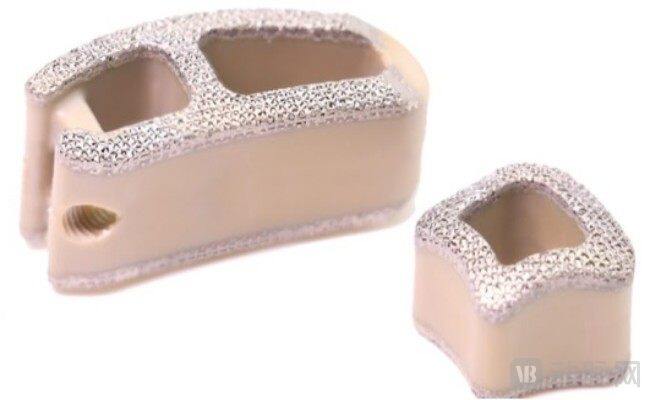
FortiCore
Image Source: Nanovis Official Website
The FortiCore interbody fusion device was developed under the guidance of surgeons, including TLIF and PLIF implants, supported by the FortiFix pedicle screw system and the FortiBridge cervical plate system.
FortiCore Implant Composed of a PEEK Core and a Deep-Hole Titanium ScaffoldProvides imaging performance valued by surgeons, sparing patients from additional radiation associated with CT scans.
3. Anti-colonization and Antibacterial Implant Platform
For patients who have received implants, if the implant cannot be fixed in place post-surgery due to new bone growth, it may rub against other bones, causing more severe pain and leaving scars. If bacteria enter the bloodstream and colonize in the scar tissue, the patient could become infected.
Nanovis is developing the next generation of antimicrobial technology for percutaneous devices and orthopedic implants, enabling material surfaces to combat or prevent localized infections.
Nano FortiFix(S) Open Pedicle Screw System is the only pedicle screw system with a nanotechnology name currently approved by the FDA.Nanovis states that the Nano FortiFix(S) Open Pedicle Screw System, through the company's comprehensive nanotechnology, can enhance the production efficiency of calcified extracellular matrix in human osteoblasts and mesenchymal stem cells. Since its launch in the third quarter of 2021, the Nano FortiFix system has set new sales records for Nanovis Spine.
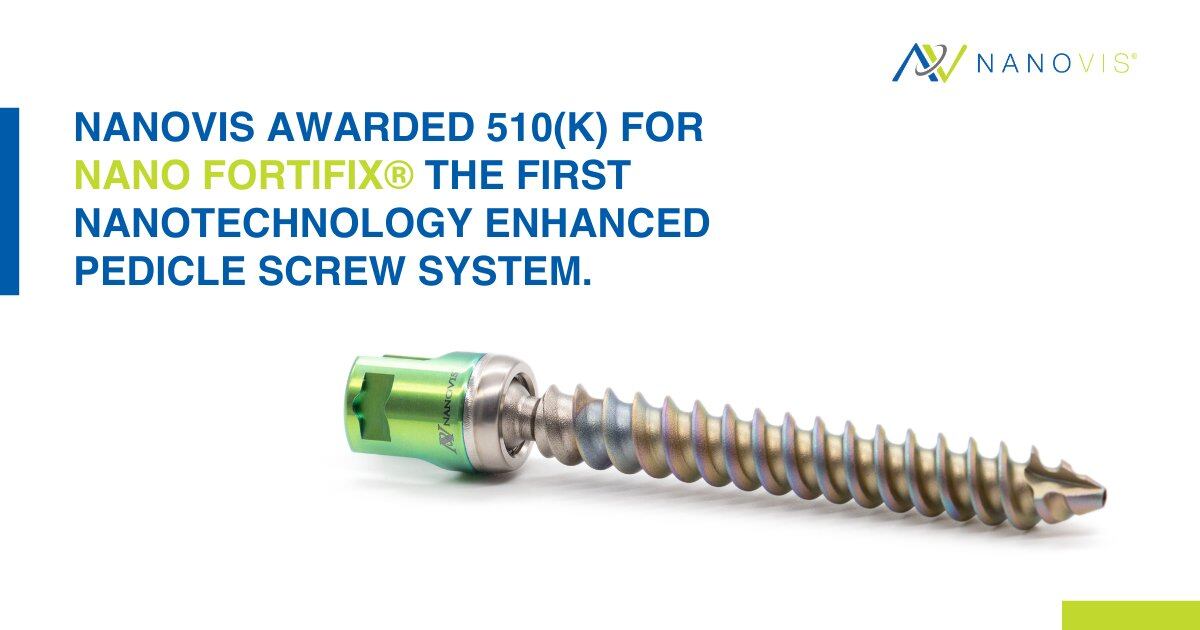
Nano FortiFix
Image Source: Nanovis Official Website
On June 15, 2015, Nanovis launched the FortiBridge cervical plate system to complement the FortiCore cervical interbody implant system. The FortiBridge cervical plate features a smooth, esophageal-friendly profile and accommodates high-angle screws. Additionally, the FortiBridge cervical plate system is available in various sizes and offered in steam-sterilized or individually sterilized packaging.
On October 15, 2015, Nanovis launched the FortiCore wedge cervical lordosis fusion device and the enhanced support transforaminal lumbar interbody fusion (TLIF) device.
On March 28, 2018, Nanovis launched PLIF (Posterior Lumbar Interbody Fusion Device with Rotatable Core). The product features a deep-hole titanium scaffold intersected with a PEEK core and marked the implantation of the 2000th FortiCore implant. On November 14, 2018, Nanovis expanded the PLIF product line by adding sizes of 22mm and 25mm for customers to choose from.
Nanovis was founded in 2008, based on clinical needs and market trends, receiving technical support from Purdue University, Brown University, and Rensselaer Polytechnic Institute to ensure the scientific nature and sustainability of the production process.
CEO Brian More stated that Nanovis' mission can be summarized in two words: support and engagement. Nanovis is committed to fostering an attractive and infectious culture that supports every internal member in utilizing their talents while collaborating and innovating with external partners. Over the past decade, Nanovis has developed top-tier nanotube technology, truly enabling medical device manufacturers to enhance healthcare through science-driven technology and help patients return to normal life.
Now, Nanovis has obtained the intellectual property license from the Purdue Research Foundation and has become a market leader in nanotechnology.
On September 22, 2014, Nanovis Spine, a subsidiary of Nanovis, announced that its sterile-packaged FortiCore interbody fusion device received FDA clearance.
In 2018, Global Health and Pharma named Nanovis the Best Nanotechnology-Driven Implant Company of 2018.This award aims to recognize the contributions made by organizations and individuals in major global industries and is granted solely based on actual achievements.
In 2019, Nanovis was named one of the top ten orthopedic suppliers by Med Tech Outlook.
On July 26, 2022, Altus Spine announced a private label partnership with Nanovis Spine to further enhance and expand its bio-ceramic nanotube surface technology across its entire product portfolio, driving the commercialization of the Nano FortiFix pedicle screw system.
Now, Nanovis is planning to apply its nanotechnology to the development of other spinal implants, such as orthopedic fixation screws, including those for knees, hips, limbs, and trauma, thereby entering the $41 billion orthopedic market.
More than a decade ago, nano-medical products began to emerge in the market. In terms of sales volume alone, some of them have become leaders among their peers in therapeutic products. The global nanomedicine market size was $171.6953 billion in 2020. According to Precedence Research, with continuously improving medical infrastructure and extensive R&D activities in the biotechnology field,By 2030, the global nanomedicine market size is expected to reach approximately USD 964.15 billion, with a compound annual growth rate (CAGR) of 11% from 2022 to 2030.
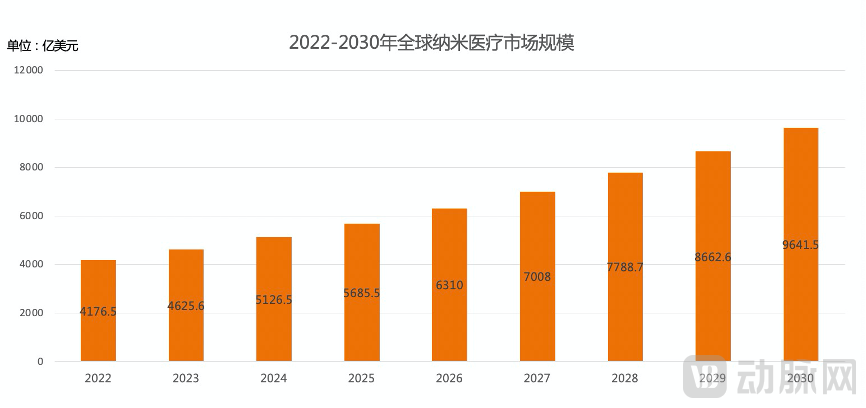
Global Nanomedicine Market Size 2022-2030
Data source: Precedence Research
According to different therapeutic areas, the nanomedicine market is divided into clinical oncology, infectious diseases, clinical cardiology, orthopedics, neurology, urology, ophthalmology, immunology, and other fields. Among them, due to the surge in the number of cancer cases and the increase in disposable income, the clinical oncology sector was the primary contributor to the global market in 2020 and is likely to remain dominant over the next decade.
By region, the nanomedicine market includes Europe, North America, Asia-Pacific (APAC), and the Rest of the World (ROW). Among these, advanced technologies and substantial investment capital will continue to drive the growth of nanomedical products in the North American market. Additionally, a high demand for healthcare, a high incidence of cancer, and increasing investments in nanotechnology research will further support this growth.The compound annual growth rate of the nanomedicine market in the Asia-Pacific region from 2020 to 2030 is expected to reach 11.2%.
The global nanomedicine market is characterized by a limited number of nanoparticle technology and nanomaterial suppliers, with low market concentration, as the substantial funding required for research and development has deterred many manufacturers. Meanwhile, those who have excelled in the nanomedicine field through technology and research-driven approaches have gained significant growth opportunities in the global market. In the coming years, increased disposable income in both developed and developing economies is likely to present boundless possibilities for the nanomedicine market.