

Fermion Submits IPO Prospectus Featuring FZ002-037, China's First SSTR4-Targeting Non-Addictive Analgesic in Clinical Development
Fermion
AI Drug Discovery Developer
On October 9, 2022, the clinical trial application for FZ002-037 capsules, a Class 1 chemical drug developed by Fermion, was accepted by the NMPA. This is the first IND submission by Fermion in China, with the Phase 1 FIH clinical trial in China expected to commence in early 2023. Fermion is poised to become the first China-based small molecule AI pharmaceutical company to receive IND approval and enter clinical trials.

It is reported that the FZ002 project targets non-addictive analgesia and will become the second drug of its kind globally and the first in China to enter clinical trials. The pain treatment drug corresponding to FZ002 is one of the six major types of drugs worldwide. In China’s overall painkiller market, due to strict government restrictions on psychotropic and narcotic drugs, non-addictive analgesics dominate. Over the past decade, more than 400,000 deaths in the U.S. were caused by opioid overdoses, leading to a series of stringent control measures against the opioid crisis in Europe and America. Consequently, the market potential for non-addictive analgesic drugs is enormous — in 2020, the global pain medication market was approximately $71.6 billion, with the market size of opioid painkillers that urgently need replacement nearing $20 billion.
It is reported that, compared with traditional opioid analgesics and non-steroidal anti-inflammatory drugs such as ibuprofen, the FZ002 project has three differentiated advantages: First, it mainly acts on peripheral nerve tissues, which can enhance drug safety; second, it has ultra-high subtype selectivity, which can reduce side effects caused by off-target effects; finally, this non-addictive target has already been supported by preliminary POC-validated clinical data.
Fermion has laid out two pipelines, FZ002 and FZ008, in the non-addictive analgesic field, targeting chronic and acute pain respectively. In the future, there may be an opportunity to claim a share of the billion-dollar pain medication market.
Fermion is an AI-driven small molecule innovative drug research and development company. The founder, Dr. Deng Daiguo, graduated from the Computer Science Department of Sun Yat-sen University and is also a serial entrepreneur. In 2018, he decided to apply AI technology to the field of drug research and development and officially established Guangzhou Fermion Technology Co., Ltd.

Dr. Deng Daiguo
Official data shows that this is an AI Biotech company mainly focused on the R&D of new drug pipelines, with a key emphasis on central nervous system (CNS) diseases and autoimmune disorders. The technical foundation for Fermion's rapid pipeline advancement stems from its self-developed Drug Studio AI drug discovery platform. Specifically, after confirming the target, the AI technology platform builds a structured database for that target, then quickly generates and screens out the TOP10 molecules with the best overall parameters through property prediction. After several rounds of rapid "design-test" feedback and iteration, multiple PCCs (preclinical candidate compounds) meeting the set technical criteria are efficiently obtained.
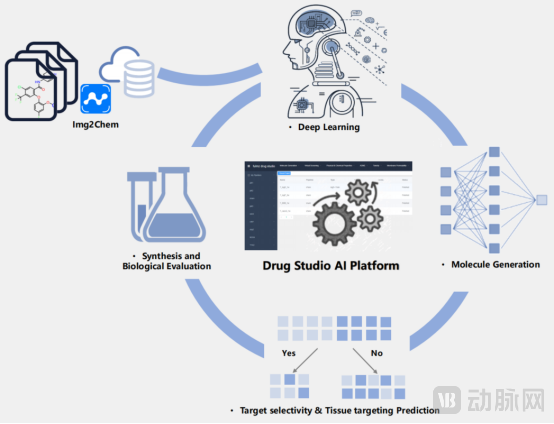
Drug Studio AI Drug Discovery Mode
It is reported that the platform has verified more than ten projects, with an average PCC delivery time of about 8-10 months, which is about half shorter than the traditional delivery cycle.
In recent years, investment in AI pharmaceuticals in China has been exceptionally火热, and globally, multiple AI drug pipelines have entered clinical stages. The field has gradually moved from the conceptual phase to the pipeline validation stage. As the commercial value becomes increasingly clear, the future of the pharmaceutical industry will achieve broader and deeper intelligence, and the era of AI pharmaceuticals will eventually arrive.