

China's First Domestically Developed MIGS Device for Glaucoma Receives NMPA Approval
The minimally invasive glaucoma surgery track, densely laid out by ophthalmic giants, has welcomed the first officially approved domestically produced glaucoma microcatheter product.
Recently,Usights Microcatheter Surgical System, independently developed by Tianjin Ushi Ophthalmic Technology Co., Ltd. (referred to as Tianjin Ushi), a subsidiary of Beijing Zhenghong Technology Co., Ltd., has received NMPA marketing approval, becoming the first domestically produced glaucoma MIGS surgical product approved for marketing in China.
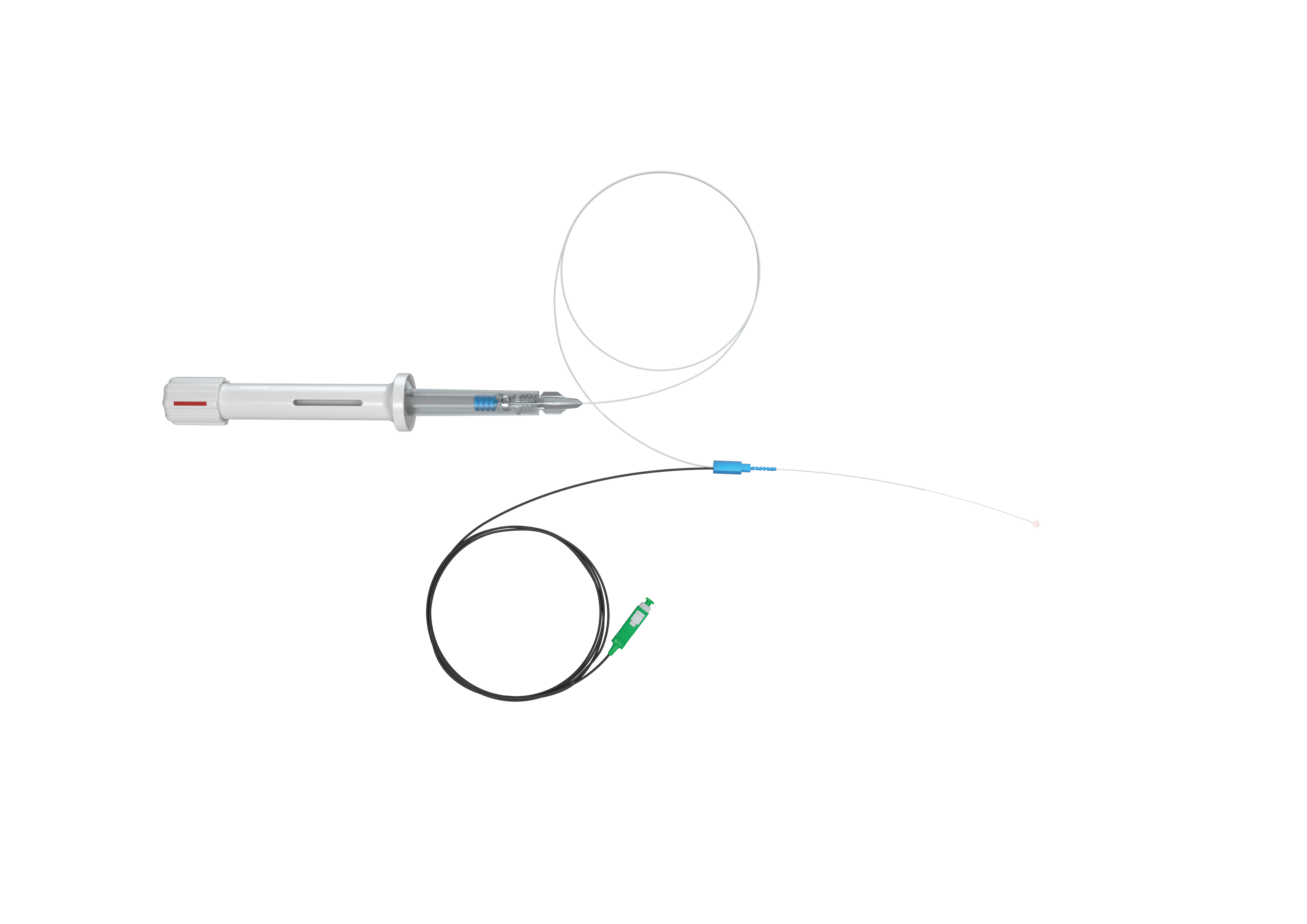
It is reported that,The Usights Microcatheter Surgical System is an innovative product independently developed by Tianjin UView over six years. The R&D process was deeply participated in by a well-known team of experts in China. It not only applies to a wide range of surgical procedures but also features fewer postoperative complications, no subconjunctival bleb formation, fast postoperative recovery, and effective pressure reduction.
In fact, before the official approval of this product, the赛道for minimally invasive glaucoma surgery had already "quietly" gained popularity, attracting several international ophthalmic giants to make strategic moves, forming an international market competition pattern that Mr. Guang Li, founder of Beijing Zhenghong Technology Co., Ltd., described as "accumulating strength for a burst of growth, and moving upwards with vitality." On the other hand, within China, although there were no domestically produced products officially approved for marketing prior to this, the academic community in glaucoma has widely recognized minimally invasive surgery, which has also successively attracted a group of local companies to enter the field.
The official approval of Tianjin Usights microcatheter surgical system this time will inject confidence into local enterprises, and what impact will it bring to the entire industry?
The field of minimally invasive glaucoma surgery is indeed heating up.
The ones that can intuitively feel the "heat" might be the series of movements in the capital market and by international giants.
In the Chinese market, according to incomplete statistics from VCBeat, from 2020 to August 2021, a total of 7 companies in China received financing, with most concentrated in the past two years.
Not only that, but this year, Allergan's glaucoma drainage tube XEN has completed its first in-hospital surgeries at multiple hospitals across China, accelerating the commercialization process in China; Santen’s glaucoma drainage device Preserflo has also been implanted in China.
From the perspective of the overseas market, the moves of international giants seem to be more frequent.
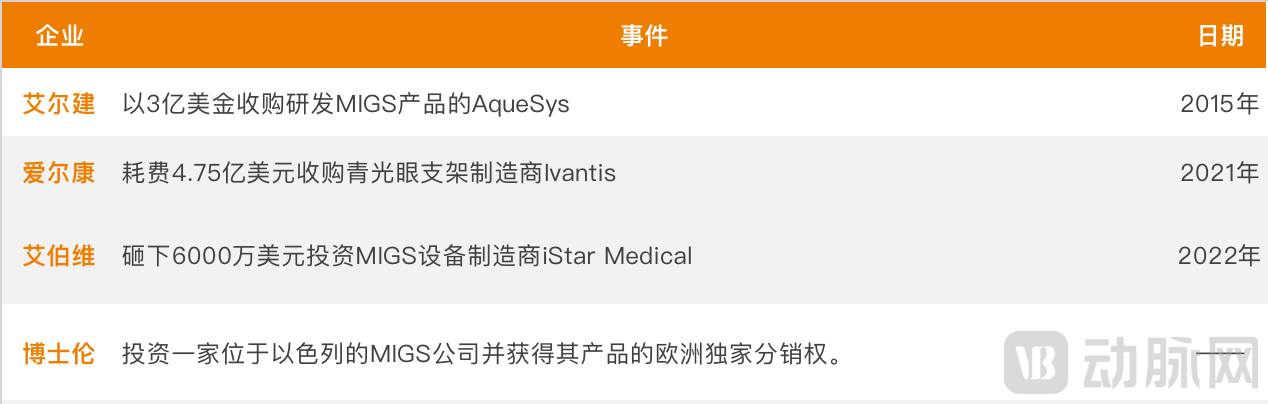
Obviously,Whether from abroad to China, or from investment to mergers and acquisitions, the glaucoma surgery sector has掀起了一阵“minimally invasive trend”. To deeply analyze these events, we need to return to the most fundamental "starting point" - clinical needs.
On the one hand, there is a significant demand in the field of glaucoma treatment in China.
In terms of the number of patients, according to the "Chinese Glaucoma Guidelines (2020)," it was estimated that by 2020, the number of glaucoma patients in China could reach 21 million. Moreover, due to the characteristic of glaucoma incidence increasing with age, the advent of an aging society will undoubtedly further increase the prevalence of glaucoma in China.
In terms of the harm caused by diseases, glaucoma is a group of conditions characterized by pathologically elevated intraocular pressure, leading to progressive optic nerve damage, which results in visual field loss and even permanent blindness. Glaucoma is the second leading cause of blindness globally, second only to cataracts, and it is also the leading cause of irreversible blindness worldwide.
On the other hand, when faced with such a huge demand for treatment, the traditional surgical methods are gradually showing disadvantages.(Note: Generally, when glaucoma progresses to the middle or late stage, surgical intervention is required. This article mainly focuses on surgical treatment and does not cover medication.)
Traditional glaucoma surgeries mainly involve external drainage procedures, primarily trabeculectomy and the implantation of glaucoma drainage devices.
Both are non-physiological drainage methods, which artificially create a long-term filtering bleb in the subconjunctival space to directly drain aqueous humor from the anterior chamber into the bleb, thereby reducing intraocular pressure. Theoretically, this surgical approach provides the greatest reduction in intraocular pressure and has the widest range of applications. However, the downside is that once the filtering bleb is established, it requires lifelong maintenance, and there are numerous challenging intraoperative and postoperative complications, such as shallow anterior chamber, low intraocular pressure, endophthalmitis, and filtering bleb-related complications. Additionally, the filtering bleb may fail over time due to various reasons, leading to increased intraocular pressure.
Therefore, in the field of glaucoma surgical treatment, traditional methods have many drawbacks. In contrast, minimally invasive techniques, with advantages such as lower invasiveness, minimal disruption to physiological structures, high safety, shorter operation time, and quicker recovery, are gradually becoming the trend in glaucoma surgery development.
Generally speaking, the technical pathways of minimally invasive glaucoma surgery products can be divided into two categories: implantation and intervention. So, why did Tianjin Ushi ultimately choose the interventional approach?
"To create a minimally invasive glaucoma product that best meets the clinical needs in China" — Back in 2016, the Tianjin Ushi Minimally Invasive Glaucoma R&D team established this development philosophy. Therefore, when faced with the choice between implantation and intervention, Tianjin Ushi prioritized intervention.
The main reasons are in three aspects:
First, the treatment of glaucoma requires controlling intraocular pressure to reduce damage to the optic nerve. For patients in the middle to late stages, especially those with higher intraocular pressure, whose visual field or optic nerve damage is severe, it is crucial to effectively lower the intraocular pressure. Based on the actual situation of glaucoma cases in China, most patients only visit the hospital when symptoms become relatively obvious. As a result, by the time they seek medical attention, the majority have already progressed to middle or late-stage glaucoma. According to relevant research findings, compared with micro-stent products, surgical methods using micro-catheter products demonstrate a more significant effect in lowering intraocular pressure.
Secondly, from the perspective of Chinese doctors' cognition and usage habits, a considerable number of Chinese doctors tend to adopt interventional methods because they believe that "stents may encounter blockage or rejection issues, while microcatheters achieve the reconstruction of aqueous humor pathways by unblocking Schlemm's canal, which is safer."
Finally, from the perspective of disease payment, take a foreign brand's glaucoma micro-stent as an example. Its price in the United States is about $1,000 each, and generally, two are needed for implantation in one eye, totaling $1,500 to $2,000. This amount accounts for a very low proportion of medical payments in the United States, and with the widespread availability of commercial insurance, this price does not pose a payment issue for patients abroad. However, the corresponding price of this product in China will significantly increase (due to import duties and distribution costs), presenting a considerable payment challenge for domestic patients.
Therefore,Based on comprehensive considerations of clinical indications, blood pressure reduction effects, prognostic issues, payment concerns, and more, Tianjin Ushi has chosen to intervene — adopting the technical path of microcatheters for product development.
The research and development成果——Usights microcatheter surgical system—has indeed shown impressive performance in clinical applications. Reportedly, Schlemm's canal incision or expansion surgery using the glaucoma microcatheter is not only easy to perform with fewer complications but can theoretically achieve intraocular pressure levels similar to episcleral venous pressure.
As a tool for doctors, the biggest highlight of the Usights microcatheter surgical system, aside from its blood pressure-lowering effects, is its ease of operation.
Specifically, the surgical system is mainly composed of a laser fiber optic indicator and a disposable ophthalmic fiber optic catheter. The former primarily provides a laser light source to mark and guide the position of the catheter tip within Schlemm's canal during glaucoma surgery; the latter consists of a viscoelastic injector and a disposable ophthalmic fiber optic catheter.
During the surgical procedure, the red light emitted from the tip of the microcatheter can penetrate the limbus, helping doctors determine the position of the catheter and achieve precise navigation. Compared to the traditional Harms knife, this product has a larger penetration range and incision range, and adopts a dual-channel design. In addition to the aforementioned optical fiber catheter channel, it also includes a built-in viscoelastic injection pathway, which facilitates the injection of viscoelastic agents by the doctor to expand Schlemm's canal.
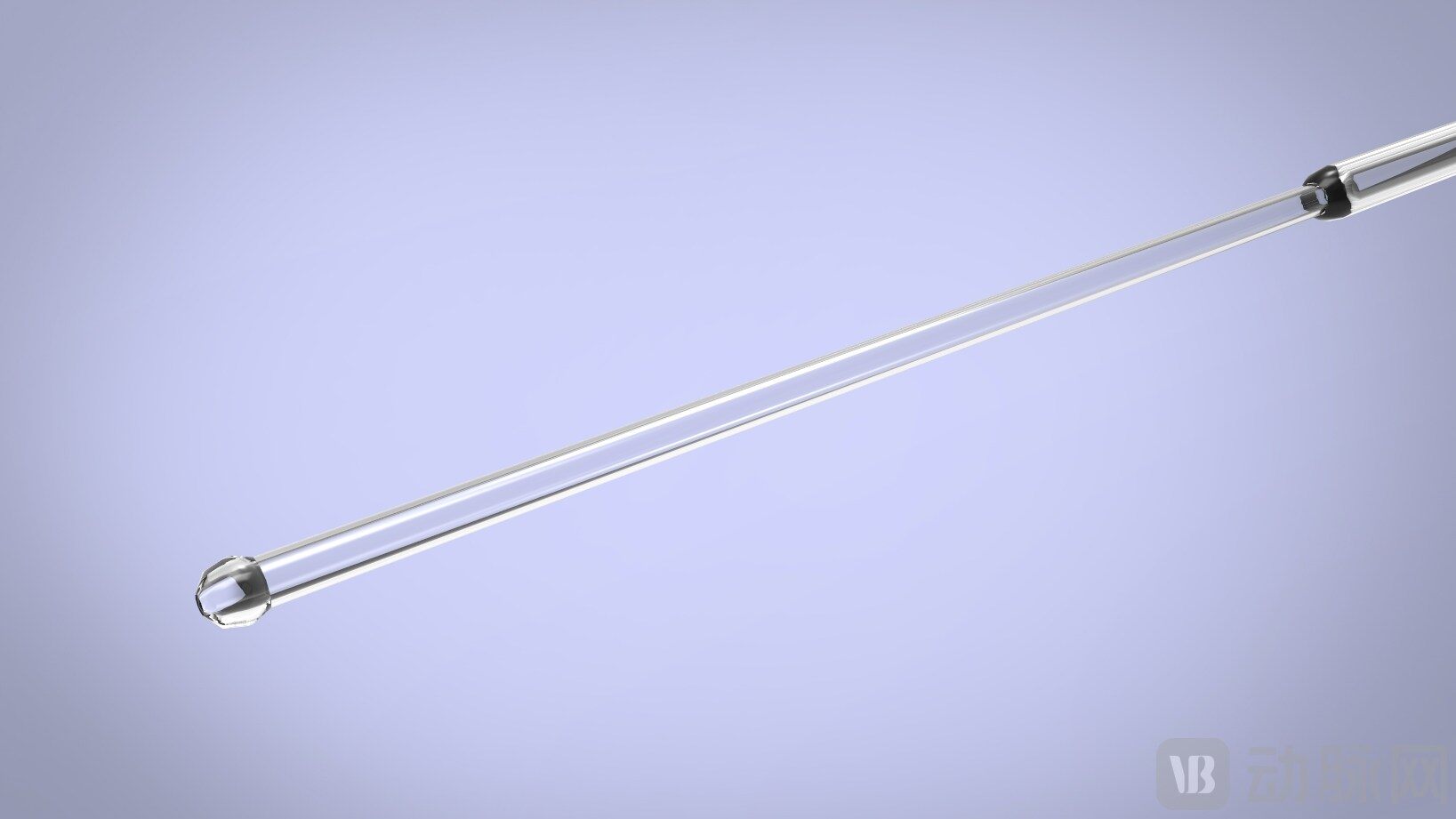
Not only that,In terms of microcatheter design, Tianjin U-View has also optimized based on actual clinical needs. For instance, compared with imported microcatheters, the Usights microcatheter is longer (with a total working length of 165mm and an insertion length of 75mm), making it more user-friendly for glaucoma surgery in patients with corneal expansion.
In addition,The microcatheter features an enlarged, smooth, and rounded tip design that allows it to smoothly enter the Schlemm's canal without damaging surrounding tissues. Its material is designed with enhanced flexibility, facilitating the transmission of pushing force to the tip, thereby making the operation more convenient for doctors and the push more seamless.
It is not difficult to see that the R&D of Tianjin Youshi is closely integrated with clinical needs. It has not only built a strong R&D team whose members have backgrounds in well-known medical device catheter R&D, but also established a close cooperative relationship with the expert team of Beijing Tongren Hospital affiliated to Capital Medical University.
Among them,Tianjin Ushi has hired renowned glaucoma expert Professor Wang Ningli as the chief scientist.

Professor Wang Ningli is the Dean of the Eye Academy at Capital Medical University, the Director of the National Engineering Research Center for Ophthalmology Diagnosis and Treatment, and the leading academic figure of the Key Discipline of Ophthalmology under the National Ministry of Education. He has also been the first contributor to receive two "Second Prizes of National Science and Technology Progress Award," consecutively listed on the Elsevier Highly Cited Scholars List for eight years, and elected as an Academician of the International Academy of Ophthalmology in 2014, with only 100 spots available globally.
Collaboration with well-known experts in China has undoubtedly brought Tianjin Youshi's research and development closer to clinical needs. Throughout the entire product development process, the expert team from Tongren Hospital was deeply involved, providing suggestions and clinical guidance. Their relentless efforts in overcoming challenges have enabled Tianjin Youshi's R&D to "deliver tangible results and achieve practical implementation."
Raw materials, manufacturing processes, and system stability are the main R&D challenges for glaucoma microcatheter products, all of which are inseparable from a notable characteristic of microcatheters—precision.
The精细化 characteristics of microcatheters not only require "customization of raw materials from catheters to optical fibers" but also无形中 raise the threshold for manufacturing工艺 and maintaining system稳定性. In response,天津优视 has conducted numerous experiments and trial-and-error efforts, enabling the current Usights microcatheter surgical system to be successfully launched.
Now, the Usights microcatheter surgical system, which has been clinically tested for its application effects, is about to officially enter the market. Tianjin Ushi already has a clear plan for its market promotion.
"At the marketing level, we will build an effective technology dissemination system," Mr. Li Guang told VCBeat.
First, in the future, Tianjin Youshi will strengthen publicity at the conceptual level to enhance awareness and acceptance of minimally invasive glaucoma surgery among the physician community. Second, Tianjin Youshi has already begun establishing an efficient technical promotion and training system, using five of China’s top hospitals as training bases—including Beijing Tongren Hospital and Wenzhou Medical University Eye Hospital—to create a model for wider adoption. The plan aims to train 500 glaucoma specialists within three years in surgical techniques such as Schlemm's canaloplasty, supplemented by technical support. This initiative will build an ecosystem supporting doctors through the entire process—from initial conceptual awareness to technical proficiency and implementation—culminating in comprehensive technical support.
In addition to the recently approved Usights microcatheter surgical system, Tianjin Ushi has also developed a micro-stent product in the minimally invasive glaucoma surgery field.VCBeat learned that the development of this product has been basically finalized, and clinical trials are planned to start next year. At that time, this product will be used in conjunction with the already approved microcatheter surgical system. "Doctors can first use the microcatheter product for initial dredging and then proceed with implantation. This method will yield better results than implantation at a single stage alone."
In fact,Tianjin Usee Glaucoma Minimally Invasive Products is one of the business layouts of Beijing Zhenghong Technology Co., Ltd.Like Tianjin Uview, Guangdong Weiren is also a subsidiary of Beijing Zhenghong Technology Co., Ltd. Its core technical team consists of returned overseas Ph.D.s, all of whom are senior experts in the international optical engineering field.Guangdong Weiren has mastered the original core technology of OCTA in the field of ophthalmic imaging equipment, forming a layout of ophthalmic equipment products such as OCTA, ultra-widefield fundus cameras, and femtosecond laser devices. Its spectral-domain OCTA device was launched at the end of 2021, with highly competitive product performance.
With a deep understanding of the ophthalmology industry, Zhenghong Technology continues to expand its business blueprint.In addition to continuing to deepen its presence in the ophthalmic diagnosis and treatment market, it will further expand into optometry equipment, eye disease management systems, and multi-modal eye disease AI screening systems.Each of its products strictly adheres to the concept of "focusing on ophthalmic diagnosis and treatment needs, continuously achieving technological and scenario breakthroughs, and gradually forming a complete layout of ophthalmic products" for extension and expansion, striving to build a full industry chain product platform for eye health.