

Jiecheng Medical Launches Pivotal China Trial for Its Transfemoral TAVR System, Poised to Reshape the Global TAVR Landscape

CAUSPER MEDICAL
Cardiac Valve Implantation System Technology Product R&D and Production Manufacturer
TAVR Track Welcomes Another Highlight Moment.
On October 15, 2022, a member company of Genius Medical Technology GroupCAUSPER MEDICAL's Transcatheter (Transfemoral) Interventional Biological Aortic Valve (referred to as: CAUSPER Transcatheter Valve) launches registration clinical trial in China。
Two patients with valvular heart disease each received a "CAUSPER Transvascular Interventional Valve" through transcatheter aortic valve replacement (TAVR). The surgeriesCompleted by the minimally invasive cardiac and vascular surgery team of Zhongshan Hospital, Fudan University, led by Professors Wang Chunsheng and Wei Lai.。
CAUSPER MEDICAL has planned to conduct multiple prospective multicenter registration clinical studies for this product worldwide. This is the first clinical trial of the product, and subsequent trials are about to be launched in the United States.
The successful implementation of this surgery has preliminarily confirmed the effectiveness of CAUSPER MEDICAL's transcatheter valve in treatment.Technical Maturity, Safety, and Efficacy of TAVR Procedures for Dual Indications of Aortic Stenosis and Regurgitation (Insufficiency); It also marks the progress of domestically innovative transcatheter bioprosthetic aortic valves towardsComprehensive Coverage of Elderly Patients with Degenerative Heart Valve DiseaseFurther.
The registration clinical study of CAUSPER MEDICAL's transcatheter valve in China is led by Professor Chunsheng Wang from Zhongshan Hospital, Fudan University.Fudan University Zhongshan Hospital, affiliated with the hospital, has the leading cardiology and cardiac surgery departments in China. It is also the first hospital in China to perform Transcatheter Aortic Valve Replacement (TAVR) and has accumulated profound expertise in TAVR clinical research.
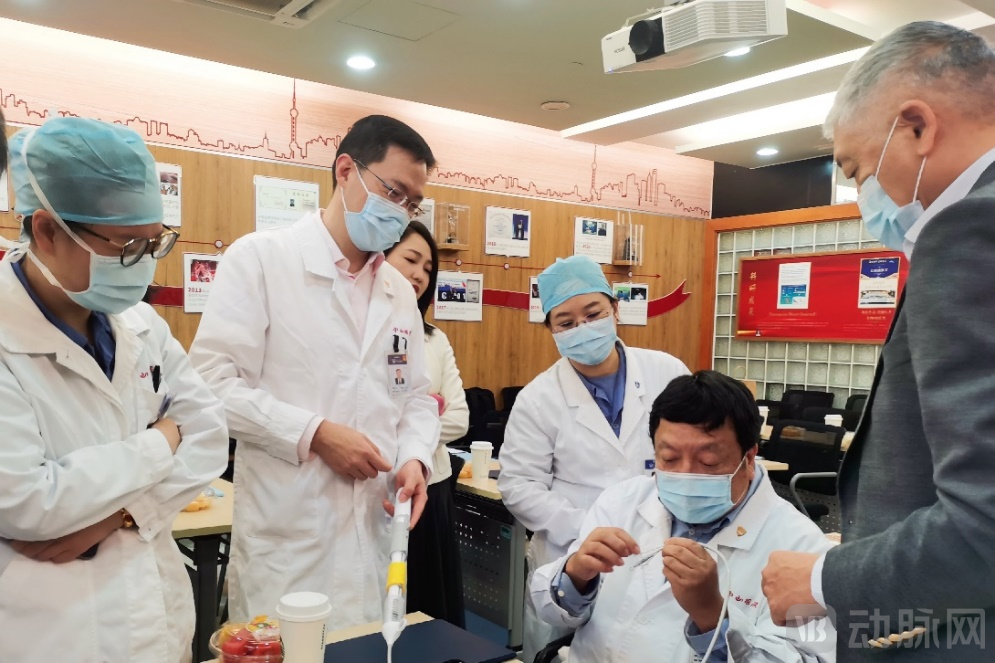 Professor Wang Chunsheng Researches on the Autonomous Navigation and Positioning Device of CAUSPER MEDICAL's Valve System
Under the leadership of Academician Ge Junbo, Zhongshan Hospital has also specially formed a cross-disciplinary interventional valve team, including departments such as cardiology, cardiac surgery, echocardiography, anesthesia, intensive care, and radiology. Relying on the team's comprehensive technical capabilities, Zhongshan Hospital hopes to consolidate and continuously deliver capabilities in clinical research, academic promotion, and patient treatment.
The first batch of this clinical trial carried out two TAVR surgeries.The surgical patient is a 90-year-old male.One month ago, symptoms such as chest tightness, shortness of breath, and edema in both lower limbs appeared. Examination revealed severe aortic valve insufficiency (regurgitation).The second surgical patient is an 83-year-old female., has experienced breathing difficulties after labor for many years, with symptoms significantly worsening in the past month. Examination revealed severe aortic valve stenosis.
According to the surgical risk scoring table, both patients were identified as high-risk surgical candidates. After a detailed clinical assessment, the team led by Professors Wang Chunsheng and Wei Lai successfully performed high-risk TAVR procedures on the two patients using CAUSPER MEDICAL's "vascular interventional valve." Patient one received a 28mm CAUSPER vascular interventional valve, while patient two received a 22mm CAUSPER vascular interventional valve.
Among the key steps of valve implantation, all were completed within 10 minutes. The patients' symptoms significantly improved after the surgery, and their recovery speed exceeded expectations. The two patients were successfully discharged on the first and second day after the surgery, respectively.
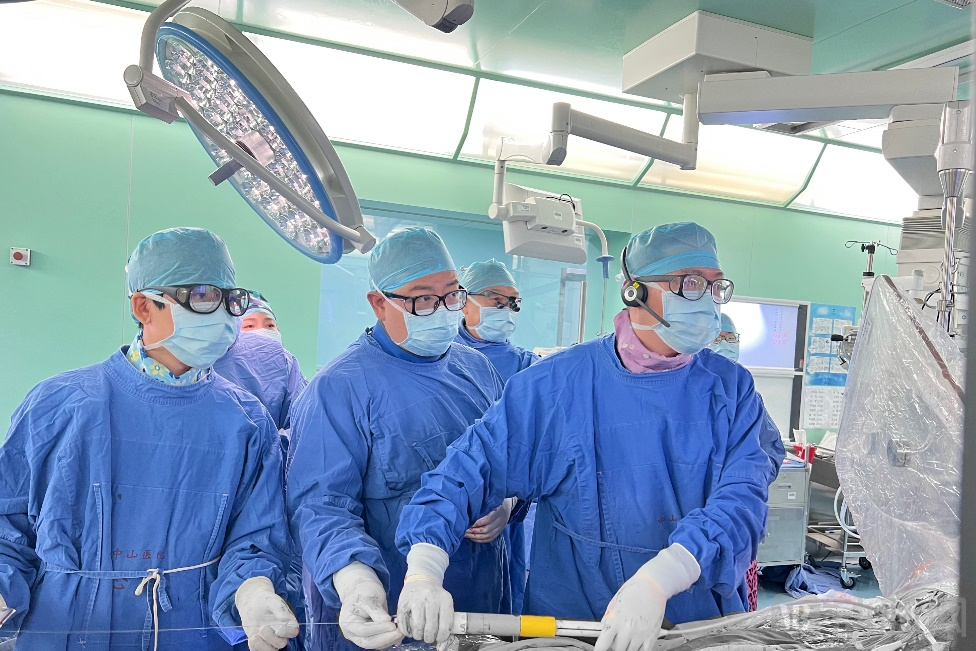
The minimally invasive cardiovascular surgery team of Zhongshan Hospital, led by Professors Wang Chunsheng and Wei Lai, performed the surgery.
"This surgery utilized CAUSPER MEDICAL's new generation of transcatheter valves, which can achieve more minimally invasive surgical outcomes. Prior to this, the only approved product capable of simultaneously treating aortic regurgitation and stenosis was CAUSPER MEDICAL's J-Valve, which follows a transapical surgical approach," said Professor Wang Chunsheng.
"The J-Valve Transcatheter Heart Valve showed excellent maneuverability during the procedure and the technology is relatively mature, which is truly a blessing for Chinese patients with aortic valve disease. Moreover, the innovative design of the J-Valve has long been recognized in clinical practice. Dozens of articles about the J-Valve have been published in mainstream international journals, earning it widespread international recognition," commented Professor Wei Lai.
Unique positioning piece design, forging the treatment of stenosis and regurgitation
The Only TAVR Product with Dual Indications
CAUSPER MEDICAL is a leading enterprise in China's interventional cardiac bioprosthetic valves industry. Its core product, the "J-Valve Precision Positioning Heart Valve Implantation System," has led to technological innovation at the source for China's TAVR through its original and unique "autonomous navigation and positioning system." It possesses globally advanced technology and worldwide independent intellectual property rights, breaking international monopolies.
In 2017, CAUSPER MEDICAL's "J-Valve TA Transapical Interventional Heart Valve Replacement System" received NMPA certification.Currently the only approved treatment that can simultaneously address severe aortic valve stenosis and regurgitation with dual indications.CAUSPER MEDICAL's J-Valve product. Since its official commercial launch in July 2017, the J-Valve has been adopted by nearly 200 global partner hospitals, with an annual TAVR implant volume of nearly 1,000 cases, reaching a top-three market share in China.
In addition to indications, clinicians will also focus on post-implantation when selecting TAVR products.Incidence of paravalvular leakage, pacemaker implantation rate, and valve durabilitySuch key factors. In July 2021, CAUSPER MEDICAL announced its 5-year follow-up data: the 5-year pacemaker implantation rate of J-Valve was only 7.4%, and the moderate structural degeneration rate was only 3.7%. These two figures are leading both in China and internationally.
The J-Valve Transfemoral (transvascular) system used in this surgery, building on the advantages of the previous transapical product, utilizes a transfemoral (transvascular) approach, offering patients more access options while maintainingShorter operation time, smaller surgical trauma, faster patient recoveryAdvantages such as these are expected to lead to the widespread adoption of this surgery in major cardiovascular centers.
As early as 2018, the technology of CAUSPER MEDICAL's transcatheter valve intervention had already matured, and it successfully completed human implants in Canada and the United States. Since then, the product has been applied through the "Humanitarian Use" approval by the U.S. FDA and Health Canada, aiding more than 20 patients in the two countries. The majority of these patients suffered from severe aortic regurgitation.
Professor Wei Lai mentioned that globally, there are many interventional valve products capable of treating aortic stenosis, but very few can safely and effectively treat regurgitation. Currently, the only product that has been officially approved by government regulatory authorities is the J-Valve transapical interventional valve.
It is reported that,CAUSPER MEDICAL will soon initiate the U.S. registration clinical trial for its transcatheter aortic valve, accelerating the progress of the "one-stop solution for aortic valve disease" in both domestic and international markets.
Overall, China's heart valve market is a large-capacity, fast-growing, but low-penetration market.
According to Frost & Sullivan data, in 2021, the market size of China's structural heart disease interventional devices was 20 billion yuan. Among the细分 markets, the TAVR market was the largest, reaching 910 million yuan in 2021, accounting for 45.5% of China's structural heart disease interventional medical device market, with a compound annual growth rate as high as 52.0% from 2021 to 2025.
Annual Report of the Chinese Medical Doctor Association's Structural Heart Disease Group Shows That in 2021, the Number of TAVR Surgeries (Including Transfemoral and Transapical, Excluding Clinical Research) in China Exceeded 6,500 Cases. Compared to 3,500 Cases in 2020, This Nearly Doubled the Number of TAVR Surgeries, but the Penetration Rate is Still Less Than 1%, and the Overall Market is Still in the Introduction Phase.
Behind the high growth and low penetration isThe relatively high cost of treatment, the small number of hospitals conducting TAVR, and TAVR product indicationsLimitedAnd other multiple limiting factors.
According to the prospectus of Jianshi Technology, the price of SAVR valves for Surgical Aortic Valve Replacement (SAVR) ranges from 10,000 to 30,000 yuan, while the price of TAVR valves is between 196,000 and 298,000 yuan, approximately ten times higher. However, with the improvement of national medical insurance policies, some provinces have already included TAVR devices in medical insurance coverage, significantly reducing the financial burden on patients.
For example, in May 2022, the Shanghai Medical Insurance Bureau issued the "Notice on the Trial of Performance-based Payment for Some Medical Consumables," proposing to trial performance-based payment for heart valve (foldable) consumables. TAVR consumables will be included in the medical insurance payment scope at 80%, and the immediate success rate of TAVR surgery or the incidence of severe perioperative complications will be incorporated into the assessment criteria. This will drive the superior-performing TAVR products to achieve rapid market expansion first.
In addition, doctors need a certain amount of time to transition to learning TAVR surgical procedures. Moreover, there are relatively few hospitals and doctors in China capable of performing TAVR surgeries, so the market needs to gradually stabilize. Data from the MicroPort CardioFlow Medtech Corporation's prospectus shows that in 2019, there were 604 hospitals in China qualified to perform TAVR surgeries, of which only 156 hospitals actually carried out the procedure.
But with the advancement of the marketization process of listed products and the boost from the relaxation of medical insurance policies, the Chinese TAVR market will continue to grow as the number of relevant hospitals increases and hospital penetration improves.
The scope of indications for TAVR might also be an important reason for its low penetration rate. Professor Wei Lai introduced, "The current consensus in the medical community both domestically and internationally is that it is suitable for patients over 65 years old, especially those with multiple comorbidities.High-risk patients can preferentially choose transcatheter aortic valve replacement (TAVR).。”
At the same time, TAVR products on the market generally can only treat aortic valve stenosis, like CAUSPER MEDICAL.There is a significant lack of TAVR products that have been clinically proven to be safe and effective for treating aortic valve insufficiency.。But whether it is stenosis or insufficiency, there are large populations of patients in China and overseas urgently in need of treatment.
According to the literature review and a report by Frost & Sullivan, in 2020, the number of patients with aortic valve stenosis in China reached 4.4 million; it is expected that by 2030, the number of patients will reach 5.2 million. The number of patients with aortic valve insufficiency is comparable to the number of patients with aortic valve stenosis.
Written at Last
From the perspective of the market competition landscape, four domestic companies and two imported companies occupy China's TAVR market, but currently, there is no single dominant player. Facing fierce competition, several domestically-listed TAVR companies have turned their attention to overseas markets, but almost all are in Europe and other emerging market countries that recognize NMPA/CE certification.
Overseas markets are also a key focus for CAUSPER MEDICAL. The dual-indication advantages of CAUSPER MEDICAL's TAVR products have reached areas that giants like Edwards and Medtronic cannot cover, while also possessing comprehensive global intellectual property rights. Therefore, from Day 1, CAUSPER MEDICAL set its sights on North America, where the TAVR market is most mature and market access is extremely stringent.
Currently, nearly ten top international doctors have highly praised CAUSPER MEDICAL's transcatheter valve, including Dean Kereiakes from Christ Hospital in the United States, John Webb from St. Paul’s Hospital at the University of British Columbia in Canada, and several other professors. As CAUSPER MEDICAL advances its clinical trials in both China and the United States, it may leverage the turning point in China’s TAVR market to make a global impact.