

STELARA® (ustekinumab) Demonstrated Sustained Symptomatic and Corticosteroid-Free Remission Through Four Years in Adults with Moderately to Severely Active Ulcerative Colitis

Johnson & Johnson
Healthcare Product Manufacturers, Health Service Providers

Janssen Pharmaceuticals
Pharmaceutical R&D Developer

Image Source: Shutterstock
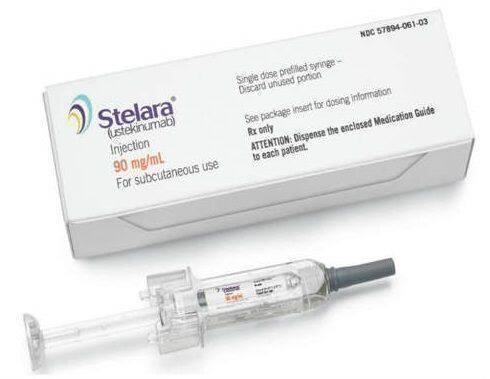
News on October 20, 2022 / BIOON / -- Johnson & Johnson (JNJ) subsidiary Janssen Pharmaceuticals recently announced at the 30th United European Gastroenterology Week (UEG Week 2022) in 2022Anti-inflammatory drug Stelara (Chinese trade name: Xidano, generic name: ustekinumab, Ustekinumab Injection) for the treatment of moderate to severe activeUlcerative Colitis(UC) Adult PatientsFinal data from the Phase 3 UNIFI study (NCT02407236) long-term extension (LTE).
The results announced at the meeting,Confirmed the sustained efficacy and favorable safety of Stelara over a 4-year treatment period.Specifically:Among patients who achieved clinical response during the Stelara induction therapy period, 64.9% were in remission at Week 44 of the maintenance phase, and this proportion was 55.2% at Week 200 (4 years).. In addition, inAmong patients with symptom relief at Week 200, the majority (96.4%) achieved corticosteroid-free remission, meaning remission without the use of corticosteroids.。
InAcceptStelara as the First Biologic to Treat UCAmong 174 biologic-naive patients, 71.8% (n=125) were in symptomatic remission at Week 44 of the maintenance phase.67.2% (n=117) were in symptomatic remission at Week 200.。
Another analysis of the UNIFI LTE study presented at the conference showed,Among Stelara-randomized patients who were receiving corticosteroids at maintenance baseline and received Stelara during the LTE period, the majority (79.1%) were able to discontinue corticosteroid use by Week 200.
Waqqas Afif, Associate Professor in the Division of Experimental Medicine and Gastroenterology at McGill University Health Centre in Montreal, Canada, and presenter of the UNIFI study results, stated: "The final LTE results of the UNIFI study indicate that Stelara can be an effective long-term treatment option for patients with moderate to severe active ulcerative colitis (UC), including those who are biologic-naïve. Importantly, the vast majority of patients who achieved remission in the study were able to discontinue the use of corticosteroids, which can cause significant side effects and are not a long-term treatment solution for this condition."

Stelara Targets and Inhibits the Cytokines IL-12/IL-23 (Image Source: stelarainfo.com)
——UNIFI LTE Study Week 200 Efficacy Data:In the Intent-to-Treat (ITT) population, out of 348 patients who achieved clinical response at the start of the maintenance period (maintenance period baseline) and were randomized to receive Stelara 90mg every 8 weeks (q8w) or every 12 weeks (q12w): (1)55.2% of patients (192/348) maintained symptom remission at week 200, compared to 64.9% at week 44 (end of the primary maintenance treatment study).(226/348)。(2)53.2% of patients (185/348) achieved corticosteroid-free remission at week 200, compared to 63.5% at week 44.(221/348). (3) In174 biologic-naive patients randomized to receive Stelara at maintenance baselineIn China,67.2% (117/174) of patients maintained symptom remission at Week 200, compared to 71.8% at Week 44.(125/174)。(4)Among patients in clinical remission at Week 44, 72.9% were also in symptomatic remission at Week 200.。(5)Among the 284 randomized patients who entered the LTE period of the study after Week 44 of the maintenance phase and continued to receive Stelara treatment (q8w or q12w), 67.6% (192/284) were in clinical remission at Week 200.
——UNIFI LTE Study Week 200 Safety Data:At week 200, a safety evaluation was conducted for all patients (n=588) receiving LTE treatment, including both the randomized and non-randomized populations. Throughout the entire study period,The incidence of key safety events in patients treated with Stelara was similar to that of placebo.From Week 0 to Week 200 of the maintenance period, the follow-up durations for the combined Stelara group and placebo group were 1647.4 and 301.7 patient-years (PY), respectively. The incidence rates of safety events per 100 PY were as follows: adverse events (AE), 214.45 in the Stelara group and 288.04 in the placebo group; serious adverse events (SAE), 7.22 in the Stelara group and 10.61 in the placebo group; serious infections, 2.00 in the Stelara group and 3.31 in the placebo group. No new safety signals were observed.
——UNIFI LTE Study Week 200 Corticosteroid-Sparing Data:Analysis of the impact of corticosteroids during UNIFI LTE showed that,Among Stelara-randomized patients (n=139) who were on corticosteroid therapy at maintenance baseline and received Stelara during the LTE period, 79.1% were off corticosteroids by Week 200.. Patients who were randomized to Stelara at the maintenance baseline and received Stelara treatment during the LTE period:The corticosteroid-free remission rate at Week 200 was generally similar in the q8w group (63.6% [91/143]) and the q12w group (66.7% [94/141]).。Among patients receiving Stelara treatment and in remission at week 200, 94.8% in the q8w group and 97.9% in the q12w group were not using corticosteroids.
Inflammatory Bowel Disease (IBD) includes Ulcerative Colitis (UC) and Crohn's Disease (CD). UC is a chronic IBD that affects the large intestine (colon), where the inner lining of the colon becomes inflamed, forming tiny open ulcers that produce pus and mucus. The disease is the result of an overactive immune system, with symptoms varying from patient to patient but potentially including constipation, frequent bowel movements, persistent diarrhea, abdominal pain, bloody stools, loss of appetite, weight loss, and fatigue.
Selara is the world's first biologic that can simultaneously selectively target IL-12 and IL-23.IL-12 and IL-23 are two naturally occurring cytokines that are believed to play a key role in immune-mediated inflammatory diseases, including UC, plaque psoriasis, psoriatic arthritis, and Crohn's disease. Stelara inhibits these two pro-inflammatory cytokines by binding to the shared p40 subunit of IL-12 and IL-23, preventing their interaction with the cell surface receptor IL-12 β1.
Stelara was launched in September 2009 and has been approved for the treatment of:(1) Children (≥6 years old) and adult patients with moderate to severe plaque psoriasis (PsO); (2) Children (≥6 years old) and adult patients with active psoriatic arthritis (PsA); (3) Adult patients with moderate to severe Crohn's disease (CD); (4) Adult patients with moderate to severe active ulcerative colitis (UC).
In China, Stelara (喜达诺)®) was first approved in November 2017, and to date, it has been authorized for two indications: (1) Suitable for adult patients with moderate to severe plaque psoriasis (PsO) who have not responded, are contraindicated, or cannot tolerate other systemic treatments such as cyclosporine, methotrexate (MTX), or PUVA (psoralen and ultraviolet A); (2) Suitable for adult patients with moderate to severe active Crohn's disease (CD) who have had an inadequate response, lost response, or cannot tolerate conventional treatments or tumor necrosis factor α (TNFα) antagonists. (Bioon.com)
Source: STELARA® (ustekinumab) Demonstrated Sustained Symptomatic and Corticosteroid-Free Remission Through Four Years in Adults with Moderately to Severely Active Ulcerative Colitis