

BMS Submits sNDA for Camzyos (mavacamten) to Reduce Need for Septal Reduction Therapy in Obstructive HCM

Bristol-Myers Squibb
Biopharmaceutical and Nutritional Product R&D and Sales

FDA
U.S. Food and Drug Administration

Image Source: Shutterstock
News / BIOON / -- Bristol-Myers Squibb (BMS) recently announced that the U.S. Food and Drug Administration (FDA) has acceptedCamzyos(mavacamten)The supplemental New Drug Application (sNDA),To expand the indication: for reducing the need for septal reduction therapy (SRT).FDA Sets PDUFA Target Date for June 16, 2023
Camzyos is a novel, oral, cardiac myosin-selective allosteric reversible inhibitor., which was approved by the U.S. FDA in April 2022: For the treatment of adult patients with symptomatic obstructive hypertrophic cardiomyopathy (oHCM) classified as New York Heart Association (NYHA) functional class II-III, to improve function and symptoms.
It is worth mentioning that,Camzyos is the first cardiac myosin inhibitor approved by the U.S. FDA, targeting the pathophysiology of oHCM.oHCM is a chronic heart disease with a high incidence rate. Previously, the FDA granted Camzyos a Breakthrough Therapy Designation for the treatment of oHCM.LianBioHas obtained the license authorization from MyoKardia, a wholly-owned subsidiary of Bristol-Myers Squibb, to develop and commercialize mavacamten in Greater China, Thailand, and Singapore. In February 2022,The Center for Drug Evaluation (CDE) of the National Medical Products Administration (NMPA) has granted mavacamten the "Breakthrough Therapy" designation for the treatment of oHCM.
This sNDA is based on the results of the VALOR-HCM Phase 3 study (NCT04349072). This is a randomized, double-blind, placebo-controlled, multicenter Phase 3 study evaluating Camzyos in symptomatic obstructive HCM patients (NYHA Class III-IV) who meet the 2011 ACC/AHA SRT guideline criteria and have been referred for invasive procedures. The study enrolled over 100 patients, who were randomly assigned in a 1:1 ratio to receive either mavacamten or placebo. The study includes three treatment phases spanning 128 weeks: a 16-week placebo-controlled period, a 16-week active treatment period (during which all patients will receive mavacamten), and a 96-week long-term extension period (during which all patients will continue to receive mavacamten).
The primary endpoint of the study is a composite of the number of patients in the mavacamten treatment group compared to the placebo group who were determined to undergo SRT before or at Week 16, and the number of patients still meeting the SRT guideline criteria (LVOT gradient ≥50mmHg and NYHA class III-IV) at Week 16. Key secondary endpoints include the impact on exercise LVOT gradient, NYHA class, Kansas City Cardiomyopathy Questionnaire (KCCQ), and biomarkers at Week 16 of treatment.
The results showed,VALOR-HCM Study Met Primary Endpoint and All Secondary Endpoints with High Statistical SignificanceStatisticsStatistical significance. The safety of mavacamten was consistent with previous studies, and no new safety signals were observed.
Roland Chen, Senior Vice President of Global Drug Development and Head of Cardiovascular Development at Bristol-Myers Squibb, stated: "Currently, septal reduction therapy (SRT) is recommended for many patients with severe symptomatic obstructive hypertrophic cardiomyopathy. This often involves open-heart surgery or septal ablation, both of which are specialized care options. The approval of Camzyos earlier this year marked a significant milestone. The FDA's acceptance of this application for an expanded indication has the potential to further enhance the profile of Camzyos while reinforcing our commitment to delivering transformative cardiovascular treatments to patients."
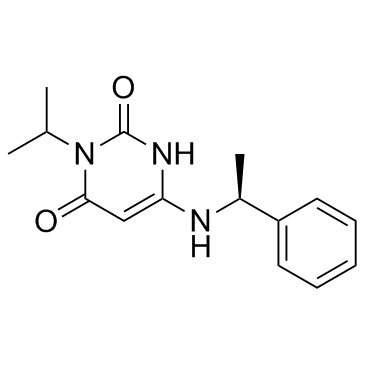
Chemical Structure of Mavacamten (Source: chemsrc.com)
Hypertrophic cardiomyopathy (HCM) is a chronic progressive disease caused by excessive myocardial contraction and obstruction of left ventricular blood filling, which can lead to debilitating symptoms and cardiac dysfunction.It is estimated that 1 in every 500 people worldwide has HCM. The most common cause of HCM is mutations in the myocardial sarcomere proteins. In patients with obstructive or non-obstructive HCM, exertion can lead to fatigue or shortness of breath, impacting their daily lives. HCM is also associated with an increased risk of atrial fibrillation, stroke, heart failure, and sudden cardiac death.
Obstructive HCM (oHCM) is the most common type of HCM, where the left ventricular outflow tract (LVOT), through which blood exits the heart, is obstructed by enlarged myocardium.It is estimated that oHCM affects 400,000-600,000 people worldwide, but many patients remain undiagnosed and/or asymptomatic.
Mavacamten is a first-in-class, orally administered, cardiac myosin allosteric modulator for the treatment of diseases characterized by excessive cardiac contraction and impaired cardiac diastolic filling as underlying causes.Mavacamten reduces myocardial contractility by inhibiting the excessive formation of myosin-actin cross-bridges, which can lead to excessive myocardial contraction, left ventricular hypertrophy, and reduced compliance. In clinical and preclinical studies, mavacamten has consistently demonstrated biomarkers that reduce ventricular wall stress, alleviate excessive myocardial contraction, and improve diastolic compliance.
Mavacamten was initially developed for the treatment of symptomatic obstructive hypertrophic cardiomyopathy (oHCM). Based on its mechanism of action and evidence of therapeutic activity, mavacamten is also being clinically investigated for the treatment of symptomatic non-obstructive HCM and heart failure with preserved ejection fraction (HFpEF).
Mavacamten (MYK-461) was developed by MyoKardia. On October 2020, Bristol-Myers Squibb announced the acquisition of MyoKardia for $13.1 billion in cash, with a 60% premium, and the transaction was completed in November 2020. Notably, on August 11, 2020, LianBio, incubated by the investment company Perceptive Advisors, was officially established. On the same day, it announced two significant collaborations: one to introduce BridgeBio Pharma’s product pipeline into China, and the other to bring MyoKardia's mavacamten into China.
In February 2022, LianBio announced that the Center for Drug Evaluation (CDE) of the National Medical Products Administration (NMPA) had granted mavacamten "Breakthrough Therapy" designation for the treatment of obstructive hypertrophic cardiomyopathy (oHCM).Currently, it is estimated that there are approximately 1.1 to 2.8 million patients with hypertrophic cardiomyopathy in China, and apart from limited treatments for symptom relief, there are no effective drug therapy options available.。In the global Phase 3 clinical trial, mavacamten demonstrated the potential to alter the disease course in oHCM patients and restore cardiac function.(Bioon.com)
Source: U.S. Food and Drug Administration (FDA) Accepts Supplemental New Drug Application for CAMZYOS™ (mavacamten) in Symptomatic Obstructive Hypertrophic Cardiomyopathy to Reduce the Need for Septal Reduction Therapy