

After Stents and Valves, a New Billion-Dollar Opportunity Emerges in Cardiac Intervention: Heart Failure Devices

ForQaly
Minimally Invasive Heart Ventricular Assist Device Developer

magAssist
Developer of Extracorporeal Artificial Heart Devices

HearHill
Cardiovascular Innovation Product Developer
After coronary stents and heart valves, another billion-dollar风口 is here.
In the 1980s, China introduced coronary intervention technology. With the strong promotion and popularization by experts, enterprises, and policies, PCI procedures have grown rapidly and now exceed one million cases annually.Based on the large volume of surgeries, the coronary stent market is assessed as a billion-dollar market.,The rapid development of the coronary stent industry has driven the listing of multiple companies in China.。
In 2002, Professor Alain Cribier, a French interventional cardiologist, performed the world's first TAVR (Transcatheter Aortic Valve Replacement) surgery, marking the beginning of rapid development in valve interventional therapy. According to the "China Cardiovascular Report 2019," in 2019, there were approximately 3.9 million patients with aortic regurgitation, about 10.6 million patients with mitral regurgitation, and around 9.1 million patients with tricuspid regurgitation in China.Based on the large number of patients, the market space for valve interventional treatment is considered to exceed 10 billion yuan, and several related companies have successfully gone public through IPOs.
With the development of PCI surgery and valve interventional surgery, the life expectancy of cardiovascular patients in China has significantly increased. However, over time, patients with hypertension, coronary heart disease, and other cardiovascular diseases are progressing to the final battlefield of cardiovascular disease—heart failure. Clinical experts, innovative enterprises, investment institutions, consulting firms, and others all believe:The next decade will be the golden ten years for the development of heart failure devices, and the heart failure device market will become the next billion-dollar风口 in cardiovascular disease.
Among them, market research firm ReportLinker believes:The global heart failure innovative treatment device market is expected to reach 14 billion US dollars (approximately 94.1 billion yuan) by 2025.。
Many institutions are optimistic about the heart failure device market. On one hand, this is because the number of heart failure patients is large and continues to grow, with the condition being highly harmful and patient demand being urgent; on the other hand, it is because heart failure devices are developing rapidly and are about to be applied on a large scale.
Heart failure, recognized as the final battlefield of cardiovascular disease.
According to the data released in the "Report on Cardiovascular Health and Diseases in China 2021," there are approximately 330 million cardiovascular disease patients in China, including about 8.9 million heart failure patients. With the deepening of aging, the incidence of heart failure in China is expected to continue to rise.
Currently, heart transplantation is recognized as the only effective treatment for end-stage heart failure patients. However, there is a severe shortage of cardiac donors, with only about 5,000 heart transplants performed globally each year, which is far from meeting the needs of a large number of patients. Meanwhile, among heart failure patients, only a small portion are end-stage heart failure patients, while the majority are acute heart failure patients.
In response,Some companies have developed permanently implantable ventricular assist devices, also known as artificial hearts., which can meet the treatment needs of end-stage heart failure patients when heart transplantation is not possible or there is a shortage of heart donors. Clinical research data shows that the long-term survival rate of artificial hearts is close to that of heart transplantation.
Some companies have innovated temporary interventional ventricular assist devices., which can help enhance the cardiac pumping function of acute heart failure patients in a short term through minimally invasive intervention. Data shows,Temporary interventional ventricular assist devices mainly include innovative products such as intra-aortic balloon pump systems (IABP), extracorporeal membrane oxygenation equipment (ECMO), and percutaneous ventricular assist devices (pVAD).。
Among them,Intra-Aortic Balloon Pump SystemIt is a pulsatile pump assist device suitable for acute myocardial infarction (AMI) with severe heart failure or cardiogenic shock, mechanical complications of AMI, refractory angina, high-risk PCI perioperative support, and as a bridge to heart transplantation.
Its working principle is: The balloon is placed in the aorta and inflated or deflated during the diastole or systole of the heart, which increases diastolic pressure during diastole to enhance blood flow perfusion, and reduces the heart's pressure load during systole to decrease myocardial oxygen consumption. However, the intra-aortic balloon pump system can only increase cardiac output by 10%-20%, and its operation must rely on the heart’s own contraction and a stable rhythm, thus it cannot actively assist the heart in performing work.
Extracorporeal Membrane Oxygenation (ECMO)Applicable to heart failure combined with respiratory failure, cardiac arrest, and can also be applied to low cardiac output syndrome after cardiac surgery, refractory malignant arrhythmia, peripartum cardiomyopathy, high-risk PCI, acute right heart failure, and as a bridge before heart transplantation.
The principle of ECMO in treating heart failure is as follows: The venous cannula at the blood inlet is inserted into the femoral vein, and the return cannula is inserted into the femoral artery on the same or opposite side. The venous blood is drawn out of the body through a centrifugal pump, undergoes gas exchange via an extracorporeal membrane oxygenator to become arterial blood, and is then returned to the femoral artery, thereby achieving cardiac assistance.
ECMO draws blood from the veins, which can reduce the preload of the left and right ventricles; returning the blood to the arteries can increase the mean arterial pressure and maintain peripheral circulation. However, the arterial return is a parallel flow, posing risks of increasing left ventricular afterload and myocardial oxygen consumption. Additionally, ECMO equipment is expensive, with an initial setup cost of about 50,000 yuan and daily treatment costs exceeding 10,000 yuan.
Interventional Cardiac Catheter Pump (pVAD)It is an innovative device for treating heart failure through minimally invasive intervention, suitable for acute myocarditis with poor response to conventional treatment, cardiomyopathy with shock, refractory heart failure, cardiogenic shock caused by AMI, and perioperative support for high-risk PCI.
It is reported that the interventional cardiac catheter pump increases blood flow, enhances blood perfusion, reduces myocardial oxygen consumption, and achieves cardiac assistance in different ways.
Compared with the intra-aortic balloon pump system, ECMO can provide flow support of more than 4.5 liters, and the interventional cardiac catheter pump can provide larger flow support such as 2.5 liters, 3.5 liters, and 5 liters. Therefore, the application of ECMO and interventional cardiac catheter pumps is expected to be more widespread.
Overall, artificial hearts, ECMO, and interventional cardiac catheter pumps are the three core细分领域 in the heart failure device field, which will have更大的市场空间 and faster普及速度 in the future.
Compared to the once highly popular artificial heart and the ECMO that shone during the pandemic, interventional cardiac catheter pumps are still in the early stages of development. Globally, only Abiomed's Impella series has been approved.
However, several companies have currently laid out research and development of interventional cardiac catheter pumps, choosing different technical routes. Depending on the location of the power unit, interventional cardiac catheter pumps are divided into two types: built-in motor and external motor.
According to reports, the Impella 2.5, Impella CP, Impella 5.0, and other models launched by Abiomed.The classic Impella system adopts the built-in motor route.The working principle of such classic Impella systems is as follows: the impeller and micro motor are delivered through the femoral artery to the ascending aorta; the catheter is inserted into the left ventricle, with its inflow port located in the left ventricular outflow tract and the outflow port in the ascending aorta. When the micro axial flow pump at the tip of the catheter operates, the catheter draws blood from the left ventricle and delivers it to the ascending aorta.
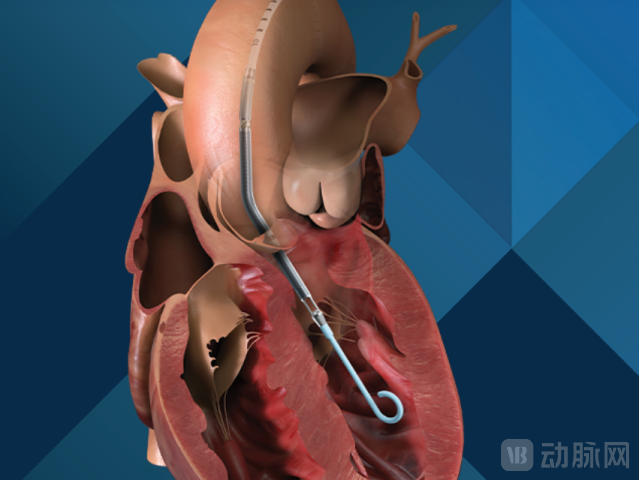
(Image source: Abiomed company official website)
In terms of clinical effects, the classic Impella system increases cardiac output by providing active forward blood flow; it directly reduces left ventricular pressure and load by aspirating blood from the left ventricle, decreases ventricular workload, and reduces myocardial oxygen consumption. Meanwhile, the increase in cardiac output and reduction in ventricular wall tension enhance coronary blood flow and improve myocardial perfusion.
According to the introduction,The safety and efficacy of the classic Impella system have been clinically validated, with over 230,000 cumulative applications to date, and the product has gained recognition from both clinicians and patients.As a result, Abiomed, the company that launched the Impella system, now has a market value exceeding tens of billions of dollars.
In 2014, Abiomed began its research and development.Impella ECP System with External Motor Routing. The product is designed toThe World's Smallest Interventional Cardiac Catheter Pump,The sheath and pump are only about 3 millimeters, with a peak flow rate greater than 3.5 liters per minute. At the same time, the Impella ECP system adopts an extracorporeal motor and a self-expanding pump head design to reduce trauma and bleeding risks.
According to the introduction, the working principle of the Impella ECP system is as follows: the impeller is placed in the left ventricle, and the motor is positioned outside the femoral artery (extracorporeal), with a flexible drive shaft connecting the power unit and the impeller. When the device is in operation, the catheter draws blood from the left ventricle into the aorta, increasing cardiac output.
After eight years of research and development, the Impella ECP system, which adopts an external motor design, has been granted the "Breakthrough Device" designation by the FDA. However, it is still in the research and development stage, and its specific effects remain to be clinically verified. Additionally, Abbott had previously developed an external motor product called HeartMate PHP. In 2021, Abbott discontinued the trial registration for this product due to the reduction in impeller speed at the end of the procedure, making the product unable to meet the needs of the patients it was intended to serve. Therefore, under the external motor approach, there is currently no mature interventional cardiac catheter pump available globally.
This shows that the intervention of motor-outside-route ventricular assist devices presents extremely high technical difficulties. For instance, such products demand a great deal from flexible drive shafts, requiring them to ensure energy transmission over long distances and through curved sections. These products also need to adopt foldable impellers to guarantee high flow support at low rotational speeds. Technologies like flexible drive shafts and foldable impellers present significant technical barriers.
In addition to the aforementioned products, CardiacAssist Inc. has developed a short-term extracorporeal ventricular assist pump: the TandemHeart system.
Unlike the Impella product, the TandemHeart system involves trans-septal puncture to place a catheter in the left atrium. Blood is then aspirated from the left atrium via a centrifugal pump and returned to the aorta. Clinically, the TandemHeart system reduces the load on the left ventricle by aspirating blood from the left atrium, while the return of blood to the artery achieves circulatory support.
In fact, the TandemHeart system is similar to ECMO. However, ECMO draws venous blood, which requires extracorporeal oxygenation before it can be returned to the artery; the TandemHeart system draws arterial blood from the left atrium and can directly return the blood to the artery. Therefore, it can be said to a certain extent that the TandemHeart system is a simplified version of ECMO.
Compared with the classic Impella products, the TandemHeart system requires application through atrial septal puncture, making it more operationally challenging. Postoperative management demands and anticoagulation requirements are also higher, with increased risks of complications and hemolysis.
OverallIABP has low operational difficulty and risk, but the additional flow per minute is relatively small; ECMO provides over 4.5 liters of flow support per minute and can be left in the patient’s body for several days or weeks; Impella products can provide 2.5-5 liters of flow per minute with a shorter duration of several days, and postoperative management requirements, anticoagulation needs, and complication risks are all lower; The TandemHeart system offers 3-5 liters of flow, but postoperative management requirements, anticoagulation needs, and complication risks are higher. (The Impella ECP system is not discussed due to lack of relevant data.)
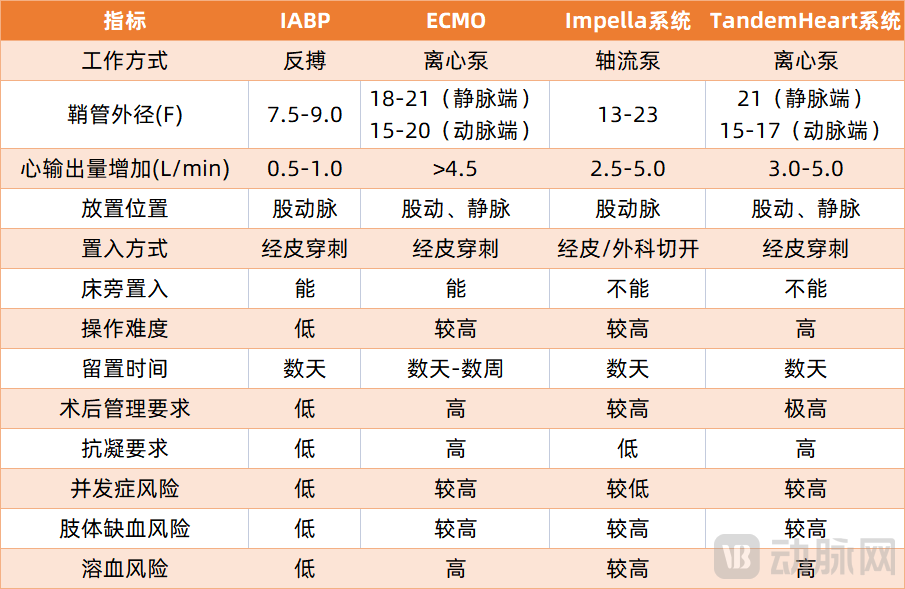
(Source: Collated from public information)
Interventional cardiac catheter pumps, as innovative devices for minimally invasive treatment of heart failure, have a market potential of approximately 100 billion yuan.
The huge market has not only attracted innovative companies such as Medtronic, HearHill, magAssist, Dinyuan Medical (Shengshi Technology), ForQaly Medical, and Xinhengrui Medical to establish a presence, but also drawn investments from well-known institutions like Sequoia China, Legend Capital, CDH VGC, Qianji Capital, Yahu Investment, TF Capital, Vivo Capital, CD Capital, and Lilly Asia Ventures.
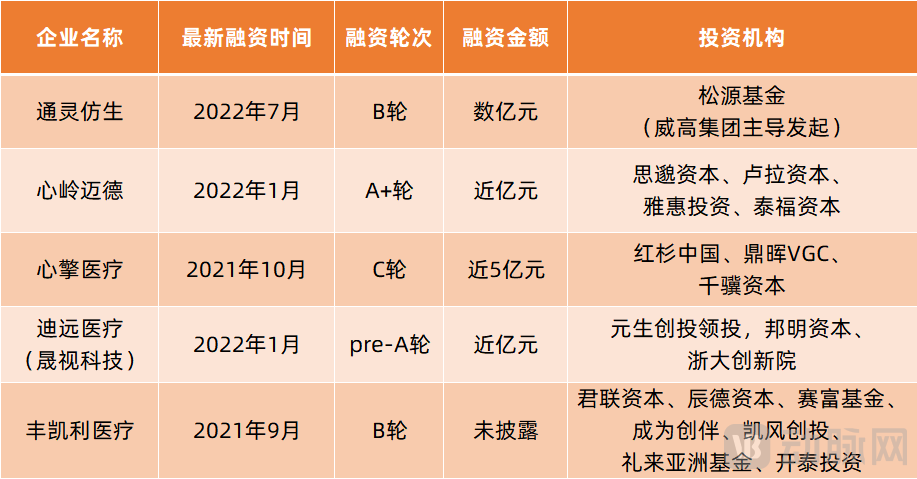
Currently, companies in the field of interventional cardiac catheter pumps are still in the early stages of development, with financing rounds mainly at Series A and Series B. However, the financing amounts within the field are generally high, such as magAssist's Series C financing of nearly 500 million yuan and HearHill's Series B financing of several hundred million yuan.
This is because the interventional cardiac catheter pump is a technology-intensive industry that requires a significant investment in research and development funds. At the same time, most domestic companies are still in the research and development stage, necessitating increased R&D investment to overcome technical challenges and master core technologies.
Fortunately, the capital market is very optimistic about the field of interventional cardiac catheter pumps, providing substantial financial support to companies in the industry. Chinese manufacturers such as Tongling Biomimetics, HearHill, magAssist, DiYuan Medical, ForQaly Medical, and Xinhengrui Medical are also promoting the progress of domestically produced interventional cardiac catheter pumps by increasing investment in research and development.
According to public information, among Chinese companies producing invasive cardiac catheter pumps, companies like Tongling Biomimetic and HearHill have adopted the classic, well-verified internal motor approach; while companies like magAssist and ForQaly Medical have opted for an innovative, yet-to-be clinically validated external motor approach.
Despite different technical routes, each company has made extremely rapid progress. For example, Tongling Biomimicry has completed animal experiments and type inspections and is about to conduct clinical trials; HearHill, magAssist, and DiYuan Medical have all successfully carried out animal experiments; the SynFlow3.0 independently developed by ForQaly Medical was first implanted on August 25, 2022, successfully assisting a high-risk complex PCI surgery; the D-OmniHeart independently developed by Xinhengrui Medical completed the first implantation in China on August 19, 2022, successfully treating a critically ill end-stage heart failure patient.
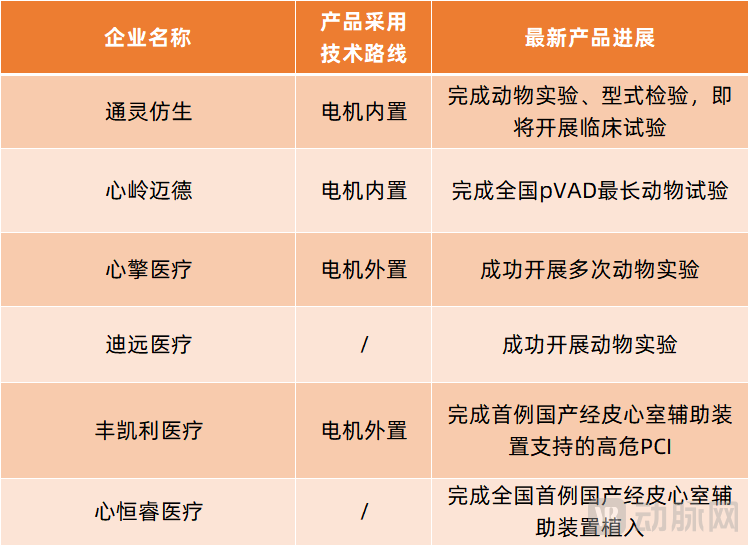
Based on the rapid progress of various companies, it is expected that China-produced interventional cardiac catheter pumps will be approved for application within three years.
In the field of interventional cardiac catheter pumps, whether it follows the route of built-in motors or external motors, the biggest obstacle to industry development is technological barriers.
For example, the most critical issue for the intravascular cardiac catheter pump based on the integrated motor technology route is the micro-motor technology. The micro-motor needs to be implanted into the patient’s body, which imposes extremely high requirements on size, power, and material selection.
The interventional cardiac catheter pump with an external motor technology route has no special requirements for the motor, but it needs to solve technical challenges such as a flexible drive shaft and a foldable impeller.
Flexible drive shafts need to ensure the efficiency of energy transmission over long distances and through curved sections; foldable impellers, on the other hand, must ensure that they can unfold within the body and operate stably when in a certain size.
In addition, each enterprise also needs to consider issues such as product structural design, risks of coagulation and hemolysis, risk of complications, and postoperative management requirements.
The development of medical devices is fraught with risks at every step, requiring companies to proceed with caution. In particular, as a Class III medical device, the requirements for the safety and reliability of interventional cardiac catheter pumps are even higher.
Despite the rapid product advancement and smooth R&D progress within the industry, there is still much work to be done and many challenges to overcome for invasive cardiac catheter pumps in transitioning from theory to practice, from prototype to product, and from animal experiments to clinical application.