World's First BCMA/CD3 Bispecific Antibody Teclistamab Approved: Can This 'Powerhouse Combo' Conquer the Billion-Dollar Myeloma Market?

Johnson & Johnson
Healthcare Product Manufacturers, Health Service Providers

Janssen Pharmaceuticals
Pharmaceutical R&D Developer

FDA
U.S. Food and Drug Administration
Recently, Janssen, a subsidiary of Johnson & Johnson, announced that its globally first BCMA/CD3 bispecific antibody teclistamab has been approved by the FDA for marketing, used for the treatment of relapsed or refractory multiple myeloma.
As of now, seven bispecific antibody drugs have been launched globally.
Teclistamab was approved for marketing by the EU on August 24, and the Phase III clinical study of teclistamab in China began in October last year.
Table 1 Globally Marketed Bispecific Antibody Drugs
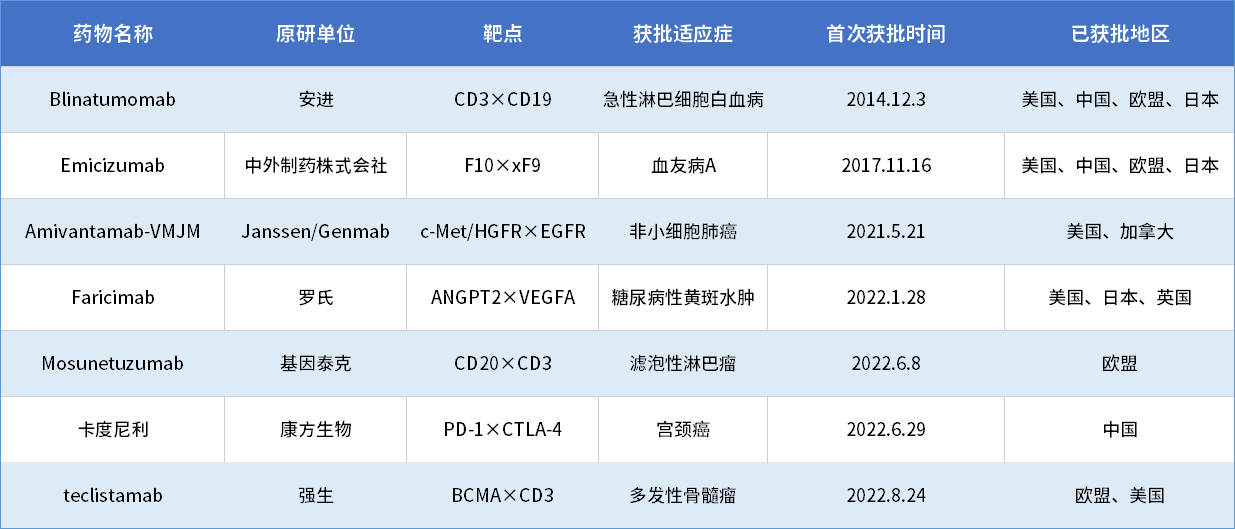
Source: Collation of publicly available online information
Currently, with the continuous acceleration of the approval and market entry process for bispecific antibody drugs, the global bispecific antibody market size is expected to rise rapidly, reaching USD 80.7 billion by 2030, with an average annual compound growth rate of 39.6% from 2022 to 2030!
Johnson & Johnson's BCMA/CD3 Bispecific Antibody Approved for Marketing, Another Addition to Bispecific Drugs: Can the "Powerful Duo" Capture a Billion-Dollar Market?
ORR Reaches 63%
TECVAYLI®, the brand name of Teclistamab, is a fully humanized bispecific antibody that simultaneously targets BCMA and the CD3 receptor on the surface of T cells.Can recruit CD3-positive T cells to the vicinity of myeloma cells expressing BCMA, thereby activating T cells to kill tumor cells.
Teclistamab was first granted the PRIME (Priority Medicines) designation by the European Medicines Agency (EMA), and on June 1, it was also awarded the Breakthrough Therapy Designation (BDT) by the FDA. Two months later, the teclistamab injection was included in the breakthrough therapy category by the NMPA for the treatment of adult patients with relapsed or refractory multiple myeloma who have received at least three prior lines of therapy. Its inclusion as a breakthrough therapy in both China and the United States highlights its significant efficacy in treating multiple myeloma.
The approval of Teclistamab is based on the positive results of the MajesTEC-1 study, an open-label, multicenter, Phase I/II clinical trial (Registration Numbers: NCT03145181, NCT04557098).Aim to evaluate the efficacy and safety of Teclistamab in patients with relapsed or refractory multiple myeloma.
The trial results were published in the top journal NEJM. The study enrolled a total of 165 patients who received weekly subcutaneous injections of Teclistamab (dose of 1.5 mg/kg, with step-up doses of 0.06 mg/kg and 0.3 mg/kg).
The results showed that the overall response rate (ORR) reached 63% (104/165).Moreover, 58.8% of patients achieved a very good partial response (VGPR) or better, and 39.4% of patients achieved a complete response (CR) or better.
The median duration of response was 18.4 months, the median progression-free survival was 11.3 months, and the median overall survival was 18.3 months. In terms of safety, the most common adverse events were cytokine release syndrome (CRS) (72%; 0.6% grade 3, no grade 4), neutropenia (71%; 64% grade 3 or 4), and anemia (55%; 37% grade 3 or 4).
BCMA+CD3, The Ultimate Combo?
BCMA is a member of the tumor necrosis factor superfamily, primarily expressed in malignant and normal plasma cells as well as some mature B cells, and not expressed in vital tissues. It is an effective target for treating multiple myeloma.
BCMA bispecific antibodies demonstrate both good efficacy and safety. CAR-T drugs targeting BCMA show significant efficacy in treating hematologic cancers, with ORR exceeding 90% for multiple drugs. However, they come with serious toxicity issues, including severe immune effector cell-associated neurotoxicity syndrome and CRS. ADC drugs, while less toxic, show a certain gap in therapeutic effects compared to CAR-T and bispecific antibodies. The efficacy and safety of BCMA bispecific antibodies lie between those of CAR-T and ADC drugs.
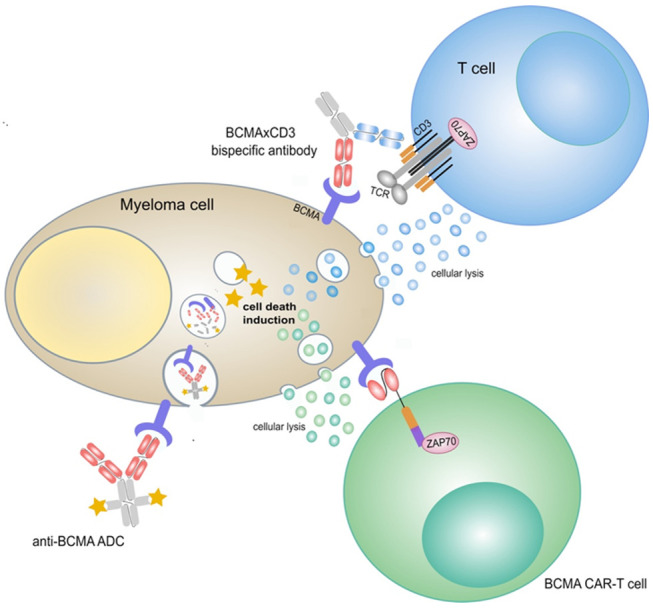
Figure 1 Schematic diagram of BCMA-targeted immunotherapy constructs
Source: Document 3
As early as the 1980s, the CD3 target had already entered the field of bispecific antibody development. The concept of T-cell redirection was first proposed in 1985, and after 30 years of research, the CD3 target gradually matured.
CD3 molecules are membrane antigens widely distributed on the surface of mature T cells. They combine with the T-cell antigen recognition receptor (TCR) to form a composite receptor molecule that activates T cells, enabling T-cell redirection.
From the already marketed bispecific antibody drugs, Amgen's Blinatumomab, Genentech's Mosunetuzumab, and the latest teclistamab all target CD3. Additionally, the rapidly progressing glofitamab and epcoritamab also target CD3, which has now become a major target for global bispecific antibody drug development.
According to data, there are a total of 229 bispecific antibodies targeting CD3 that are either marketed or under development globally, far surpassing the second-place target, PDL-1. The BCMA×CD3 target combination pipeline ranks second with 17 candidates, just behind the CD3×CD20 target combination. In China alone, there are 10 bispecific antibodies targeting the CD3×BCMA combination, most of which are in the early stages of clinical trials.
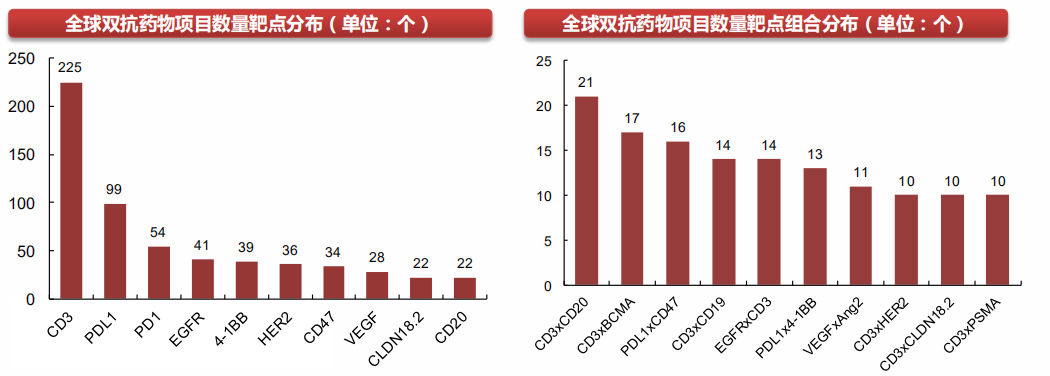
Figure 2 Global Distribution of Bispecific Antibody Targets and Combination Distribution
Source: Southwest Securities
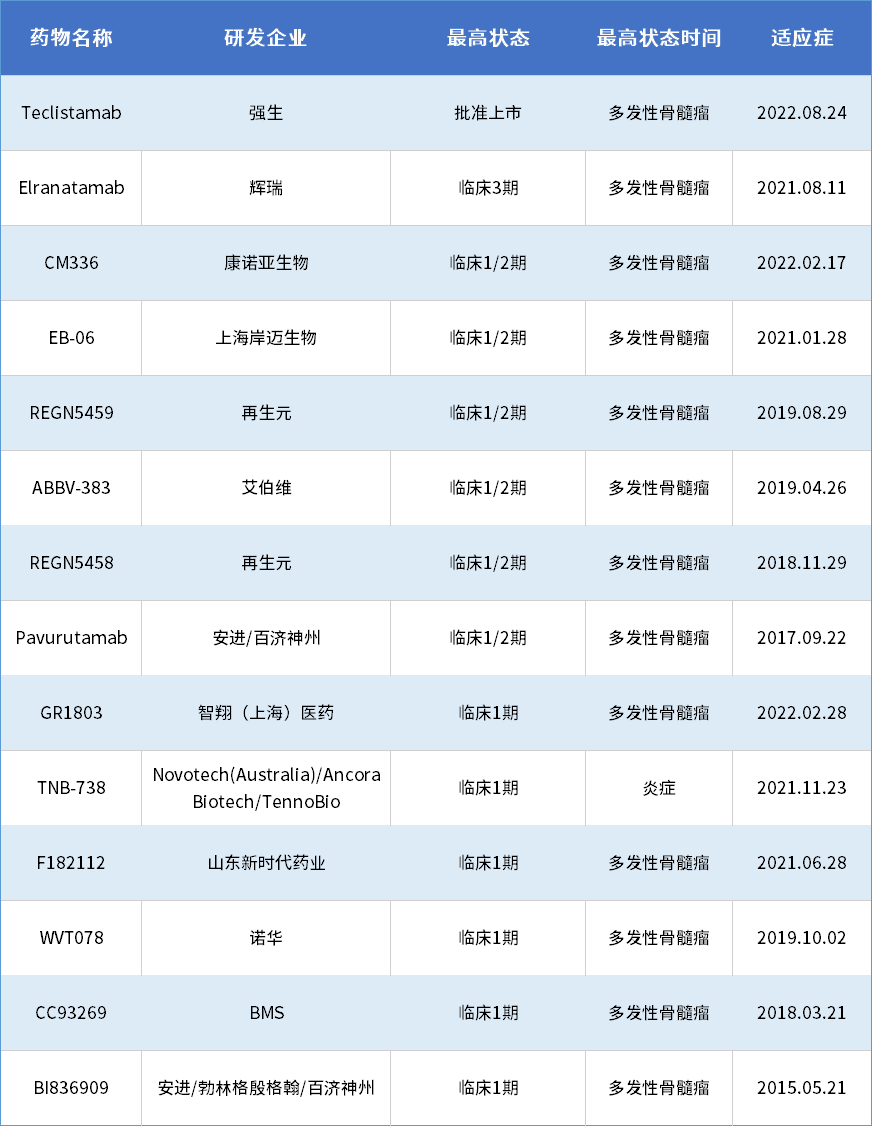
Pfizer, Regeneron, AbbVie, and Amgen are all actively involved in the BCMAxCD3 bispecific antibody field, with China's Connaught Bio and Shanghai EpimAb Biotherapeutics making rapid progress.
Table 2 BCMA/CD3 Bispecific Antibodies Entering Clinical Stage
Source: Online public information compilation
Currently, there are 14 BCMAxCD3 bispecific antibodies globally in clinical stages, with the majority used for treating multiple myeloma. The fastest-progressing among them is Pfizer's Elranatamab (PF-06863135).
Elranatamab is a bispecific antibody targeting BCMA and CD3 developed by Pfizer for the treatment of multiple myeloma. The binding affinity of Elranatamab for BCMA and CD3 has been optimized to enhance T-cell-mediated anti-myeloma activity. Subcutaneous injection allows for the use of higher doses compared to intravenous injection without increasing adverse events.
At the ASCO Annual Meeting in June this year, Pfizer announced the interim analysis data of the Phase 2 MagnetisMM-3 registrational trial of elranatamab for patients with relapsed/refractory multiple myeloma. As of March 23, 2022, the safety and efficacy of 94 patients who received elranatamab (patients received subcutaneous elranatamab 76 mg once weekly injection) were analyzed, with a median follow-up time of 3.71 months. Preliminary efficacy results showed that the objective response rate of elranatamab was 60.6%, and 89.5% of patients' objective responses were still ongoing without confirmed disease progression or death.
The most common treatment-emergent adverse events were anemia (43.6%), neutropenia (38.3%), thrombocytopenia (28.7%), lymphopenia (25.5%), and CRS (60.6%); additionally, 2.2% of patients experienced immune effector cell-associated neurotoxicity syndrome, all of which were grade 2 or lower.
How does Johnson & Johnson layout?
In the field of multiple myeloma, Johnson & Johnson also has the blockbuster product daratumumab, with global sales of $6.023 billion in 2021.
This year, Carvykti (Ciltacabtagene Autoleucel, BCMA CAR-T), a promising product, has been approved. Ciltacabtagene Autoleucel is a CAR-T therapy independently developed by Legend Biotech, a subsidiary of GenScript. In 2017, Legend Biotech reached a licensing agreement with Janssen to jointly develop and promote Ciltacabtagene Autoleucel. In February this year, Ciltacabtagene Autoleucel received FDA approval in the United States for the treatment of patients with relapsed/refractory multiple myeloma, becoming the first China-produced CAR-T cell therapy to receive FDA approval, achieving an impressive 98% ORR in MM patients.
According to the announcement released by GenScript Biotech, the sales of Cilta-cel in the third quarter were approximately 55 million US dollars, with a month-on-month increase of 129%.
In addition, Johnson & Johnson has a first-in-class CD3 bispecific antibody, Talquetamab (GPRC5D x CD3), which has shown very good efficacy in multiple myeloma.
As of now, four bispecific antibody drugs have been approved for marketing this year. Additionally, Roche's glofitamab and AbbVie's epcoritamab have submitted marketing applications and are expected to be approved for marketing soon.
References:
1. Johnson & Johnson's BCMA/CD3 bispecific antibody is proposed for inclusion in the breakthrough therapy designation.
2.The Agony of Choice—Where to Place the Wave of BCMA-Targeted Therapies in the Multiple Myeloma Treatment Puzzle in 2022 and Beyond.
3. Pfizer Announces Positive Interim Analysis from Phase 2 MagnetisMM-3 Registrational Trial of Elranatamab, a BCMA and CD3 Bispecific Antibody.
4. Overseas for Half a Year, Sales Reach 5.7 Billion: What is the Future of CAR-T Amidst Domestic Competition in China?
5. Southwest Securities and other publicly available information online, etc.

Editor: Dadasiva
Disclaimer: The views expressed in this article are solely those of the author and do not represent the position of Pharma Intelligence. We welcome exchanges and additional insights in the comment section; for reprints, please be sure to credit the author and source. If there are any issues regarding the content, copyright, or other aspects of the work, please leave a message on this platform, and we will remove it promptly.