

Gilead Presents Real-World Evidence Reinforcing the Use of Biktarvy® for the Treatment of People Living With HIV With a Range of Comorbidities

Gilead Sciences
Antiviral Drug Developer

Image Source: Shutterstock
October 25, 2022 /BioValleyBIOON/ -- Gilead Sciences recently announced at the 30th International Congress on Drug Therapy in HIV Infection (HIV Glasgow 2022) in 2022Three-in-One Combination New Drug Biktarvy (Chinese brand name: 必妥维®, generic name: 比克恩丙诺片, bictegravir 50mg/emtricitabine 200mg/tenofovir alafenamide 25mg, BIC/FTC/TAF)BICSTaR StudyReal-World Data (RWD):Confirmed that Biktarvy is a generally well-tolerated and effective treatment regimen, regardless of the HIV-infected individual's prior treatment history or comorbidity status.. In addition, from two Phase 3 studies (Study 1489, Study 1490)The latest 5-year data provides evidence of the long-term safety and efficacy of Biktarvy in HIV patients who switched from dolutegravir-based regimens to Biktarvy.
The 24-month follow-up analysis from the BICSTaR study provides new real-world data. The studyEvaluation of the Efficacy and Safety of Biktarvy in Clinical Practice Across 9 Countries. The analysis includesCOVID-19(COVID-19) during the pandemic, taking into account the age, ethnicity, gender, compliance, and advanced stage of the populationDiagnosis。Patients initiating Biktarvy achieved a high level of virologic suppression (HIV-1 RNA <50 copies/mL).。
Overall,97% (104/107) of treatment-naïve patients and 95% (497/521) of treatment-experienced patients achieved virologic suppression at 24 months of Biktarvy treatment (missing = exclusion analysis).No treatment-induced resistance was reported. The discontinuation rate (14% overall) was low, with few patients (7%) discontinuing due to drug-related adverse events (DRAE). The most common drug-related adverse events were weight changes (3%) and depression (1%). These data reinforce the safety and durability of Biktarvy in HIV-infected individuals with high comorbidities.
Dr. Benoit Trottier, Research Director and Physician at the Urbaine du Quartier Latin clinic in Montreal, Canada, commented: "These latest data demonstrate how innovations and improvements in HIV treatment regimens can help people living with HIV and their clinicians identify an HIV treatment plan that supports long-term care. Factors such as aging and comorbidities are critical components of discussions around long-term health. The BICSTaR study reinforces the real-world effectiveness of Biktarvy across a range of populations with comorbidities, with results consistent with evidence from randomized clinical trials of Biktarvy treatment."
Additional data from Studies 1489 and 1490 presented at the conference indicate,Biktarvy Shows High Efficacy and Sustained Safety in Treatment-Experienced Patients with Persistent High Resistance.These results come fromSwitched to open-label Biktarvy treatment for 96 weeks after receiving 144 weeks of blinded dolutegravir + 2 NRTI regimen.Patients.
At Week 240, more than 99% of patients achieved virologic suppression in Study 1489 (217/218; missing=excluded) and Study 1490 (232/234; missing=excluded).In addition, research shows that,During each visit within 240 weeks after switching to Biktarvy, efficacy was >96% (missing = excluded), indicating that Biktarvy can provide sustained virologic suppression for HIV patients, even after switching therapy.
Biktarvy was generally well-tolerated, with 0.4% (2/519) of patients in the switch regimen experiencing adverse reactions leading to drug discontinuation during the open-label extension phase across two studies. No treatment discontinuations due to renal causes occurred. The most common adverse events during the open-label extension phase were diarrhea (0.6%) and weight change (0.6%).
On October 14, 2022, the U.S. Food and DrugManagementBureau (FDA) approved the label change for Biktarvy, updating the prescribing information to include 144-week efficacy data and 240-week safety data in treatment-naïve HIV adults from studies 1489 and 1490.
Jared Baeten, Vice President of HIV Clinical Development at Gilead Sciences, stated: "As we strive to advance scientific innovation to help end the HIV epidemic, we are committed to a treatment research program that addresses the individual needs of all people living with HIV. Gilead’s ongoing person-centered research focuses on the evolving needs and preferences of people living with HIV. These latest data presented at this conference,"Demonstrated that the clinical application of innovative drugs like Biktarvy can help a wide range of HIV-infected individuals, regardless of their comorbidity burden."
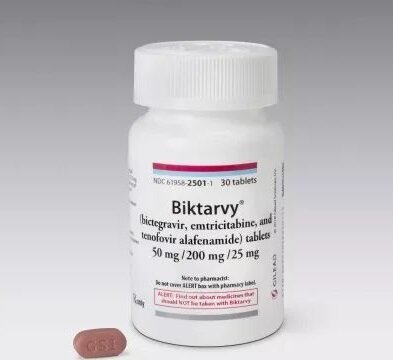
Biktarvy is a once-daily single-tablet regimen (STR) for the treatment of HIV-1 infection.This drug combines the potency of the novel integrase strand transfer inhibitor (INSTI) bictegravir (BIC) with the proven efficacy and safety of the marketed drug Descovy (emtricitabine 200 mg/tenofovir alafenamide 25 mg, FTC/TAF), which is a part of HIV clinical treatment.GuidelinesRecommended Dual-Efficacy Nucleoside Reverse Transcriptase Inhibitor (NRTI) Backbone Therapy. In Phase 3 clinical studies, Biktarvy achieved very high virologic suppression rates in both treatment-naïve patients and those who had achieved virologic suppression and switched treatment regimens, with no treatment-emergent resistance observed.
In the United States, Biktarvy (BIC/FTC/TAF, 50mg/200mg/25mg) was approved for marketing in February 2018. The current indications for this drug are: as a complete regimen for the treatment of HIV-1 infection in pediatric patients (weighing ≥25 kg) and adult patients who have no history of treatment failure and do not have known mutations associated with resistance to each component of Biktarvy. Specifically: (1) patients without antiretroviral treatment history; (2) patients who have achieved virologic suppression on a stable antiretroviral regimen, replacing their current antiretroviral regimen. It should be noted that the drug label for Biktarvy includes a black box warning about the risk of acute exacerbation of hepatitis B after treatment.
In October 2021, the U.S. FDA approved Biktarvy (BIC/FTC/TAF, 30mg/120mg/15mg, low-dose tablets) for HIV-1 infected pediatric patients weighing at least 14 kg to less than 25 kg who are virologically suppressed or initiating antiretroviral (ARV) treatment. Providing a single-tablet antiretroviral therapy for children weighing at least 14 kg represents an important milestone with the potential to save many lives. This approval expands the indications for Biktarvy to include younger children infected with HIV-1, which will help reduce disparities in accessing HIV treatment regimens between adult and pediatric populations.
In China, Biktarvy (Biktarvy®) was approved in Hong Kong in October 2018 and in mainland China in August 2019. Biktarvy® is indicated in China as a complete regimen for the treatment of humanImmunityAdults infected with Defective Virus Type 1 (HIV-1), and patients currently and previously without evidence of viral resistance to integrase inhibitors, emtricitabine, or tenofovir.(Bioon.com)
Source of the original text:Gilead Presents Real-World Evidence Reinforcing the Use of Biktarvy® for the Treatment of People Living With HIV With a Range of Comorbidities