

New Data Show Oral S1P Receptor Modulator Zeposia Achieves 86.1% Disease Relapse-Free Rate at One Year in Ulcerative Colitis Patients

Bristol-Myers Squibb
Biopharmaceutical and Nutritional Product R&D and Sales
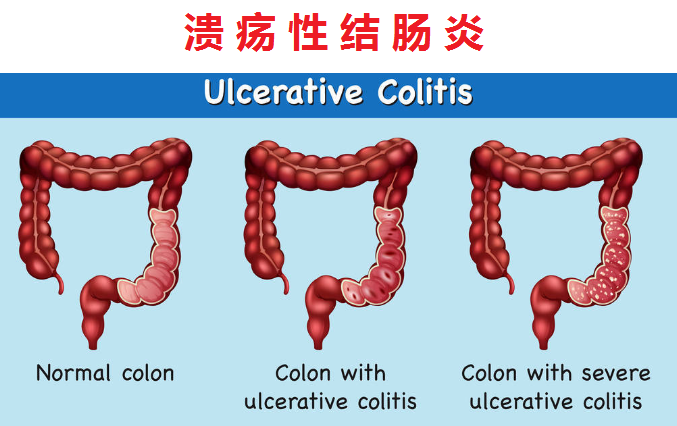
Image Source: Shutterstock
October 25, 2022 /BioValleyBIOON/ --Bristol-Myers Squibb (BMS) recently announced at the American College of Gastroenterology (ACG) Annual Scientific MeetingAnti-inflammatory Drug Zeposia (ozanimod) for the Treatment of Moderate to Severe ActiveUlcerative Colitis(UC)New post-hoc analysis data from the Phase 3 True North study (NCT02435992). The study evaluated the duration of response after one year of continuous Zeposia treatment and following treatment discontinuation.
Zeposia is an oral medication taken once daily. It is a sphingosine-1-phosphate (S1P) receptor modulator that selectively binds with high affinity to S1P subtypes 1 (S1P1) and 5 (S1P5).In the United States and the European Union, Zeposia has been approved for the treatment of multiple sclerosis (MS) andUlcerative Colitis(ulcerative colitis, UC). It is worth mentioning that,Zeposia is the first oral S1P receptor modulator approved for the treatment of UC.
The data released at the conference showed,At the end of the induction period (10 weeks), 86.1% of patients who achieved clinical response and remained on Zeposia treatment had no disease recurrence at Week 52 (Kaplan-Meier [KM] estimated 52-week disease-free rate: Zeposia/Zeposia, 86.1%; Zeposia/placebo, 62.6%).
Since temporary treatment interruptions may occur in clinical practice, these analyses evaluated the duration of response after treatment interruption. The results suggest thatIn patients who switched to placebo after achieving an initial clinical response with Zeposia, Zeposia maintained disease control for up to 8 weeks (KM estimated 8-week disease-free recurrence rate: Zeposia/Zeposia, 96.1%; Zeposia/placebo, 90.6%).
Other analyses presented at the meeting also indicate that,No additional safety signals were observed after 2 years of continuous Zeposia treatment.。
Bruce E. Sands, Director of the Division of Gastroenterology at the Mount Sinai Health System and Professor of Gastroenterology at the Icahn School of Medicine at Mount Sinai, stated:Understanding the duration of response after continuous Zeposia treatment is crucial, as it helps support clinical decision-making when considering a temporary suspension of UC treatment in clinical practice.. These analyses reaffirm that Zeposia treatment effectively helps patients maintain disease remission and suggestMost patients remained relapse-free within 8 weeks after treatment discontinuation.。”
BMSImmunityJonathan Sadeh, Senior Vice President of Learning and Fibrosis Development, stated: "The data presented at the ACG meeting indicate that,Zeposia can prevent disease recurrence after one year of continuous treatment and maintain disease control even with temporary interruption."These analyses reinforce the established profile of Zeposia in patients with moderate to severe active UC and underscore our long-term commitment to the gastroenterology community."
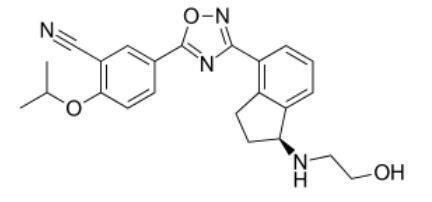
Molecular Structure of Ozanimod (Source: Wikipedia)
Ulcerative colitis (UC) is a chronic inflammatory bowel disease (IBD), characterized by an abnormal immune response, prolonged duration, and long-term inflammation and ulcers in the mucosa (lining) of the large intestine (colon). Symptoms include bloody stools, severe diarrhea, and frequent abdominal pain, which usually develop over time rather than suddenly. UC significantly impacts patients' health-related...Quality of LifeIt has a significant impact, including physical function, social and emotional well-being, and work capacity. Many patients respond inadequately or not at all to currently available therapies. It is estimated that 12.6 million people worldwide suffer from IBD.
Zeposia is an oral sphingosine-1-phosphate (S1P) receptor modulator that binds with high affinity selectively to S1P subtype 1 (S1P1) and 5 (S1P5). Zeposia reduces the ability of lymphocytes to migrate from lymphoid tissues, decreasing the number of circulating lymphocytes in peripheral blood. The mechanism by which Zeposia exerts its therapeutic effects in ulcerative colitis (UC) is not fully understood but may involve the reduction of lymphocyte migration to the gastrointestinal tract.
Currently, Bristol-Myers Squibb is continuing to evaluate the long-term efficacy and safety of Zeposia in treating moderate to severe active ulcerative colitis (UC) in the True North open-label extension (OLE) trial. The company is also assessing Zeposia for the treatment of moderate to severe active Crohn's disease (CD) in the Phase 3 YELLOWSTONE clinical trial program.
In the United States, in March 2020, Zeposia was approved.FDAApproval: For the treatment of adult relapsing multiple sclerosis (RMS), including clinically isolated syndrome, relapsing-remitting disease, and active secondary progressive disease. In May 2021, Zeposia received FDA approval: for the treatment of adults with moderately to severely active ulcerative colitis (UC).
In Europe, in May 2020, Zeposia received approval from the European Commission (EC) for the treatment of adults with relapsing-remitting multiple sclerosis (RRMS) with active disease (defined as: having clinical or imaging features). In November 2021, Zeposia received EC approval for the treatment of adult patients with moderate to severe active ulcerative colitis (UC) who have had an inadequate response, lost response, or were intolerant to conventional therapy or biologics. (Bioon.com)