

Merck Highlights Evobrutinib: First CNS-Penetrant Covalent BTK Inhibitor Demonstrating Sustained Clinical Benefit in RMS Over 3.5 Years

Merck Group
Pharmaceutical R&D Developer
Image Source: Shutterstock
October 31, 2022 /BioValleyBIOON/ -- Merck KGaA recently presented the results of a clinical study at the 38th Congress of the European Committee for Treatment and Research in Multiple Sclerosis (ECTRIMS 2022), showing data:In patients with relapsing multiple sclerosis (RMS) treated with the highly selective oral central nervous system (CNS) penetrant covalent BTK inhibitor evobrutinib for over 3.5 years, the annualized relapse rate (ARR) remained low and the Expanded Disability Status Scale (EDSS) scores were stable.In addition, during the open-label extension (OLE) of the Phase 2 clinical trial,The number of T1 gadolinium-enhanced (Gd+) lesions and the volume of T2 lesions remain very low.. These dataDemonstrates the long-term positive benefits of evobrutinib as a potential best-in-class therapy for RMS patients.。
Multiple Sclerosis (MS) is a chronic inflammatory disease of the central nervous system and the most common non-traumatic, disabling neurological disease among young adults. It is estimated that approximately 2.8 million people worldwide are living with MS. While symptoms may vary, the most common symptoms of MS include blurred vision, numbness or tingling in the limbs, and problems with strength and coordination. The relapsing-remitting type is the most common form of multiple sclerosis.
Evobrutinib is an oral, highly selective, and CNS-penetrantImmunityModulator, by inhibiting Bruton's tyrosine kinase (BTK) signaling in B cells and microglia, addresses both peripheral and central drivers of inflammation, with the potential to become a safe and effective treatment option for RMS. Evobrutinib’s dual approach may offer better control over the silent disease progression between relapses in RMS patients while also effectively managing relapses.
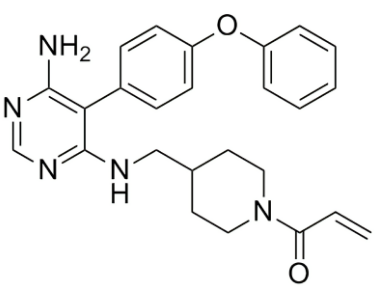
Chemical Structure of Evobrutinib (Source: bjbalb.com)
The open-label extension (OLE) part of the Phase II clinical trial evaluated the long-term treatment effects of evobrutinib on ARR, EDSS scores, and several magnetic resonance imaging (MRI) outcomes in RMS patients:Throughout the OLE, patients initially taking 75mg orally twice daily maintained an ARR at a low level of 0.13. Additionally, patients switching from 75mg once daily to 75mg twice daily during the OLE saw their ARR decrease from 0.19 to 0.09.
Overall, throughout the research process,The mean EDSS score and MRI lesion activity remained low and stable.. These data points further reinforce the previous observation that the maximum BTK occupancy achieved over the entire dosing interval with twice-daily dosing is associated with a greater reduction in ARR by evobrutinib.
New long-term data from the OLE part of the Phase II clinical trial revealedCurrent reduction in neurofilament light chain (NfL) levels, a key biomarker that can predict future brain volume loss and disease progression.。Compared with the double-blind period (DBP) and OLE baseline, the level of NfL in patients' blood continued to decrease.Compared with the early dose response shown by placebo/evobrutinib 25mg once daily, the 75mg twice-daily dose significantly reduced NfL levels starting from week 12 (DBP). The reduction in NfL levels provides evidence that evobrutinib can reduce neuronal damage in RMS patients.
The meeting also announced the vaccination during the 2nd phase OLE period.COVID-19(COVID-19) vaccine (n=24) in a post-hoc analysis, showing96% of RMS patients treated with evobrutinib (75mg, twice daily) were able to mount an antibody response after receiving two doses of mRNA COVID-19 vaccine, similar to untreated RMS patients and healthy subjects.. The antibody response increased in both seronegative and seropositive patients, indicating that the responses to neoantigens and memory antigens remained unchanged.This is the first time that a BTK inhibitor has shown this in RMS, and these findings are consistent with the regulation of B-cell function, offering a potential alternative to B-cell depletion approaches.
Jan Klatt, Senior Vice President and Head of Neuroscience and Immunology Development at Merck KGaA, stated: "This is the first time that a BTK inhibitor has demonstrated sustained efficacy over three and a half years in RMS. Combined with our previously published data showing a reduction in slowly expanding lesion (SEL) volume, effects on microglia, and decreased levels of neurofilaments (a marker of nerve damage), we believe evobrutinib has the potential to offer best-in-class efficacy for patients with RMS." (Bioon.com)
Source of Original Text:Merck Highlights New Data for Evobrutinib, First BTKi to Demonstrate Sustained Clinical Benefit for People with RMS through Three and a Half Years of Treatment