

Over 20 Investment Firms Pour Into the Discreet Yet Rapidly Growing Neuromodulation Sector

Rishena Medical
Implantable Medical Device R&D and Production Manufacturer
Pins
Neuromodulation Product R&D, Production, and Sales

Leadinno Medical Valley
Developer of Medical Devices and Consumables in the Field of Pain and Neuromodulation

NeuroEchos
Functional Neurosurgical Medical Device and Intelligent Diagnosis Service Provider

SceneRay
Innovative High-Tech Medical Device R&D and Manufacturer

NeurPlus
Precision EEG Measurement and Intelligent Wearable Medical Device Developer

GenLight
Innovative Medical Device Solution Provider

SNEURO MEDICAL
Developer and Manufacturer of Implantable Neurostimulation and Brain-Computer Interface Products

MEDKINETIC
Provider of Implantable or Wearable Neurostimulation Treatment Solutions
The cold wind seems not to have blown towards the neuromodulation track.
Against the backdrop of this year's capital winter, this track continues to be favored by investment institutions, showing resilience. Not only has it attracted well-known firms such as Sequoia Capital, Hillhouse Ventures, and Qiming Venture Partners, but it has also frequently seen investors increasing their investment quotas after completing initial investments.
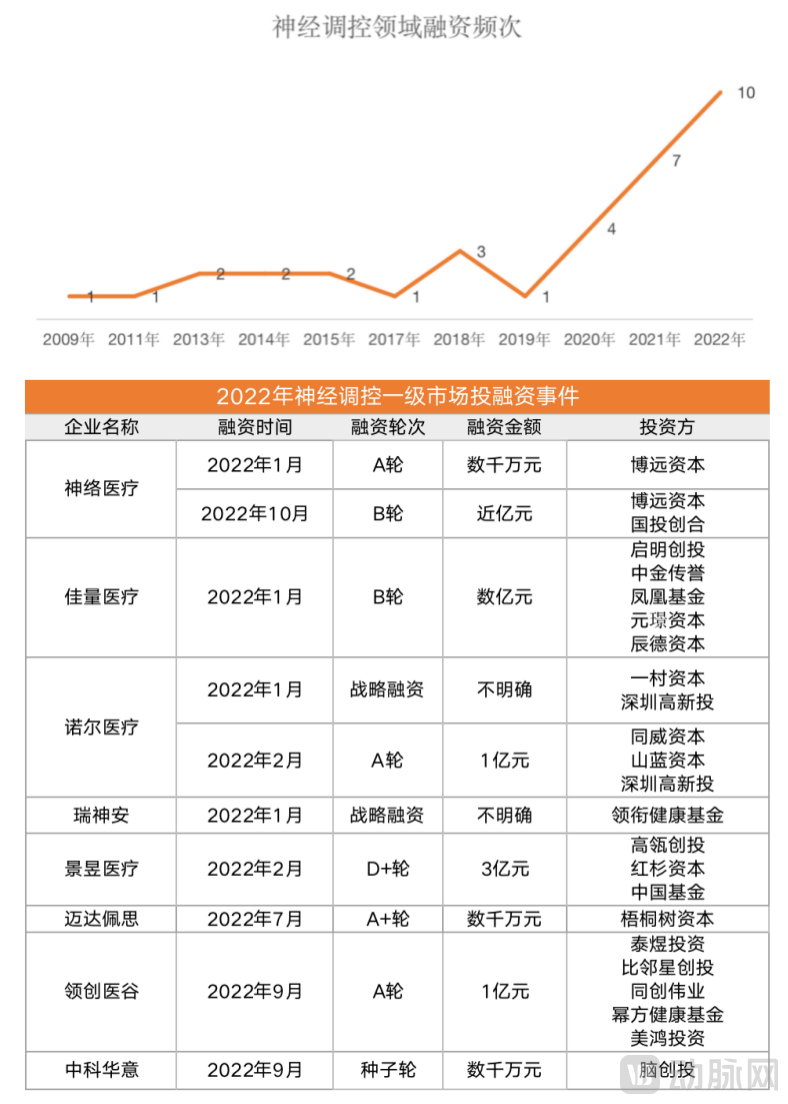
In terms of financing frequency, the neuromodulation track has followed a "J-shaped" curve.From January this year to now, there have been 10 financing events in the primary market of this field, with a total financing amount exceeding 700 million RMB, which is at its historical high.
Note: In this statistics, the financing amount of undisclosed events is counted as zero; financing amounts described as "tens of millions" or "over ten million" are counted as 10 million; financing amounts described as "hundreds of millions," "over hundred million," or "exceeding hundred million" are counted as 100 million.
Even so, the neuromodulation track still maintains a relatively low-key and secretive posture. Not only is it difficult to find detailed information related to neuromodulation in public materials, but there are also few voices heard from investors and track participants in the market. They seem to have reached a tacit agreement — to stay submerged.
"Neuromodulation is a very valuable field. But you need to understand, it requires deep exploration. Since I started tracking the neuromodulation field in 2019, I have rarely seen industry information. I've also talked to many practitioners, and they are really low-key, all focusing on solid technical work. Ninety percent of the practitioners prefer to wait until the product is made before disclosing information." During an internal exchange with colleagues, he said so.
A practitioner with over a decade of experience in the neuromodulation industry told VCBeat,Neuromodulation has broad development space for different indications in the future.However, precisely because of this, practitioners need to devote more thought to how this technology can truly meet clinical needs. It involves relatively complex technologies, including neurosurgical stereotactic materials, medical imaging technology, neuroelectrophysiological techniques, and computer technology. For the Chinese market, which is still in its early stages of development, practitioners must invest more time in overcoming technical challenges.
In the field of neuromodulation, there seems to always be a thin layer of mist hovering over it. If it weren't for the frequent financing events in the neuromodulation sector this year, we might have overlooked this gem.
So, what is the current state of development in the field of neuromodulation in China? Where are the gaps between domestic and overseas companies? How do Europe and the U.S. conduct research in this area and monetize it? VCBeat has explored these questions by analyzing the industry's status both domestically and internationally, hoping to find answers.
Since the nervous system controls the activities of various important organs in the human body, the application scope of neuromodulation technology is very broad. Its applications mainly include Deep Brain Stimulation (DBS), Spinal Cord Stimulation (SCS), Vagus Nerve Stimulation (VNS), etc. The diseases treated cover numerous fields such as neurological injuries, motor dysfunction, chronic pain, spasticity, epilepsy, gastrointestinal and bladder dysfunction, peripheral vascular disease, cardiac ischemia, audio-visual disorders, and psychosomatic diseases (such as depression, obsessive-compulsive disorder, and Tourette syndrome).
Although the traditional field of neuromodulation only includes neuromodulation of the central nervous system, such as deep brain stimulation and spinal cord stimulation, with new initiatives for innovative neuroscience technologies and the establishment of regional neuromodulation centers, research and application in neuromodulation are rapidly advancing. In the past few decades, hundreds of thousands of patients have benefited from this treatment technology, and new areas of neuromodulation applications continue to be discovered. According to relevant statistics, the global market size of neuromodulation reached 5.8 billion US dollars in 2020.
At the same time,The diseases treated by this technology have expanded from movement disorders such as Parkinson's disease, dystonia, and essential tremor to psychiatric conditions like Tourette syndrome, obsessive-compulsive disorder, and anorexia nervosa, as well as pain and epilepsy.Chinese-made deep brain stimulators and Chinese-made vagus nerve stimulators have also been successively introduced. Their main technical indicators have reached international standards, and some technical indicators are already at a leading level. The development of technology has further reduced treatment costs, benefiting patients.
Compared with the thriving basic research and new clinical applications abroad, the application scope of neuromodulation technology in China is limited, lacking basic research and pioneering applications. This might have been the impression left to the outside world in the field of neuromodulation for a long time. However, during the process of reviewing the industry, we discovered...Neuromodulation: A Potential Track with Broad Future Market Development Space and a Favorable, Non-Crowded Competitive Landscape. Since the introduction of Deep Brain Stimulation (DBS) systems in China in 1998, neuromodulation has achieved significant development in the country.
Reviewing its development. For a long time in the past, the localization of DBS hardware equipment, the establishment of multidisciplinary teams, the lack of unified and comprehensive guidelines and standardized procedures during the implementation of DBS, as well as the high cost of overseas products, have all become significant factors restricting the development of the domestic market.
From the establishment of the Chinese branch of the International Neuromodulation Society (INS) in 2007 to the founding of the Neuroregulation Professional Committee of the Chinese Medical Doctor Association in Beijing on October 30, 2010, a platform for academic exchange in the field of neuroregulation has been provided for professionals both in China and internationally. A national neuroregulation conference is held annually. The development of the neuroregulation market in China has gradually gained momentum, and with the passage of time and the efforts of practitioners, the aforementioned challenges have been overcome one by one.
After market research, we found that the breakthrough in solving the "bottleneck" problem has unleashed broader development opportunities in the neuromodulation market and created more room for domestically produced alternatives. After all, compared to the global market, China's neuromodulation market is still in its early stages of development, with a competitive landscape that remains favorable and not overcrowded.Neuromodulation technology has vast potential for development in terms of indications. Its targeted, reversible, long-lasting, and adjustable treatment characteristics also create room for the subsequent growth of the market scale of this technology.
A review of the list of innovative medical devices approved by the National Medical Products Administration in recent years reveals that there are already 17 neuro-modulation related technologies in China, demonstrating significant potential for domestic substitution and innovative development.
At the same time, theseBreakthroughs are no longer limited to traditional technologies such as deep brain stimulation (DBS), spinal cord stimulation (SCS), and vagus nerve stimulation (VNS). Innovative breakthroughs have also been achieved around sacral nerve modulation systems (SNM). In addition, neuro-modulation companies, including Sceneray and Pins, have made numerous innovative iterations on traditional technologies.
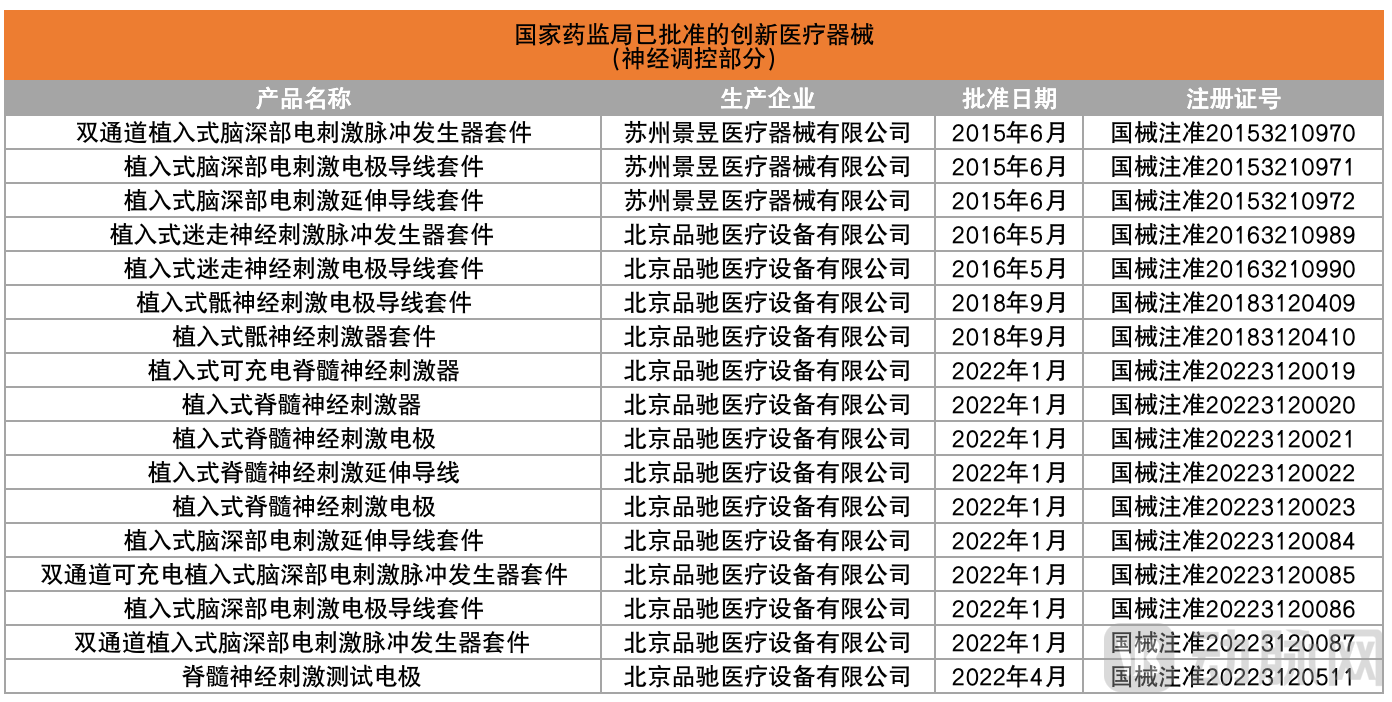
Among the list of innovative medical devices approved by the National Medical Products Administration (NMPA), products from Sceneray and Pins account for the majority. Sceneray specializes in the field of Deep Brain Stimulation (DBS) therapy and, based on this, explores cutting-edge technologies such as invasive brain-computer interfaces for medical use. Pins focuses on the research, production, and sales of a series of neuromodulation products, including brain pacemakers, vagus nerve stimulators, spinal cord stimulators, and sacral nerve stimulators. The products developed can treat functional neurological disorders such as Parkinson's disease, epilepsy, pain, and urinary incontinence.
The dual-channel implantable deep brain stimulation pulse generator kit, developed by Sceneray, is the earliest neuro-modulation innovative medical device to receive approval from the National Medical Products Administration.
This implantable pulse generator, containing multiple control programs, is a component of the brain pacemaker system. It delivers controllable electrical pulse signals to specific areas of the brain through electrode leads and extension leads. Additionally, this pulse generator is a dual-channel implantable deep brain stimulation pulse generator. Based on the design of Sceneray's stimulation chip, the application of this product enables independent frequency programming for the left and right brain. Moreover, each channel’s stimulation parameters—such as polarity, voltage/current, pulse width, and frequency—can be independently programmed. The device offers two stimulation modes: constant voltage and constant current, along with the ability to store and select up to 13 sets of stimulation programs, providing refined control options for patients experiencing periodic symptom fluctuations. This product has been representative and innovative both at the time of its release and in the present day.
At the beginning of this year, Pins Medical's "Implantable Spinal Cord Stimulator" (SCS) was officially approved for marketing.According to the official website of Pins Medical, this product series is China's first spinal cord nerve stimulation product series with independent intellectual property rights. The product adopts a new generation of comprehensive spinal cord nerve stimulation technology system, which not only reduces product costs but also enables automatic invocation of preset stimulation parameters based on the patient’s posture, allowing patients to achieve satisfactory therapeutic effects. Additionally, it features remote control capabilities, reducing the number of hospital visits required by patients. The breakthrough of this product signifies that China has broken foreign monopolies in this field and filled the technological gap.
In addition to Sceneray and Pins, other manufacturers in China have launched explorations in the fields of gastrointestinal diseases, bladder dysfunction, diabetes, pain, nervous system injuries, and motor function disorders.
For example, MEDKINETIC is developing innovative applications of neuromodulation therapy in inflammatory bowel disease, diabetes, and functional gastrointestinal disorders. Some of its products are currently applying for FDA approval for market launch, while others are about to enter clinical trials. Leadinno Medical Valley focuses on the research and development of medical devices and consumables in the field of pain and neuromodulation, innovatively developing wireless implantable neuromodulation products. The closed-loop neurostimulator (EpilcureTM) developed by Genlight Neurotech fills the technical gap in the domestic treatment of neurological diseases in China. Based on its self-developed LITT (magnetic resonance-guided laser ablation), it achieves a closed-loop treatment that combines electrical stimulation and minimally invasive ablation for neurological disorders.
In addition, Zhilian Brain Control has developed high-intelligence electronic control products, such as the vagus nerve electrical stimulation regulation software system and the multi-channel transcranial electrical stimulation control system. NeuroEchos has formed a three-dimensional R&D pipeline layout with auditory reconstruction products as the core, and visual reconstruction products and neuroregulation stimulators as auxiliary. SNEURO MEDICAL, which recently received nearly 100 million yuan in B-round financing, has mastered core technologies such as electrodes, chips, wireless charging, algorithms, positioning and fixation, cloud management, and big data. It has independently built a neuroregulation platform to advance the development of neuroregulation products through different technical pathways and for various application scenarios.
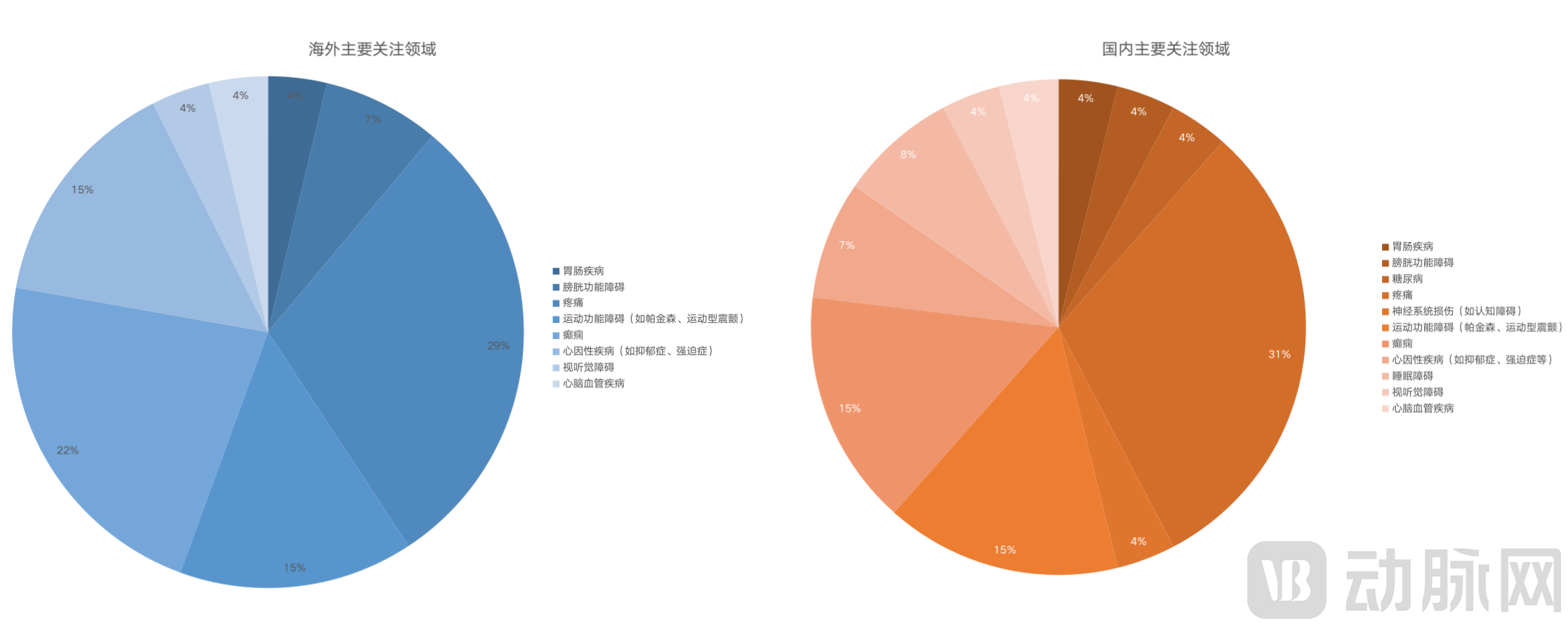
Although the field of neuromodulation has a favorable and not overly crowded competitive landscape, with only 17 companies in China (due to time and data volume constraints, the information we have collected may not be comprehensive; if you are also a startup in this field, feel free to contact VCBeat) involved in the research and development of neuromodulation products, the actual scope of related product applications already covers gastrointestinal diseases, bladder dysfunction, diabetes, pain, nervous system injuries, motor function disorders, epilepsy, psychosomatic diseases, sleep disorders, audiovisual impairments, and cardiovascular and cerebrovascular diseases.After comparing with 18 overseas companies, we found that the application scope of domestic products is even broader than that of foreign companies.
The similarity lies in the fact that pain remains the most mature application area for neuromodulation products, while motor dysfunction and epilepsy are mainstream scenarios in neuromodulation applications.
CD Capital believes after in-depth communication with multiple companies: "The increase in the future neuromodulation market size is inevitable, and its potential will be reflected in the indications and engineering technology.In addition to relatively mature fields such as Parkinson's disease, epilepsy, and pain, we seeInternationally, there are also active efforts to explore new indications, such as rheumatoid arthritis, hypertension, spinal cord injury, stroke rehabilitation, etc., and their clinical progress is worth noting.At the same time,Neuromodulation technology still has significant room for improvement in engineering, and even the long-standing DBS is continuously iterating. As a platform technology, the refinement of electrodes and the miniaturization of IPGs are common pursuit goals for invasive modulation devices.”
Overseas, not only giants like Medtronic, Abbott, and Boston Scientific are laying out in the neuromodulation market. Judging from the financing rounds, the overseas market is also nearing maturity.Among the 18 enterprises counted by VCBeat, 10 have successfully gone public. However, no companies in China have yet been listed, indicating significant room for development.
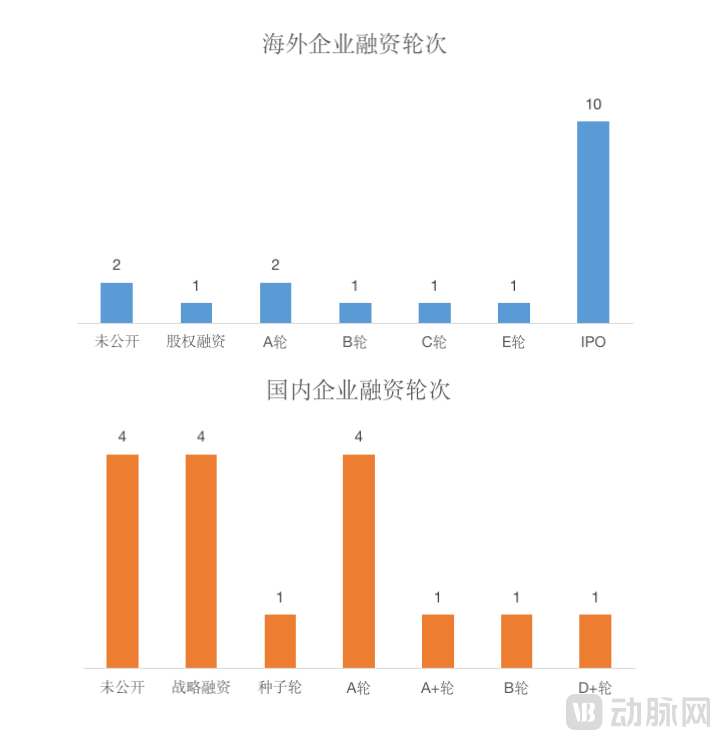
At the same timeIn 2022, the field of neuromodulation overseas remained highly active, showing a "rapid and aggressive" momentum.DespiteMedtronic, Abbott, Boston Scientific and other companies have rich product pipelines, but these giants still focus on the field of neuromodulation as one of their development priorities, making many layouts and strategic adjustments.
This year, Axonics announced the expansion of its intellectual property portfolio for sacral neuromodulation. Medtronic successively announced the appointment of Dr. Ashwini Sharan as the Chief Medical Officer of the Neuromodulation division and the approval by the National Medical Products Administration (NMPA) of its deep brain stimulation device with sensing technology, Percept™ PC. Abbott announced that the FDA granted breakthrough device designation to its DBS system for treatment-resistant depression.The overseas market in the field of neuromodulation is full of good news, and its relatively mature development model can serve as a reference for domestic companies in the early stages of development.
This time, VCBeat has conducted a brief review of the products and business models of 18 overseas neuromodulation companies that were statistically recorded, and provided a key summary in chart form.
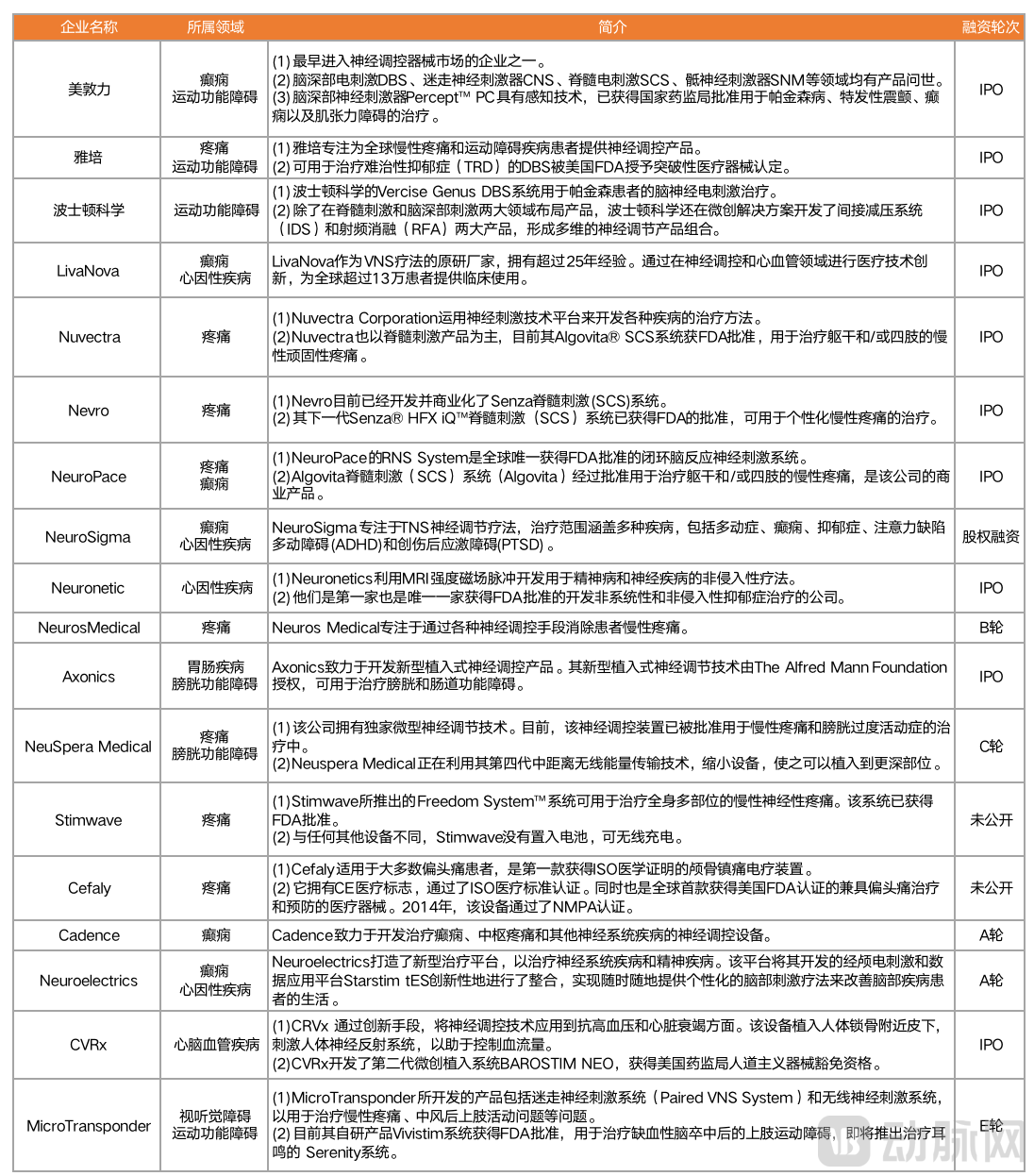
Among them, Medtronic, as one of the earliest companies to enter the neuromodulation device market, has the most comprehensive layout. It has launched products in fields such as Deep Brain Stimulation (DBS), Central Nervous System Stimulator (CNS), Spinal Cord Stimulation (SCS), and Sacral Nerve Modulation (SNM). Focusing on traditional deep brain stimulators, Medtronic has iteratively upgraded its devices. Its self-developed Percept™ PC is equipped with sensing technology, which continuously captures and records patients' brain signals, providing clinicians with more intuitive and objective data.
Currently, the product has not only obtained the CE mark and FDA approval in the United States, but also received approval from the National Medical Products Administration this year for the treatment of Parkinson's disease, essential tremor, epilepsy, and dystonia. It is evident that Medtronic not only holds an advantageous position in the comprehensive layout of neuromodulation products but also leads to a certain extent in rapidly achieving product commercialization.
Abbott focuses on patients with chronic pain and movement disorders, offering neuromodulation products. Building on its existing foundation, this year Abbott has also found a new breakthrough by developing DBS for treatment-resistant depression (TRD), which has been granted Breakthrough Device Designation by the U.S. FDA. Boston Scientific has product portfolios in both spinal cord stimulation and deep brain stimulation, and has also developed two key products in minimally invasive solutions: the Indirect Decompression System (IDS) and Radiofrequency Ablation (RFA), forming a multi-dimensional neuromodulation product suite. LivaNova, with its deep research into VNS therapy, is driving medical technology innovation in the fields of neuromodulation and cardiovascular care, providing clinical use for more than 130,000 patients globally.
LivaNova, with its in-depth research on VNS therapy, has been innovating medical technology in the fields of neuromodulation and cardiovascular care, providing clinical use for more than 130,000 patients worldwide.
Nevro's products are innovative, as the company applies artificial intelligence technology to spinal cord stimulation (SCS) systems to provide personalized pain optimization and relief solutions. NeuroPace's RNS System is the world’s only FDA-approved closed-loop brain-responsive neurostimulation system.
The innovation of NeuroSigma's products lies in their application of TNS neuromodulation therapy to treat epilepsy, as well as psychogenic conditions such as ADHD, depression, attention deficit hyperactivity disorder (ADHD), and post-traumatic stress disorder (PTSD). Although Neuronetics' neuromodulation products also target psychogenic conditions, they differ from NeuroSigma by utilizing MRI-strength magnetic field pulses to achieve non-invasive therapies for psychiatric and neurological disorders. Neuronetics is also the only company that has received FDA approval for developing non-systemic and non-invasive treatments for depression.
NeuSpera Medical's products reflect the trend and value of miniaturization in neuromodulation devices. NeuSpera Medical is committed to pushing the limits of miniaturized neuromodulation equipment, possessing exclusive micro-neuromodulation technology. Moreover, NeuSpera Medical continues to focus on miniaturization, utilizing its fourth-generation mid-range wireless energy transmission technology to reduce device size, enabling deeper implantation for the treatment of chronic pain and overactive bladder, achieving precise neuromodulation.
Neuroelectrics innovatively integrates transcranial electrical stimulation with the data application platform Starstim tES, enabling personalized brain stimulation therapy to be provided anytime and anywhere to improve the lives of patients with brain disorders and optimize treatment solutions for neurological and psychiatric conditions.
CVRx's innovation lies in the company's application of neuromodulation technology to combat hypertension and heart failure. The device is implanted subcutaneously near the collarbone, stimulating the body's neural reflex system to help control blood flow. Currently, CVRx's second-generation minimally invasive implant system, BAROSTIM NEO, has received humanitarian device exemption from the U.S. Food and Drug Administration.
Among the innovative technologies applied in the field of neuromodulation by overseas companies, we can still observeThe mainstream development trends in the current field of medical devices are miniaturization, refinement, and digitization. The application of artificial intelligence technology in the field of neuromodulation may also be inevitable in the future.
As SNEURO MEDICAL founder Wang Shoudong said, nerve damage is almost irreversible.Under the trend of population aging, the field of neuromodulation is bound to derive greater development opportunities. With the advancement of future research, diabetes, anorexia, and rare diseases, among others, may become application areas for neuromodulation products.Although from a product design perspective, our current neuromodulation devices are about the size of a matchbox,In the future, miniaturization will remain a major direction apart from the expansion of application fields, as it can make more users accept this invasive device and turn it into a more common treatment method.
Through the analysis of overseas enterprises' products and development models, we have discoveredContinuously improving the corresponding product layout while rapidly advancing the commercialization logic of products is a development model. However, apart from exploring new indications, continuously iterating on traditional or single technologies is one of the mainstream models for the development of overseas enterprises.After all, developing new indications means greater difficulty and more investment, andContinuous technological iteration in a specific field can create more irreplaceable advantages for enterprises, establishing a leading position in a single domain.
Breakthroughs in innovative research cannot be achieved without basic research.In addition to the industry's development, basic research on neuromodulation in China has been initiated with great enthusiasm and achieved numerous breakthroughs.
At the beginning of this year, VCBeat conducted an interview with Yang Fan from Shenzhen Institutes of Advanced Technology. During the interview, we learned that the research team led by Yang Fan from the Brain Cognition and Brain Disease Institute of Shenzhen Institutes of Advanced Technology, Chinese Academy of Sciences, and Shenzhen-Hong Kong Institute of Brain Science had published their latest research findings in Nature Communications, titled "An optogenetic approach for regulating human parathyroid hormone secretion." The team applied optogenetic technology to regulate the secretion of Parathyroid Hormone (PTH), achieving precise rhythmic regulation of PTH secretion to intervene in bone loss caused by secondary hyperparathyroidism.
This study not only effectively expands the application of optogenetic technology in the fields of bone and endocrine research but also brings innovative developments to neuroscience. Apart from the research conducted by Yang Fan's team, progress in other neural modulation-related studies in China is still advancing. According to incomplete statistics from VCBeat, teams such as Xiao Lei's group from Fudan University and Pan Yufeng's team from Southeast University have made breakthrough research in neural modulation, aiming to unravel the layers of mystery surrounding the nervous system.
As we delve deeper into the field of neuromodulation, the fog gradually clears. We see the value demonstrated by neuromodulation technology under the relatively mature development models of overseas enterprises. We observe the vast market potential in the field of neuromodulation driven by the trend of aging. More importantly, we witness the increasingly clear figures of entrepreneurs and researchers, as well as their dedicated efforts and contributions to exploring neuromodulation.
When the ark exploring the vast ocean of brain science sets sail, we have every reason to believe that the future of the neuromodulation market in China will certainly produce giants like Medtronic, Abbott, Boston Scientific, and Axonics.
References:
《Neuromodulation Technology and Applications》