
Home Ultra-Rare Disease Drug Eculizumab Debuts at CIIE, Set for China Launch Four Years After Approval

Ultra-Rare Disease Drug Eculizumab Debuts at CIIE, Set for China Launch Four Years After Approval

Nov 06, 2022 16:20 CST Updated 16:20
AstraZeneca

Biopharmaceutical Manufacturer

Image Source: Visual China

Reporter |Huang Hua

Editor |Xie Xin

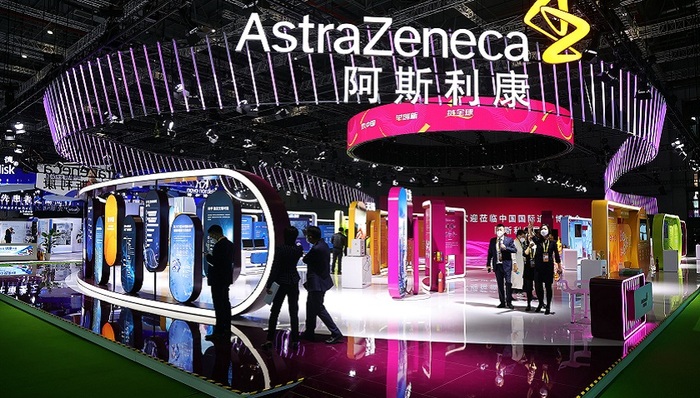
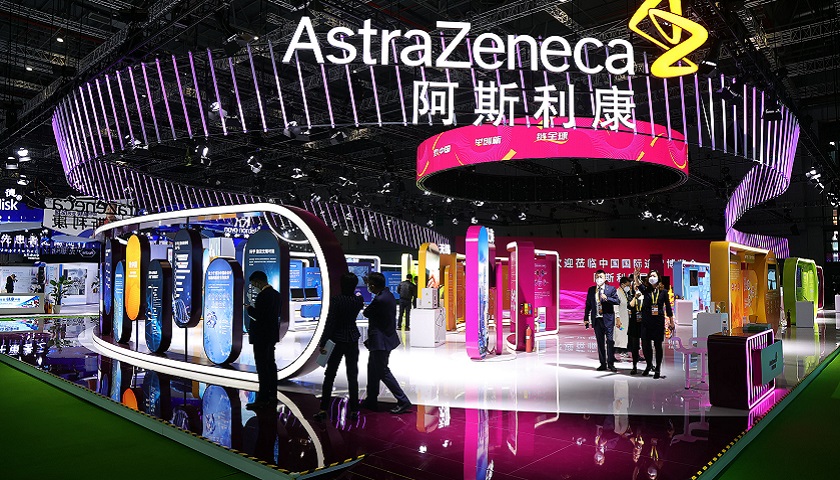
On November 5th, during the first day of the 5th China International Import Expo (referred to as "CIIE"), the multinational pharmaceutical company AstraZeneca exhibited its first product in the field of rare diseases in China, Eculizumab Injection (English name: Eculizumab Injection, trade name: Soliris).

In addition, AstraZeneca also announced further deepened cooperation with Qingdao, Shandong, a city at the forefront of rare disease protection in China, to support Qingdao in becoming a pioneering hub for rare disease diagnosis and treatment innovation in China.

Eculizumab is the first rare disease drug introduced by AstraZeneca in China. It is a recombinant humanized monoclonal antibody targeting complement C5. In late 2020, AstraZeneca acquired Alexion Pharmaceuticals, a well-known rare disease drug company, for $39 billion, and Eculizumab is one of Alexion's core products. Alexion's most notable achievement in the pharmaceutical field was pioneering the development of complement inhibitor drugs.

At the time of acquisition, eculizumab was Alexion Pharmaceuticals' star product and one of the world's best-selling rare disease drugs. Its global sales reached $3.946 billion in 2019 and $4.064 billion in 2020. To date, it has been approved globally for four rare disease indications: paroxysmal nocturnal hemoglobinuria (PNH) in adults and children, atypical hemolytic uremic syndrome (aHUS), anti-AchR antibody-positive generalized myasthenia gravis (gMG), and neuromyelitis optica spectrum disorder (NMOSD) positive for anti-aquaporin-4 (AQP4) antibodies.

In China, although eculizumab was approved by the National Medical Products Administration back in 2018 for the treatment of paroxysmal nocturnal hemoglobinuria (PNH) and atypical hemolytic uremic syndrome (aHUS) in both adults and children—two ultra-rare disease indications—it has, for various reasons, yet to be officially launched domestically.
Although Eculizumab has been approved in China for two ultra-rare diseases covered by the country’s first national list of rare diseases, the inclusion of such high-cost drugs for rare diseases into the national medical insurance system still faces challenges. According to previous estimates, the annual treatment cost for the two indications approved in China exceeds 4 million yuan. However, with AstraZeneca, which is familiar with the Chinese market, now taking over, the future of Eculizumab in China seems to be turning around. Its appearance at the CIIE also suggests that the official launch of this drug in China is imminent.

It is reported that AstraZeneca is also actively exploring the possibilities of various drug payment models. In June this year, AstraZeneca officially signed a cooperation memorandum with the Qingdao Municipal Government. Currently, Eculizumab has been included in the rare disease drug list of Shandong Province's customized commercial medical insurance.

On November 5, AstraZeneca announced another collaboration with Qingdao at the CIIE. Although the details of the collaboration have not been disclosed yet, it was revealed that AstraZeneca and Qingdao will continue to focus on rare diseases moving forward. The collaboration will revolve around regional headquarters, innovation centers, innovation parks, and industrial funds—key areas the company has consistently leveraged in China in recent years. The focus will be on addressing issues related to the introduction of innovative drugs, the establishment of standardized diagnosis and treatment systems for rare diseases, and the creation of an innovative ecosystem.

Currently, apart from Qingdao in Shandong, AstraZeneca is also exploring cooperation on the construction of a multi-level security system for rare diseases with other provincial cities in China. For instance, AstraZeneca has signed a strategic cooperation agreement with the Boao Lecheng International Medical Tourism Pilot Zone Administration in Hainan for the early adoption and pilot implementation of innovative drugs for rare diseases.

Moreover, regarding the subsequent pipeline layout, Leon Wang, Executive Vice President of AstraZeneca PLC and President of International Business & China, stated at the CIIE that AstraZeneca's rare disease drug research and development has been deployed across six major disease areas: hematology, nephrology, central nervous system, metabolism, cardiovascular, and ophthalmology. In the future, multiple new drugs involving both complement and non-complement systems will be continuously introduced in China, gradually achieving synchronized R&D with the rest of the world. The company will also actively support the establishment of collaborative networks for diagnosis and treatment as well as the standardized system for rare disease diagnosis and treatment in China.

Image Source: Visual China

Reporter |Huang Hua

Editor |Xie Xin

On November 5th, during the first day of the 5th China International Import Expo (referred to as "CIIE"), the multinational pharmaceutical company AstraZeneca exhibited its first product in the field of rare diseases in China, Eculizumab Injection (English name: Eculizumab Injection, trade name: Soliris).

In addition, AstraZeneca also announced further deepened cooperation with Qingdao, Shandong, a city at the forefront of rare disease protection in China, to support Qingdao in becoming a pioneering hub for rare disease diagnosis and treatment innovation in China.

Eculizumab is the first rare disease drug introduced by AstraZeneca in China. It is a recombinant humanized monoclonal antibody targeting complement C5. In late 2020, AstraZeneca acquired Alexion Pharmaceuticals, a well-known rare disease drug company, for $39 billion. Eculizumab is Alexion's core product, and Alexion's most significant achievement in the pharmaceutical field was pioneering the development of complement inhibitor drugs.

At the time of acquisition, eculizumab was Alexion Pharmaceuticals' star product and also one of the world's best-selling rare disease drugs. Its global sales reached $3.946 billion in 2019 and $4.064 billion in 2020. To date, it has been approved globally for four rare disease indications: paroxysmal nocturnal hemoglobinuria (PNH) in adults and children, atypical hemolytic uremic syndrome (aHUS), anti-AchR antibody-positive generalized myasthenia gravis (gMG), and neuromyelitis optica spectrum disorder (NMOSD) positive for anti-aquaporin-4 (AQP4) antibodies.

In China, although eculizumab was approved by the National Medical Products Administration back in 2018 for the treatment of paroxysmal nocturnal hemoglobinuria (PNH) and atypical hemolytic uremic syndrome (aHUS) in adults and children—two ultra-rare disease indications—it has not been officially launched in the country for various reasons.

Although Eculizumab has been approved in China for two ultra-rare diseases that are both covered by the country's first national list of rare diseases, the difficulty of including such high-cost orphan drugs in China's national medical insurance system still exists, as is the case with most high-value rare disease drugs. According to previous estimates, the annual treatment costs for the two indications approved in China for Eculizumab exceed 4 million yuan. Therefore, with AstraZeneca, which is familiar with the Chinese market, taking over, the future of Eculizumab in China seems to be turning a corner. Its appearance at the CIIE also indicates that the official launch of this drug in China is imminent.

It is reported that AstraZeneca is also actively exploring the possibilities of various drug payment models. In June this year, AstraZeneca officially signed a cooperation memorandum with the Qingdao Municipal Government. Currently, Eculizumab has been included in the rare disease drug list of Shandong Province's customized commercial medical insurance.

On November 5, AstraZeneca announced another cooperation agreement with Qingdao at the CIIE. Although the details of the cooperation have not been clarified yet, it was revealed that AstraZeneca and Qingdao will continue to focus on rare diseases in the future. They will further break new ground by leveraging the company's commonly-used strategies in China in recent years: regional headquarters, innovation centers, innovation parks, and industrial funds. The main areas of focus will be the introduction of innovative drugs, the establishment of standardized diagnosis and treatment systems for rare diseases, and the creation of an innovative ecosystem.

Currently, apart from Qingdao in Shandong, AstraZeneca is also exploring cooperation on the construction of a multi-level security system for rare diseases with other provincial cities in China. For instance, AstraZeneca has signed a strategic cooperation agreement with the Boao Lecheng International Medical Tourism Pilot Zone Administration in Hainan for the early adoption and pilot implementation of innovative drugs for rare diseases.

Moreover, regarding the subsequent pipeline layout, Leon Wang, Executive Vice President of AstraZeneca PLC and President of International Business & China, stated at the CIIE that AstraZeneca's rare disease drug research and development has been deployed in six major disease areas: hematology, nephrology, central nervous system, metabolism, cardiovascular, and ophthalmology. In the future, multiple new drugs involving complement and non-complement systems will be continuously introduced in China, gradually achieving synchronized R&D with the rest of the world. The company will also actively support the establishment of collaborative networks for diagnosis and treatment and the standardized system for rare disease care in China.