

Takeda China Unveils Comprehensive Lung Cancer Solutions at CIIE, Featuring Innovative Therapies for Rare Targets

Takeda
Biopharmaceutical Manufacturer
Continuous Focus on Rare Lung Cancer Targets, Multiple Levels of Care Build a Health Defense for Patients
ShanghaiNovember 6, 2022PR Newswire -- The fifth China International Import Expo (hereinafter referred to as "CIIE") recently opened grandly in Shanghai. During the exhibition, Takeda China, together with experts in the field of oncology in China, patient organizations, and industry partners, jointly held a lung cancer special release event titled "Special Care for the Lungs, Together for a New Life." Based on the current status of diagnosis and treatment and actual needs of lung cancer patients in China, the event discussed comprehensive solutions to assist in the diagnosis and treatment of lung cancer in China. At this press conference, Takeda China announced its support for patient organizations and industry players to establish "EGFR ex20ins Lung Cancer Disease Care Day," calling for increased care and attention from all sectors of society towards patients with EGFR ex20ins mutations in lung cancer. Meanwhile, Takeda China will support the Non-Small Cell Lung Cancer Committee of the Chinese Society of Clinical Oncology (CSCO) and the China Pharmaceutical Education Association in launching the "Precision Diagnosis and Treatment of Rare Targets in Lung Cancer" project. It will also initiate the company's first digital therapeutics project for lung cancer, aiming to integrate superior resources in the field of lung cancer diagnosis and treatment so that continuous care, standardized diagnosis and treatment, and follow-up support can build multiple health defenses for patients, comprehensively improving the quality of life for lung cancer patients.
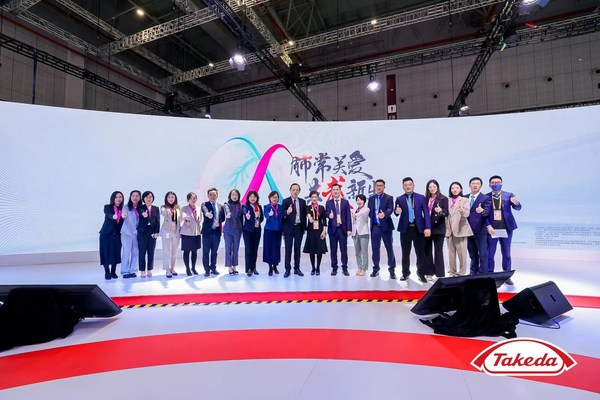
Accelerating the Introduction of Innovative Treatment Options, Patients with Rare Target Lung Cancer Welcome New Hope for Treatment
In recent years, with the rapid development of medical research, innovative drugs and treatment options have emerged one after another, significantly improving the overall survival time and quality of life for lung cancer patients in China. However, currently, there are still limitations in clinical treatment options for rare target mutations in lung cancer. For instance, patients with anaplastic lymphoma kinase (ALK) fusion positivity often face the issue of brain metastasis, with about 55% of ALK-positive advanced non-small cell lung cancer patients experiencing brain metastasis.[1],[2],[3]; while the relatively rare EGFR exon 20 insertion mutation in epidermal growth factor receptor (EGFR) mutations still lacks targeted therapeutic drugs in China. The existing EGFR-TKIs cannot improve survival benefits, and patients are in urgent need of effective innovative treatment methods.[4] 。
During this year's CIIE, Takeda showcased two innovative drugs targeting rare mutations in lung cancer, providing novel treatment options for some rare targets in the field of lung cancer, which are expected to meet the significant unmet needs of these patients. Among them, the innovative treatment drug Brigatinib Tablets for ALK-positive advanced non-small cell lung cancer patients has been commercially launched in China this August. Clinical trial data shows that Brigatinib can reduce the risk of disease progression or death by 75% in patients with baseline brain metastases, and the four-year survival rate of patients is as high as 71%.[5]; and in ALK-positive advanced non-small cell lung cancer, the first-line complete tumor response rate across the entire population reached 24%, significantly improving patients' quality of life (HR=0.69, P=0.047). Another drug, Mobocertinib Succinate (mobocertinib), is the world's first...[6]An oral targeted therapy specifically designed for EGFR exon 20 insertion mutation-positive non-small cell lung cancer (NSCLC) patients, with clinical data showing a median OS of 20.2 months.[7]Currently, Mobocertinib Succinate has been officially accepted by the Center for Drug Evaluation (CDE) of the National Medical Products Administration (NMPA) in China and has been approved for inclusion in the priority review and approval process. It will bring new hope to Chinese patients with NSCLC harboring EGFR exon 20 insertion mutations.
Promote the Popularization of Precision Diagnosis and Treatment Concepts, and Enhance the Overall Level of Diagnosis and Treatment for Rare Lung Cancer Targets
In recent years, the continuous updating and iteration of targeted drugs for malignant tumors have brought more precise treatment options to patients with rare target lung cancer. However, there is still insufficient awareness among clinicians regarding rare targets, leading to challenges in accurate testing, the use of targeted drugs, and prognosis assurance.
While accelerating the introduction of innovative products, Takeda is also committed to promoting the application and popularization of precision diagnosis and treatment for lung cancer. On the day of the event, Takeda China joined hands with experts in the field of oncology in China to announceEstablish the first in ChinaEGFR ex20ins Lung Cancer Disease Awareness Day, with disease education activities held on the 20th of each month. These are accompanied by media campaigns targeting doctors, aiming to raise awareness among more lung cancer patients and doctors about this rare target. It calls for attention and care from all sectors of society toward patients with EGFR exon 20 insertion mutation lung cancer, encouraging them to face the disease and its challenges bravely. At the same time, Takeda announced its support for two authoritative organizations: the Non-Small Cell Lung Cancer Committee of the Chinese Society of Clinical Oncology (CSCO) and the Chinese Medicine Education Association, in launching"Precision Diagnosis and Treatment of Rare Targets in Lung Cancer"The project, through a series of online thematic lecture live streams, cross-hospital exchange activities, etc., builds a platform for standardized diagnosis and treatment center hospitals to learn and communicate, cultivating professional skills of grassroots medical staff; and establishes precision diagnosis and treatment centers for rare lung cancer targets in cooperative hospitals across China, forming regional alliances for the diagnosis and treatment of rare lung cancer targets, thereby accumulating and promoting the experience in diagnosing and treating rare lung cancer targets, and comprehensively enhancing the level of precision diagnosis and treatment of lung cancer in China.
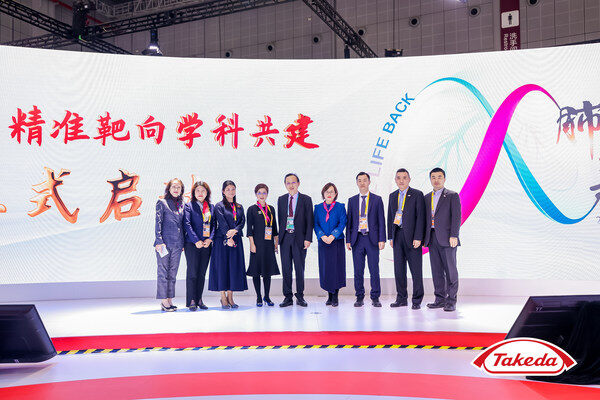

Professor Cai-Cun Zhou, Director of the Oncology Department at Shanghai Pulmonary Hospital, Tongji University, stated:"Lung cancer is the number one cancer in China."[8], the patient population is vast, and the number of patients with rare target mutations is also substantial. The unmet clinical needs of these patients urgently require full attention. It is hoped that in the future, more clinicians can use the platform of the lung cancer precision diagnosis and treatment project to break disciplinary boundaries, strengthen exchange and cooperation, and enhance awareness and capabilities in standardized, precise, and individualized diagnosis and treatment, jointly promoting the improvement of diagnosis and treatment levels for rare targets in lung cancer in China, and helping more lung cancer patients achieve overall survival benefits.

Innovative Layout of Digital Therapeutics: Comprehensive Protection of Survival Benefits for Lung Cancer Patients
Subsequent patient support is an important part of the entire diagnosis and treatment process for lung cancer patients. However, there is currently a lack of effective measures for home-based medication management and symptom management among lung cancer patients in China. Digital Therapeutics breaks through the limitations of traditional drug treatments and disease management by providing evidence-based and personalized medication management for lung cancer patients through simple operations and intelligent back-end analysis. Takeda's Lung Cancer Digital Therapeutics is a "customized" accompanying management tool specifically designed for two innovative targeted drugs, Brigatinib and Mobocertinib, offering a digital medication management platform tailored for ALK-positive and EGFR exon 20 insertion mutation NSCLC patients. This is one of the cutting-edge explorations in the field of digital oncology treatment, aiming to help lung cancer patients enhance their self-management awareness and capabilities, improve patient compliance, and thereby assist patients in improving their quality of life and maximizing survival benefits.
During this year's CIIE, Takeda China, together with Professor Zhao Jun from Peking University Cancer Hospital and a member of the CSCO Intelligent Healthcare Committee & Project Leader at LinkDoc Technology, announcedTakeda Lung Cancer Digital Therapy ProjectOfficially launched.Professor Zhao Jun said:"At present, digital therapeutics are widely used in chronic disease management internationally, and the current treatment path for lung cancer is moving towards a 'chronic disease transformation.' Takeda's lung cancer digital therapy can visually present patients' medication data, symptom monitoring and management, as well as patient quality of life. With the support of big data and algorithms, it continues to upgrade and iterate, truly realizing chronic disease management for lung cancer and helping more lung cancer patients live longer and better."

The oncology field is one of Takeda's core global therapeutic areas. Takeda focuses on leading the development of innovative treatment solutions in oncology, accelerating the realization of outstanding innovations, and developing novel therapeutic strategies for underserved cancer patient populations. Thanks to the powerful radiating and spillover effects of the CIIE (China International Import Expo), the approval and market launch speed of Takeda's innovative drugs and breakthrough therapies in China has continuously set new records. Against the backdrop of China’s innovative environment and opportunities, this year Takeda Global announced the official implementation of the "Broaden China" strategy. The headquarters will allocate key investments and full support to fully tap the potential of China as the world’s second-largest pharmaceuticals market. Adhering to the philosophy of "patient-first," in the future, Takeda will collaborate with multiple parties to enhance cancer diagnosis and treatment standards in China, actively contributing to the goal of improving the overall five-year survival rate for cancer as part of the "Healthy China 2030" initiative.
Statement:
1. This article aims to convey cutting-edge pharmaceutical information and does not constitute a recommendation or promotion of any drug or treatment plan.
2. If you want to learn more about disease knowledge or drug and treatment-related information, please consult a healthcare professional.
About Takeda Pharmaceutical Company Limited
Takeda Pharmaceutical Company Limited (Tokyo Stock Exchange Stock Code: 4502)(New York Stock Exchange ticker symbol: TAK) is a global, value-based, R&D-driven biopharmaceutical company headquartered in Japan. Takeda is committed to translating scientific research into highly innovative medicines, safeguarding patients' healthy lives and promising futures. Takeda focuses on drug development in four therapeutic areas: oncology, gastroenterology, neuroscience, and rare diseases, with dedicated investments in blood products and vaccines. We consistently concentrate on the development of highly innovative drugs, creating a robust and diversified pipeline by pioneering new treatment solutions and strengthening our collaborative R&D capabilities, ultimately improving people's lives. Our employees, spread across approximately 80 countries and regions, work hand-in-hand with local healthcare partners to bring health benefits to patients worldwide.
Takeda entered China in 1994. The headquarters of Takeda China is located in Shanghai, and its main business centers in mainland China are located in cities and regions such as Beijing, Shanghai, Tianjin, Guangzhou, and the Hong Kong Special Administrative Region. The company has offices in major cities across China and currently employs over 2,000 people in China. With the development of China’s economy and the continuous growth in demand for healthcare, China has become one of Takeda's most important emerging markets globally.
For more information, please visithttps://www.takeda.com
Forward-Looking Statements
This manuscript and any materials distributed in connection with it may contain forward-looking statements, views, or opinions related to Takeda's future business, future condition, and operational performance, including Takeda’s estimates, forecasts, targets, and plans. Forward-looking statements often, but not exclusively, include terms such as "aims," "plans," "believes," "hopes," "continues," "expects," "targets," "intends," "ensures," "will," "may," "should," "would," "might," "anticipates," "estimates," "forecasts," or similar expressions or their negative forms.
The forward-looking statements contained in this document are based solely on the estimates and assumptions of Takeda as of the date of release. Such forward-looking statements are not guarantees of future performance by Takeda or its management and involve known and unknown risks, uncertainties, and other factors, including but not limited to: economic conditions surrounding Takeda’s global business, including the macroeconomic environment in Japan and the United States; competitive pressures and developments; changes in applicable laws and regulations; success or failure of product development programs; decisions by regulatory authorities and the timing thereof; fluctuations in interest and currency exchange rates; claims or concerns regarding the safety or efficacy of marketed products or pipeline candidates; the timing and impact of post-merger integration efforts with acquired companies; and the ability to divest assets that are not core to Takeda’s operations and the timing of any such divestment, all of which could cause Takeda's actual results, performance, achievements, or financial position to differ materially from any future results, performance, achievements, or financial position expressed or implied by such forward-looking statements.
For more information on the above and other factors that may affect Takeda's results, performance, achievements, or financial condition, please refer to "Item 3. Key Information—D. Risk Factors" in Takeda’s latest Annual Report on Form 20-F filed with the U.S. Securities and Exchange Commission and other reports, available on Takeda's website.https://www.takeda.com/investors/reports/sec-filings/Orwww.sec.govTakeda's future results, performance achievements, or financial position may differ materially from the content explicitly or implicitly conveyed in forward-looking statements. Individuals who receive this press release should not place undue reliance on any forward-looking statements. Takeda has no obligation to update any forward-looking statements in this press release or any other forward-looking statements that the company may issue, unless required by law or securities trading rules. Historical performance is not indicative of future performance, and Takeda's performance mentioned in this press release does not represent, nor is it an estimate, prediction, or projection of Takeda's future performance.Speculation.
[1] Johung KL, et al. J Clin Oncol 2016;34:123–129.
[2] Descourt R, et al. Lung Cancer 2019;136:109–114. Huber RM, et al. J Thorac Oncol 2020;15:404–415.D'Antonio C, et al. Ther Adv Med Oncol 2014;6:101–114.
[3] Liu C, et al. Front Oncol. 2019.
[4] Zhou C, Ramalingam SS, Kim TM, et al. Treatment Outcomes and Safety of Mobocertinib in Platinum-Pretreated Patients With EGFR Exon 20 Insertion-Positive Metastatic Non-Small Cell Lung Cancer: A Phase 1/2 Open-label Nonrandomized Clinical Trial. JAMA Oncol. 2021 Dec 1;7(12):e214761. doi: 10.1001/jamaoncol.2021.4761.
[5] Camidge DR, et al. J Clin Oncol. 2021.
[6] Mobocertinib: First Approval:https://pubmed.ncbi.nlm.nih.gov/34716908/
[7] 2022ESMO-988P-Phase 12 study of mobocertinib in EGFR exon 20 insertion metastatic NSCLC
[8] Zhang Xuchao, Liu Xiaoqing, Wang Jie, et al. Guidelines for the Diagnosis and Treatment of ALK-Positive and ROS1-Positive Non-Small Cell Lung Cancer in China[J]. Chinese Journal of Pathology, 2018, 47(4):7.