

Roche Showcases 'Hematology All-Stars' at CIIE to Advance Equitable Access for Chinese Blood Disorder Patients

Roche Pharma China
Pharmaceutical Manufacturer

Roche
Oncology Drug Research, Development, and Manufacturing
ShanghaiNovember 6, 2022PR Newswire -- November 6, 2022, Roche Pharma China's "Shining Stars of Hematology" press conference was held at the Roche booth during the 5th China International Import Expo (hereinafter referred to as CIIE). Multiple groundbreaking innovative products in the hematology field from Roche were showcased, including Polivy, which has the potential to revolutionize the treatment landscape for lymphoma.®(Polivy) and Peishengkai, which is expected to achieve its "global debut" in China®(Kevalizumab) and other key drugs further demonstrate Roche's firm determination to collaborate with all parties for mutual benefit, promote the overall development of the field of hematological disease treatment in China, and contribute to the realization of "Healthy China 2030."
Guided by the Stars, Three Decades of Advancements in Hematological Disease Diagnosis and Treatment in China
Hematological diseases usually refer to diseases that originate from or involve the blood and hematopoietic system, covering malignant diseases such as lymphoma and leukemia, as well as rare diseases like hemophilia. The patient population with hematological diseases in China is vast, and the development of diagnosis and treatment started relatively late, resulting in a heavy overall disease burden. In the past 30 years, with the continuous improvement in the diagnosis and treatment of hematological diseases in China and the arrival of innovative therapies, the field of hematological diseases has also witnessed repeated transformations in treatment.
"Over the past 30 years, the Chinese hematology community has continuously strived for excellence, achieving a leap in the field of blood disease treatment in China from non-existent to becoming a strong force. Looking back at this history, in 2000, the world's first monoclonal antibody drug—Rituxan (MabThera),®(Rituximab) receiving approval in China marks an important milestone, introducing the concept of precision treatment for the first time and providing transformative support for the treatment of hematological tumors in China.Professor Depei Wu, Chairman of the Hematology Society of the Chinese Medical AssociationHe pointed out: "Today, the development of treatments for blood diseases is advancing rapidly, with innovative drugs constantly emerging. The world's first antibody-drug conjugate (ADC) targeting CD79b, Polivy (维泊妥珠单抗), which is about to be launched in China, represents the greatest breakthrough in the field of lymphoma in nearly 20 years and has the potential to revolutionize clinical treatment standards. With the support of an increasing number of innovative drugs, the diagnosis and treatment of blood diseases in China are sure to reach new heights."

Professor Depei Wu, Chairman of the Hematology Society of the Chinese Medical Association
With the improvement of China's diagnostic and treatment standards for hematological diseases and the application of innovative therapies, an increasing number of Chinese patients are achieving remission and cure. More patients in their prime years, after being cured or having stable conditions, are eager to reintegrate into society and return to work. "We are very pleased to see that the enhancement of diagnostic and treatment capabilities in recent years, along with the use of innovative therapies, has made it possible for more hematology patients to return to work."Professor Weili Zhao, Vice President of Ruijin Hospital, Shanghai Jiao Tong University School of MedicineIt is worth mentioning that, among major hematological diseases, lymphoma still receives insufficient attention. Currently, the overall five-year disease-free survival rate for lymphoma patients in China is nearly 38%.[1]The cure rate is higher in the Beijing-Shanghai-Guangzhou regions, but due to society's lack of proper understanding of lymphoma, the path for recovered patients to return to work faces various challenges. Improving the cure rate of blood diseases and helping patients reintegrate into society is a common goal for both doctors and patients, and it requires the participation and support of the entire society.
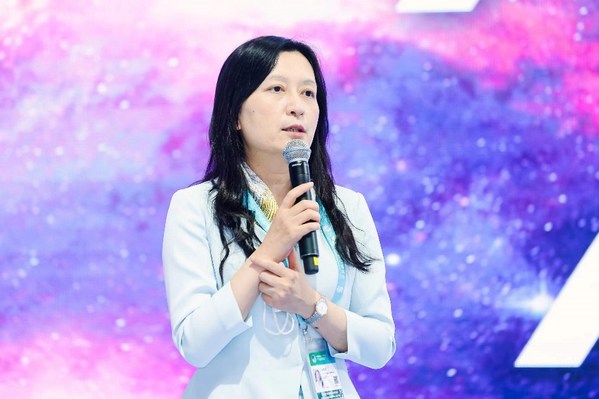
Professor Zhao Weili, Vice President of Ruijin Hospital, Shanghai Jiao Tong University School of Medicine
"Even after receiving treatment, it remains difficult to reintegrate into society, a problem that is particularly prominent among patients with follicular lymphoma, a condition that is prone to relapse and challenging to cure."Founder of Lymphoma Home, Gu Hongfei"A lot of patients often fall into the fear of worrying about recurrence and cannot return to normal life. As a patient organization, we have the responsibility to work on further raising societal attention towards this patient group. To this end, over the years, we have joined hands with Roche to launch a series of lymphoma patient care and education activities such as 'Born to Be Beautiful' and 'Worry-Free Life,' providing multi-dimensional, full-life-cycle care for patients and helping them truly achieve a worry-free and beautiful life."
Deeply Cultivating the Hematology Field to Meet Unmet Patient Needs Through Innovation
Hematological diseases are one of the core therapeutic areas that Roche has long been deeply involved in. For decades, Roche has been committed to the research and development and introduction of innovative drugs for hematological diseases based on the needs of Chinese patients, accumulating rich experience, product portfolios, and R&D pipelines; several innovative products for hematological diseases were also showcased at this year's CIIE in China. During this event,Dr. Li Xin, Head of Roche Global Pharma Development Center in ChinaIntroduced Roche's rich R&D pipeline in the field of hematology: from the world's first monoclonal antibody drug — Rituxan.®(Rituximab), a humanized glycosylated monoclonal antibody targeting CD20 — Gazyva®(Obinutuzumab), to the antibody-drug conjugate (ADC) targeting CD79b —— Polivy®(Polivy), as well as bispecific monoclonal antibody drugs targeting both CD20 and CD3, such as Glofitamab and Mosunetuzumab.
Dr. Li Xin introduced that in the field of rare blood diseases, Roche also pays close attention to the needs of patients with hemophilia, paroxysmal nocturnal hemoglobinuria (PNH), and others. The innovative C5 complement inhibitor for PNH treatment—Parsenkai.®(Cofavelimab) has been granted priority review status by the Center for Drug Evaluation (CDE) of the National Medical Products Administration. Its future market launch in China is expected to precede that in markets such as the United States and Europe, achieving Roche's first "global debut" of an innovative drug in China. In the field of hemophilia, with emicizumab (brand name: Hemlibra),®) has benefited more than tens of thousands of patients with hemophilia A worldwide, and hemophilia treatment has entered the "zero bleeding" era.[2]"With a rich and diverse product portfolio and R&D pipeline as the foundation, and with the mission to address unmet patient needs, Roche is always committed to bringing more innovative treatment solutions to patients with blood disorders," said Dr. Li Xin.
Ms. Bian Xin, President of Roche Pharma ChinaRoche has long been deeply engaged in the field of blood diseases, continuously enriching its product pipeline. Adhering to the concept of 'acting on the needs of patients,' Roche Hematology is committed to helping more patients with blood diseases reduce recurrence, prolong life, and even achieve a cure, with an attitude of constantly challenging and surpassing itself. Roche will continue to actively collaborate with all partners to contribute to the realization of the grand blueprint of 'Healthy China 2030.'
Witness the Spillover Effects of the CIIE, Accelerating the Benefits of Innovative Drugs for More Patients
Over the five years since the inaugural China International Import Expo (CIIE), thanks to the "spillover effects" of the CIIE and combined with the Chinese government's significant reforms in the new drug review system, Roche's innovative hematology products are accelerating their entry into the Chinese market. Meanwhile, various innovative drug pilot programs introduced in recent years, along with supplementary medical insurance policies at local levels, have greatly enhanced the accessibility and affordability of innovative drugs.
Polivy (brand name: Polivy)®) as an example, based on the data obtained from clinical research, this innovative drug was already listed as a recommended treatment for DLBCL in the "Chinese Society of Clinical Oncology (CSCO) Lymphoma Diagnosis and Treatment Guidelines" before its launch in China. It has also reached more patients in urgent clinical need through green channels for drug approval in areas such as the Boao Lecheng International Medical Tourism Pilot Zone in Hainan, the Guangdong-Hong Kong-Macao Greater Bay Area, and the Tianjin Free Trade Zone. Moreover, several local惠民-type commercial supplementary medical insurance plans, including the Tianjin Huimin Insurance and the Hainan Boao Lecheng Global Special Drug Insurance, have successively included Polatuzumab Vedotin (brand name: Polivy).®) have been included in the coverage of innovative specialty drug insurance, significantly lowering the threshold for innovative treatments and reducing patients' financial burden. This allows cutting-edge global innovations to benefit a wider population of patients in China.

From the left: Shi Hao, Head of Hematology at Roche Pharma China; Dr. Li Xin, Head of Roche Global Drug Development China Center; Professor Zhao Weili, Vice President of Ruijin Hospital, Shanghai Jiao Tong University School of Medicine; Gu Hongfei, Founder of Lymphoma Home; Professor Wu Depei, Chairman of the Hematology Society of the Chinese Medical Association; Qian Wei, General Manager of Oncology at Roche Pharma China's Customer Interaction Model; Li Bin, Vice President of Medicine and Personalized Healthcare at Roche Pharma China; and Long Weili, Vice President of Corporate Affairs and Communications at Roche Pharma.
[1] Liu, W, et al. Cancer Med. 2020; 00: 1– 10.
[2] Young G, Liesner R, Chang T, et al. A multicenter, open-label phase 3 study of emicizumab prophylaxis in children with hemophilia A with inhibitors. Blood. 2019;134(24):2127-2138.