

Boston Scientific's Localization Strategy: Transforming the Market through Core Product Localization and Innovation

Boston Scientific
Medical Device Manufacturer
For the medical industry, the CIIE, participated by several global giants, is a grand event that sends signals about the direction of industry innovation. The release of heavyweight products representing the highest level of global medical technology reveals information about market changes.
Boston Scientific is one of the leading companies in the global medical industry, repeatedly creating new market segments and defining industry standards with innovative technologies.
At the 2022 CIIE, Boston Scientific showcased several groundbreaking "world-first" products, including the only FDA-approved cerebral protection device specifically for transcatheter aortic valve replacement (TAVR) – the SENTINEL cerebral embolic protection device, the SpaceOAR absorbable spacer hydrogel for single use, the EKOS ultrasound-assisted thrombectomy system, and more.
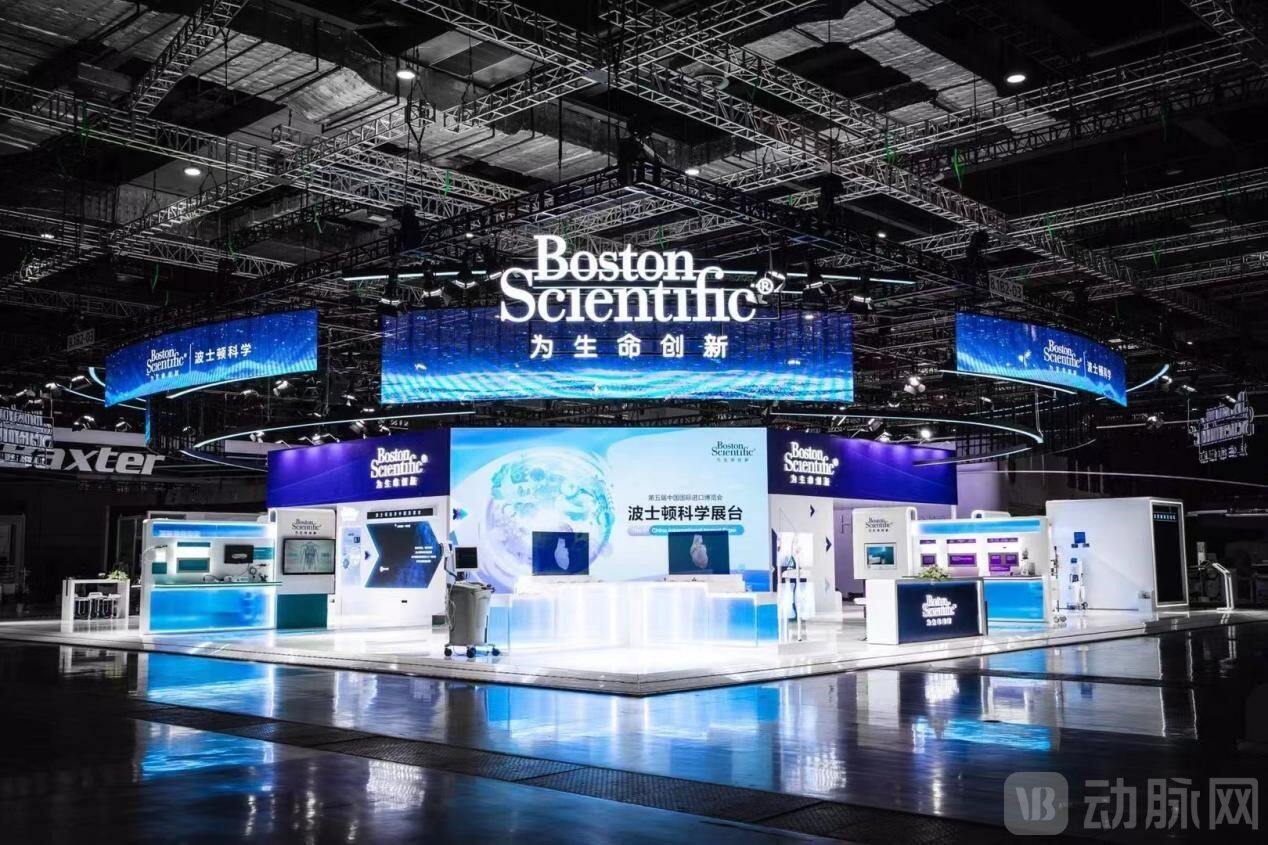
Boston Scientific Booth at the 2022 CIIE
In addition to the globally innovative new products worth attention, Boston Scientific has also brought two "made-in-China" products this year: the Polaris intravascular ultrasound system, which is the first production in China, and the "Rongyi" single-use radiofrequency ablation electrode developed and manufactured by a Chinese team. Moreover, the TheraSphere Y90 glass microspheres are also expected to be produced in China.
These achievements reveal Boston Scientific's strategy of taking root in the Chinese market.When Boston Scientific first entered the Chinese market, China’s innovative medical devices for vascular intervention were almost non-existent. Over the past 25 years, Boston Scientific has witnessed and participated in the rapid development of multiple sub-sectors. Now, as the industry reaches an inflection point, the market remains optimistic in the long term but is showing greater complexity and heightened competition. Multinational corporations are continuously updating their strategies in China. Amidst a challenging external environment and new industry dynamics, how is Boston Scientific positioning itself in the Chinese market? VCBeat (WeChat ID: vcbeat) provides an analysis.
Over the past two decades, multinational corporations represented by Boston Scientific have pioneered the Chinese market, training a large number of Chinese doctors and increasing the penetration rate of innovative therapies.
In terms of localization, Boston Scientific's basic strategy is:Through independent research and development as well as acquisitions, Boston Scientific targets the unmet clinical needs in China, continuously introducing cutting-edge global innovative solutions to the Chinese market. It helps establish relevant therapeutic ecosystems and launches innovative products to lead industry development.
At this CIIE, Boston Scientific showcased a series of products targeting diseases with high incidence rates and large patient populations in China, including stroke, atrial fibrillation, coronary heart disease, Parkinson's disease, pulmonary embolism, liver cancer, aortic valve stenosis, peripheral arterial disease and deep vein thrombosis, lung cancer, and benign prostatic hyperplasia.
Multiple "high-tech" products made their debut in China,Including the EKOS Ultrasound-Assisted Thrombectomy System, Vercise Genus Implantable Deep Brain Stimulation System, and VersaCross RF Puncture Exchange Wire System, among others.
These products have previously attracted significant attention within the industry, particularly the EKOS ultrasound-assisted thrombectomy system used for acute pulmonary embolism.
Acute Pulmonary Embolism: One of the Three Major Fatal Cardiovascular Diseases, but Few New Technologies for Treatment and Mortality Reduction
EKOS Ultrasonic-Assisted Thrombectomy System Promotes Drug Penetration into Thrombus and Accelerates Thrombolysis through Ultrasonic Vibration on the Basis of Traditional Catheter-Directed Thrombolysis, a small amount of medication can achieve highly efficient thrombolysis. When used for pulmonary embolism treatment, it significantly improves efficacy while reducing the risk of bleeding associated with thrombolytic drugs, achieving a 1+1>2 effect. In vitro studies have shown that traditional CDT treatment may take up to 7 days, whereas the drug absorption rate after EKOS treatment increased by 48% and 84% at 1 hour and 2 hours, respectively. [1]
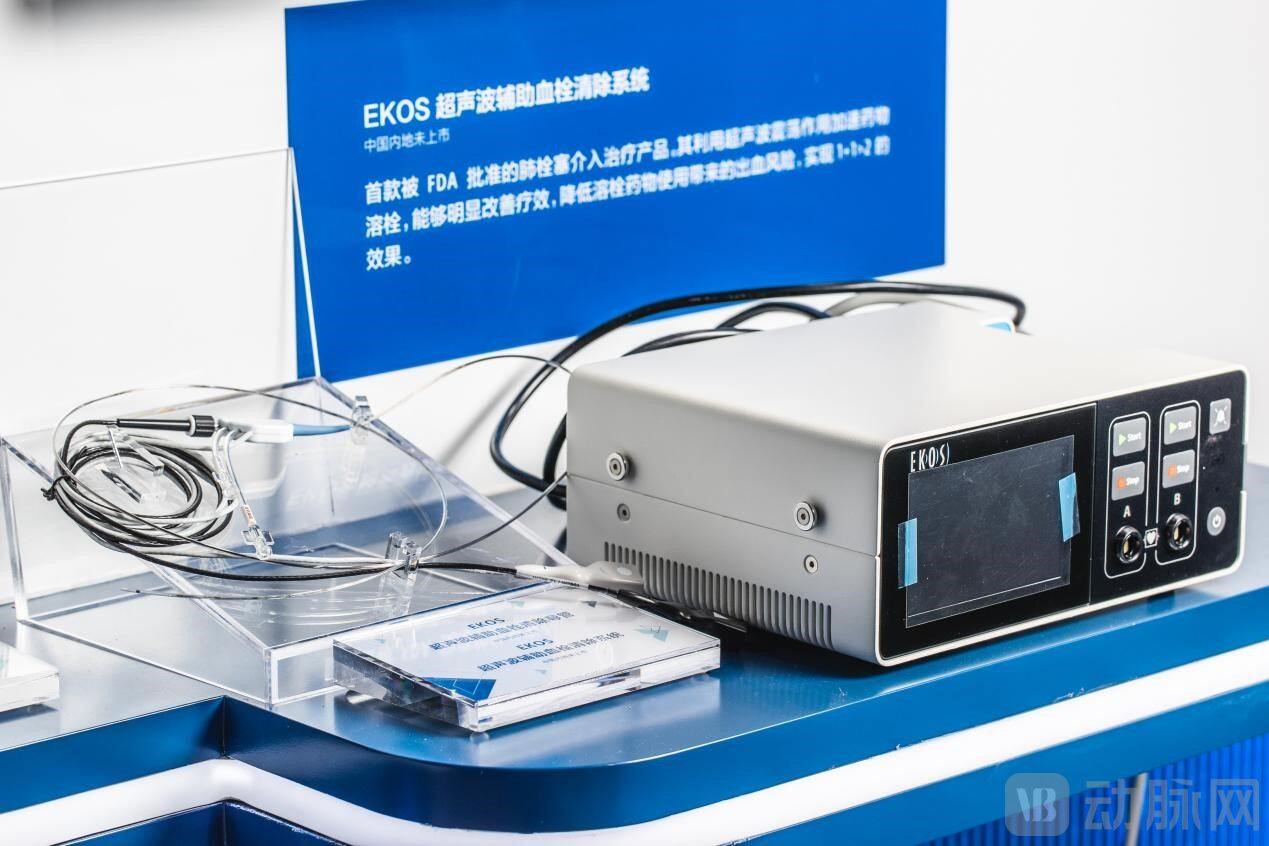
EKOS Ultrasound-Assisted Thrombectomy System
For the treatment of Parkinson's diseaseVercise Genus Implantable Deep Brain Stimulation SystemEqually noteworthy. Vercise Genus is Boston Scientific's fourth-generation DBS (Deep Brain Stimulation) product, with a model that is smaller and thinner. The biggest highlight is that it features the world’s first directional lead electrode, combined with unique MICC (Multiple Independent Current Control) technology, enabling precise control over stimulation direction, location, range, and amplitude. This facilitates personalized parameter settings to accurately stimulate target areas while avoiding side-effect regions, providing patients with better treatment outcomes and more effective, sustained relief of symptoms.
Parkinson's patients in China account for nearly half of the global patient population [2]. However, the current diagnosis and treatment of Parkinson's disease generally present market pain points such as underdiagnosis, limited efficacy, and long-term burdens. Vercise Genus has entered the "green channel" for review and approval, offering a new option for Parkinson's patients in China.
The third product, VersaCross RF Puncture Exchange Wire System, was acquired by Boston Scientific for $1.75 billion in the first half of the year through the acquisition of Baylis Medical Company Inc.
The Importance of VersaCrossVersaCross is crucial because atrial septal puncture technology is indispensable for electrophysiological atrial fibrillation ablation, left atrial appendage closure, and trans-septal mitral valve interventions. Only by completing the atrial septal puncture through a left-heart access product can one reach the left atrium to treat related conditions. Using radiofrequency puncture technology, VersaCross eliminates reliance on the "needle tip" and the operator’s force, allowing operators to flexibly optimize the puncture location even in complex environments and achieve easy, precise punctures. By removing the previous need for intraoperative instrument exchanges, VersaCross enables operators to smoothly enter the left atrium in a single operation. This simplifies the surgical process, reduces operation time, and further enhances the safety of the procedure.
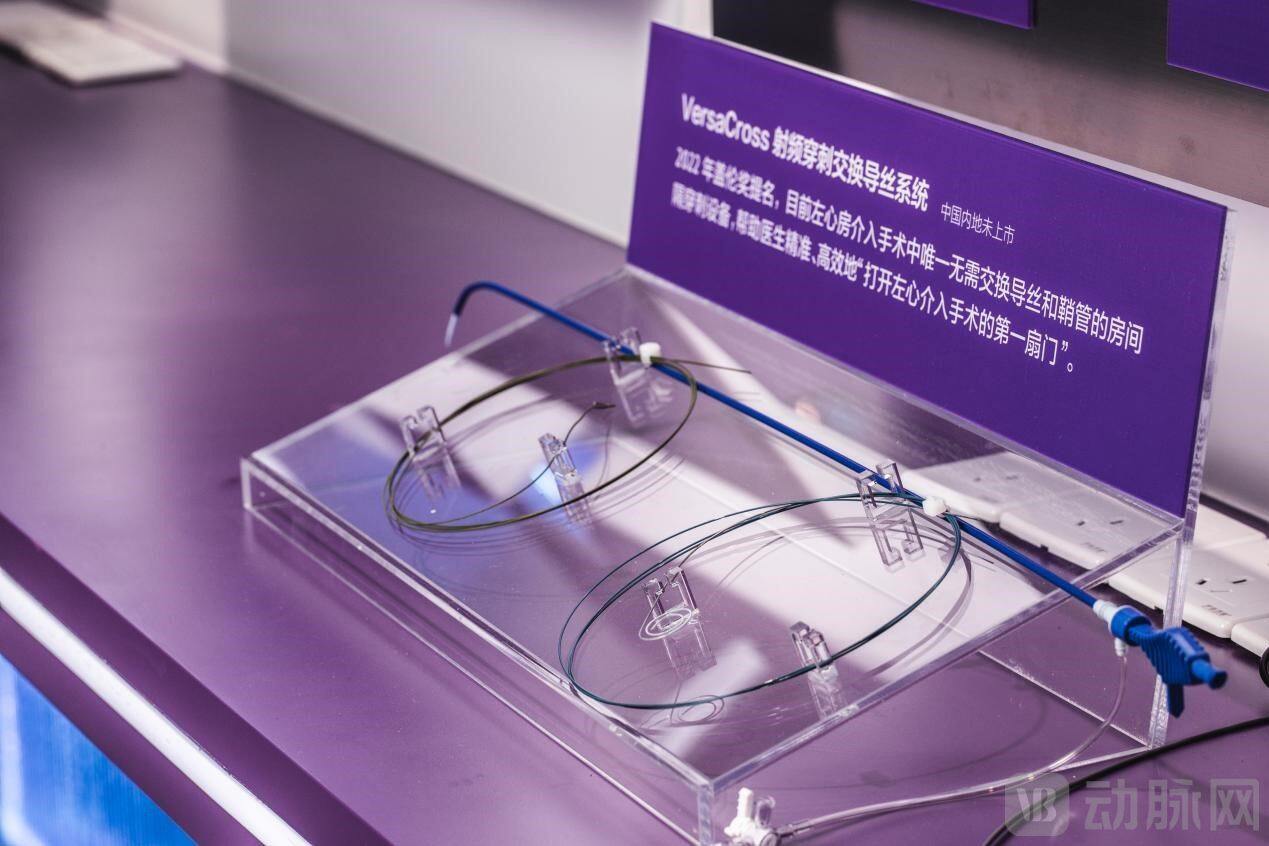
VersaCross RF Puncture Exchange Guidewire
These three products not only bring urgently needed innovative technologies to doctors and patients in China, but also greatly enhance Boston Scientific's peripheral intervention, neuromodulation, electrophysiology, and structural heart disease businesses.
In addition to the debut products, multiple exhibits from previous sessions have officially entered the Chinese market.Including the Eluvia Nitinol Paclitaxel-Eluting Vascular Stent, Hot Axios Ultrasound-Guided Pancreatic Pseudocyst and Walled-Off Necrosis Electrocautery Drainage Stent, SENTINEL Cerebral Embolic Protection Device, WATCHMAN FLX Left Atrial Appendage Closure Device, Rezūm (RuiMeng) Thermal Vapor Therapy Device, and the disposable prostate steam treatment device (referred to as the "Rezūm System"), among others.
In the past, due to the time gap between product launches in the U.S. and China, several blockbuster products were launched in China relatively late. Nowadays, the time gap for the launch of Boston Scientific's innovative products in the U.S. and China is continuously narrowing. This is attributed, on one hand, to the reform of China’s medical device review and approval system, and on the other hand, to Boston Scientific’s open-minded exploration and attempts.
Taking the Rezūm System for the treatment of benign prostatic hyperplasia as an example, the Boston Scientific team successfully applied and was selected for the second batch of Hainan Boao Lecheng "Real-World Study" projects. They completed the real-world study for this product within one year and received NMPA approval just four months after submitting the registration application.
Among the products showcased by Boston Scientific at the CIIE, several have been expedited for approval and clinical application in China through innovative review and approval mechanisms. These include participation in the Boao Lecheng "Pilot Program" and "Real-World Data Studies," as well as being selected for the Special Review Procedure for Innovative Medical Devices (also known as the "Green Channel"), allowing innovative products to benefit Chinese patients more quickly.
The pandemic has reshaped the global medical device supply chain. Amidst the transformation of the global supply chain, Boston Scientific has chosen to continue investing heavily in the Chinese market and participate more deeply in China.As a multinational medical device company, Boston Scientific has deepened its roots in China, and two of its products can now be considered "Made in China."
In the core coronary intervention market of Boston Scientific, the heavy-weight product Polaris intravascular ultrasound system has been placed into production in China. With the help of the Medical Device Registration (MAH) system, the production of Polaris has been localized and is simultaneously supplied globally, becoming a milestone event in the localization process of Boston Scientific.
The localization opportunity for Polaris stemmed from Boston Scientific's perception of and timely response to the market demands in China.
With the development of coronary intervention towards precision, intravascular ultrasound (IVUS) has grown rapidly in China. According to data from Frost & Sullivan, based on the number of procedures in 2019, the penetration rate of IVUS in PCI surgeries was about 7%. However, in 2021, the penetration rate of IVUS increased significantly, with usage soaring to the point of stockouts. Even so, China's IVUS penetration rate still lags far behind Japan’s 90%.
The localization process of Boston Scientific's Polaris in China began with the first attempt in 2020 during the pandemic. At that time, while global supply chains faced challenges, the demand for cardiovascular disease diagnosis and treatment remained unchanged. Considering that if Polaris could be localized in China, it would mean improved accessibility and affordability of this high-end medical device for Chinese cardiovascular patients.
So, Boston Scientific leveraged the Medical Device Registration Holder (MAH) system and, with the support of the Shanghai Medical Products Administration, successfully conducted a production pilot for Polaris at the Jabil Shanghai factory. In July this year, the "China-made" Polaris intravascular ultrasound received a registration certificate issued by the NMPA. In its previous three appearances at the CIIE, Polaris participated as an imported exhibit, but this year, Polaris is participating as a "locally produced product."
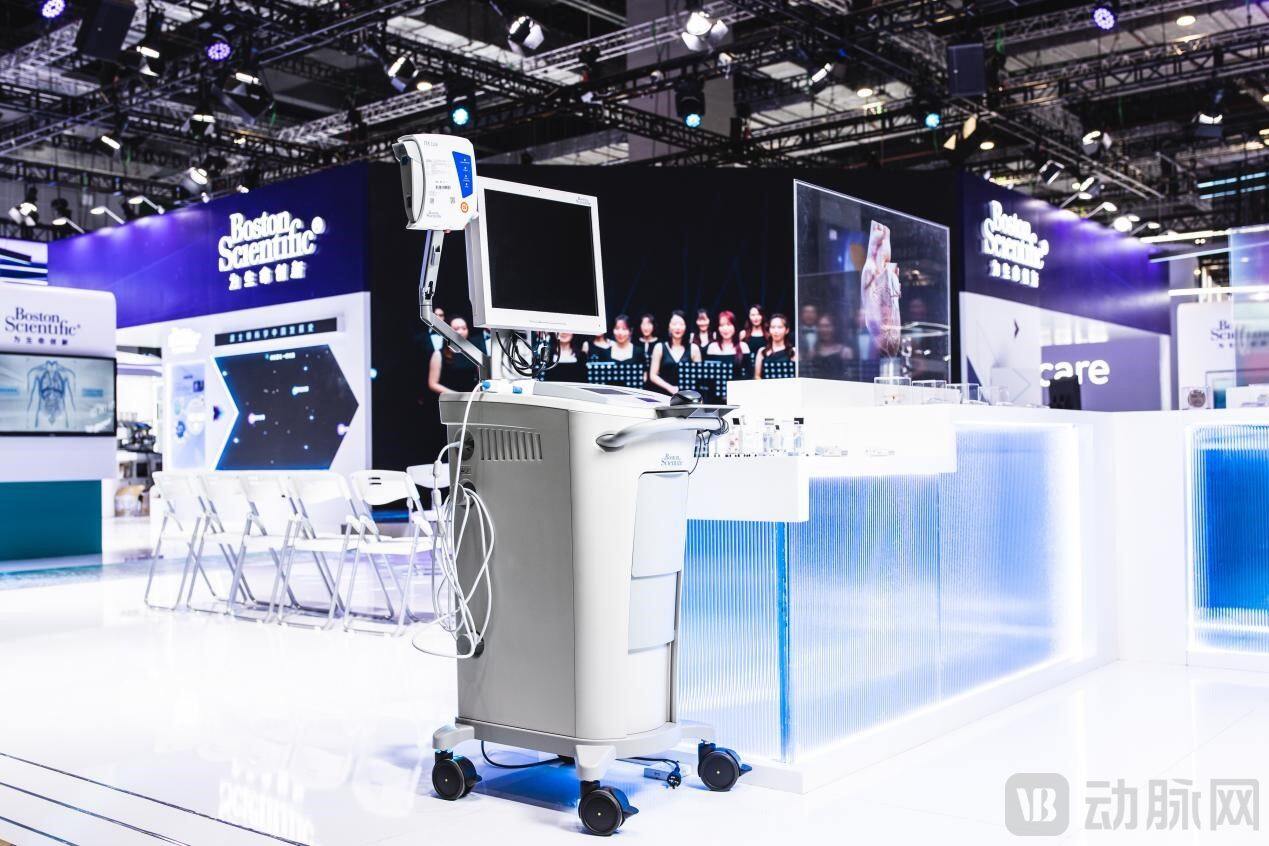
China-produced Polaris Intravascular Ultrasound System Debuts at the 5th CIIE
Polaris is not the only example of Boston Scientific's localized production in China.
At the 4th CIIE, Boston Scientific also partnered with Suzhou Frankman to reach a comprehensive strategic cooperation agreement on strategic investment, technology transfer, and localized production, transferring ablation technology for thyroid diseases to Frankman.
It is worth mentioning that the thyroid ablation technology transferred to Frankman was developed by Boston Scientific's R&D team in China.
Boston Scientific's China R&D Center was established in Shanghai in 2010 as the first R&D center outside the United States. It has since developed a team of over 100 local engineers. This China-based R&D team plays a leading role in global R&D efforts while also allowing local innovations to benefit the world.
China's R&D team participated in the development of the HeartLogic heart failure diagnostic technology, which was nominated for the 2020 Galien Award for "Best Medical Technology." Amid the pandemic in 2020, they also led the development of Heart Connect, a globally leading digital clinical support system. This innovative technology has received FDA approval.
Rongyi's disposable radiofrequency ablation electrode is developed for the high incidence of thyroid nodules in China.Rongyi is currently the only Chinese-produced comprehensive solution for thyroid radiofrequency ablation that masters imported core technology in the Chinese market.It is alsoBoston Scientific's First Medical Device Product Developed and Produced in China.
In addition, in March 2021, Boston Scientific and Chengdu Nuret Medical Technology Co., Ltd. signed a cooperation agreement on equity investment, technology transfer, and localized production, planning to transfer the TheraSphere Y90 glass microsphere technology used for internal radiation therapy of liver cancer to Chengdu Nuret. In the future, localized production is also expected to be achieved.
Boston Scientific has completed a three-step localization strategy: from initially introducing advanced products to China, to investing in construction in China, and then gradually focusing on "Chinese-style innovation," which accelerates the development of local innovative technologies.
The localization strategy has broadened the path for Boston Scientific to participate in the Chinese market, providing more access and market responsiveness advantages for Boston Scientific in developing the Chinese market. This will accelerate product launches in China, enable quicker responses to market demands, and achieve mutual growth with the Chinese market.
For China's medical device industry, the combination of multinational corporations' international experience with local needs will also inject endogenous growth momentum into the industry and promote its high-quality development.
Over the past two decades, the growth driver of China's medical device industry has shifted from demand-driven to innovation-driven; the market structure has evolved from being dominated by first-tier core markets to being led by multi-level markets; the participants in the medical device market have also become more diverse; and the industry's decision-makers have changed from a model dominated by doctors and hospitals to a mixed model involving doctors, patients, and payers.
Boston Scientific's Localization of Value Chain in China is not only reflected in products and supply chain, but also in the commercial expansion phase.Boston Scientific's approach to the vast market of China, with its considerable population density, also varies. The company has a deeper understanding of the complexity and multi-layered nature of the Chinese market and has adopted different models for developing various niche markets.
After the domestic market for coronary intervention underwent the wave of volume-based procurement, participants were forced to adjust their strategies. Boston Scientific has listed enhancing the accessibility of advanced technologies and products applied to complex lesions in grassroots markets as an important goal.
As the gatekeeper of the healthcare system, primary care is a weak point in China’s medical system and often struggles to access high-quality medical resources. While Boston Scientific's products have achieved relatively high penetration in first-tier cities, their availability in the primary care market still needs improvement.
In order to enhance the ability of grassroots markets to carry out precision diagnosis and treatment, Boston Scientific launched the "Thousand Counties Project Precision PCI Grassroots Initiative" in Beijing in 2022 in collaboration with the National Cardiovascular Disease Management Capacity Assessment and Enhancement Project (CDQI). Through the Thousand Counties Project, Boston Scientific is helping county-level hospitals establish minimally invasive intervention centers for coronary heart disease, improving the medical service capabilities of these hospitals, further extending high-quality medical resources to the grassroots level, and promoting the realization of hierarchical diagnosis and treatment goals.
The peripheral and tumor markets have various细分病种, requiring a diverse product portfolio, and the penetration rate of innovative procedures remains relatively low.Boston Scientific's strategy is: on the one hand, to strengthen internal capabilities and improve product lines; on the other hand, to enhance the penetration of cutting-edge procedures in various细分fields through technological innovation, professional education, procedure promotion, market education, and other approaches.
In the peripheral field, Boston Scientific offers a variety of product portfolios such as the Eluvia Paclitaxel-Eluting Stent and the AngioJet Thrombectomy Control System, covering peripheral venous and arterial diseases. In the field of liver cancer, Boston Scientific has introduced embolic microspheres, Y90 radioembolic microspheres, cryoablation, radiofrequency ablation, and microcatheter products to provide a comprehensive interventional oncology solution in China centered around the three core sectors of TACE, ablation, and internal radiation therapy.
In the cardiac rhythm market, Boston Scientific has leading products such as the S-ICD (Subcutaneous Implantable Cardioverter Defibrillator) and pacemakers; in the rapidly growing electrophysiology market, Boston Scientific offers disruptive innovative Pulse Field Ablation (PFA) products.
In the structural heart disease market, Boston Scientific has an absolute advantage in the left atrial appendage closure device market, driving the rapid development of left atrial appendage closure procedures. In the aortic valve stenosis market, Boston Scientific has also introduced its latest product this year: the SENTINEL Embolic Protection Device, the world's only FDA-approved cerebral protection device specifically for transcatheter aortic valve replacement (TAVR).
In the urology and pelvic health market, the market in China is growing rapidly, but there has been a lack of high-quality innovative products and brands with comprehensive layouts.
Boston Scientific is one of the earliest companies to enter the global urology and pelvic health market, with several groundbreaking products such as disposable flexible ureteroscopes, stents, and stone retrieval baskets. This year, Boston Scientific's Rezūm System for the "ultra-minimally invasive" treatment of benign prostatic hyperplasia (BPH) was approved, paving the way for expanding its presence in China’s urology health market through innovative solutions.
From Zero to One,开拓新兴市场, Boston Scientific not only introduces重磅products but also lays the foundation for the industry in various ways.In the field of urology and andrology, where the medical treatment rate is low, Boston Scientific helps improve patient awareness and better manage health through digital solutions; in the gastroenterology market, which faces a significant talent gap, Boston Scientific helps cultivate more professionals to address industry shortages; in terms of grassroots market education, efficiency is enhanced through digital means.
Innovation and embracing challenges are the hallmarks of Boston Scientific. The implementation of a robust localization strategy reveals other qualities of Boston Scientific: being both aggressive and defensive in an ever-evolving business environment, maintaining an edge through flexible strategies amidst change.
[[1]] Francis, C.W., et al., Ultrasound in Medicine and Biology, 21.3, 1995, 419–424)
[[2]] Parkinson's Disease and Movement Disorders Group of the Neurology Branch of the Chinese Medical Association, Parkinson's Disease and Movement Disorders Group of the Neurologists Branch of the Chinese Medical Doctor Association. "Chinese Parkinson's Disease Treatment Guidelines," Chinese Journal of Neurology, 2020, 53(12): 973-986.