Enhertu (DS-8201): The Fastest ADC to Reach $1 Billion in Sales, Redefining HER2-Targeted Therapy in Breast Cancer and Beyond
Daiichi-Sankyo
Pharmaceutical R&D Developer

AstraZeneca
Biopharmaceutical Manufacturer
Recently, Daiichi Sankyo released its Q2 financial report. The blockbuster ADC drug Enhertu (DS-8201), developed in collaboration with AstraZeneca, achieved sales of 79.5 billion yen (approximately $568 million USD at 140 yen to 1 USD) in the first half of the year. The company has also raised its full-year performance forecast.Enhertu's global sales in 2022 are projected to reach 195.2 billion yen (1.393 billion USD).
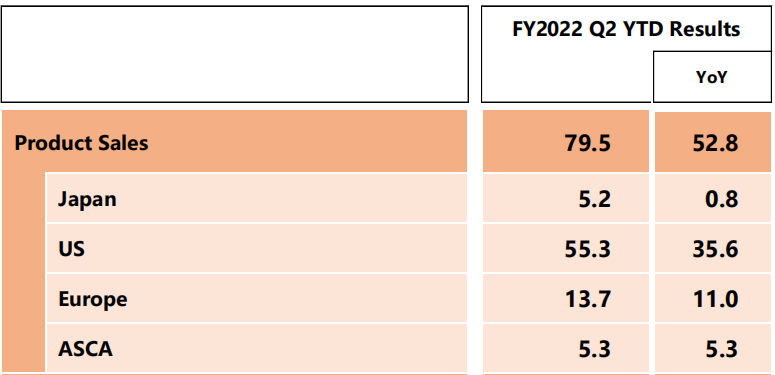
Figure 1 Sales of Enhertu in Various Regions
Source: Q2 Report (Billion Yen)
According to incomplete statistics, among the 14 ADC drugs currently on the market, only Seagen/Takeda's Adcetris and Roche's Kadcyla had global sales exceeding $1 billion last year.
Seagen/Takeda's Adcetris broke the $1 billion sales mark in nearly 10 years; Roche's Kadcyla took five years, while the breast cancer wonder drug Enhertu (DS-8201) might take only two years.
The Fastest ADC Drug to Break $1 Billion? What's the Charm of the Breast Cancer "Wonder Drug" Enhertu, and Who Can Compete with HER2 ADC?
01 The "Wonder Drug" for Breast Cancer Shows Its Power Again
Enhertu is an antibody-drug conjugate targeting HER2 jointly developed by AstraZeneca and Daiichi Sankyo. It links trastuzumab (a humanized monoclonal antibody targeting HER2) with a novel topoisomerase 1 inhibitor, an exatecan derivative (DX-8951 derivative, DXd), via a tetrapeptide linker, enabling the targeted delivery of cytotoxic agents into cancer cells.
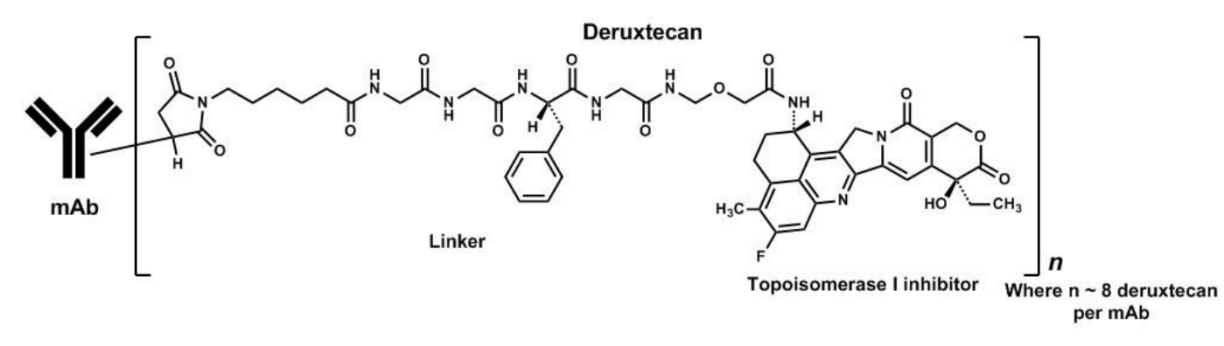
Figure 2 Composition of Enhertu
Source: Instructions
With 4 major advantages:
Higher Drug Loading:By employing a unique hydrophobic linker with site-specific conjugation technology to cysteine residues, the hydrophobicity of ADCs is reduced. T-DXd (Enhertu) enables each antibody to carry 7-8 DXd molecules. The drug-to-antibody ratio (DAR) is higher than 3-4 for T-DM1 (Kadcyla).
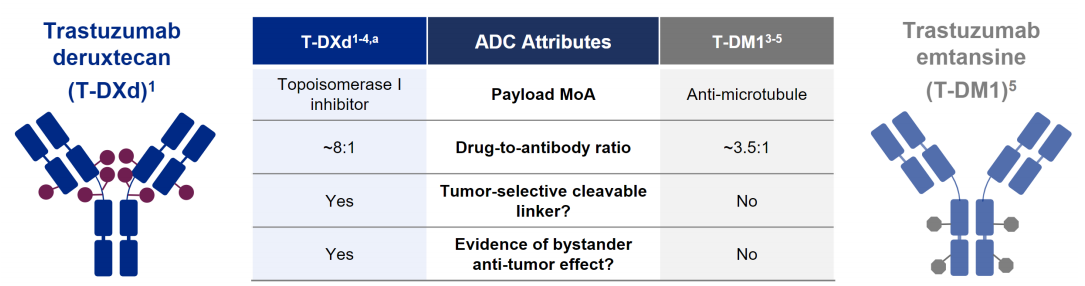
Figure 3 Advantages of T-DXd over T-DM1
Source: Huachuang Securities
Warhead Selection:DXd has stronger toxicity, a shorter half-life, and remains in the body for a shorter period compared to microtubule inhibitors.
Linker Design:The hydrophobic tetrapeptide linker of T-DXd can be degraded by lysosomal enzymes highly expressed in tumor cells, thereby releasing DXd and avoiding drug polymerization.
In addition, DXd has high membrane permeability, and the released DXd can penetrate into adjacent tumor cells, exerting a cytotoxic effect through the "bystander effect."
In March 2019, AstraZeneca and Daiichi Sankyo entered into a global collaboration and commercialization agreement, securing rights to Enhertu for an upfront payment of $1.35 billion and potential milestones totaling $5.55 billion.
The total value of this deal reaches $6.9 billion. In return, AstraZeneca will equally share the global profits outside of Japan with Daiichi Sankyo. For AstraZeneca, this is a major gamble to expand its influence in oncology.
It seems worthwhile now.
The third-quarter report mentioned that with the approval of new indications and the increase in market penetration, the sales of Enhertu are bound to achieve steady growth.
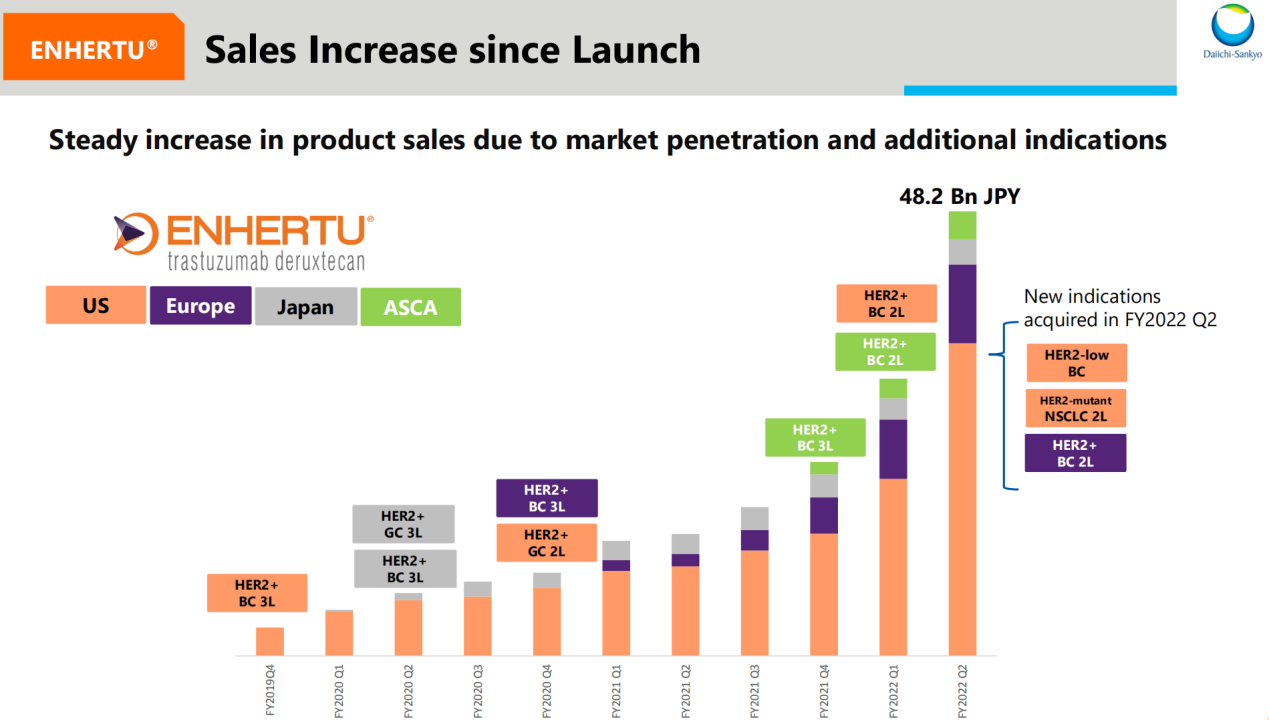
Figure 4 Progress of Enhertu Indication Approvals and Sales in Major Regions
Source: Q2 Report
Breast Cancer
Breast cancer patients can be divided into three categories based on the type of receptors expressed by cancer cells: HER2-positive, HR-positive/HER2-negative, and triple-negative (ER-PR-HER2-) breast cancer.
Among them, about 20% are HER2-positive breast cancer patients, with HER2-targeted therapy as the first choice. Several HER2-targeted drugs have been approved.
HER2-negative patients (approximately 80%) have relatively limited treatment options, and about 50% of breast cancer patients have HER2-low expression.
HER2-Positive Breast Cancer
In December 2019, the FDA approved Enhertu for the treatment of patients with unresectable or metastatic HER2-positive breast cancer who have received two or more prior anti-HER2 therapies.
Enhertu was approved by the FDA based on a head-to-head trial with the well-known ADC drug Kadcyla. According to the study published in NEJM (DESTINY-Breast03), the 12-month PFS rate for Enhertu vs Kadcyla was 75.8% vs 34.1%; the 12-month OS rate was 94.1% vs 85.9%; and the ORR for Enhertu vs Kadcyla was 79.7% vs 34.2%, showing that Enhertu demonstrated significantly superior efficacy compared to Kadcyla in the head-to-head study.
In May 2022, the FDA approved Enhertu for the treatment of patients with unresectable or metastatic HER2-positive breast cancer who have previously received a HER2-targeted therapy.
HER2-Low Breast Cancer
In August 2022, the FDA approved Enhertu for the treatment of adult patients with unresectable or metastatic HER2-low (immunohistochemistry [IHC] 1+ or 2+/in situ hybridization [ISH] negative) breast cancer.
Among them, about 50% of breast cancer patients have HER2-low expression, with limited treatment options primarily relying on chemotherapy. Enhertu has become the first HER2-targeted therapy to demonstrate a survival advantage in the HER2-low population, which is expected to redefine the treatment of HER2-low breast cancer.
The FDA approval was based on the results of the DESTINY-Breast04 Phase III trial.
In the trial, compared with physician’s choice of chemotherapy, Enhertu reduced the risk of disease progression or death by 50% in patients with HER2-low metastatic breast cancer that was either hormone receptor-positive (HR+) or hormone receptor-negative (HR-), PFS: 9.9 months vs. 5.1 months (HR: 0.50; 95% CI 0.40-0.63; p<0.0001). The OS for patients treated with Enhertu was 23.4 months, compared to 16.8 months in the chemotherapy group, representing a 36% reduction in the risk of death with Enhertu versus chemotherapy (HR 0.64; 95% CI 0.49-0.84; p=0.001).
Gastric Cancer
In January 2021, the FDA approved Enhertu for the treatment of patients with HER2-positive metastatic gastric or gastroesophageal junction (GEJ) adenocarcinoma, making it the first ADC drug approved for the treatment of HER2-positive gastric cancer.
Enhertu's approval for gastric cancer indications in the United States and Japan is based on the results of the open-label, randomized Phase 2 DESTINY-Gastric01 trial. In the study, patients (who had previously received two or more regimens, including 5-FU, platinum-based chemotherapy, and trastuzumab, but experienced disease progression) were randomly assigned in a 2:1 ratio to receive either Enhertu (6.4mg/kg) or investigator-selected chemotherapy (paclitaxel or irinotecan monotherapy), administered every three weeks. The results showed that the ORR was 51.3% (95% CI: 41.9-60.5%) in the Enhertu group and 14.3% (95% CI: 6.4-26.2%) in the chemotherapy group. In a pre-specified interim analysis, the risk of death was reduced by 41% in the Enhertu group compared to the chemotherapy group (HR=0.59; 95% CI: 0.39-0.88; p=0.0097). The median OS was 12.5 months in the Enhertu group and 8.4 months in the chemotherapy group.
Lung Cancer
In August 2022, the FDA approved Enhertu for the treatment of patients with unresectable or metastatic NSCLC harboring activating HER2 mutations. This is also the first drug approved by the FDA for the treatment of HER2-mutated NSCLC. The efficacy of the accelerated approval was based on DESTINY-Lung02. Patients (with unresectable or metastatic HER2-mutated non-squamous non-small cell lung cancer whose disease had progressed after prior systemic therapy) received Enhertu 5.4mg/kg via intravenous infusion once every three weeks until unacceptable toxicity or disease progression occurred. The trial results showed an objective response rate of 58% and a median duration of response of 8.7 months.
02 Who Can Rival Enhertu?
Globally, there are approximately 350 ADC drug clinical trials led by enterprises, with about 166 in China, accounting for approximately 47%. The top three targets of ADC drugs under research globally are HER2, TROP2, and CLDN18.2.
HER2 is currently the top target for ADC drug development globally, with nearly 50 approved or investigational ADC drugs targeting HER2. Among them, three have been approved for marketing: Roche's Kadcyla, Daiichi-Sankyo's Enhertu, and the first China-produced ADC drug, Rongchang Biopharmaceutical's RC48 (Disitamab Vedotin).
In the Chinese market, HER2 is similarly the top target for ADC research and development, with fierce competition for targets such as Claudin-18.2 and Trop-2. In terms of R&D progress, most ADC drugs developed by domestic companies in China are still in the early stages of research, with faster progress concentrated on targets like HER2 and TROP2.
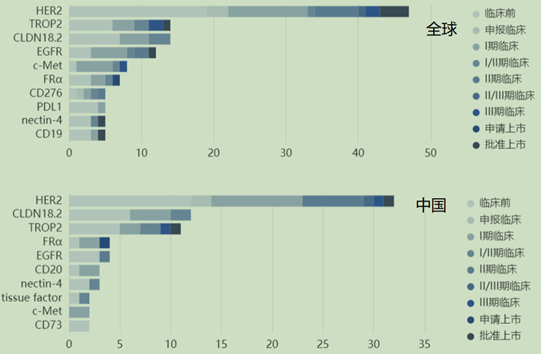
Figure 5 Proportion of Each Target in Clinical Stage of ADC Drugs Globally and in China
Source: East Wu Securities
In China, Rongchang Bio's self-developed HER2 ADC Disitamab Vedotin has been approved for marketing to treat gastric cancer and urothelial carcinoma. It is also undergoing clinical trials for the treatment of various solid tumors, such as breast cancer, non-small cell lung cancer, biliary tract cancer, gynecological malignancies, and advanced melanoma, among others. In addition, Hengrui's SHR-A1811, TAA013 from TOT BIOPHARM, and others have already entered phase 3 clinical trials...
Summary
ADC drugs are now one of the hottest tracks in the biopharmaceutical field. The strong sales performance of Enhertu is bound to push the competition in this track to a fever pitch. The disruptive impact of DS-8201 not only makes T-DM1 tremble with fear, but also makes it extremely challenging for the following companies to gain a share under the overwhelming pressure of DS-8201.
Last year, Bio-Thera Solutions ultimately announced the termination of the ADC project BAT8001. Ambrx Biopharma declared that, considering the competitive landscape of the HER2 target, it would remove the HER2 ADC ARX788 from its internal R&D pipeline. Although it will continue to collaborate with its partner, NovaRock Biotherapeutics, to advance the development of ARX788, the outcome of whether it can succeed in head-to-head trials remains uncertain.
These stories have sounded alarm bells for all later comers.
Currently, whether globally or in China, there is a phenomenon of crowded indications and targets in the entire ADC field. The HER2 target has become the focus. The excellent performance of DS-8201 has made all players in the HER2 ADC track feel uneasy. In the ADC field, we wait to see who will be capable of competing with it!
References:
1.ADC Explosion, Half-Year Revenue Doubles, AstraZeneca......
2. Just Now! Heavyweight ADC Drug DS-8201 Accepted by NMPA, AZ Spent $69 Billion on It!
$369 Million! AstraZeneca and Daiichi Sankyo Forge Oncology Strategic Collaboration to Develop DS-8201, an Antibody-Drug Conjugate Targeting HER2.
4.Daiichi Sankyo to Present DXd ADC Portfolio at ESMO 2022, Driving Advancements in Oncology
5. Daiichi Sankyo's Q2 report, Huachuang Securities, East Wu Securities, Guojin Securities, FDA and other publicly available online materials.

Editor: Dadasiva
Disclaimer: This article is a reprint from Yaozhi.com. All rights of the images and text are reserved by the original author. The purpose of the reprint is to convey more information and does not represent the views of this platform. If there are any issues related to the content, copyright, or other aspects, please leave a message on this platform, and we will delete it as soon as possible.