Regeneron: The Antibody Powerhouse That Took Two Decades to Break Through
Regeneron
Biopharmaceutical Manufacturer
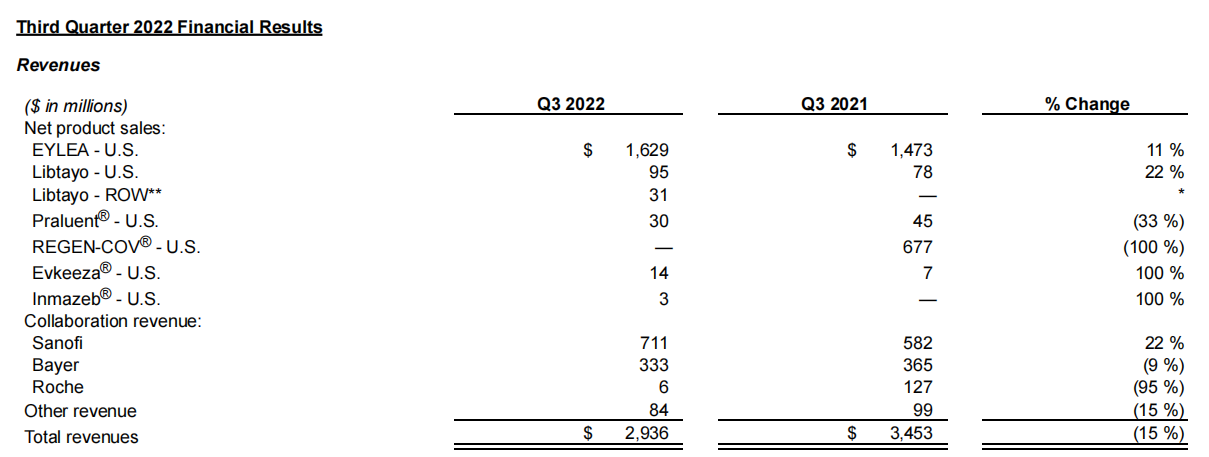
On November 3 EST, Regeneron (Regeneron Pharmaceuticals, REGN) released its Q3 2022 earnings report: revenue was $2.936 billion, a year-over-year decrease of 15%, but excluding the COVID-19 antibody cocktail REGEN-COV, revenue was $2.930 billion, an increase of 11% year-over-year. Under GAAP accounting standards, net profit was $1.316 billion, and under Non-GAAP accounting standards, net profit was $1.270 billion.
Despite the turbulent market conditions, although the demand for Regeneron's COVID-19 antibody cocktail therapy has nearly disappeared, the company still achieved solid performance driven by its two key products, Eylea and Dupixent.
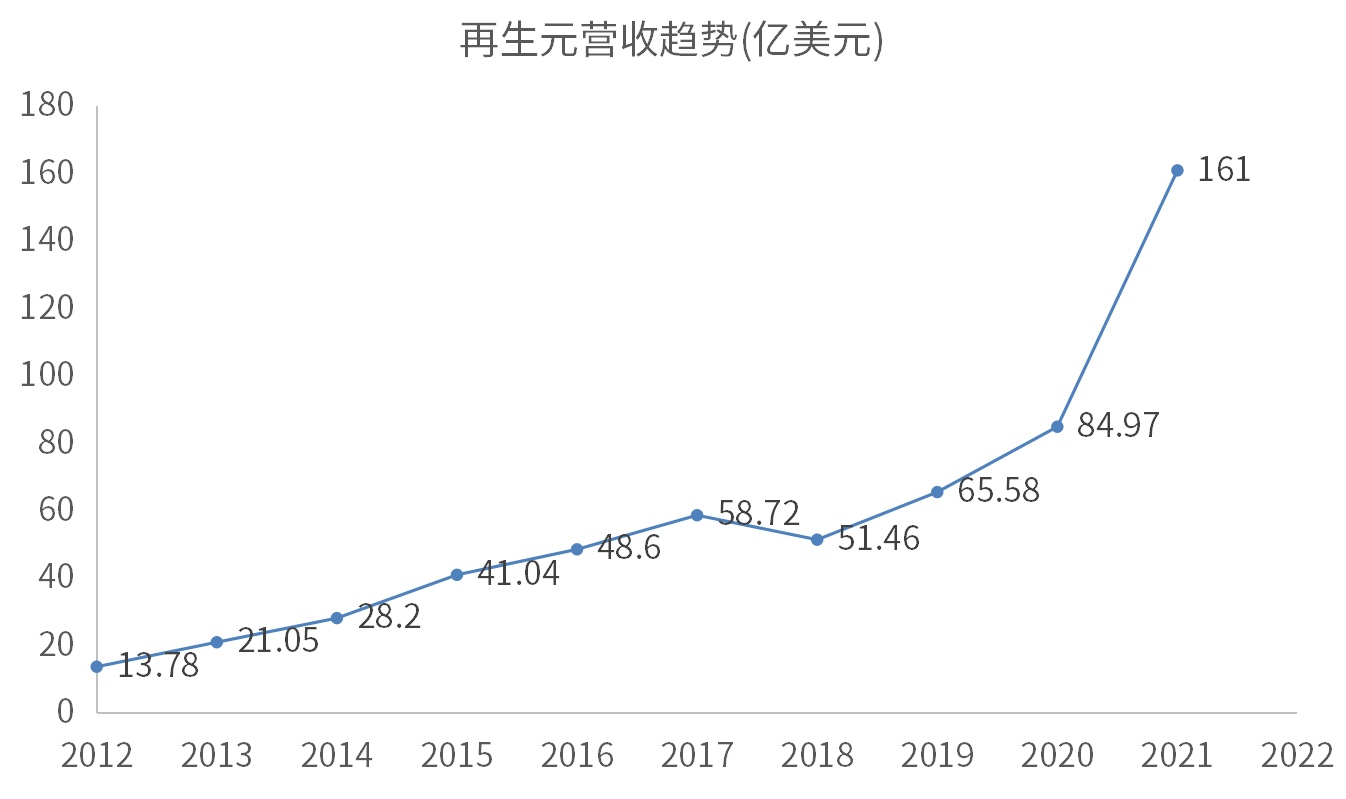
Source: Regeneron Annual Report
"Debuting" with Biotechnology
From the late 1970s to the early 1990s, biotechnology startups entered a period of prosperity, giving rise to many large and enduring companies, such as Genentech, Amgen, Biogen, and today's protagonist, Regeneron.
In 1988, Leonard Schleifer, then an assistant professor of neurology at Weill Cornell Medical College, decided to "take the plunge" and founded Regeneron. The name is a combination of "regenerating," "gene," and "neurons," foreshadowing the company's main direction of development—treating neurological diseases.
In 1990, the Regeneron team published an article in the journal *Science* on how to clone a novel neurotrophic factor, which gained significant attention and attracted the interest of Amgen, another biotech "rising star." In 1991, Regeneron successfully went public on NASDAQ, raising $91.6 million, causing quite a stir.
However, risks are everywhere, and fate will not always favor Regeneron.
In 1994, Regeneron's Phase III clinical trial of Ciliary Neurotrophic Factor (CNTF) for the treatment of Amyotrophic Lateral Sclerosis (ALS, also known as "Lou Gehrig's disease") failed.
In 1997, Regeneron's neurotrophic factor drug (BDNF) failed again; layoffs and a sharp drop in stock price followed.
At a critical moment, Regeneron repeatedly sought out Roy Vagelos, inviting him to take on the role of Chairman of the Board of Regeneron.
Vagelos Roy, the legendary former CEO of Merck, promoted the target-centric R&D philosophy and developed several important drugs, including lovastatin. He brought Merck's annual sales to exceed $10 billion for the first time, establishing its dominant position as a global pharmaceutical leader. In 1989, he also transferred the technology for the recombinant hepatitis B vaccine to China at a low price ($7 million), which made him well-known in the country.
After Vagelos took office, Regeneron changed its R&D strategy, no longer "fixating" on the field of degenerative neurological diseases, and built up the most important technical barriers for the company's future operations — the Trap and VelociSuite technology platforms. Today, Regeneron remains committed to "platforms" and has made arrangements in areas such as gene therapy, RNAi therapy, gene editing, and CAR-T.
Thick Accumulation, Thin Eruption: Blockbuster Drugs Successively Born
In 2008, Regeneron finally launched its first drug, Arcalyst, for the treatment of Cryopyrin-Associated Periodic Syndromes (CAPS). However, due to the rarity of the disease, sales were not ideal.
What truly pulled Regeneron out of its financial困境 was the 2011 launch of the ophthalmology新药 Eylea. Since then, Regeneron has continuously brought重磅炸弹 drugs to market.
Regeneron's Revenue Composition in Q3 2022
Screenshot source: Regeneron official website
The First Blockbuster: Aflibercept
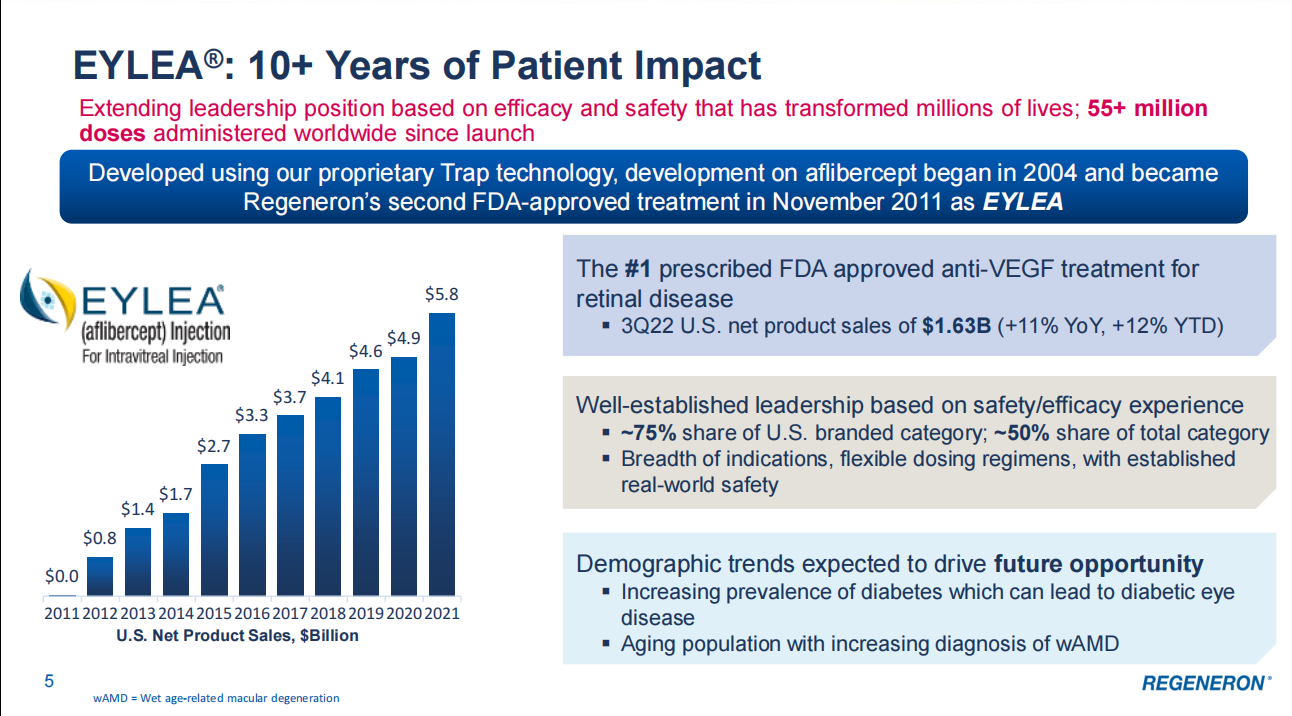
In 2011, on the occasion of its 20th anniversary of going public, Regeneron finally launched its first blockbuster product, Eylea (aflibercept, intravitreal aflibercept injection), for the treatment of wet age-related macular degeneration. In 2012, within just one year, aflibercept's sales reached $840 million, and in the following decade, its sales continued to grow rapidly. In 2021, the total sales of aflibercept amounted to $9.4 billion, a year-over-year increase of 19%, including $5.8 billion from the U.S. market (exclusively held by Regeneron) and $3.6 billion from markets outside the U.S. (handled by Bayer, with Regeneron receiving $1.4 billion). This year, aflibercept sales have continued to rise, with Q3 U.S. sales reaching a record $1.63 billion, a year-over-year increase of 11%.
Screenshot source: Regeneron official website
However, the active ingredient patent for Aflibercept expired in 2020, and it is about to face competition from biosimilars. Additionally, Roche’s VEGF-A/ANG2 bispecific antibody drug Faricimab has already been approved for marketing, with a Q16W dosing interval that offers an advantage over Eylea's Q8W. The good news is that, according to data released by Regeneron in September this year, Aflibercept at a high dose of 8mg with extended intervals (Q12W/Q16W) demonstrated non-inferior visual improvement and comparable safety in two trials for DME and wAMD when compared to the lower-dose, shorter-interval group. Regeneron plans to submit a BLA application for the 8mg formulation for the treatment of DME and wAMD by the end of this year and will use a priority review voucher.
If this new specification is successfully launched, it will not only delay the impact of biosimilars but also render the competitors' compliance advantage non-existent.
Potential Blockbuster Drug: Dupilumab
Another important drug from Regeneron is the IL-4R monoclonal antibody Dupixent (dupilumab), developed in collaboration with Sanofi.
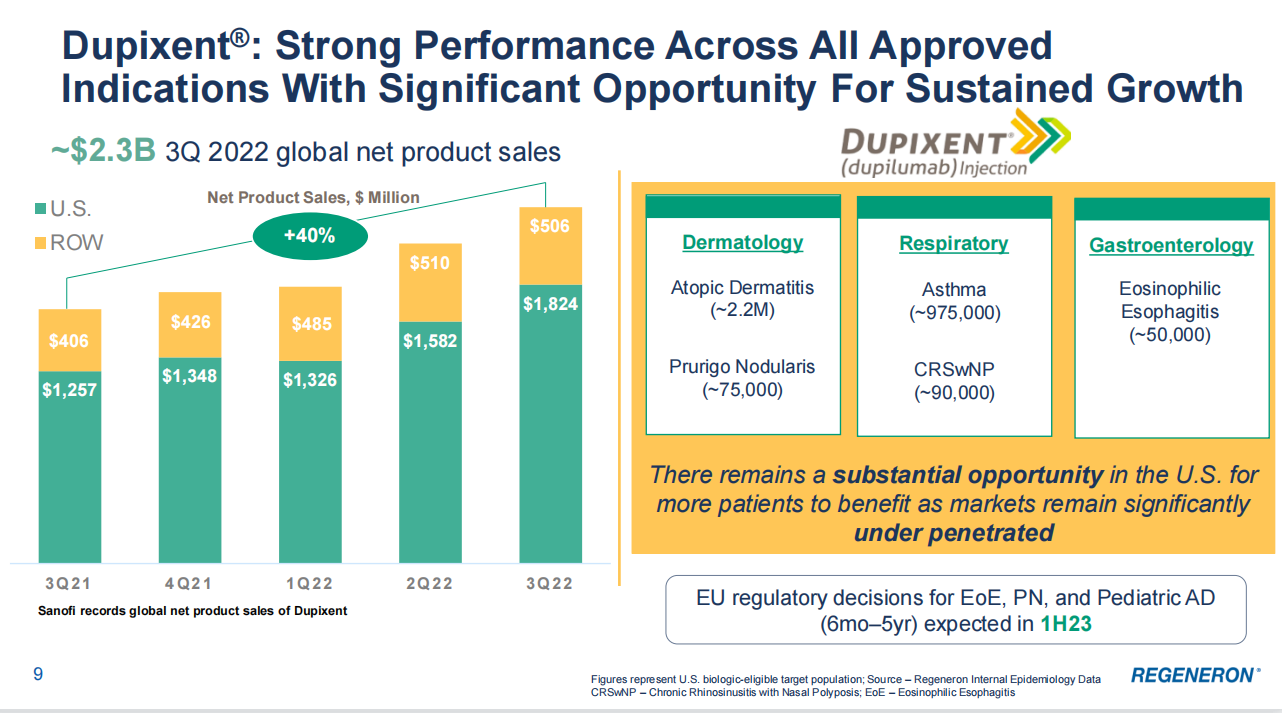
In July 2017, the U.S. FDA first approved Dupixent for the treatment of adult patients with moderate-to-severe atopic dermatitis. Since its launch, the indications for Dupixent have continued to expand, with sales increasing year by year. In Q3 2022, the drug's sales reached $2.33 billion, a year-over-year increase of 40%, making it the main driver of growth for both Regeneron and Sanofi’s performance. Future peak sales are projected to exceed €10 billion.
Screenshot source: Regeneron official website
In China, the drug was first approved in June 2020 for the treatment of adult atopic dermatitis under the trade name Dupixent and has now been included in the national medical insurance catalog.
Sales of Other Drugs
Libtayo (cemiplimab) is a fully human anti-PD-1 monoclonal antibody co-developed by Regeneron and Sanofi, with the former responsible for the U.S. market and the latter for markets outside the U.S. The drug was first conditionally approved by the FDA in September 2018 for the treatment of adult patients with metastatic or locally advanced cutaneous squamous cell carcinoma (CSCC). Subsequently, it received approvals for advanced basal cell carcinoma (BCC), non-small cell lung cancer (NSCLC), and more. Although multiple PD-(L)1-targeted drugs have been launched globally, many cancer types do not respond to monotherapy. Regeneron is actively developing combination therapies to treat various cancers, and the future remains promising.
Praluent (alirocumab, PCSK9 inhibitor), a new drug co-developed by Regeneron and Sanofi, was approved by the U.S. FDA in April last year for adult patients with homozygous familial hypercholesterolemia (HoFH). In 2021, its sales reached $400 million, including $170 million in the U.S. market, but have declined this year.
REGEN-COV (COVID-19 neutralizing antibody, casirivimab and imdevimab), co-developed by Regeneron and Roche, achieved remarkable success in 2021 with total sales reaching $7.6 billion, but its sales have been lackluster this year due to viral mutations.
Evkeeza (evinacumab, ANGPTL3 inhibitor), like Praluent, belongs to lipid-lowering drugs. It was approved in the United States in February 2021 and in the European Union in June 2021 as an adjunctive therapy to other lipid-lowering treatments for adult and adolescent patients (≥12 years old) with HoFH.
Inmazeb (atoltivimab, maftivimab, and odesivimab-ebgn) is a neutralizing antibody cocktail therapy developed by Regeneron. It is the first FDA-approved drug for treating Ebola virus infection, ushering in a new era of monoclonal antibodies for combating viral diseases and global pandemics. This year, Inmazeb received the Galien Award, known as the "Nobel Prize of the pharmaceutical industry," in the category of Best Biotechnology Product.
Rich pipeline under research
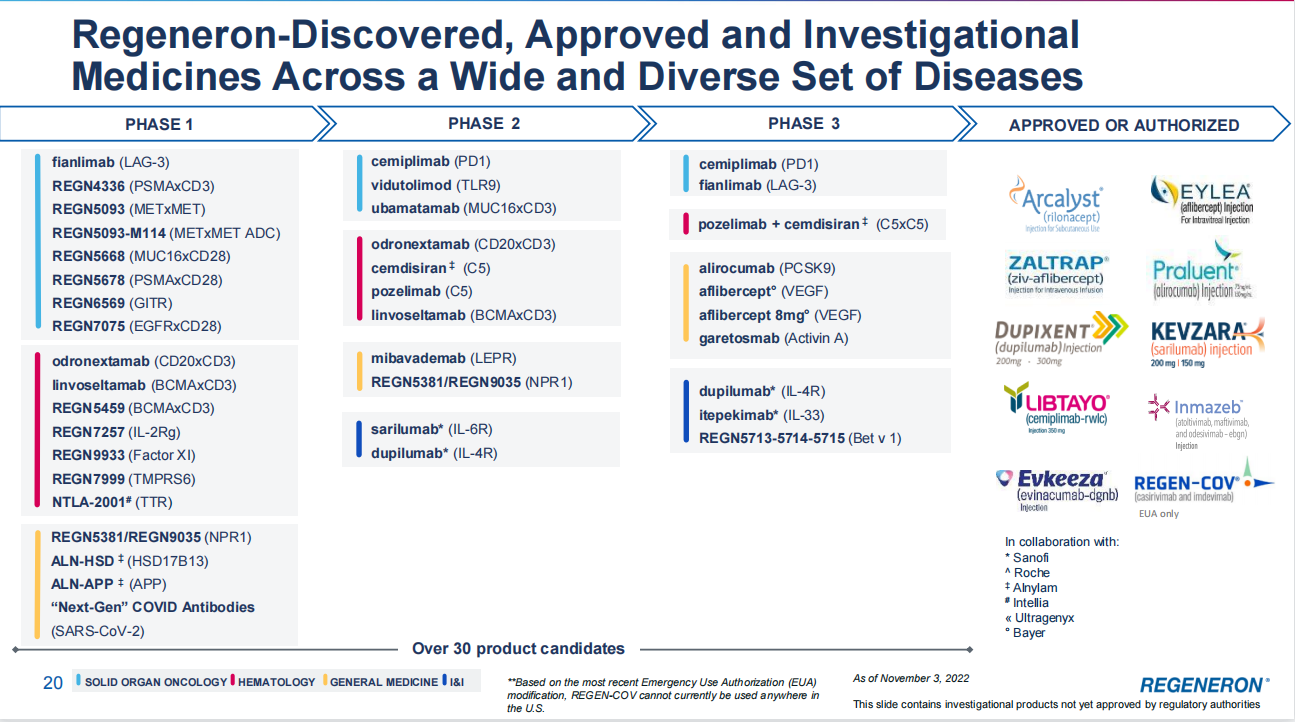
Regeneron has approximately 35 product candidates in clinical development, including the Phase III LAG-3 antibody Fianlimab (REGN3767), C5 antibody Pozelimab (REGN3918), IL-33 antibody Itepekimab (REGN3500), Bet v1 antibody EGN5713-5714-5715; as well as the Phase II BCMAxCD3 bispecific antibody linvoseltamab and CD20xCD3 bispecific antibody odronextamab, among others.
Screenshot source: Regeneron official website
Conclusion
It is worth mentioning that Regeneron, which owns the two major technology platforms Trap and VelociSuite, has successfully minimized its R&D costs. According to statistics from Forbes, the average R&D investment by most pharmaceutical companies for each drug is around 4.3 billion US dollars, while Regeneron's cost investment is only 736 million US dollars.
As a rising star, Regeneron is now a large pharmaceutical company with a market value of approximately 80 billion US dollars, proving with its strength that innovative R&D is the only way forward for the pharmaceutical industry. In recent years, China's biopharmaceutical industry has entered a period of prosperity. Where is China's Regeneron? Welcome to discuss with the editor~

Editor: Liu Li
Disclaimer: The views expressed in this article are solely those of the author and do not represent the position of Pharma Intelligence Network. We welcome discussions and additional insights in the comment section; for reprints, please be sure to credit the author and source. If there are any issues regarding the content, copyright, or other aspects of the work, please leave a message on this platform, and we will remove it promptly.