

77.2% Objective Response Rate Achieved: Qilu Pharmaceutical Announces Phase II Results of Novel Combination Antibody QL1706 in Cervical Cancer

Qilu Pharmaceutical
Specialty Formulations and Active Pharmaceutical Ingredients (API) Developer
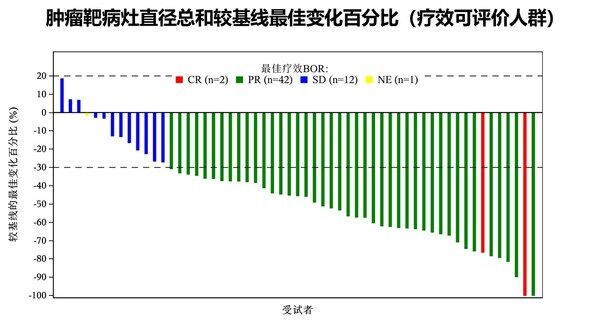
ShanghaiNovember 7, 2022/PR Newswire/ -- November 5-12, 2022, "Chinese Society of Clinical Oncology (CSCO)Annual Conference Academic Week"Held in five cities: Beijing, Shanghai, Guangzhou, Harbin, and Jinan. At the conference, Qilu Pharmaceutical presented the latest results of the Phase II study of its investigational novel combination antibody QL1706 in the form of a poster. The study aims to evaluate the safety and efficacy of QL1706 in combination with paclitaxel-cisplatin/carboplatin with or without bevacizumab as first-line treatment for recurrent or metastatic cervical cancer. The study, led by President Danbo Wang of Liaoning Cancer Hospital and Director Naifu Liu of Shandong Cancer Hospital, was conducted across 13 clinical research centers in China. Data showed that the objective response rate (ORR) was 77.2% in patients with recurrent or metastatic cervical cancer who had not received systemic treatment, following treatment with QL1706 combined with chemotherapy with or without bevacizumab."

Worldwide, the incidence and mortality rates of cervical cancer rank high among women. More than half of the patients have already experienced disease progression at the time of diagnosis, losing the opportunity for radical surgery and requiring systemic anti-tumor treatment. QL1706 is a novel combination antibody therapy developed by Qilu Pharmaceutical's MabPair technology platform, simultaneously targeting programmed death receptor-1 (PD-1) and cytotoxic T-lymphocyte-associated protein 4 (CTLA-4) dual immune checkpoints. Preliminary results from earlier clinical studies indicate that QL1706 monotherapy has shown promising efficacy and safety in treating recurrent/metastatic cervical cancer.
This report describes an open, non-randomized, multi-center Phase II study. The subjects were patients with recurrent or metastatic cervical cancer who had not previously received systemic treatment. A total of 60 patients participated in the study and received treatment, divided into two cohorts: QL1706 combined with chemotherapy and QL1706 combined with chemotherapy + bevacizumab. Medication was administered once every three weeks. After completing six cycles of chemotherapy, chemotherapy could be discontinued while continuing to receive QL1706 with or without bevacizumab treatment until disease progression or intolerable toxicity, etc.
The study results indicate that QL1706 combined with chemotherapy, with or without bevacizumab, as a first-line treatment for recurrent or metastatic cervical cancer, has manageable and expected safety. The most common adverse reaction was decreased white blood cell count (48.3%), followed by anemia (33.3%). The incidence of serious adverse reactions was 20%. The incidence of immune-related adverse reactions was 23.3%.
QL1706 Combined with Chemotherapy, With or Without Bevacizumab, Demonstrates Excellent Antitumor Activity as First-Line Treatment for Recurrent or Metastatic Cervical Cancer. A total of 57 patients were included in the efficacy analysis, with an ORR of 77.2% and a disease control rate of 98.2%. As of the data cutoff, the median progression-free survival (PFS) and overall survival (OS) data are not yet mature. Currently, based on the results of this study, a Phase III clinical trial has been initiated to evaluate the efficacy and safety of QL1706 combined with paclitaxel-cisplatin/carboplatin, with or without bevacizumab, as first-line treatment for recurrent or metastatic cervical cancer.
More highlights:
Research report on QL1706 presented at the 2022 ASCO Annual Meeting published in the American Society of Clinical Oncology's *Journal of Clinical Oncology*
https://ascopubs.org/doi/abs/10.1200/JCO.2022.40.16_suppl.5535