

Pfizer Advances Standardized Quality Control in Breast, Lung, and Renal Cancers to Promote Equitable Oncology Care in China

Pfizer
Pharmaceutical R&D Developer
ShanghaiNovember 8, 2022/PR Newswire/ --November 7On the occasion of the Fifth China International Import Expo, Pfizer conducted a series of thematic activities in the oncology field under the theme of "Science for Victory, Together Overcoming Cancer," aiming to promote the homogeneity of cancer diagnosis and treatment and advance the equity of cancer treatment. In the first special session, "Cancer Quality Control • Precision 'Must Reach'," several clinical experts in the oncology field engaged in an in-depth discussion with Pfizer on the nationwide implementation of the quality control system for cancer diagnosis and treatment. They jointly released the "2022 Annual Report on Standardized Diagnosis and Treatment Quality Control of Breast Cancer in China," launched the "Provincial Quality Control System Construction for Standardized Diagnosis and Treatment of Lung Cancer in China," and initiated the "Construction of the Quality Control System for Standardized Diagnosis and Treatment of Kidney Cancer in China."
Professor Ma Fei, Director of the Medical Oncology Center at the National Cancer Center/Cancer Hospital, Chinese Academy of Medical Sciences; Professor Wang Zhijie, Chief Physician of the Department of Medical Oncology at the Cancer Hospital, Chinese Academy of Medical Sciences; Professor He Zhishong, Chief of the Department of Urology at Peking University First Hospital; Professor Pan Yueyin, Vice President of Anhui Provincial Cancer Hospital; Professor Wang Xiaojia, Director of the Department of Breast Medical Oncology at Zhejiang Cancer Hospital; Professor Song Qibin, Director of the Cancer Center at Renmin Hospital of Wuhan University; Ms. Wang Yiqin, General Manager of the Oncology Division, Pfizer Global Biopharmaceutical Commercial Group, China; and Dr. Cao Junyang, Chief Medical Officer and Vice President, Pfizer Global Biopharmaceutical Commercial Group, China, participated in the event through "cloud connectivity" and offline attendance respectively.

Roundtable Discussion on the Implementation of Quality Control System Construction for Breast Cancer, Lung Cancer, and Kidney Cancer
The Road to Quality Control of Tumor Diagnosis and Treatment in China is Long and Arduous
The latest cancer report in China released by the National Cancer Center shows that the incidence of several types of cancers, including breast cancer and lung cancer, is showing a continuous upward trend, presenting a severe situation for prevention and control. Due to the lack of obvious early symptoms, most kidney cancer patients are diagnosed at an advanced stage, posing significant challenges for its prevention and treatment. With the increase in the number of cancer patients in China, the demand for tumor diagnosis and treatment services has also risen. In recent years, the application scope of innovative treatments such as targeted drugs and immunotherapy has expanded. The overall diagnosis and treatment of tumors in China are moving towards a more individualized and precise multidisciplinary comprehensive treatment process. The importance of standardized cancer treatment is becoming increasingly prominent, and the promotion of standardized diagnosis and treatment for specific types of cancer has become key to improving the overall level and effectiveness of cancer treatment in China.
Since 2020, the National Health Commission and other departments in China have successively issued documents such as the "Notice on Further Strengthening the Quality Management and Control of Single Disease Conditions" and the "Notice on Printing and Distributing the Action Plan for Improving the Quality of Cancer Diagnosis and Treatment," to further effectively enhance the quality of cancer diagnosis and treatment in medical institutions and standardize diagnostic and treatment practices. With the support of hospitals at all levels across China, the National Cancer Center has been actively promoting the establishment of cancer quality control centers at various levels and strengthening the informatization network for cancer quality control. As the three-level (national-provincial-city) cancer quality control system advances and interaction between different levels increases, quality control efforts for various types of cancer are continuously being reinforced and improved.
Peng Zhenke, President of Pfizer's Global Biopharmaceutical Commercial Group in China, stated: "The development of standardized diagnosis and treatment is closely related to people's health. As an important participant in the global anti-cancer field, Pfizer actively responds to national policies based on its years of accumulation in the field of cancer treatment. It supports and promotes the construction of quality control systems for breast cancer, lung cancer, and kidney cancer with practical actions to fulfill the commitment of 'Science for victory, overcoming cancer together.' We hope to leverage the radiation of the cancer quality control project to grassroots medical care across China, ‘bringing breakthrough innovations that can change the lives of Chinese patients.’"
Pfizer Actively Supports the Implementation of Quality Control System for Breast Cancer, Lung Cancer, and Kidney Cancer
The "Healthy China 2030" Plan Outline states that improving the level and quality of medical services requires establishing a medical quality management and control system that aligns with international standards while reflecting Chinese characteristics. The field of oncology has always been a key focus for Pfizer, which actively responds to the Chinese government's call for chronic disease management of cancer. Pfizer supports and promotes the construction of quality control systems for breast cancer, lung cancer, and kidney cancer, demonstrating its commitment to patients in China through concrete actions.
Breast cancer is the leading malignant tumor that poses a serious threat to women's health worldwide. Since 2019, Pfizer has been supporting and cooperating with the National Cancer Center in launching the first single-disease quality control project for breast cancer, showcasing its quality control support efforts through the spillover effects of the CIIE platform. From supporting the establishment of academic platforms to assisting in the development of quality control indicators, as well as conducting nationwide pilot lectures, Pfizer has provided comprehensive support for the implementation of breast cancer quality control initiatives. With the unveiling and advancement of key projects such as the "Critical Ten-Year Action for Breast Cancer Health" and the *Yearbook of Standardized Diagnosis and Treatment Quality Control for Breast Cancer in China*, the establishment of a quality control system for breast cancer has become an experience and model that can be referenced for the implementation of quality control in other single diseases. Professor Ma Fei, Director of the Medical Oncology Center at the National Cancer Center/Cancer Hospital, Chinese Academy of Medical Sciences, stated: "The consecutive release of the *Yearbook of Standardized Diagnosis and Treatment Quality Control for Breast Cancer in China* over the past two years aims to identify issues in clinical breast cancer diagnosis and treatment promptly. Through this approach, we hope to better promote improvements in the quality of diagnosis and treatment, support the establishment and refinement of China’s breast cancer diagnosis and treatment quality control system, provide patients with more standardized and precise comprehensive treatment options, and ultimately enhance long-term survival rates and quality of life for breast cancer patients."

Release Ceremony of "China Breast Cancer Standard Diagnosis and Treatment Quality Control Yearbook 2022"
Lung cancer ranks first in both incidence and mortality among malignant tumors. With the recent advancements in lung cancer treatment, grassroots healthcare institutions across China should also enhance their application of new methods and concepts. Since 2021, Pfizer has been implementing quality control measures for lung cancer in China. To date, five provincial expert committees on lung cancer quality control have been established in Anhui, Chongqing, Henan, Jiangsu, and Jiangxi, and the initial pilot program involving 123 standardized diagnosis and treatment centers has been successfully launched. Professor Wang Zhijie from the Cancer Hospital of the Chinese Academy of Medical Sciences stated: "Currently, the development of lung cancer quality control capabilities is proceeding as planned. Moving forward, we will focus on multidisciplinary team (MDT) diagnosis and treatment, promoting the implementation of various standards and guidelines through standardized lectures and training programs targeting the seven key competencies in lung cancer care. This effort aims to gradually establish a nationwide model for standardized diagnosis and treatment in the field of lung cancer, facilitating the implementation of quality control work in more regions across China."
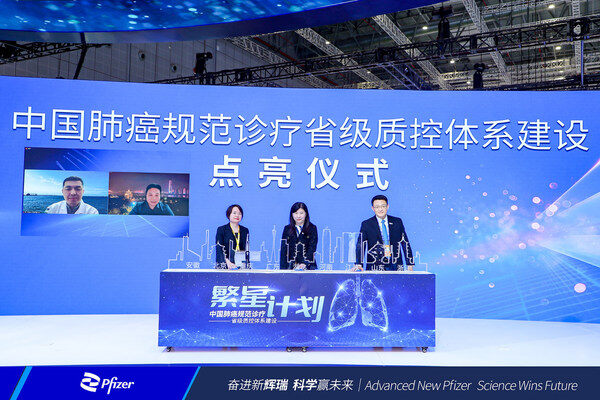
"Lighting Ceremony for the Construction of Provincial Quality Control System for Standardized Diagnosis and Treatment of Lung Cancer in China"
"Lighting Ceremony of Provincial Quality Control System Construction for Standardized Diagnosis and Treatment of Lung Cancer in China" In December 2021, the National Expert Committee on Tumor Quality Control for Renal Cancer was established. By the end of this year, the quality control indicators for renal cancer will be officially released, and Pfizer will begin to support related work on the construction of the renal cancer quality control system. Professor He Zhishong, Director of the Department of Urology at Peking University First Hospital, stated: "The treatment plan for patients with advanced renal cancer is relatively complex, and the prognosis of patients is closely related to the standardization of diagnosis and treatment. According to the requirements and work plans for the construction of renal cancer quality control capabilities, and drawing on the implementation experience of quality control construction for tumor types such as breast cancer and lung cancer, we will gradually carry out the interpretation of renal cancer quality control indicators, planning and construction of core capabilities for renal cancer quality control, and the establishment of academic platforms and academic exchanges for standardized diagnosis and treatment of renal cancer. We aim to accelerate the selection and implementation of the first batch of pilot sites for standardized diagnosis and treatment quality control for renal cancer."
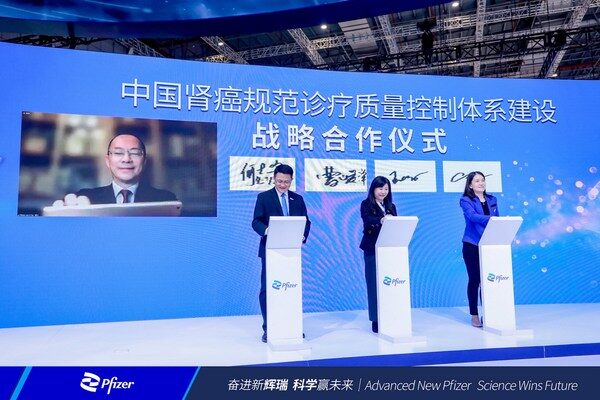
"Strategic Cooperation Ceremony for the Construction of China's Quality Control System for Standardized Diagnosis and Treatment of Kidney Cancer"
Yiqin Wang, General Manager of the Oncology Division of Pfizer's Global Biopharmaceutical Commercial Group in China, stated: "As a biopharmaceutical company that puts patients first, Pfizer actively promotes the coordinated development of the oncology ecosystem and explores the full-course management and practice for cancer patients. Since 2019, Pfizer has participated in and supported the exploration of standardized quality control in China’s cancer diagnosis and treatment, contributing to the establishment and nationwide implementation of quality control systems for breast cancer, lung cancer, and kidney cancer, as well as assisting in building a single-disease cancer diagnosis and treatment system from the national to provincial to municipal levels. In the future, we will continue to uphold the concept of 'Science Will Win, Together We Conquer Cancer,' actively collaborate with the Chinese government, industry, and society, fulfill Pfizer's responsibilities and mission, better support the nationwide implementation of single-disease quality control efforts, help more patients achieve a better quality of life, and advance the realization of the 'Healthy China 2030' goals."