

Multiomics Study of Nonalcoholic Fatty Liver Disease Identifies Novel Therapeutic Targets and Diagnostic Biomarkers

Amgen
Developer of Treatment Drugs for Serious Diseases
Non-alcoholic fatty liver disease(NAFLD, Nonalcoholic fatty liver disease) and its sequelae are increasingly prevalent health issues in the global population. Recently, an article published in an international journalNature GeneticsThe research report titled "Multiomics study of nonalcoholic fatty liver disease"Scientists from institutions such as Amgen have conducted a large-scale genome-wide association study on the population with non-alcoholic fatty liver disease. The results identified sequence mutations associated with non-alcoholic fatty liver disease, including rare protective loss-of-function mutations pointing to rare drug targets, among others. Additionally, plasma proteomic analysis may provide deeper insights into the pathological mechanisms underlying human non-alcoholic fatty liver disease.
Non-alcoholic fatty liver disease (NAFLD) is a health issue that threatens human health. It is estimated that up to 25% of the global population is affected by this condition. NAFLD represents the first stage in disease progression, defined as the liver being covered by more than 5% fat without a determined cause, which may be due to reasons such as excessive alcohol consumption. NAFLD can progress to non-alcoholic steatohepatitis (NASH), which may further advance to cirrhosis or hepatocellular carcinoma. Currently, it is difficult for scientists to target NAFLD for intervention.DiagnosisAnd monitoring, there is also no targeted therapeutic therapy, so identifying potential drug targets and biomarkers becomes particularly important.
In this research report, the researchers conducted a large-scale genome-wide association study on non-alcoholic fatty liver disease, cirrhosis, and hepatocellular carcinoma, and integrated the findings with expression and proteomic data. The researchers noted that for non-alcoholic fatty liver disease, in addition to the proton density fat fraction (PDFF) extracted from 36,116 liver MRIs, there were also 9,491 clinical cases from Ireland, the UK, the US, and Finland. Besides the sequence variants discovered in the Icelandic population, the researchers identified rare, protective, loss-of-function-predicting MTARC1 and GPAM variants, which might suggest that inhibiting MTARC1 or GPAM could potentially aid in treating non-alcoholic fatty liver disease or non-alcoholic steatohepatitis.
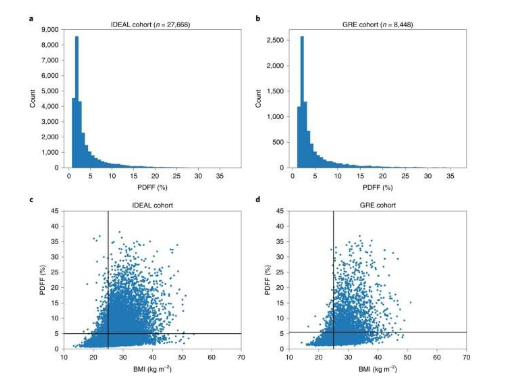
Successful multi-omics research on human non-alcoholic fatty liver disease may help develop new diagnostic and therapeutic strategies.
Image Source:Nature Genetics (2022). DOI:10.1038/s41588-022-01199-5.
By analyzing the levels of thousands of proteins measured in plasma, the researchers identified potential biomarkers for diseases, disease progression, and target engagement. They also used proteomic data to construct a research model capable of distinguishing between non-alcoholic fatty liver disease and cirrhosis. These findings provide an approach and research foundation for developing non-invasive tools to evaluate the diagnosis of non-alcoholic fatty liver disease.
In addition, by observing the associations with other 52 phenotypes and traits, the researchers further explored the pleiotropic effects of the discovered mutants. BMI is one of the most common risk factors for non-alcoholic fatty liver disease. Longitudinal PDFF study results indicate that individuals carrying the known non-alcoholic fatty liver disease risk mutation p.Ile148Met on the PNPLA3 gene are more susceptible to the effects of BMI changes than non-carriers. To date, this study is one of the largest conducted on the genetic basis of non-alcoholic fatty liver disease, and its findings may help researchers develop new diagnostic tools and therapies to aid in treating patients affected by non-alcoholic fatty liver disease.
In summary, the results of this study indicate that proteomics data may have the potential to distinguish between non-alcoholic fatty liver and non-alcoholic steatohepatitis. The findings could potentially assist researchers in developing novel non-invasive assessment methods and new therapeutic strategies for non-alcoholic fatty liver.(BioValleyBioon.com)
Original Source:
Sveinbjornsson, G., Ulfarsson, M.O., Thorolfsdottir, R.B. et al. Multiomics study of nonalcoholic fatty liver disease. Nat Genet (2022). doi:10.1038/s41588-022-01199-5