

Beyfortus (Nirsevimab) Receives First Global Regulatory Approval as a Single-Dose Passive Immunization for RSV Prevention in All Infants
Sanofi
Pharmaceutical R&D Developer
AstraZeneca
Biopharmaceutical Manufacturer
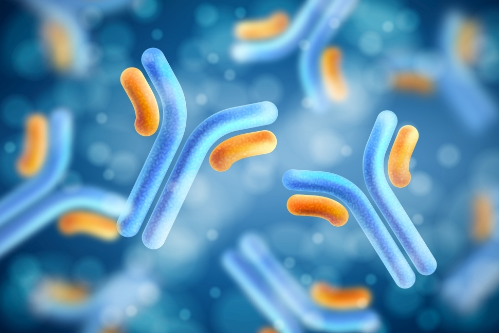
Image Source: Shutterstock
News on November 5, 2022 /BioValleyBIOON/ -- AstraZeneca and Sanofi jointly announced that the European Commission (EC) has approvedBeyfortus (nirsevimab): As a single-dose passiveImmunityTherapy for all newborns and infants to prevent RSV lower respiratory tract disease (LRTI) during their first Respiratory Syncytial Virus (RSV) season.. This approval marks the first regulatory approval for Beyfortus worldwide.
The approval and marketing of Beyfortus marks a milestone in RSV preventionBeyfortus isThe first single-dose preventive regimen approved for RSV, and also the first and only RSV preventive regimen for a broad population of newborns and infants, including full-term or preterm infants who are healthy or have specific health conditions.RSV is a common and highly contagious seasonal virus,Almost all children will be infected with RSV before the age of 2。
Beyfortus is the first long-acting antibody to provide RSV protection for a broad population of newborns and infants.Beyfortus is a groundbreaking passive immunotherapy for infants, designed for all babies. With just a single intramuscular injection, it provides continuous protection against RSV disease from birth until the end of the first RSV season.Currently, Beyfortus is being developed for infants who will experience their first RSV season and children at higher risk during their second RSV season.
This approval is based on the clinical development program of Beyfortus, including the MELODY Phase 3 trial, the MEDLEY Phase 2/3 trial, and a Phase 2b trial (NCT02878330). These trials confirmed the safety and efficacy of Beyfortus in providing protection for all infants through a single dose during the RSV season.
Specifically, in the pivotal MELODY efficacy trial, Beyfortus met the primary endpoint:After receiving a single dose injection, on Day 151 (a typical RSV season), Beyfortus reduced the incidence of lower respiratory tract infections (LRTI) caused by RSV by 74.5% (95% CI: 49.6, 87.1; p < 0.001) compared to placebo.. In the MEDLEY Phase 2/3 trial,Beyfortus also demonstrated safety and tolerability similar to Synagis (palivizumab).The incidence of treatment-emergent adverse events (TEAEs) and treatment-emergent serious adverse events (TESAEs) was similar between the two groups.
Iskra Reic, Executive Vice President of AstraZeneca's Vaccines and Immune Therapies, stated: "Beyfortus is the first single-dose preventive solution against RSV to be approved in Europe, and the first and only preventive solution approved for a broad infant population. Today’s marketing approval of Beyfortus marks a significant scientific achievement, addressing a persistent global unmet medical need in RSV prevention."
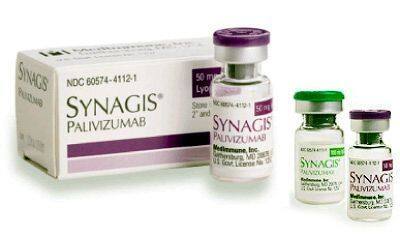
The marketed product for preventing RSV in infants and young children: Synagis
RSV is a very common infectious pathogen that can cause seasonal epidemics of LRTI (including bronchiolitis and pneumonia). Globally, RSV is the leading cause of hospitalization in infants and young children.
The active pharmaceutical ingredient in Beyfortus, nirsevimab, is aLong-acting anti-RSV monoclonal antibody,With an extended half-life, averaging (±SD) 59.3 days (±9.6 days).Clinical data show that, after receiving a single-dose injection, 97.9% of infants had serum concentrations above the target 90% effective concentration threshold of 6.8 μg/mL on day 151; after 91 days, the mean serum concentration of nirsevimab showed a proportional decrease without any non-linear signs.
Nirsevimab, which uses AstraZeneca's proprietary YTE technology, is being co-developed by AstraZeneca and Sanofi as a passive immunotherapy to directly provide all infants with immunity through a single-dose intramuscular injection that offers immediate protection against RSV throughout the RSV season.
As of now, nirsevimab has received qualification designations aimed at facilitating rapid development from multiple regulatory agencies worldwide, including: the National Medical Products Administration of China.ManagementCenter for Drug Evaluation (CDE) of the National Medical Products Administration (NMPA) granted Breakthrough Therapy Designation, United StatesFDABreakthrough Therapy Designation granted by the FDA, Priority Medicines (PRIME) designation granted by the European Medicines Agency (EMA), and "Priority Development Drug" designation granted by the Japan Agency for Medical Research and Development (AMED).
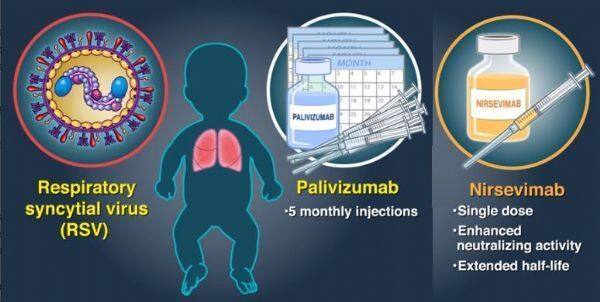
Advantages of nirsevimab over the marketed drug Synagis (Source: NEJM)
Respiratory Syncytial Virus (RSV) is a common contagious virus that infects the respiratory tract and is the leading cause of acute lower respiratory tract infections (LRTI, mainly bronchiolitis and pneumonia) in infants and young children. Data shows that nearly all infants and young children will have had at least one RSV infection before the age of 2, with infants under 6 months being the primary affected group. RSV is highly contagious and can spread from person to person through droplets or contact. The RSV epidemic season occurs annually from autumn to the following spring, with a typical RSV epidemic season lasting 5 months.
The current anti-RSV antibody Synagis (palivizumab) is limited to high-risk infants, offering only one month of protection and requiring five injections to cover a typical RSV season.
Nirsevimab is an RSV monoclonal antibody with an extended half-life, developed as a passive immunotherapy to prevent RSV-induced LRTI. The product aims to be used in a broader population of infants than the current standard of care, including: infants entering their first RSV season, and infants with congenital heart disease or chronic lung disease who will experience their first and second RSV seasons.
Nirsevimab is a passive immunotherapy, which means directly providing antibodies to infants to help prevent RSV; passive immunity is different from active immunity, the latter being the prevention or fighting of RSV infection by activating the human immune system through vaccination.Passive immunity can provide immediate protection, while active immunity takes weeks to become protective.
In March 2017, AstraZeneca and Sanofi reached an agreement to develop and commercialize nirsevimab. According to the terms of the agreement, AstraZeneca leads all development activities and initial regulatory approvals, and retains production activities, while Sanofi will lead commercialization activities. (Bioon.com)
Source of Original Text:Beyfortus approved in the EU for the prevention of RSV lower respiratory tract disease in infants