

Novartis’ Leqvio (Inclisiran) Demonstrates Sustained LDL-C Reduction and Favorable Safety Over Four Years in ORION-3 Trial

Novartis
Drug Development and Manufacturing
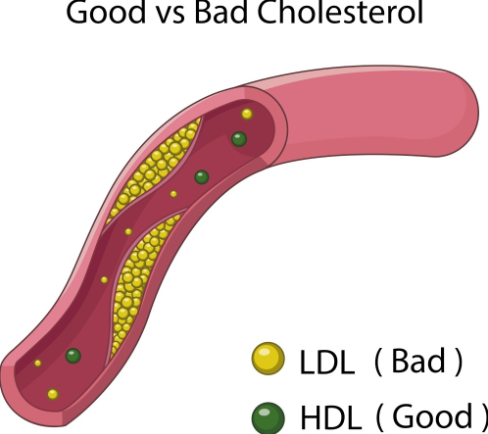
Image source: Shutterstock
News on November 9, 2022 /BioValleyBIOON/ -- Novartis recently announced at the 2022 American Heart Association Scientific Sessions (AHA 2022)siRNA DownCholesterolDrug Leqvio (Inclisiran)Results of the ORION-3 trial (NCT03060577). ORION-3 is an open-label, non-randomized extension study of the Phase 2 ORION-1 trial, evaluating the long-term safety and efficacy of Leqvio. The trial involved 233 patients.Patients with atherosclerotic heart diseaseBlood VesselThe study was conducted in patients with atherosclerotic cardiovascular disease (ASCVD, approximately 1210 patient-years) or those with ASCVD risk equivalents, whose low-density lipoprotein cholesterol (LDL-C) levels remained high despite receiving the maximum tolerated dose of statin therapy.
Leqvio is the first and only small interfering RNA (siRNA) therapy for lowering LDL-C ("bad" cholesterol).The drug is administered via subcutaneous injection, with one dose given at months 0 and 3,Maintenance phase: once every 6 months, only 2 injections per year.Compared with cholesterol-lowering therapies available on the market, Leqvio can significantly improve long-term adherence.
The results published at the meeting showed,During the 4-year study period, Leqvio, as a supplementary therapy to statins, effectively and continuously reduced LDL-C: In patients receiving Leqvio, LDL-C was reduced by an average of 47.5% (95% CI: -50.69, -44.27) from baseline (Day 1 of the ORION-1 trial) to Day 210. With twice-yearly dosing, the time-averaged reduction in LDL-C over the 4-year period was 44.2%.
The current evidence suggests, elevated LDL-C is one of the most easily modifiable risk factors for atherosclerotic cardiovascular disease (ASCVD); however, despite the widespread use of statins, four out of five patients do not achieveGuidelinesRecommended LDL-C TargetThe data released at the meeting showed,At any time point throughout the ORION-3 trial, approximately 80% of patients treated with Leqvio reached LDL-C levels <70mg/dL.
The ORION-3 trial provides the longest safety follow-up to date in Leqvio studies. After four years of treatment, Leqvio was well-tolerated, with a safety profile consistent with the previous 18-month Phase 3 LDL-C reduction study. The most common drug-related treatment-emergent adverse events (TEAEs) were general disorders and injection-site reactions, most of which were mild to moderate, consistent with prior studies.
In addition to the ORION-3 trial data presented at the AHA Scientific Conference, a comprehensive exploratory safety analysis of the Phase III ORION trials titled "Inclisiran and cardiovascular events: a patient-level analysis of Phase III trials," published in the European Heart Journal on November 4, has added to the growing body of safety evidence for Leqvio.
Professor of Public Health, Department of Public Health and Primary Care, Imperial College London, Imperial College NHS TrustFundHonorary Cardiology Consultant Kausik Ray said: "WeResults observed in patients four years after treatment indicate that Leqvio is well-tolerated and can help reduce LDL-C while maintaining and stabilizing its levels over time.Currently, there are still too many patients struggling to reach their LDL-C target levels.A therapy that provides a sustained reduction in LDL-C through a twice-yearly maintenance dose regimen could be a turning point in the treatment of ASCVD.”
Under a licensing and collaboration agreement with Alnylam Pharmaceuticals, the leader in RNAi therapeutics, Novartis has obtained global rights to develop, manufacture, and commercialize Leqvio. To date, Leqvio has been approved in more than 60 countries worldwide, including the United States and EU member states.In the United States, Leqvio is indicated as an adjunct to diet and maximally tolerated statin therapy for the treatment of adults with clinical atherosclerotic cardiovascular disease (ASCVD) or heterozygous familial hypercholesterolemia (HeFH) who require additional lowering of LDL-C levels.
In the EU, Leqvio is indicated as an adjunct to diet for the treatment of adult patients with primary hypercholesterolemia (heterozygous familial and non-familial) or mixed dyslipidemia.Specifically: (1) Leqvio in combination with statins or statins and other lipid-lowering therapies, for the treatment of patients who are unable to reach LDL-C treatment goals with the maximum tolerated dose of statins; (2) Leqvio in combination with other lipid-lowering therapies, for the treatment of patients who are statin-intolerant or have contraindications to statins.
It is worth mentioning that,Leqvio is the world's first and only small interfering RNA (siRNA) therapy for lowering cholesterol (LDL-C).The active ingredient of this drug is inclisiran, a first-of-its-kind siRNA with a novel mechanism of action that potently and persistently lowers LDL-C levels in patients with atherosclerotic cardiovascular disease (ASCVD), ASCVD risk equivalents, or heterozygous familial hypercholesterolemia (HeFH) through RNA interference (RNAi). These conditions are major drivers of heart attacks and strokes and may ultimately lead to patient death.
Atherosclerosis corresponds to the accumulation of lipids over time, primarily the buildup of low-density lipoprotein cholesterol (LDL-C) in the arterial walls.The unexpected rupture of atherosclerotic plaques can lead to atherosclerosis-relatedCardiovascular Events, such as a heart attack orStroke。ASCVD accounts for more than 85% of all cardiovascular disease deaths.ASCVD is the leading cause of death in the European Union, and the burden of ASCVD in the United States is greater than that of any other chronic disease. ASCVD risk equivalents correspond to conditions that can lead to a similar risk of ASCVD events (e.g.,Diabetes, Heterozygous Familial Hypercholesterolemia).
Despite the widespread use of statins, 80% of high-risk patients do not achieve the guideline-recommended LDL-C target.Clinical data show that in patients receiving the maximum tolerated dose of statin therapy but with elevated LDL-C, Leqvio effectively and sustainably reduces LDL-C levels by 52% compared to placebo, with a safety profile similar to placebo. Through a unique twice-yearly dosing regimen, Leqvio can seamlessly integrate into patients' regular medical visits, improving adherence and enhancing patient outcomes.
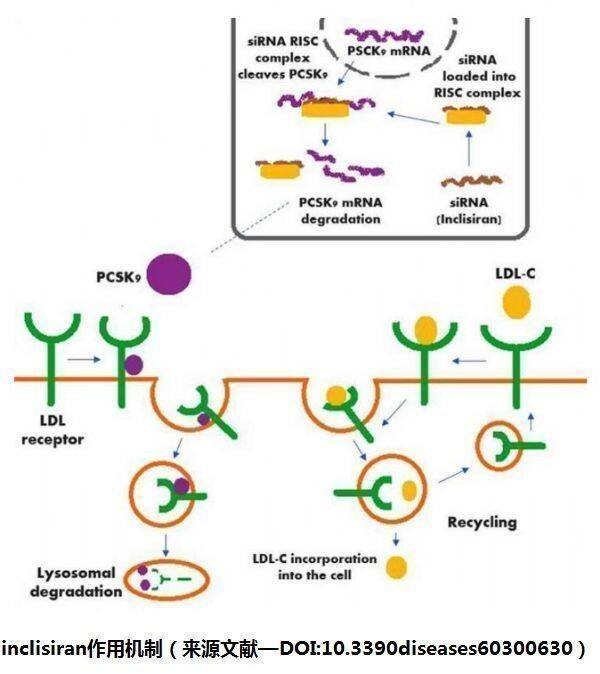
Inclisiran is the first cholesterol-lowering therapy in the siRNA class, targeting proprotein convertase subtilisin/kexin type 9 (PCSK9), a key mechanism in the body’s regulation of LDL-C. The PCSK9 protein reduces the liver's ability to remove low-density lipoprotein cholesterol (LDL-C) from the bloodstream, and LDL-C is widely recognized as a major risk factor for cardiovascular disease (CVD). The PCSK9 target offers a completely new therapeutic approach to combating LDL-C and is considered the most significant advancement in lipid-lowering since statins (such as Lipitor).
Inclisiran is an siRNA that utilizes the natural process of RNA interference in the human body, binding to the mRNA encoding PCSK9 protein, reducing mRNA levels through RNA interference, preventing the liver from producing PCSK9 protein, thereby enhancing the liver's ability to remove LDL-C from the blood and achieving a reduction in LDL-C levels.
As of now, two monoclonal antibody drugs targeting the inhibition of PCSK9 protein have been approved for marketing: Repatha from Amgen and Praluent from Sanofi/Regeneron.Unlike monoclonal antibody PCSK9 inhibitors, as an RNAi drug, inclisiran works by directly shutting down the production of PCSK9 protein in the liver.(Bioon.com)
Source of the original text:New long-term Leqvio (inclisiran) data from Novartis show sustained efficacy and safety over four years