

AstraZeneca Launches First Rare Disease Innovative Drug Soliris® (Eculizumab) in China at the 5th CIIE, Deepening Local Commitment

AstraZeneca
Biopharmaceutical Manufacturer
Deepening Local Commitment in the Rare Disease Field
ShanghaiNovember 11, 2022PR Newswire -- November 11, 2022 - At the 5th China International Import Expo, with the theme "United by Rarity, Advancing into the Future Together,"Presented by AstraZenecaIts new therapeutic area Rare Disease business layout in China. During this period, AstraZeneca officially announced its launch in China.The FirstRare Disease Innovation Drug Suliri®(Eculizumab) This drug has been approved in China for the treatment of adults and children with paroxysmal nocturnal hemoglobinuria (PNH) and atypical hemolytic uremic syndrome (aHUS). In addition, AstraZeneca and CanSino have reached a strategic cooperation agreement to explore development opportunities in the field of rare disease diagnosis and treatment. AstraZeneca has also made substantial progress with the Qingdao government in the construction of a Qingdao regional headquarters and innovation ecosystem focused on rare diseases. Both parties will further deepen their cooperation in the introduction of innovative drugs for rare diseases and diagnostic services.

AstraZeneca Introduces Suliri®(R), Its First Rare Disease Drug in China, and Launches the Construction of a Rare Disease Ecosystem Hub in Qingdao
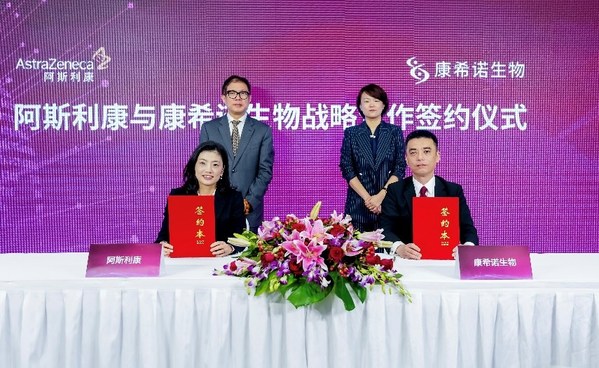
AstraZeneca and CanSino Biologics Reach Strategic Cooperation Agreement
As China increasingly prioritizes rare disease populations, significant progress has been made in multiple areas including rare disease research, diagnosis and treatment, drug development and supply, and the healthcare security system. In 2021, AstraZeneca entered the rare disease field by acquiring Alexion Pharmaceuticals. At this year's CIIE, AstraZeneca showcased for the first time the world’s first approved C5 complement inhibitor, Eculizumab, developed by Alexion, and announced its market launch in China. Leveraging the open, inclusive, and mutually beneficial platform of the CIIE, AstraZeneca will facilitate the availability of this rare disease drug in cities such as Suzhou, Qingdao, Beijing, Shanghai, Tianjin, and Hangzhou, benefiting patients.
Professor Rong Fu, Vice President of Tianjin Medical University General Hospital, stated: "Paroxysmal nocturnal hemoglobinuria (PNH) is a life-threatening rare blood disorder, with symptoms including anemia, bone marrow failure, hemoglobinuria, and thrombosis. Previously, the main treatments for PNH were symptomatic, including blood transfusions, glucocorticoids, and immunosuppression. However, traditional therapies face many challenges in controlling hemolysis and preventing kidney damage. The launch of eculizumab in China has been anticipated by the industry for many years, offering a revolutionary treatment option for Chinese PNH patients."
Professor Jianhua Mao, Vice President of the Children's Hospital affiliated to Zhejiang University School of Medicine, stated: "Atypical hemolytic uremic syndrome (aHUS) is a rare and fatal thrombotic microangiopathy (CM-TMA). Plasma therapy was the initial approach for managing aHUS, but its efficacy has been unsatisfactory, with some patients even requiring dialysis and kidney transplantation. In recent years, with a deeper understanding of the pathogenesis of aHUS, C5 complement inhibitors have become one of the treatment options. Global data shows that eculizumab has good long-term safety and tolerability, and its launch in China is expected to significantly improve the quality of life for patients with aHUS."
The diagnosis and treatment of rare diseases is not only a medical issue but also an important social matter that requires the participation of multiple parties. At the CIIE, based on CanSino's technological and developmental advantages in the vaccine field and AstraZeneca's resource advantages in biopharmaceuticals and ecological innovation, the two parties have strengthened their cooperation in the field of rare disease diagnosis and treatment with the aim of benefiting more patients with rare diseases.
"Having medicines to treat and medical insurance to cover" is the key to enabling every group to realize the Healthy China Dream. In recent years, the state has successively introduced a number of healthcare policies benefiting the people for rare diseases, and local governments have actively explored suitable rare disease protection systems. The Qingdao municipal government has not only focused on the biopharmaceuticals industry but also formed an innovative diagnosis, treatment, and protection system in the field of rare diseases.
In June 2022, AstraZeneca and the Qingdao Municipal Government held in-depth discussions on promoting the innovative development of Qingdao's biopharmaceutical industry. Both parties reached a strategic memorandum to establish AstraZeneca’s China Regional Headquarters in Qingdao. With the official inauguration of AstraZeneca’s China Qingdao Regional Headquarters at this year’s CIIE, the Intelligent Healthcare Innovation Center focused on rare diseases, the Life Science Innovation Park, and the Healthcare Industry Fund have also settled in Qingdao. These three innovative "driving forces" will connect high-quality resources from home and abroad, accelerate the clustering of biopharmaceutical innovation resources, and help Qingdao become a leading hub for rare disease diagnosis and treatment innovation in China.
Professor Chuanzhu Yan, Vice President of Qilu Hospital of Shandong University, stated: "Qingdao is actively working to establish itself as a national and provincial regional medical center. It has made some beneficial explorations in the diagnosis, treatment, and support for rare diseases, while accelerating the development and introduction of high-quality innovative drugs. Deepening standardized diagnosis and treatment for rare diseases are crucial components. We hope that innovative drugs for rare diseases, including Eculizumab, can quickly benefit patients in Qingdao. We look forward to new progress in building Qingdao into a highland for the rare disease ecosystem, providing ‘Qingdao momentum’ for the development of China’s rare disease initiatives."
Leo Wang, Executive Vice President of AstraZeneca Global, President of International Business and China, stated: "Rare diseases are a significant health challenge faced globally and one of the new therapeutic areas that AstraZeneca Global cares about the most. We have the responsibility and confidence to take on the mission of leading with innovation. We are delighted to leverage the Fifth China International Import Expo (CIIE) to make innovative global rare disease drugs accessible to Chinese patients. In the future, AstraZeneca will continue to support all partners in exploring multi-level insurance models to help alleviate the medical burden on rare disease patients and enhance their healthcare rights. We eagerly look forward to promoting standardized whole-process management for rare diseases, and helping Qingdao’s innovations expand beyond the region to benefit all of China."
Rooted in China for nearly 30 years, AstraZeneca, with its strong scientific research capabilities and leadership in the innovation ecosystem, has introduced nearly 40 innovative drugs in the fields of oncology and chronic diseases, while continuously expanding into new therapeutic areas including rare diseases, COVID-19, and autoimmune disorders. Leveraging the resources of its regional headquarters, AstraZeneca collaborates with governments, industries, academia, research institutions, medical professionals, and investors to build multiple innovation ecosystems focused on specific disease areas. With a clear vision, AstraZeneca will actively utilize the high-quality open platform of the CIIE to push the boundaries of scientific innovation alongside various partners, ensuring every group can equally benefit from the "Healthy China" initiative.
Disclaimer: The other indications involved in this article have not been approved in China, and AstraZeneca does not recommend the use of any unapproved drugs.