

Kunshi Biotech and Puheng Tech Forge Strategic Partnership to Develop a High-Throughput CAR-Macrophage Screening Platform Based on 3D In Vitro Solid Tumor Models

Rock Roc Biotechnology
Macrophage Chimeric Antigen Receptor Therapy Developer
Recently, ROC ROCK Biotechnology (Shenzhen) Co., Ltd. ("ROC ROCK Biotechnology") and Rock Roc Biotechnology Co., Ltd. ("Rock Roc Biotechnology") signed a strategic cooperation agreement. The two parties will utilize the 3D NAC-Organ technology platform to establish a high-throughput in vitro screening system for CAR-Macrophage cells, aiming to accelerate the development of novel immune cell therapies for solid tumors.
Currently, the number of cancer patients diagnosed globally each year is close to 20 million, with China being predominantly affected by solid tumors such as lung cancer, liver cancer, and stomach cancer. With the progression of an aging population, the ongoing treatment of cancer and related care have become increasingly severe societal issues in healthcare.
For end-stage cancer patients, tumor immunocyte therapy has become a star method in cancer treatment. Chimeric antigen receptor (CAR) T-cell therapy, for example, has shown remarkable success in hematologic malignancies but has very limited efficacy in treating solid tumors. Due to their unique killing ability and capacity to penetrate tumors, macrophages have drawn scientists’ attention. Researchers are now attempting to genetically engineer human macrophages to guide them in engulfing tumors. The engineered CAR-Macrophages (CAR-M) exhibit enhanced tumor-specific phagocytosis and clearance both in vitro and in vivo, suggesting that CAR-M may have promising therapeutic effects on "cold" tumors, or those typically unresponsive to the immune system.
In vivo evaluation of tumor models has traditionally been conducted using model organisms such as mice. However, due to significant evolutionary differences between mice and humans, as well as variations in the complexity of immune systems, many drugs often fail to translate efficacy from the mouse level to patient applications, especially for antibody drugs and other cancer immunotherapies. The development of in vitro humanized 3D disease model technology will provide more efficient and precise research tools for anti-cancer drug development. At the end of 2021, the Center for Drug Evaluation (CDE) officially recommended the use of in vitro 3D models for safety and efficacy assessments of cell therapy products in the "Non-Clinical Research Technical Guidelines for Gene-Modified Cell Therapy Products (Trial)." In 2022, the U.S. House of Representatives and Senate successively passed the "2022 Food and Drug Amendments" and the "FDA Modernization Act 2.0," which authorize the FDA to no longer mandate the use of experimental animals in new drug applications, encouraging the use of human in vitro models as supplements. A series of milestone events will promote the large-scale application of in vitro 3D physiological/pathological model technology in drug development.
Appropriate 3D solid tumor models can provide an efficient screening and testing platform for CAR-M development, accelerating the R&D efficiency of immune cell therapies. On November 18, 2022, ROC ROCK Biotechnology (Shenzhen) Co., Ltd. ("ROC ROCK Biotechnology") and Suzhou Puheng Technology Co., Ltd. ("Puheng Technology") signed a strategic cooperation agreement in Suzhou to establish a high-throughput in vitro screening system for CAR-M development. Both parties will fully leverage their respective technical advantages, utilizing Puheng Technology's 3D solid tumor cell therapy-specific screening platform (NAC-Solid Tumor) based on NAC-Organ in vitro model technology, to efficiently evaluate the tumor targeting, infiltration, and killing capabilities of CAR-M cells developed by ROC ROCK Biotechnology. The NAC-Solid Tumor platform can integrate multiple immune cells within a 3D solid tumor model to establish an immunological microenvironment, creating solid tumor models of varying scales with up to millions of cells. This provides full-cycle safety and efficacy evaluation services for the development, optimization, and drugability of novel CAR-M immune cell platforms, helping advance CAR-M immune cell therapy toward clinical applications, benefiting cancer patients, and serving human health.
ROC ROCK Biotechnology stated: The NAC-Solid Tumor platform developed by Puheng Technology for CAR-M can provide efficient efficacy evaluation for ROC ROCK Biotechnology's CAR-M cell research and development. This collaboration will significantly accelerate the evaluation and R&D process of ROC ROCK Biotechnology’s pipeline, achieving continuous technological leadership in the macrophage-targeted solid tumor field.
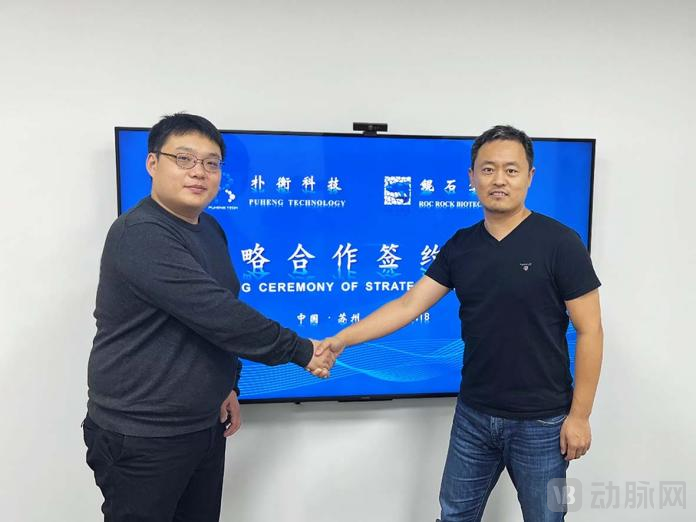
Puheng Technology stated: ROC ROCK Biotechnology is a leading enterprise in the CAR-M research and development field, and Puheng Technology is very pleased to cooperate with ROC ROCK Biotechnology. This collaboration will fully utilize the technical advantages of both parties to jointly build a leading cell therapy product R&D platform. At the same time, it will accelerate the company's layout in the cell therapy evaluation platform, achieving the strategic goal of establishing an efficacy evaluation platform covering various biotechnological innovative drugs such as cell therapy and gene therapy.
Establish an NAC-Solid Tumor model using SKOV3 cells, and add the corresponding proportions of Macrophage and CAR-M cells after 48 hours. Subsequently, observe the morphology of the tumor spheroids, analyze the infiltration of Macrophages, and assess the damage to the SKOV3 3D NAC-Organ through LDH and ATP detection results.
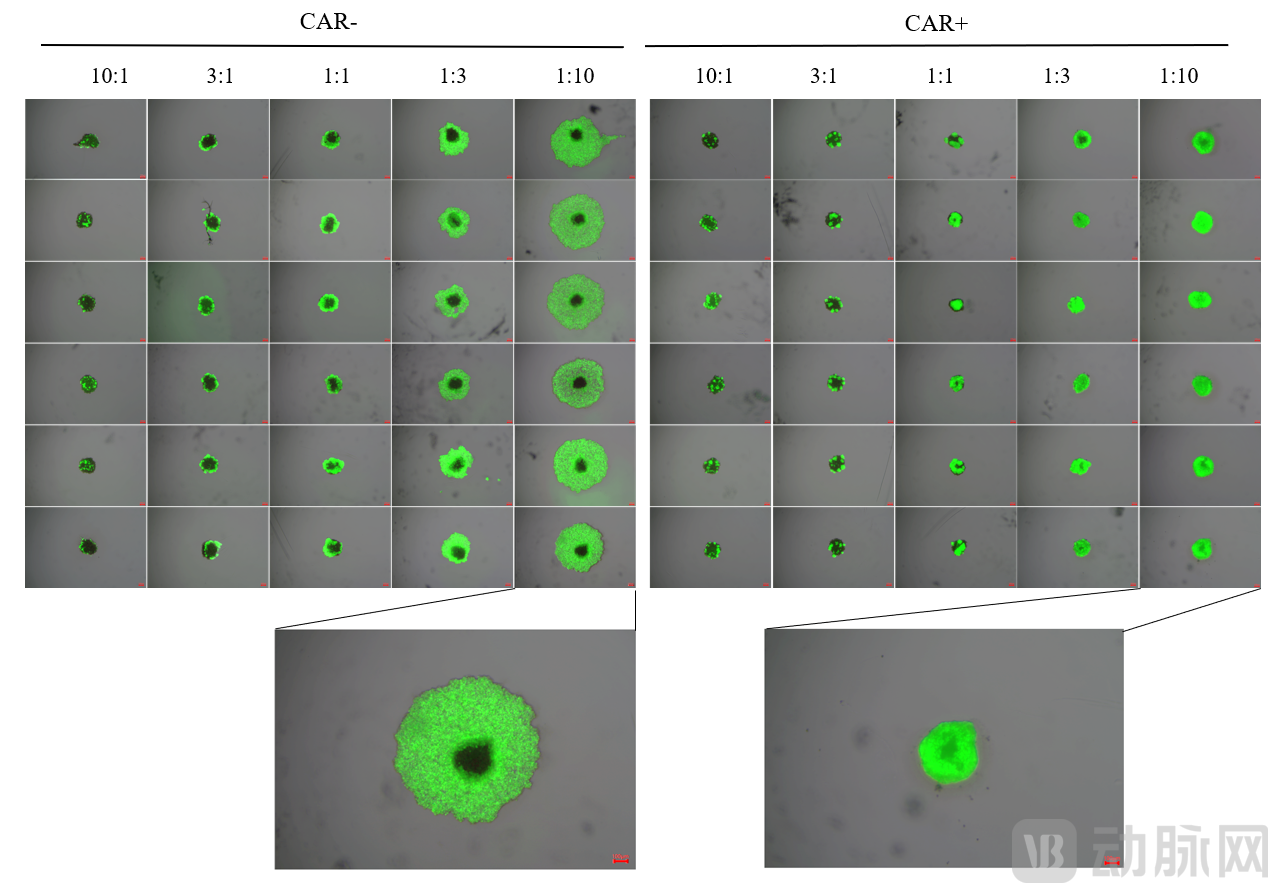
Figure 1. Evaluation of the targeting ability of CAR-Macrophage cells on solid tumors. After adding GFP-labeled Macrophage/CAR-M cells to the 3D tumor NAC-organ for 48 hours, it was found that 95% of the CAR-M cells invaded the solid tumor model, indicating that CAR-modified Macrophages have a strong targeting ability for solid tumors.
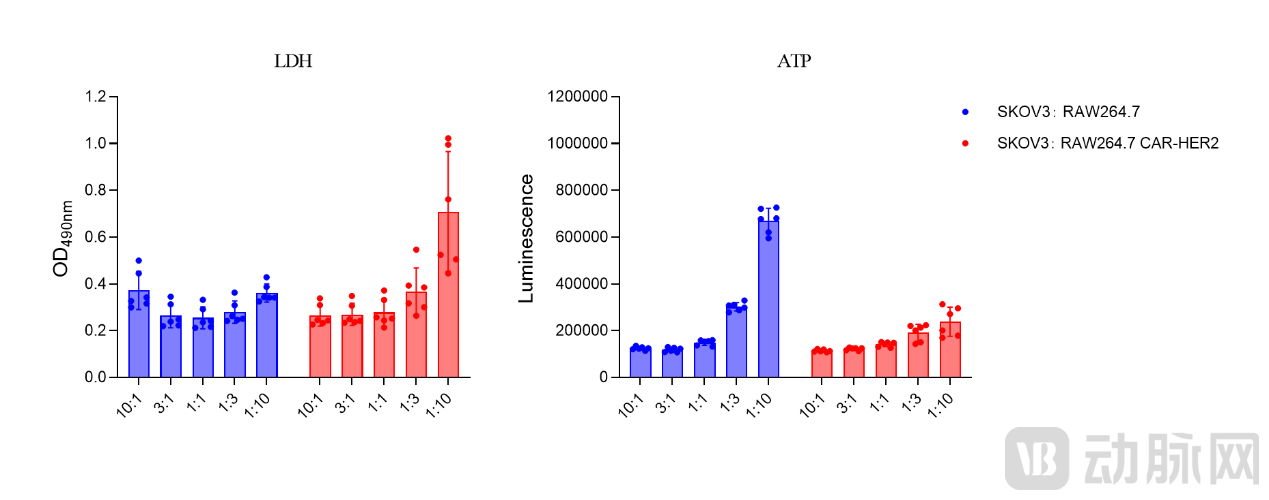
Figure 2: Through the detection of cell viability (ATP) and cell damage (LDH), compared to Macrophage, CAR-Macrophage exhibits a stronger killing ability against 3D NAC-Organ.
ROC ROCK Biotechnology focuses on the development and clinical application of macrophage-based drugs for solid tumor treatment. It is the first company in China to possess a technology platform for engineered macrophages driven by gene editing, biomaterials, and synthetic biology. The company has pioneered the world's first closed-loop industrial chain centered on macrophages, with core capabilities to mass-produce CAR-M-based pipelines targeting solid tumors.
Puheng Technology focuses on a drug development platform based on in vitro 3D physiological/pathological models. Using its self-developed novel in vitro 3D culture technology (NAC-Organ technology) as the foundation, it has developed high-throughput screening and evaluation platforms for in vitro safety and efficacy. Currently, it has established systems for evaluating drug-induced liver toxicity and the efficacy of various chronic liver diseases. The NAC-Solid Tumor platform, developed for tumor immunotherapy, is capable of simulating the immune microenvironment and modeling solid tumors of varying cell quantities. It can be used for high-throughput testing of tumor cell targeting ability and tumor cell killing capacity.