

Human Genetics Identifies MAP3K15 as a Novel Obesity-Independent Therapeutic Target for Diabetes

AstraZeneca
Biopharmaceutical Manufacturer
Recently, an article published in the international journalScience AdvancesThe research report titled "Human genetics uncovers MAP3K15 as an obesity-independent therapeutic target for diabetes"Scientists from AstraZeneca and other institutions have found through research that specific proteins associated with MAP3K15 gene mutations may represent a potential new target to help control human type 1 and type 2.Diabetes。
Type 1 and Type 2 diabetes in humans have been shown to cause a variety of health problems, such as heart disease, kidney failure, and blindness. Currently, there is no cure for these two types of diabetes, but scientists have developed new therapies that can prevent bodily damage caused by diabetes. In this study, researchers searched for commonalities in the genomes of diabetes patients, using them as the basis for developing new treatments. To achieve this, they ran search algorithms in the UK Biobank.
Researchers Have Discovered Data on 412,000 Individuals with Varying Degrees of Illness, Who Exhibit a Specific Pattern: Elevated Levels of Proteins Associated with the MAP3K15 Mutation in Their Bodies. The Study Found That Recessive Carriers of These Mutations Are 30% Less Likely to Develop Diabetes and/or Related Complications Caused by Increased Glycated Hemoglobin Levels, Complications Which Are Common Among Diabetic Patients. Researchers Suggest That Therapies Targeting Such Proteins May Prove Effective in Preventing the Onset of Diabetes and Reducing Its Impact on Patients.
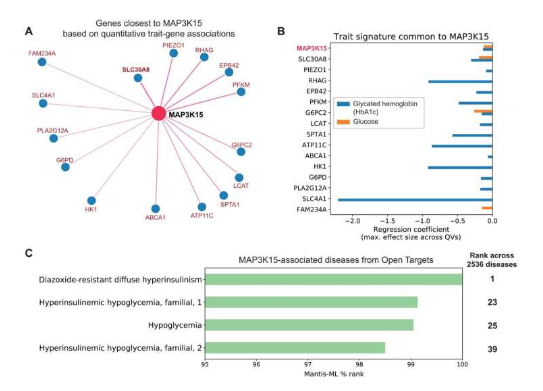
Scientists Discover Potential Gene Target That May Help Develop New Diabetes Therapies for Humans.
Image Source:Science Advances (2022). DOI:10.1126/sciadv.add5430
Researchers utilized data from the Admixed Americans database of the Mexico City Prospective Study and the FinnGen database to conduct the same study, ultimately discovering similar findings, although they also found that individuals carrying the SLC16A11 gene might exhibit a certain association. This research suggests that therapies targeting MAP3K15 may not be highly effective for individuals carrying the SLC16A11 gene mutation. Additionally, individuals who carry both the MAP3K15 and Arg1122 mutations might be more prevalent in Finland, where...Type 1 DiabetesThe country with the highest incidence rate.
Subsequently, the researchers analyzed whether the MAP3K15 mutant was associated with obesity or the body.CholesterolThere seems to be a certain correlation between the tendency of elevated levels, but results suggest there might not be any association between the two;In summary, the findings of this study indicate that researchers did not identify any adverse phenotypes associated with MAP3K15 mutations in the UK Biobank. Therefore, the MAP3K15 gene may represent a potential therapeutic target for the development of novel diabetes treatments.(BioValleyBioon.com)
Original Source:
ABHISHEK NAG,RYAN S. DHINDSA,JONATHAN MITCHELL, et al. Human genetics uncovers MAP3K15 as an obesity-independent therapeutic target for diabetes, Science Advances (2022). DOI: 10.1126/sciadv.add5430