

Daiichi Sankyo Announces Japanese Approval of ENHERTU for HER2-Positive Metastatic Breast Cancer with Superior Efficacy Over Kadcyla

Daiichi-Sankyo
Pharmaceutical R&D Developer

AstraZeneca
Biopharmaceutical Manufacturer

Image Source: Shutterstock
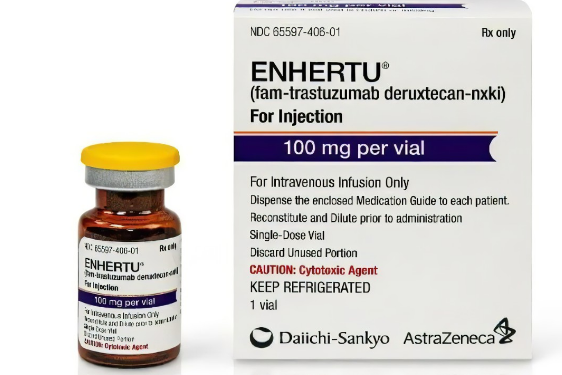
November 26, 2022 /BioValleyBIOON/ -- Daiichi Sankyo Company Limited recently announced that Japan's Ministry of Health, Labour and Welfare (MHLW) has approvedEnhertu (trastuzumab deruxtecan): For the treatment of HER2-positive unresectable or recurrent cases previously treated with chemotherapy (trastuzumab + taxane).Breast CancerAdult PatientsEnhertu is a HER2-targeted antibody-drug conjugate (ADC) jointly developed globally by Daiichi Sankyo and AstraZeneca, with Daiichi Sankyo retaining exclusive rights in the Japanese market. In the United States and the European Union, Enhertu was approved in May and July 2022, respectively, as a monotherapy for the treatment of adult patients with unresectable or metastatic HER2-positive breast cancer who have previously received one or more anti-HER2 regimens.
Breast cancer is the most common cancer and one of the leading causes of cancer-related death.In 2020, the number of confirmed cases worldwide exceeded 2 million, with 685,000 deaths. In Japan, breast cancer is the most common cancer among women, with about 92,000 confirmed cases and 17,000 deaths in 2020.About one-fifth of breast cancer cases are considered HER2-positive.Despite initial treatment with trastuzumab and taxanes, patients with HER2-positive metastatic breast cancer typically experience disease progression and require more effective treatment options to further delay disease progression and prolong survival.
This approval in Japan was based on the results of the groundbreaking head-to-head Phase 3 DESTINY-Breast03 trial:In patients with HER2-positive unresectable and/or metastatic breast cancer who were previously treated with trastuzumab and a taxane, Enhertu reduced the risk of disease progression or death by 72% (HR=0.28; 95% CI: 0.22-0.37; p<0.000001) compared to Roche's HER2-targeted ADC product Kadcyla (trastuzumab emtansine, T-DM1), significantly extending progression-free survival (median PFS: not reached [NR, 95% CI: 18.5-NE] vs 6.8 months [95% CI: 5.6-8.2]).
The data from the DESTINY-Breast03 trial has met the requirement for Enhertu to conduct a confirmatory Phase 3 trial, which was part of the condition for its early approval in March 2020. Wataru Takasaki, Head of Japan R&D at Daiichi Sankyo, stated: "The MHLW's approval underscores the importance of Japan's conditional approval system, which allows for the early approval of certain drugs for serious conditions like breast cancer."
Kadcyla is a targeted drug approved for the treatment of HER2-positive breast cancer patients described above.。DESTINY-Breast03 is the first global Phase 3 head-to-head trial comparing Enhertu with a positive control drug.Previously treated HER2-positive metastatic breast cancer patients typically experience disease progression within less than a year when treated with currently available HER2-targeted therapies. In the DESTINY-Breast03 trial,Patients treated with Enhertu experienced high and consistent significant benefits across various efficacy endpoints and key subgroups, supporting the potential of Enhertu as a new standard of care for this group of patients with HER2-positive metastatic breast cancer.
Detailed positive results from the DESTINY-Breast03 trial were presented in September 2021 at the European Society for Medical Oncology (ESMO) Virtual Congress, with data showing:In patients with HER2-positive unresectable and/or metastatic breast cancer previously treated with trastuzumab and a taxane, Enhertu demonstrated significantly superior efficacy compared to Kadcyla, with highly consistent and substantial benefits observed across multiple efficacy endpoints and key subgroups.
The data disclosed at the meeting showed that, in the pre-specified interim analysis, the DESTINY-Breast03 trial met the primary endpoint of progression-free survival (PFS):Compared with Kadcyla, Enhertu significantly reduced the risk of disease progression or death by 72% (HR=0.28; 95% CI: 0.22-0.37; p<0.000001).After 15.5 months of follow-up for the Enhertu group and 13.9 months for the Kadcyla group, the median PFS for patients in the Enhertu group has not yet been reached (95% CI: 18.5-NE), while the median PFS for patients in the Kadcyla group was 6.8 months (95% CI: 5.6-8.2).
In terms of the key secondary endpoint of PFS assessed by the investigators,The median PFS in the Enhertu group was three times that of the Kadcyla group (25.1 months vs 7.2 months; HR=0.26; 95% CI: 0.20-0.35; p=6.5x10E-24). Consistent PFS benefits were observed across key subgroups of patients treated with Enhertu, including those with a history of stable brain metastases.
In addition, for the key secondary endpoint of overall survival (OS):Compared with the Kadcyla group, the Enhertu group showed a strong trend toward improved OS (HR=0.55; 95% CI: 0.36-0.86; nominal p=0.007172)., but this analysis is still immature and there is noStatisticsStatistical significance. Nearly all patients in the Enhertu group survived after one year (94.1%), compared to a survival rate of 85.9% in the Kadcyla group.
Compared with the Kadcyla group, the confirmed objective response rate (ORR) in the Enhertu group was more than doubled (79.7% vs 34.2%).In the Enhertu group, 42 cases (16.1%) of complete response (CR) and 166 cases (63.6%) of partial response (PR) were observed, while in the Kadcyla group, 23 cases (8.7%) of complete response (CR) and 67 cases (25.5%) of partial response (PR) were observed.
In the trial, the safety profile of Enhertu was consistent with previous clinical trials, with no new safety concerns identified. The most common ≥Grade 3 treatment-emergent adverse events in the Enhertu group were neutropenia (19.1%), thrombocytopenia (7.0%), leukopenia (6.6%), and nausea (6.6%). According to the Independent Review Committee, there were 27 cases (10.5%) of treatment-related interstitial lung disease (ILD) or pneumonitis reported. The majority (9.7%) were low grade (Grade 1 or 2), with two Grade 3 (0.8%) events reported. No Grade 4 or Grade 5 ILD or pneumonitis events occurred.
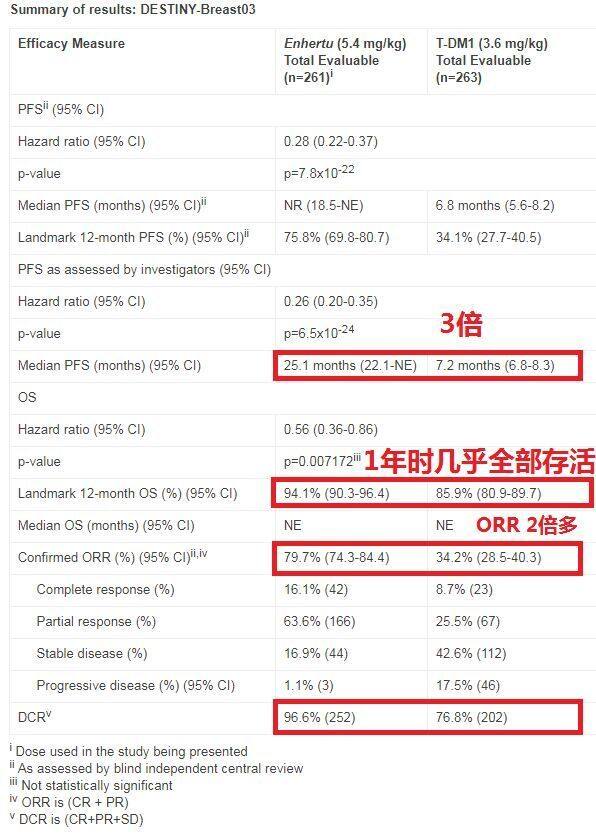
DESTINY-Breast03 Trial Results (Source: AstraZeneca, Released in September 2021)
In March 2019, AstraZeneca and Daiichi Sankyo reached a deal worth $6.9 billion in total.ImmunityOncology collaboration to co-develop Enhertu for treating cancer patients with various HER2 expression levels or HER2 mutations, includingGastric Cancer、Colorectal CancerAndLung CancerHER2-Low Breast Cancer.
Enhertu is a next-generation ADC drug that links the HER2-targeted humanized monoclonal antibody trastuzumab (Herceptin) with a novel topoisomerase I inhibitor exatecan derivative (DX-8951 derivative, DXd) through a 4-peptide linker, enabling the targeted delivery of cytotoxic agents into cancer cells and reducing systemic exposure to cytotoxic agents compared with conventional chemotherapy.
To date, Enhertu (5.4mg/kg) has been approved in multiple countries as a monotherapy for the treatment of adult patients with unresectable or metastatic HER2-positive breast cancer who have received two or more prior anti-HER2 treatment regimens in the metastatic setting. Additionally, Enhertu (6.4mg/kg) has also been approved in several countries for the treatment of adult patients with locally advanced or metastatic HER2-positive gastric or gastroesophageal junction (GEJ) adenocarcinoma who have previously received a trastuzumab-based regimen.
Breast cancer is the most common type of cancer in women and one of the leading causes of cancer-related deaths in women. Approximately 20% of breast cancer cases are HER2-positive. Despite recent treatment advances and the approval of several new drugs, there remains a significant unmet clinical need in patients with HER2-positive metastatic breast cancer. This disease is still incurable, and patients eventually experience disease progression after receiving currently available therapies. HER2 is a tyrosine kinase receptor growth-promoting protein expressed on the surface of various tumor cells, including gastric cancer, breast cancer, lung cancer, and colorectal cancer, and is associated with aggressive disease and poor prognosis. (Bioon.com)
Source of Original Text:ENHERTU Approved in Japan for Patients with Previously Treated HER2 Positive Metastatic Breast Cancer