

Spravato Nasal Spray Demonstrates Superior Efficacy Over Quetiapine XR in Phase 3b Trial for Treatment-Resistant Depression

Janssen Pharmaceuticals
Pharmaceutical R&D Developer

Johnson & Johnson
Healthcare Product Manufacturers, Health Service Providers
Image Source: Shutterstock
November 25, 2022 /BioValleyBIOON/ - Johnson & Johnson (JNJ) subsidiary Janssen Pharmaceuticals recently announced the results of the ESCAPE-TRD study (NCT04338321) at the German Association for Psychiatry, Psychotherapy and Psychosomatics (DGPPN) Congress. This is a long-term, comparative, randomized, open-label Phase 3b clinical trial.Conducted in adult patients with treatment-resistant depression (TRD), evaluating the short-term and long-term efficacy, safety, and tolerability of flexible dosing Spravato (esketamine nasal spray [NS]) versus quetiapine extended-release tablets (quetiapine XR).These two drugs are both used in combination with the patient's current ongoing selective serotonin reuptake inhibitor (SSRI) or serotonin and norepinephrine reuptake inhibitor (SNRI).
The results showed,Compared with quetiapine extended-release tablets, Spravato achieved the primary endpoint: better efficacy in achieving remission at Week 8 of treatment. Additionally, the study also met the key secondary endpoint: a significantly higher proportion of patients in the Spravato group achieved remission at Week 8 and remained relapse-free until Week 32 compared to the quetiapine extended-release tablets group.
The first findings of the study:Support for the short-term and long-term treatment of Spravato in adult patients with treatment-resistant depression (TRD) may help alleviate symptoms and maintain remission.
Andreas Reif, Professor and Chairman of the Department of Psychiatry, Psychosomatic Medicine, and Psychotherapy at Frankfurt University Hospital in Germany, and the principal investigator of the ESCAPE-TRD trial, stated: "Achieving remission and remaining relapse-free are key milestones in the treatment of depression, particularly challenging in treatment-resistant depression (TRD).ESCAPE-TRD study results show that, compared with quetiapine extended-release tablets, the proportion of patients treated with Spravato who achieved remission at week 8 and remained relapse-free until week 32 significantly increased. This provides further evidence for the use of Spravato in this difficult-to-treat population and offers hope to millions of patients with TRD."
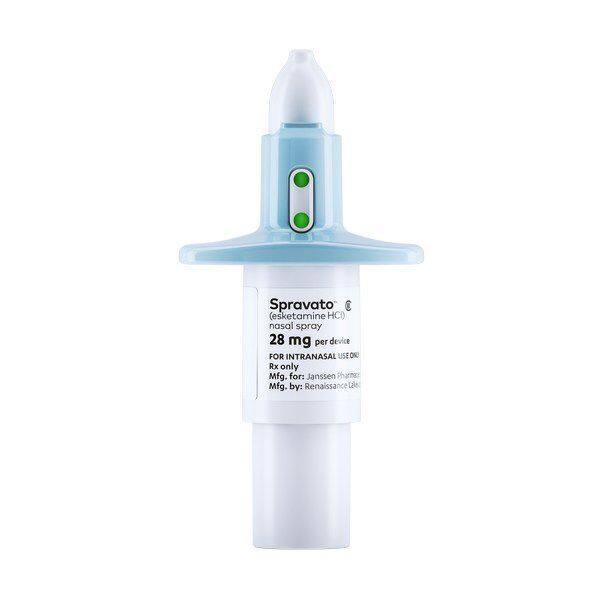
Spravato (esketamine): The first antidepressant with a new mechanism of action in 30 years
The ESCAPE-TRD trial was conducted across 24 countries in Europe, Latin America, Africa, and Asia, enrolling a total of 676 adult patients with TRD. These patients were randomly assigned to receive either Spravato nasal spray (n=336) or quetiapine extended-release tablets (n=340), both in combination with their ongoing SSRI/SNRI treatment.TRD is defined as no response to at least two antidepressants administered at adequate doses and durations during the current depressive episode.. The total duration of the study for all patients was 36 weeks, including: 14 days ofScreeningThe treatment period includes an 8-week acute treatment phase, a 24-week maintenance phase, and a 2-week safety follow-up period after the last dose.
The primary endpoint assessed the remission rates of the two treatment groups at Week 8. The data showed:A higher proportion of patients in the Spravato treatment group achieved remission compared to the quetiapine XR group (27.1% vs 17.6%; p=0.003).
A key secondary endpoint was the proportion of patients who achieved remission at week 8 and remained relapse-free through week 32 of the study. The data showed:A significantly higher proportion of patients in the Spravato treatment group compared to the Quetiapine XR group achieved remission at Week 8 and remained relapse-free until Week 32 (21.7% vs 14.1%; p=0.008).
In addition,After the primary endpoint at Week 8, the remission rates continued to increase in both groups: the proportion of patients in remission at Week 32 was significantly higher in the Spravato group compared to the Quetiapine XR group (55% vs 37%; p<0.001).
In the study, the most common (incidence ≥10%) treatment-emergent adverse events (TEAEs) in the Spravato group were dizziness (46.7%), nausea (29.3%), dissociation (28.1%), headache (24.6%), vertigo (18.9%), somnolence (15.0%), dysarthria (12.0%), paresthesia (11.1%), and vomiting (10.8%). These results are consistent with the safety data collected in previous studies. The most common TEAEs in the quetiapine XR group were somnolence (23.2%), weight increase (12.5%), and headache (12.8%). In the Spravato and quetiapine XR groups, 5.7% and 5.1% of patients, respectively, experienced serious TEAEs, while treatment discontinuation occurred in 23.2% and 40.3% of patients, respectively. The main reasons for discontinuation were lack of therapeutic effect (Spravato group: 8.3%, quetiapine XR group: 15.0%), adverse events (Spravato group: 4.2%, quetiapine XR group: 11.5%), or patient refusal to continue treatment (Spravato group: 8.3%, quetiapine XR group: 8.5%).
Dr. Tamara Werner Kiechle, Head of Neuroscience and Pulmonary Arterial Hypertension EMEA Therapeutic Area at Janssen-Cilag GmbH, a subsidiary of Janssen Pharmaceuticals under Johnson & Johnson, stated: "Patients with TRD experience severe disruptions and impairments in their lives, and there is an urgent and ongoing need to identify treatment methods that effectively address what can be a devastating condition. We are pleased to see,Compared with the powerful TRD therapy quetiapine XR, Spravato nasal spray has been proven to be effective and well-tolerated, enabling a higher proportion of patients to achieve remission and remain relapse-free until Week 32, which is an important and meaningful milestone in the treatment of TRD."Today’s ESCAPE-TRD trial results represent an important step forward in helping patients who have not responded to multiple previous treatments gain the relief they need."
It is estimated that approximately 350 million people worldwide suffer from depression, which is one of the leading causes of disability.If patients with major depressive disorder (MDD) have not responded to at least two different antidepressant treatments during their current moderate to severe depressive episode, they are considered to have treatment-resistant depression (TRD).Approximately one-third of MDD patients do not respond to treatment and are considered to have TRD.TRD is a chronic condition that imposes sustained emotional, functional, and economic burdens on patients, their loved ones, and society. The chronic nature of TRD implies a greater burden on both patients and society compared to non-treatment-resistant MDD, including lower health-related...Quality of Life(HRQoL), higher comorbidity, reduced functionality, and increased use of healthcare resources.
The original research drug of Quetiapine XR is Seroquel XR, which is sold by AstraZeneca. On May 5, 2018,Luye Pharma Announces $538 Million Acquisition of AstraZeneca's Seroquel and Seroquel XROn June 28, 2018, Luye Pharma announced that it had officially completed the business acquisition of the aforementioned products in 51 countries and regions worldwide, including China, the United Kingdom, Brazil, Australia, Saudi Arabia, Mexico, Thailand, Argentina, Malaysia, and other markets in Asia, Latin America, Africa, Oceania, and Eastern Europe.
Seroquel and Seroquel XR are used to treat bipolar disorder, schizophrenia, depression, and mania.According to an announcement released by Luye Pharma in June 2018, the compound patent for Seroquel has expired globally, and the formulation patent for Seroquel XR has also expired in most markets.
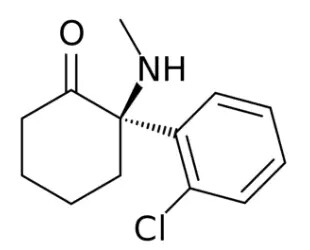
The active pharmaceutical ingredient in Spravato is esketamine, a non-competitive and subtype non-selective activity-dependent N-methyl-D-aspartate (NMDA) receptor antagonist with a novel and unique mechanism of action that differs from other depression medications currently on the market.NMDA receptors are a subtype of ionotropic glutamate receptors, playing a crucial role in synaptic plasticity and information exchange between neurons. In depression, blocking NMDA receptors is believed to improve brain plasticity and strengthen synaptic connections.
Spravato Nasal Spray is the first antidepressant with a new mechanism of action approved in over 30 years. Spravato, administered via nasal spray, acts quickly and has long-lasting effects, offering patients a welcome new treatment option.
In the United States, Spravato was approved in March 2019: in combination with oral antidepressants, forTreatment-Resistant Depression (TRD)Treatment of adult patients. In July 2020, Spravato was approved for a new indication: to be used in conjunction with oral antidepressants for the treatment of patients with acute suicidal ideation or behavior.Major Depressive Disorder (MDD)Adult patients, rapid relief of depressive symptoms. In this challenging treatment population, Spravato showed improvement in depressive symptoms from the first dose.
In the EU, Spravato was approved in December 2019: in combination with a selective serotonin reuptake inhibitor (SSRI) or serotonin and norepinephrine reuptake inhibitor (SNRI), for the treatment of adult patients with treatment-resistant major depressive disorder (TRD). In February 2021, Spravato received approval for a new indication: as an acute short-term treatment, used in conjunction with oral antidepressants, for the treatment of adult patients with major depressive disorder (MDD) who experience moderate to severe depressive episodes, constituting a psychiatric emergency according to clinical judgment, to rapidly reduce depressive symptoms. (Bioon.com)
Source of Original Text:SPRAVATO▼ (esketamine) nasal spray data from the phase 3b ESCAPE-TRD study demonstrate superior efficacy compared to quetiapine extended-release in treatment-resistant major depressive disorder