

AccuVision Medical Enhances Early and Accurate Glaucoma Diagnosis Through Integrated Corneal Biomechanics and Continuous IOP Monitoring

AGMED
Medical Device Provider
For a long time, whether compared with cataract treatment or with optometric products and services that have strong consumer attributes, glaucoma seems to have received less attention. However, in recent years, the frequent actions of international ophthalmology giants in the glaucoma field and the introduction of significant national policies for the early diagnosis and treatment of glaucoma have sparked endless imagination and reevaluation of the development of the glaucoma industry both inside and outside the field.
"This is a market that was once severely underestimated," said Qin Zhen, founder of AGMed Technology Limited (referred to as AGMED in the following text), which has just completed an angel round of financing worth nearly RMB10 million, and is committed to providing patients with safe, swift, and precise diagnosis and treatment systems and solutions.
Indeed, in terms of the number of patients, according to the Chinese Glaucoma Guidelines (2020), with the aging population, the number of glaucoma patients in China can reach 21 million, and the number of those blinded by the disease can reach 5.67 million, indicating a large patient base.
From the perspective of disease harm, glaucoma is the world's leading irreversible blinding eye disease, which will cause irreversible damage to the patient's visual function and optic nerve. It not only seriously affects the patient's quality of life but also brings enormous physical and mental harm to the patient and their family.
Moreover, from the perspective of disease burden, according to a previous report by VCBeat, with changes in people's lifestyles, the incidence of related secondary glaucoma will also increase, and the economic burden on patients and society caused by glaucoma will increase accordingly. Only in China, the medical resources consumed annually due to glaucoma are worth 18.8 billion RMB.
Therefore, the prevention and treatment of glaucoma appear to be highly necessary. Among these efforts, although the preventive screening for glaucoma has been consistently emphasized by various parties, its progress remains relatively slow compared to the treatment sector and faces significant challenges: such as the low early screening rate, with 75% of glaucoma cases already at mid-to-late stages during the initial diagnosis, insufficient early screening resources, and fewer than 50,000 ophthalmologists currently in China.
However, amidst numerous challenges, a group of local enterprises dedicated to improving the accessibility and accuracy of glaucoma screening has emerged, among which AGMed Technology Limited stands out. Moreover, compared with many other early glaucoma screening companies, AGMed Technology Limited adopts a completely different technical approach.
Founded on October 13, 2021, AGMED is a joint venture led by a postdoctoral team from the Hong Kong University of Science and Technology and co-established with the National Innovation Center for High-Performance Medical Devices.
Starting with early glaucoma diagnostic devices, AGMED is committed to providing patients with safe, efficient, and precise medical instruments, contributing to the visual health of a broader population in China. It collaborates with multiple research institutes and hospitals, including the Hong Kong University of Science and Technology, Zhongshan Ophthalmic Center of Sun Yat-sen University, and Shenzhen People's Hospital, to jointly advance world-leading technology research and development, achieving breakthroughs in high-end ophthalmic diagnostic and treatment equipment and systems produced in China.
The main products currently developed by AGMED are corneal analysis systems and intraocular pressure monitoring systems.The initial R&D prototypes of these two products can be traced back to a scientific research project by a Ph.D. from the Department of Mechanical Engineering at the Hong Kong University of Science and Technology in 2009. The founding team of AGMed Technology Limited also graduated from the Hong Kong University of Science and Technology.
Taking Qin Zhen as an example, in 2008, Qin Zhen came to the Hong Kong University of Science and Technology to pursue his undergraduate degree, and in 2012, he continued to pursue his Ph.D. at the same university until his graduation in 2017. After graduation, Qin Zhen continued to work as a postdoctoral researcher at the Hong Kong University of Science and Technology until he founded AGMed Technology Limited in Shenzhen in 2021.
During his studies at the Hong Kong University of Science and Technology, Qin Zhen was already involved in the research and development of innovative medical devices, closely integrating mechanical engineering with the R&D of medical devices.
"What we have learned from the very beginning is not traditional engineering, but rather a combination of clinical and medical needs. By refining and improving our engineering expertise, we develop high-quality medical devices to meet the needs of doctors and patients," said Qin Zhen.
Therefore, the R&D team at that time paid great attention to the connection with the clinical end, solving the real clinical needs of doctors from a practical perspective. They established cooperation with some ophthalmic hospitals and academic institutions in Hong Kong. By 2016, the research team had also reached a collaboration with Professor Minbin Yu and his team from the Zhongshan Ophthalmic Center of Sun Yat-sen University.
Professor Minbin Yu is one of the leading figures in the glaucoma department at Zhongshan Ophthalmic Center, Sun Yat-sen University. As the deputy head of the Glaucoma Group under the Ophthalmology Branch of the Chinese Medical Association, he was a key contributor to the "Chinese Glaucoma Guidelines" and has published over 100 academic papers as the first or corresponding author (including 35 SCI papers). Additionally, he has co-authored 13 academic monographs.
"Professor Minbin Yu provided professional opinions and guidance on the scope of application and application value of our product in clinical use, and conducted an effectiveness evaluation of the product's clinical application. In the future, we will collaborate more deeply with Professor Yu’s team on product development and clinical validation," said Zhen Qin.
Speaking of AGMed's corneal analysis system and intraocular pressure analysis system, Qin Zhen stated that intraocular pressure measurement is indeed one of the main screening methods for glaucoma, butCurrent Challenges in Intraocular Pressure Measurement: One of the issues is the failure to account for variations in corneal biomechanics among different patients, leading to discrepancies between measured values and actual intraocular pressure.
And,Patients with corneal damage, those who have undergone laser surgery, or those with high astigmatism cannot be measured using traditional intraocular pressure methods. Therefore, AGMED's corneal analysis system was developed to address these issues.
VCBeat learned that currently, there are only a few products globally capable of analyzing corneal biomechanics. Their technical principle is air rebound, which induces corneal deformation through an air jet. A high-speed camera captures the process of corneal deformation to derive parameters such as the rate of corneal deformation, indirectly reflecting corneal biomechanical properties. "However, in the view of professional glaucoma doctors, the accuracy of the parameters obtained by this indirect method and their correlation with glaucoma diagnosis remain questionable."
AGMED applies the contact applanation measurement method based on the gold standard, directly contacting the cornea for measurement. It has further made significant principle improvements through a dynamic analysis method, accurately measuring the material mechanical parameters of the cornea, directly reflecting the corneal biomechanical properties, thereby correcting the intraocular pressure measurement model to obtain the true intraocular pressure value.
Specifically, the existing method flattens the cornea to a given depth and keeps it stationary, calculating the current intraocular pressure based on the unified assumption of corneal biomechanical parameters. However,AGMED Corneal Analysis System's device probe can achieve full-process dynamic analysis from initial contact to final flattening. It can obtain relatively accurate corneal biomechanical parameters based on force feedback during the corneal deformation process, thereby establishing an intraocular pressure calculation model according to the corneal specificity of different patients, making the intraocular pressure measurement data more realistic. At the same time, the system can also perform early glaucoma typing to a certain extent based on different corneal biomechanical parameters.
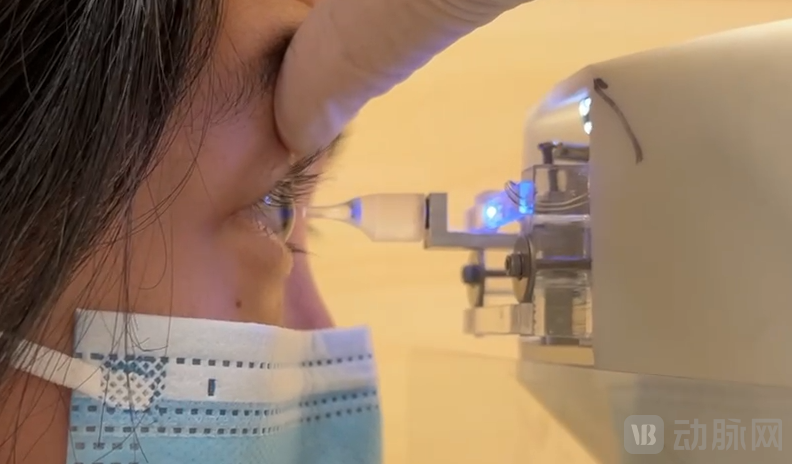
AGMED Corneal Analysis System
According to Qin Zhen, before AGMed Technology Limited's corneal analysis system entered clinical trials, a large number of in vitro experiments had been conducted. These involved extracting the cornea and measuring it with both AGMed's corneal analysis system and other testing tools. The accuracy of the measurement parameters was verified through data comparison.
In general,AGMED's Corneal Analysis System is the first product in China to combine corneal biomechanical parameters for glaucoma diagnosis and classification, and it can adjust the intraocular pressure calculation model through dynamic analysis to obtain true intraocular pressure. Currently, AGMED's Corneal Analysis System has completed over 7,000 clinical tests.
On the other hand, due to the 24-hour cyclical fluctuation characteristic of intraocular pressure (i.e., lower intraocular pressure during the day and higher intraocular pressure at night), the single-point intraocular pressure measurement equipment used in clinical outpatient settings is highly prone to misdiagnosis and missed diagnosis. The currently adopted method of multiple single-point tests at two-hour intervals consumes a significant amount of medical resources and seriously affects the normal work and life of patients. Moreover, waking patients up at night for measurements can also cause changes in intraocular pressure.The biggest highlight of AGMED's intraocular pressure monitoring system is that it can automatically monitor intraocular pressure fluctuations in real time for 24 hours without affecting the patient’s normal work and life. This is mainly due to an innovative technical approach adopted by AGMED.
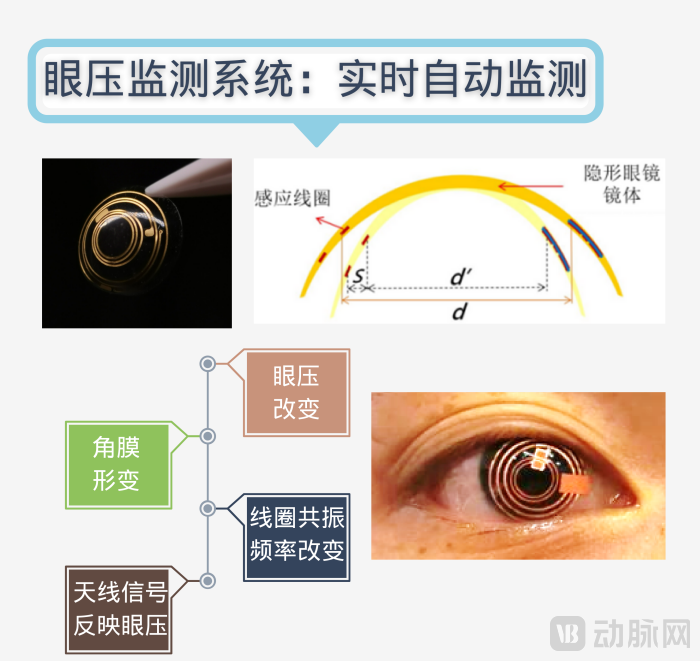
Specifically,AGMED's intraocular pressure monitoring product embeds a miniature sensing coil within the structure of a contact lens. When intraocular pressure changes, the miniature coil deforms along with the corneal deformation, causing a corresponding change in its resonance frequency. The external signal receiver then captures these fluctuations in resonance frequency and directly converts the collected signal variations into intraocular pressure data for clinical diagnosis.
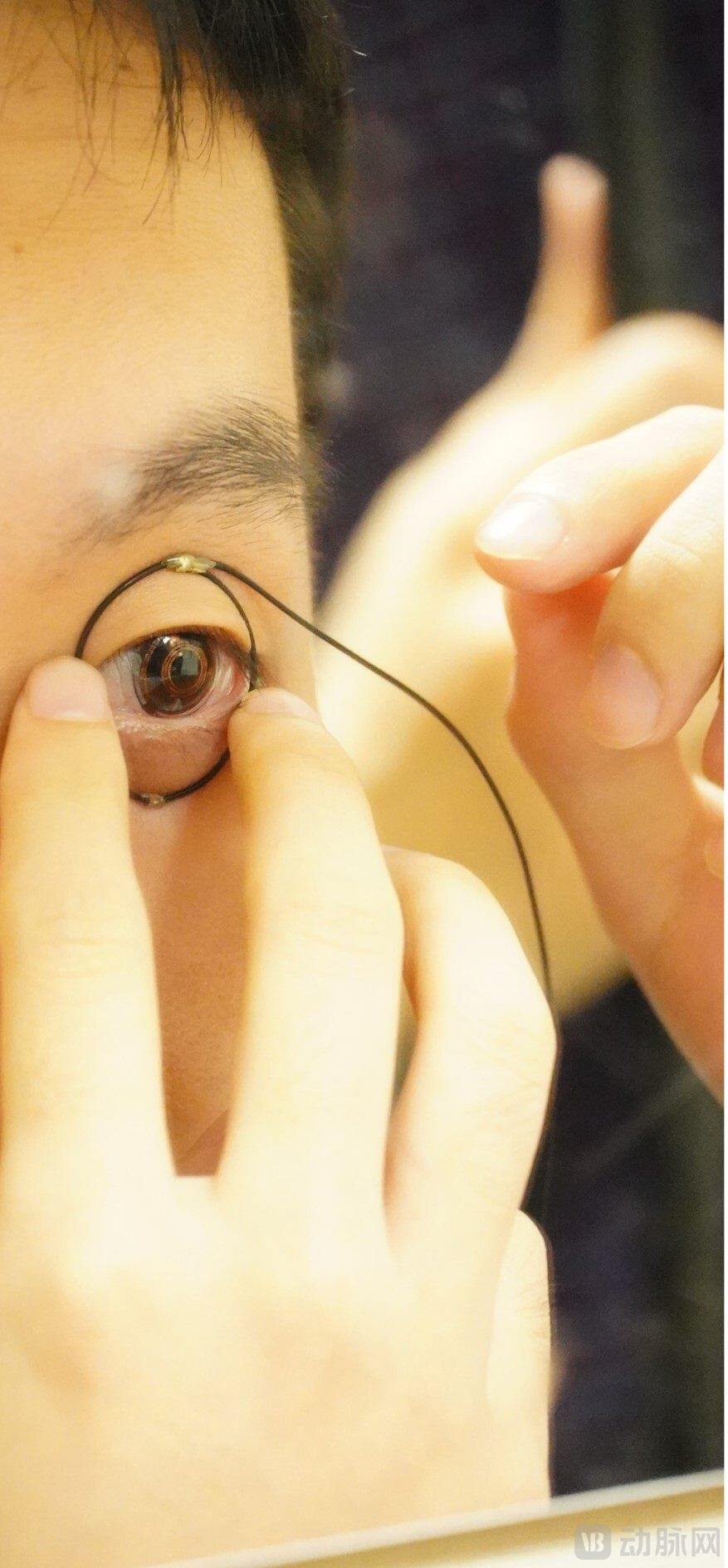
The seemingly simple technical logic is not easy to implement. The design of miniature sensing coils is one of the main difficulties.
According to Qin Zhen's introduction,On the one hand, considering the wearing comfort of patients, the thickness of the micro induction coil will be limited. Currently, the only competitor product in the world has a thickness of nearly 600 microns (ordinary myopia contact lenses are about 80-100 microns thick, and orthokeratology lenses are about 150-200 microns thick). However, after multiple improvements in the production process, AGMed Technology Limited's lens can reduce the thickness to about 200 microns.
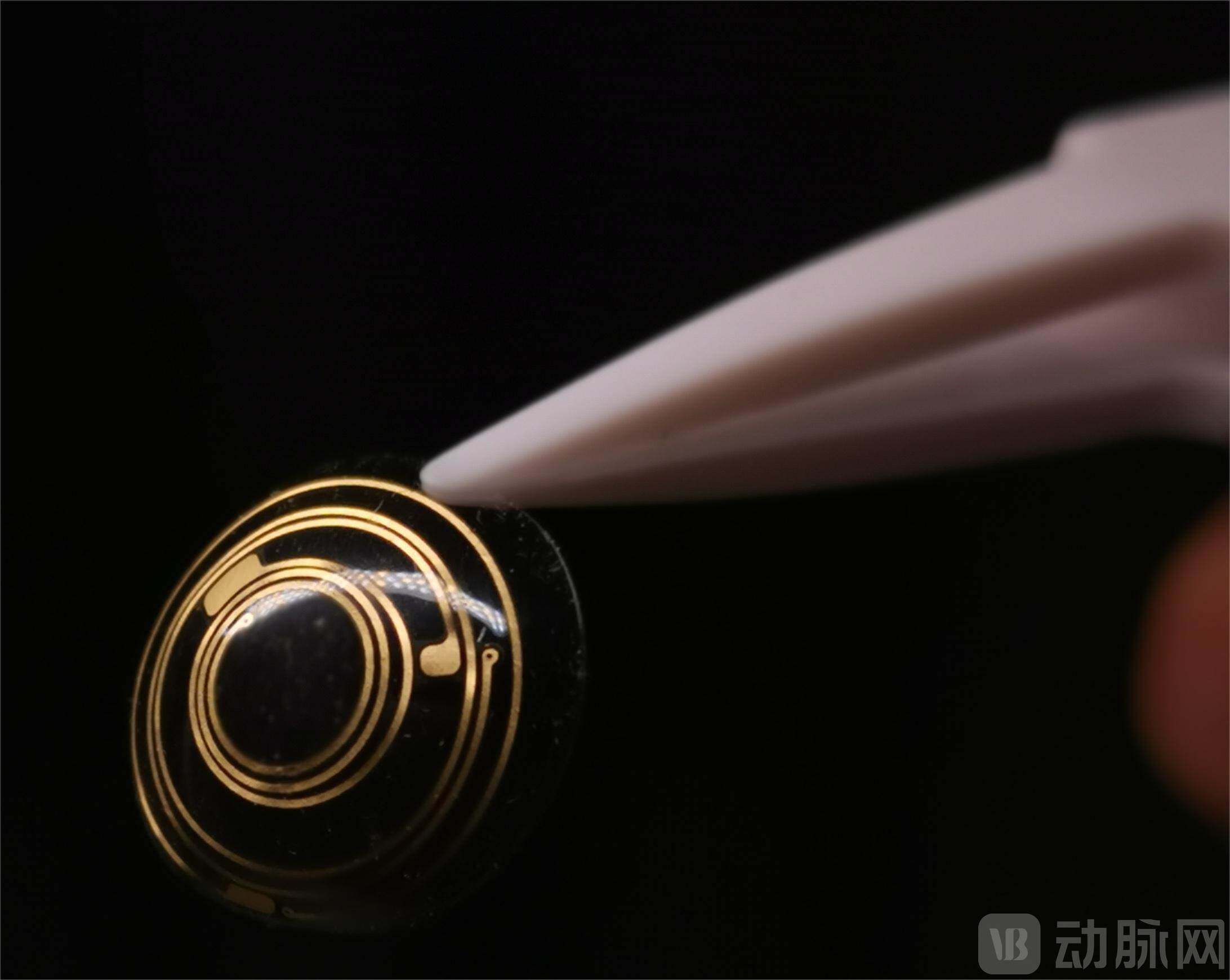
On the other hand, the position and arrangement of micro induction coils in the contact lens body will also significantly affect signal acquisition. Therefore, just for the design of the micro induction coil, AGMED underwent hundreds of trial-and-error attempts and made four major design adjustments before finally settling on the current (5th edition) design.
Secondly, the design of the antenna reception system is also one of the difficulties. The difficulty mainly lies in "what reception frequency provides the best results." At the same time, to ensure convenience and stability for patients during actual use, the system's size needs to be reduced and its battery life improved, which involves a great deal of optimization and improvement in circuit design.
Finally, the most core difficulty lies in how to convert the received electrical signals into intraocular pressure data. "This involves a large amount of clinical data collection, application of animal models, and AI algorithm functions, making it the toughest part of all the work. AGMed Technology Limited was able to overcome this challenge thanks to the R&D team's years of accumulated expertise."
When focusing on the commercialization process of the two products, Qin Zhen revealed to VCBeat:"The prototype of the corneal analysis system is ready, and it is expected to obtain the Class II medical device registration certificate in the second half of 2023. As for the intraocular pressure monitoring system, due to its longer research and development cycle, it is currently in the stage of prototype improvement and sampling. The registration application is expected to be submitted in the second half of 2023, and the Class III medical device registration certificate is likely to be obtained by the end of 2024 or early 2025."
In terms of market promotion, AGMED has established a deep partnership with the Zhongshan Ophthalmic Center of Sun Yat-sen University over the years. It will focus on building the product's brand influence at the academic level, actively seek opportunities for academic exchange, cooperation, and training with leading ophthalmology hospitals and authoritative experts, and strive to provide high-level clinical evidence to contribute to the formulation of the new glaucoma guidelines and expert consensus. After establishing a brand image in China's core ophthalmic hospitals, AGMED will gradually expand its market to grassroots hospitals, such as county-level hospitals, urban community health service centers, and small urban general hospitals, empowering grassroots doctors and benefiting grassroots glaucoma patients.
As for the more distant future, Qin Zhen revealed to VCBeat that AGMed Technology Limited will continue to focus on the corneal analysis system and intraocular pressure monitoring system, consistently building a comprehensive ophthalmic diagnosis and treatment platform."We are merely using glaucoma as an entry point into the ophthalmic diagnostics field. Relying on the corneal analysis system and intraocular pressure monitoring system, AGMED will gradually expand to other细分 fields within ophthalmology, as the applications of these two products are not limited to glaucoma diagnosis."