

BriTon Medical Secures Hundreds of Millions in Series C Funding to Advance Minimally Invasive Implantable Brain-Computer Interface into Clinical Use

Neuracle
Developer and Manufacturer of Brain-Computer Interface Systems and Related Equipment

Green Pine Capital
Venture Capital Management Institution
36Kr learned that,Neuracle, a brain-computer interface platform technology company, has recently completed a C-round financing of several hundred million yuan. This round of financing was led by Green Pine Capital, with the lead investors from the angel round, Pre-A round, A round, and B round, as well as several other existing shareholders, also participating.
NeuracleFounded in 2011, it is one of the earliest companies in China to venture into the industrialization of brain-computer interface, experiencing development from non-invasive to invasive, and from research to medical application scenarios. According to reports,Neuracle Currently Has Three Key Product Matrices: Research-grade EEG acquisition and stimulation equipment, applied in scientific research fields such as biomedicine, psychology, and neuroscience; medical-grade EEG equipment, used for the diagnosis and monitoring of diseases such as epilepsy, brain tumors, and cerebrovascular disorders; minimally invasive implantable brain-computer interface systems, applied in clinical scenarios such as refractory epilepsy treatment and rehabilitation of neurological disorders.
Neuracle founder and CEO Huang Xiaoshan told 36Kr that the company's strategy and core ideas have always been clear,First, it is necessary to strengthen the technology of brain-computer interfaces and increase the information transmission rate of the system; second, based on the improvement of the technology, implement applications in multiple scenarios.
Industrial Application of EEG Devices and Domestic Substitution
In May 2021, research on "writing" with the mind via brain-computer interface made the cover of Nature magazine. Patients were able to type 90 characters per minute, breaking the previous record for typing speed using invasive brain-computer interfaces.It is reported that at the World Robot Conference, Neuracle's non-invasive brain-computer interface system, based on visual motion stimulus coding, achieved a record of typing 120 characters per minute. In fact, whether invasive or non-invasive, achieving faster communication speed is a common pursuit in the industry.
Brain-computer interface, as a channel for the human brain to connect and communicate with the outside world (such as computers, robotic arms, etc.), also has the concept of "bandwidth" similar to the internet. Researchers have attempted various methods to increase the bandwidth of information transmission, including using a greater number or more channels of electrodes, innovative signal encoding and decoding methods, and so on. The goal is to more fully capture the EEG signals released by brain neurons and output them accurately. When the amount of information output by the system is large and fast enough, the range of applicable scenarios becomes broader, not limited to "mind typing" or "mind-controlled robotic arms."
To enhance the capabilities of EEG signal acquisition and feature recognition, Neuracle has developed a series of research-grade and medical-grade EEG acquisition and stimulation devices, gradually breaking the high technological barrier of "EEG hardware" and the industry pattern long monopolized by imported vendors.
Based on the needs and pain points of EEG equipment in the scientific research field, the Neuracle team initially entered the scientific research market by launching wireless EEG acquisition systems and transcranial electrical stimulation systems. "In the process of collaborating with university brain science laboratories and clinical medical centers, Neuracle has solved many engineering problems for customers and met research institutions' customized development needs for EEG systems—something that agents of foreign products find hard to achieve," said Huang Xiaoshan.
Research-grade products, less price-sensitive, and extremely demanding in terms of performance.Based on the accumulation of EEG technology in the scientific research field, Neuracle has "down-dimensioned" to develop a series of medical-grade devices.For instance, in psychological and cognitive neuroscience research, "event-related potentials" (ERPs) in EEG signals are frequently utilized. However, these signals are very weak, typically less than 5 microvolts. To meet the requirements of scientific research, Neuracle has experimented with various techniques to reduce system noise. After achieving high signal-to-noise ratio acquisition capabilities, the company developed a "Medical Event-Related Potential System" using this technology. This system not only expands the application scenarios of traditional clinical equipment, which is mainly concentrated in neurology and neurosurgery, but also will be used for screening and diagnosing mental disorders such as depression.
Neuracle's medical event-related potential instrument and high-frequency, high-channel digital EEG machines have all been approved by the NMPA.Currently, its scaled revenue mainly comes from the brain science research product line and the clinical medical product line. According to the company, in these two fields, Neuracle's market share ranks first among Chinese-produced equipment.
In the process of developing scientific research and medical equipment, Neuracle practices"Industry-Academia-Medicine-Research" Model, undertook a series of national key R&D projects, and collaborated with multiple institutions such as Tsinghua University, Huashan Hospital, and Xuanwu Hospital to explore their needs in scientific research and clinical aspects. A long-term foundation of trust and cooperation has been established through mutual understanding and communication."
Professor Hong Bo, a brain-computer interface expert at Tsinghua University, commented that the performance of Neuracle's EEG equipment is now on par with that of Nihon Kohden from Japan and Natus from the United States. EEG equipment in the brain-computer interface industry is like the iPhone in the mobile phone industry; developers can improve electrode materials and iterate software algorithms around solid hardware and operating systems.In the past decade, Neuracle's domestically produced EEG hardware has entered multiple brain science research laboratories, promoting the advancement of China's non-invasive brain-computer interface technology; in the next decade, the goal is to make minimally invasive implantable brain-computer interface hardware stable and reliable, and support the industry in developing around this hardware to build an open brain-computer interface development ecosystem.
Minimally Invasive Implantable Brain-Computer Interface Technology Platform
To further increase the bandwidth of EEG signal transmission and enable the application of brain-computer interface technology in clinical settings, Neuracle has developed a "minimally invasive implantable" brain-computer interface technology route, focusing on clinical applications such as intractable epilepsy and neurological disease rehabilitation.
Professor Hongbo believes that,Understanding minimally invasive implantable brain-computer interface technology can be compared with two technical routes.: Non-invasive scalp EEG brain-computer interfaces being developed by multiple research groups in China rely on conductive gel to ensure contact between electrodes and the scalp, and are not yet capable of long-term continuous operation; invasive brain-computer interfaces like BrainGate in the United States require implanting hundreds of neural electrodes into the cerebral cortex, causing significant trauma and struggling to solve immune inflammation issues—after a certain period of implantation, electrodes become covered by glial cells, leading to a gradual decline in signal quality.
Neuracle's minimally invasive implantable brain-computer interface system is implanted on the human dura mater, without invading cortical neurons. It utilizes signal enhancement technology that combines hardware and software to achieve a high signal-to-noise ratio, effectively addressing biocompatibility issues. Additionally, the size of the implantable device is approximately that of a one-yuan coin.Balance high signal intensity with minimal implantation damage.
It is reported that the volume of Neuracle's implanted intracranial device is only 1/4 to 1/3 of that of NeuroPace. By adopting more advanced microelectronic technology, signal processing, and brain-computer interface decoding algorithms, and drawing on the implantation method of cochlear implants, it transmits electrical energy to the implanted device through wireless coupling across the skin. The implanted device does not require a battery, and both EEG signal output and stimulation signal input are bidirectional and wireless, achieving the goal of "reduced size and lifelong use." In terms of electrode materials, Neuracle uses safe implantable materials; through innovations in electrode manufacturing processes and other dimensions, the electrodes can reach multiple regions of the cerebral cortex, enabling signal recording and stimulation.
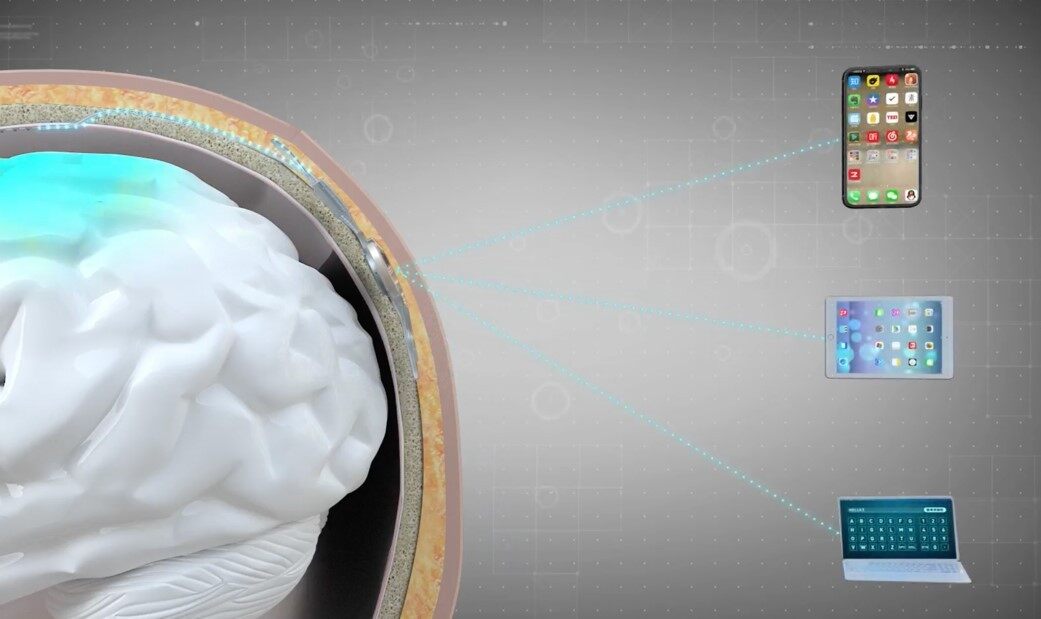
Neuracle NEO Minimally Invasive Implantable Brain-Computer Interface System
Under current technical conditions, brain-computer interface systems can already play a role in the diagnosis, treatment, and rehabilitation of neurological diseases with clear pathogenic mechanisms.Neuracle's Minimally Invasive Implantable Brain-Computer Interface System First Conducts a Series of Studies on Refractory Epilepsy,By collecting intracranial EEG signals from epilepsy patients and providing certain stimulation, closed-loop algorithm development is carried out based on the innovative concept of epilepsy network modulation. Moreover, according to the collected signals, it is possible to determine indicators such as the origin site of epilepsy, seizure frequency, and key nodes of the network, providing theoretical and methodological support for subsequent intracranial electrical stimulation therapy.
Currently, the minimally invasive implantable brain-computer interface NEO system developed by Neuracle has completed finalization and submission for inspection, with clinical trials expected to commence in the near future.As a platform technology, the minimally invasive implantable brain-computer interface system may be applied in the future to help patients with ALS and spinal cord injuries improve their self-care abilities, such as controlling computers, home appliances, wheelchairs, etc., and to assist stroke patients in the rehabilitation of their nervous systems and motor functions.
Speaking of Neuracle's advantages in the industry,Huang Xiaoshan believes that it is not only about the collection and decoding of EEG signals, but the key lies in the team's familiarity with the integrated system of brain-computer interfaces, with technical accumulations in neural electrode materials and properties, chips, algorithm processing, and other aspects."Under the comprehensive systemic advantages, we have a lot ofA Brain-Computer Interface System That Works in Real-World Scenarios"A brain-computer interface must be a complete system. Emphasizing a single technology alone may not necessarily generate application value."
Facing the unmet needs on the clinical front, countries around the world are providing key support for brain science research. According to McKinsey data, by 2030-2040, the potential market size of global brain-computer interface medical applications is expected to reach 40 billion to 145 billion US dollars, with serious medical applications accounting for a potential scale of 15 billion to 85 billion US dollars. Currently, internationally prominent brain-computer interface companies include Neuralink, founded by Musk, and Blackrock Neurotech. Previously, 36Kr has reported on companies such as Ningju Technology and Ladder Medical.You Brain GalaxyInnovative enterprises in the field of brain science, such as Neuracle Technology (Shanghai) Co., Ltd.
Investor Perspective
Green Pine CapitalFounding Partner Luo Fei stated: Brain science is one of the main tracks of technological competition among major global economies, and China has also included brain science as a key national scientific innovation and major engineering project. Neuracle, a leading enterprise in China’s brain-computer interface field, leverages its self-innovated, internationally advanced "brain-computer interface" technology to undertake key national projects during the "12th Five-Year Plan" and "13th Five-Year Plan." Through a differentiated product portfolio of minimally invasive and non-invasive strategic products, combined with the team's solid technical expertise and industrialization capabilities, Neuracle has built comprehensive competitive barriers. Green Pine Capital will continue to support Neuracle's development and looks forward to Neuracle leading greater exploration and breakthroughs in China’s brain science field.
Sequoia ChinaDr. Chen Xuanze, Vice President, stated: Brain science is one of our key focus areas, and Sequoia China has also established a brain science incubation center to support the industrial development of brain science in China. The core team of Neuracle has accumulated more than ten years of experience in brain-computer interface research and industrialization. Its core products have successfully achieved industrialization in scientific research and clinical applications and have received positive feedback from users. We continue to be optimistic about Neuracle's R&D and commercialization capabilities in the field of brain-computer interfaces, and we look forward to Neuracle’s products benefiting more patients.
Rongtuo Capital:Neuracle is one of the most outstanding brain-computer interface platform technology companies in China. In the past few years, the company has gradually assembled an excellent team of talents in the fields of brain-computer interface and neural engineering, and developed several innovative products such as neuromodulation, neurorehabilitation, and multimodal acquisition. The company's products have been applied in many top medical institutions and scientific research institutes in China.
Huakong Fund:Brain-computer interface is the most crucial key to unlocking the secrets of the brain. In addition to being used for brain science exploration and research, brain-computer interfaces have already started to be applied in the diagnosis and treatment of neurological diseases. Moreover, brain-computer interfaces have broad application prospects in consumer electronics and other fields. The founding team of Neuracle comes from the Neuroengineering Laboratory of Tsinghua University, the strongest brain-computer interface research and development team in China, and is also the earliest team in China to engage in the industrialization of brain-computer interfaces. After more than 10 years of research and enhancement, Neuracle has developed the leading domestic EEG acquisition system and achieved the world's first minimally invasive brain-computer interface platform, breaking foreign monopolies and blockades on China. The company owns independent core intellectual property rights. Huakong Fund values the company’s R&D capabilities and productization ability in the field of brain-computer interfaces, and sees huge potential for future development.
Cayman Venture Capital:Neuracle is one of the most low-profile and solid companies we have seen in the field of brain science. The team has been deeply involved in this field for many years, accumulating a lot of technology, knowledge, and data. We are optimistic about the long-term transformation of these technologies, knowledge, and data in the medical field, which can bring multiple breakthroughs in the diagnosis and treatment of certain brain diseases for humanity.