Home Bristol Myers Squibb Unveils First-Ever 'China R&D Science Day' at DIA: Driving Innovation, Embracing Change for Patients

Bristol Myers Squibb Unveils First-Ever 'China R&D Science Day' at DIA: Driving Innovation, Embracing Change for Patients

Dec 19, 2022 07:55 CST Updated Dec 21, 18:34
Bristol-Myers Squibb

Biopharmaceutical and Nutritional Product R&D and Sales

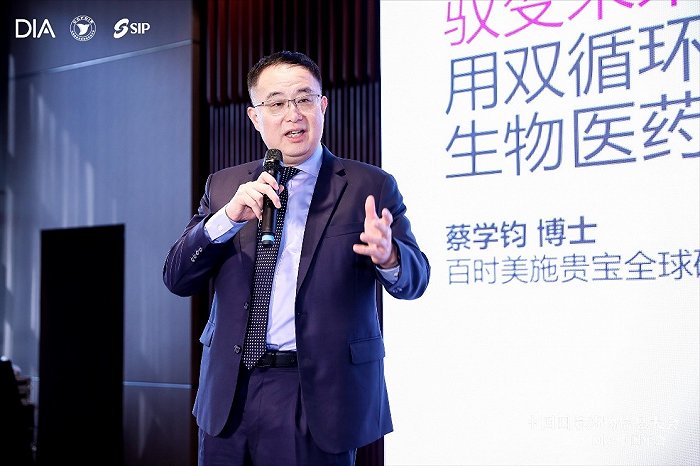
"Innovation is the driving force for shaping the future, and collaboration is at the core of advancing science. Whether it’s innovation or collaboration, everything we do is aimed at extending the vibrant lives of patients," said Dr. Cai Xuejun, Vice President of Global R&D and Head of R&D in China at Bristol-Myers Squibb, during the event. "We are deeply aware that patients are waiting, and they don’t have the luxury of time. Therefore, with a sense of urgency, we are committed to exploring and developing innovative treatment options through diversified innovations and open collaborations, enabling more patients to benefit earlier."

Since 2020, Bristol-Myers Squibb has formulated and begun implementing the "China 2030 Strategy" in China. As part of this decade-long strategic plan, Bristol-Myers Squibb will significantly increase its investment in China to continuously drive the comprehensive implementation of this strategy, fully integrate into China's thriving innovation ecosystem, and is committed to becoming an innovation leader "rooted in China, originating from China."

"Bristol-Myers Squibb is committed to becoming a trusted partner in China's health industry ecosystem," emphasized Dr. Cai Xuejun. "In terms of R&D, we will be science-based and data-driven, accelerating the introduction of global innovations into China while ensuring that Phase III clinical trials are conducted in sync with the rest of the world. We will also gradually participate in global early-stage development, integrating into the local 'internal circulation.' Additionally, we will always focus on the urgent and unmet clinical needs of Chinese patients, actively collaborating with various levels of government, academic institutions, hospitals, universities, and local startups to carry out innovative R&D guided by clinical value. Leveraging our century-long experience and global resources, we aim to help Chinese innovation reach the world and enter the global 'external circulation,' thus promoting the practice model of innovative 'dual circulation' to create more value for patients."
The "Bristol-Myers Squibb China R&D Science Day" event consisted of three key topics: "From Basic Research to New Drug Development," "Big Data and Digitalization Accelerating New Drug Development," and "Bristol-Myers Squibb China R&D Building an Innovative Platform for Future Medical Science." Multiple Chinese and international scientists engaged in discussions through an "online-offline" interactive format, bridging the gap of time and space. They exchanged cutting-edge scientific hot topics with a forward-looking perspective and explored in-depth academic insights.

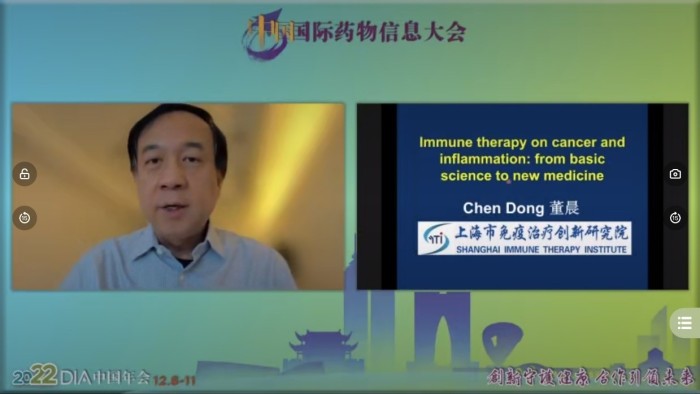
First, in the clinical translation and drug discovery phase, Academician Dong Chen, an academician of the Chinese Academy of Sciences and the director of the Shanghai Institute for Innovative Immunotherapy, focused on immunotherapy in the fields of cancer and inflammation. He analyzed the current process where basic science gradually moves towards translational medicine and clinical medical practice, eventually transforming into innovative drugs, sharing his insights and experiences throughout this process. Using Th17/IL-17 as an example, Academician Dong Chen elaborated on the role IL-17 plays in psoriasis, providing a detailed introduction of the entire process from the "discovery" of this cell/factor to its "development into a drug." Regarding the currently highly regarded field of cancer treatment, Academician Dong Chen also presented a series of breakthrough advancements made by his team concerning the involvement of the Nr4a1 gene in regulating tumor immunity and treatment. The content mentioned above is highly representative of the journey from fundamental exploratory research to clinical translation, aligning closely with the areas of interest in integrated science at Bristol-Myers Squibb.
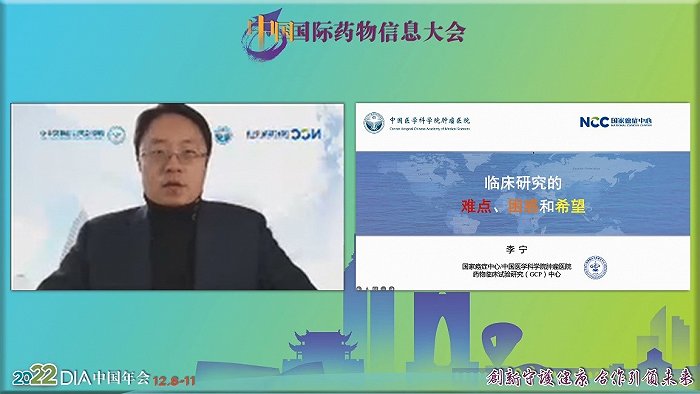
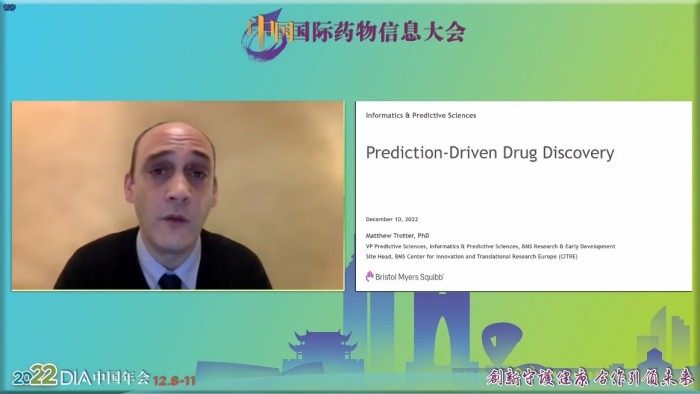
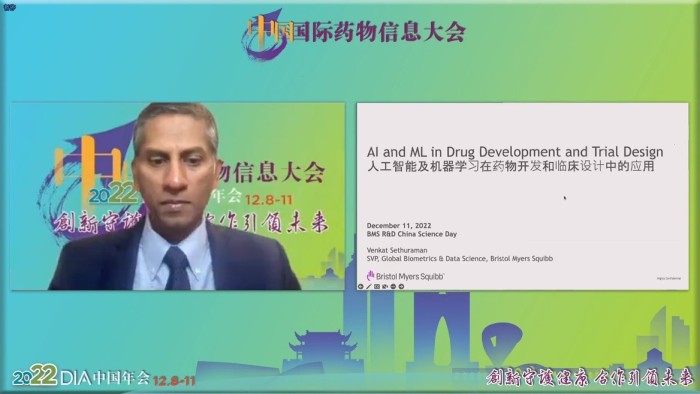
In the part of clinical research and development practice, Dr. Li Ning, Vice President and Chief Physician of the Cancer Hospital of the Chinese Academy of Medical Sciences, first delivered a speech on the theme of "Difficulties, Confusions, and Hopes in Clinical Research." He elaborated on the challenges, opportunities, and future directions of clinical research from three aspects: cognition, evaluation, and execution, emphasizing the necessity of fully understanding diseases and improving the treatment evaluation system. Subsequently, Dr. Matthew Trotter, Vice President of Predictive Sciences for Global Research and Early Development at Bristol-Myers Squibb, delivered a keynote speech on applying big data to guide innovative treatments, using data-driven molecular prediction design and optimizing drug pipelines. Dr. Venkat Sethuraman, Senior Vice President of Global Biostatistics and Data Science at Bristol-Myers Squibb, further elaborated on how to apply AI/ML technologies in clinical research, enabling digital clinical drug development through data modeling and fostering innovative external collaborations.
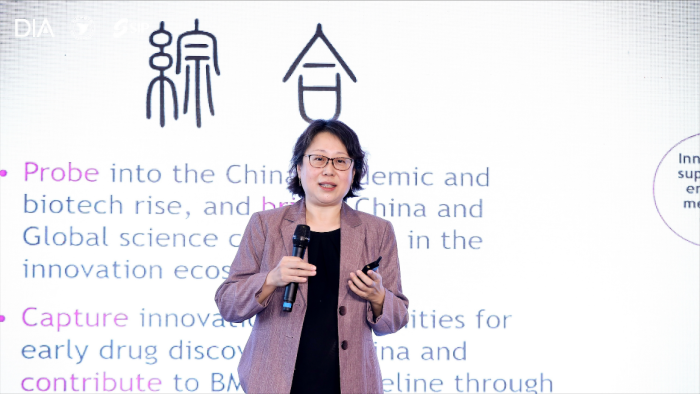
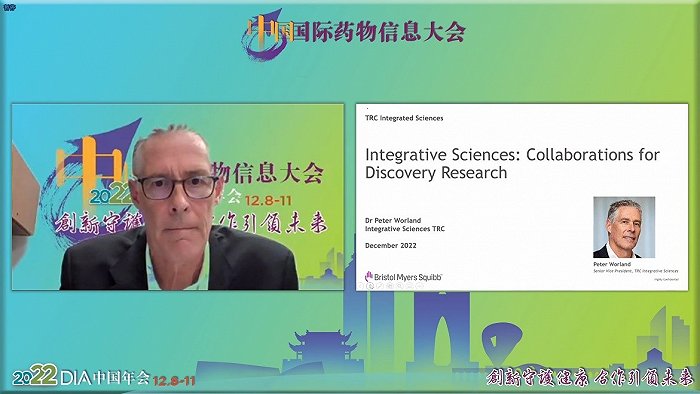
In the innovation collaboration session, Dr. Peter Worland, Senior Vice President of Integrated Sciences for Global Research and Early Development at Bristol-Myers Squibb, delivered a vivid presentation titled "Integrated Sciences: Collaborative Wins in the Early R&D Stage." He introduced the mission and purpose of the Integrated Sciences division, emphasizing the importance of external collaboration during the early stages of R&D and the drug discovery innovation process. Additionally, Dr. Worland outlined key considerations when initiating external partnerships, including strategic complementarity between internal R&D and external innovation, expanding opportunities, and advancing new therapeutic areas. Most notably, he shared the positive news of plans to enhance external collaboration efforts outside the United States, particularly in China.

Following this, Dr. Bian Feng, Executive Director of R&D at Bristol-Myers Squibb China and Head of the Integrated Science Team in China, further elaborated on the key areas of focus for the company’s extensive external collaborations in China. These cover six major disease areas and four technology platforms. Additionally, to support the development of integrated science in China, Bristol-Myers Squibb has established the China Project Scientific Review Committee, bringing together senior scientists from various fields globally. In 2023, the company will launch the "China Innovation Proposal Solicitation Project" to enhance exchanges and cooperation with China's local innovation ecosystem. During the event, Dr. Bian Feng emphasized that Bristol-Myers Squibb will always be science-driven and innovation-focused, actively collaborating with peers in the industry and academia to spark more innovative ideas for the benefit of more patients.

Bristol-Myers Squibb’s "China R&D Science Day" brings together innovative wisdom from both global and Chinese communities, while providing a platform for scientific cooperation under the "dual circulation" framework. As Dr. Cai Xuejun from Bristol-Myers Squibb stated, the frequent introduction of innovative policies and the return of innovative talents have brought unprecedented opportunities for innovation in China. The foundation of innovation lies in people—only by uniting individuals and forming synergy can we continuously overcome scientific challenges, create innovative value, and ensure patients benefit from innovation.

  • To learn more about Bristol-Myers Squibb's R&D innovation capabilities and talent strategy, please click the video below.
Video source: Bilibili UP主 "Medical Student Peter Peteristic"

"Innovation is the driving force for shaping the future, and collaboration is the core that propels scientific advancement. Whether it is innovation or collaboration, everything we do is aimed at extending the vibrant lives of patients." Dr. Cai Xuejun, Vice President of Global R&D and Head of R&D in China at Bristol-Myers Squibb, stated during the event. "We are acutely aware that patients are waiting, and they do not have the luxury of time. Therefore, with a sense of urgency, we are committed to exploring and developing innovative treatment options through diversified innovation and open collaboration, so that more patients can benefit earlier."

Since 2020, Bristol-Myers Squibb has formulated and begun implementing the "China 2030 Strategy" in China. As part of the ten-year strategic plan, Bristol-Myers Squibb will significantly increase its investment in China to continuously drive the full implementation of this strategy, while fully integrating into China's thriving innovation ecosystem. The company is committed to becoming an innovation leader "rooted in China, originating from China."

"Bristol-Myers Squibb is committed to becoming a trusted partner in China's health industry ecosystem," emphasized Dr. Cai Xuejun. "In terms of research and development, we will be science-based and data-driven, accelerating the introduction of global innovations into China while ensuring that Phase III clinical trials are conducted in sync with the rest of the world. We will also gradually participate in global early-stage development, integrating into the local 'internal circulation.' Moreover, we will always pay close attention to the urgent and unmet clinical needs of Chinese patients. We will actively collaborate with government bodies at all levels, academic institutions, hospitals, universities, and local startups to carry out innovative R&D guided by clinical value. Leveraging our century-long experience and global resources, we aim to help Chinese innovation reach the world and enter the global 'external circulation,' thereby promoting the realization of an exemplary model of innovative 'dual circulation' to create more value for patients."

The "China R&D Science Day" event hosted by Bristol-Myers Squibb consisted of three key topics: "From Basic Research to New Drug Development," "Big Data and Digitalization Accelerating New Drug Development," and "Bristol-Myers Squibb China R&D Building an Innovative Platform for Future Medical Science." Through an "online-offline" interactive format, scientists from China and abroad transcended time and space barriers to exchange cutting-edge scientific hotspots with a forward-looking perspective and discuss in-depth academic insights.

First, in the clinical translation of drug discovery, Academician Dong Chen, an academician of the Chinese Academy of Sciences and the president of the Shanghai Institute for Innovative Immunotherapy, focused on immunotherapy in the fields of cancer and inflammation. He analyzed the current process of basic science gradually moving towards translational medicine and clinical medical practice, and ultimately being transformed into innovative drugs, sharing his insights and experiences. Taking Th17/IL-17 as an example, Academician Dong Chen elaborated on the role of IL-17 in psoriasis and provided a detailed introduction of the entire process from the "discovery" of this cell/factor to its "development into a drug." Regarding the currently highly regarded cancer treatment, Academician Dong Chen also presented a series of breakthrough advancements made by his team concerning the involvement of the Nr4a1 gene in regulating tumor immunity and treatment. The above content is highly representative of the transition from fundamental exploratory research to clinical translation, which aligns perfectly with the areas of interest of Bristol-Myers Squibb's integrated science.

In the part of clinical research and development practice, Dr. Li Ning, Vice President and Chief Physician of the Cancer Hospital of the Chinese Academy of Medical Sciences, first delivered a speech on the theme of "Difficulties, Confusion, and Hopes in Clinical Research." He elaborated on the challenges, opportunities, and future directions of clinical research from three aspects: cognition, evaluation, and execution, emphasizing the necessity of fully understanding diseases and improving the treatment evaluation system. Subsequently, Dr. Matthew Trotter, Vice President of Predictive Sciences for Global Research and Early Development at Bristol-Myers Squibb, gave a keynote speech on applying big data to guide innovative treatments, using data-driven molecular drug prediction design and optimizing drug pipelines. Dr. Venkat Sethuraman, Senior Vice President of Global Biostatistics and Data Science at Bristol-Myers Squibb, further elaborated on how AI/ML technologies can be applied to clinical research, enabling digital clinical drug development through data modeling and fostering innovative external collaborations.
In the innovation collaboration session, Dr. Peter Worland, Senior Vice President of Integrated Sciences for Global Research and Early Development at Bristol-Myers Squibb, gave a vivid presentation titled "Integrated Sciences: Collaborative Wins in the Early R&D Stage." He introduced the mission and purpose of the Integrated Sciences department while emphasizing the importance of external collaborations during the early stages of R&D and drug discovery innovation. Additionally, Dr. Worland outlined key considerations when initiating external partnerships, including strategic complementarity between internal R&D and external innovation, expanding opportunities, and promoting development in new therapeutic areas. Most notably, he shared the positive news of plans to enhance external collaboration efforts outside the United States, particularly in China.

Bristol-Myers Squibb China R&D Executive Director and Head of China Integrated Sciences Team, Dr. Bian Feng, further introduced the focus of Bristol-Myers Squibb's extensive external collaborations in China, covering six major disease areas and four technology platforms. In addition, to support the development of integrated sciences in China, Bristol-Myers Squibb has established the China Program Scientific Review Committee, involving senior scientists from various fields globally, and will launch the "China Innovation Proposal Solicitation Project" in 2023 to enhance exchanges and cooperation with China's local innovation ecosystem. Dr. Bian Feng emphasized during the event that Bristol-Myers Squibb will always be science-driven and innovation-focused, actively collaborating with peers in the industry and academia to generate more innovative ideas for the benefit of more patients.
Bristol-Myers Squibb’s "China R&D Science Day" brings together innovative wisdom from both global and Chinese communities, while also providing a platform for scientific cooperation under the "dual circulation" framework. As Dr. Cai Xuejun from Bristol-Myers Squibb stated, the frequent introduction of innovative policies and the return of innovative talent have brought unprecedented opportunities for innovation in China. At the heart of innovation are people—only by uniting individuals and forming synergies can we continuously overcome scientific challenges, create innovative value, and ensure patients benefit from these innovations.

  • To learn more about Bristol-Myers Squibb's R&D innovation capabilities and talent strategy, please click the video below.
Video source: Bilibili UP主 "Medical Student Peter Peteristic"