

How AstraZeneca's iCampus Drives Accelerated Collaborative Innovation in China's Life Sciences Sector

AstraZeneca
Cancer Drug Developer

AstraZeneca
Biopharmaceutical Manufacturer
China's medical innovation is entering a "tipping point" period.
This transformation can be observed from two dimensions. First, the frequency of investment and financing, which reflects the temperature of the innovation market, has continued to rise. According to data from VCBeat, in the first three quarters of 2022, the total amount of investment and financing in China's healthcare industry exceeded 95 billion RMB, with over 900 financing transactions. Second, the era of follow-up innovation in the healthcare industry has nearly come to an end in recent years, while original innovation is increasingly becoming the focus of the industry.
Facing the wave of innovation, enterprises, capital, universities, and local governments across China are seizing opportunities, making the healthcare and wellness industry a key focus for entrepreneurship, investment, and economic planning.But medical innovation is highly complex and risky, thus extremely challenging, especially in the field of original innovation, where the tests faced are even more intricate. Therefore, how to better connect resources from all parties and help innovative projects address and overcome numerous challenges during their growth process has become a direction that participants in the healthcare industry are concerned about and contemplating.
In line with the trend, various incubators and industrial parks have been successively established as important carriers for medical innovation, thereby providing diverse support to innovative enterprises.
VCBeat observed that among a group of innovation parks,The international life science innovation park model (hereinafter referred to as "iCampus") supported by AstraZeneca has embarked on a differentiated and remarkably successful path, achieving key progress in 2022.By the end of 2022, iCampus has been established in 7 cities across China, attracting over 90 medical innovation companies to collaborate and settle in. It has 10 investment partners and 9 strategic partners, and has built several ecosystem platforms for top expert innovation collaborations. iCampus is progressively exploring and improving a high-quality ecosystem that accelerates the transformation of scientific research achievements into industrial results.
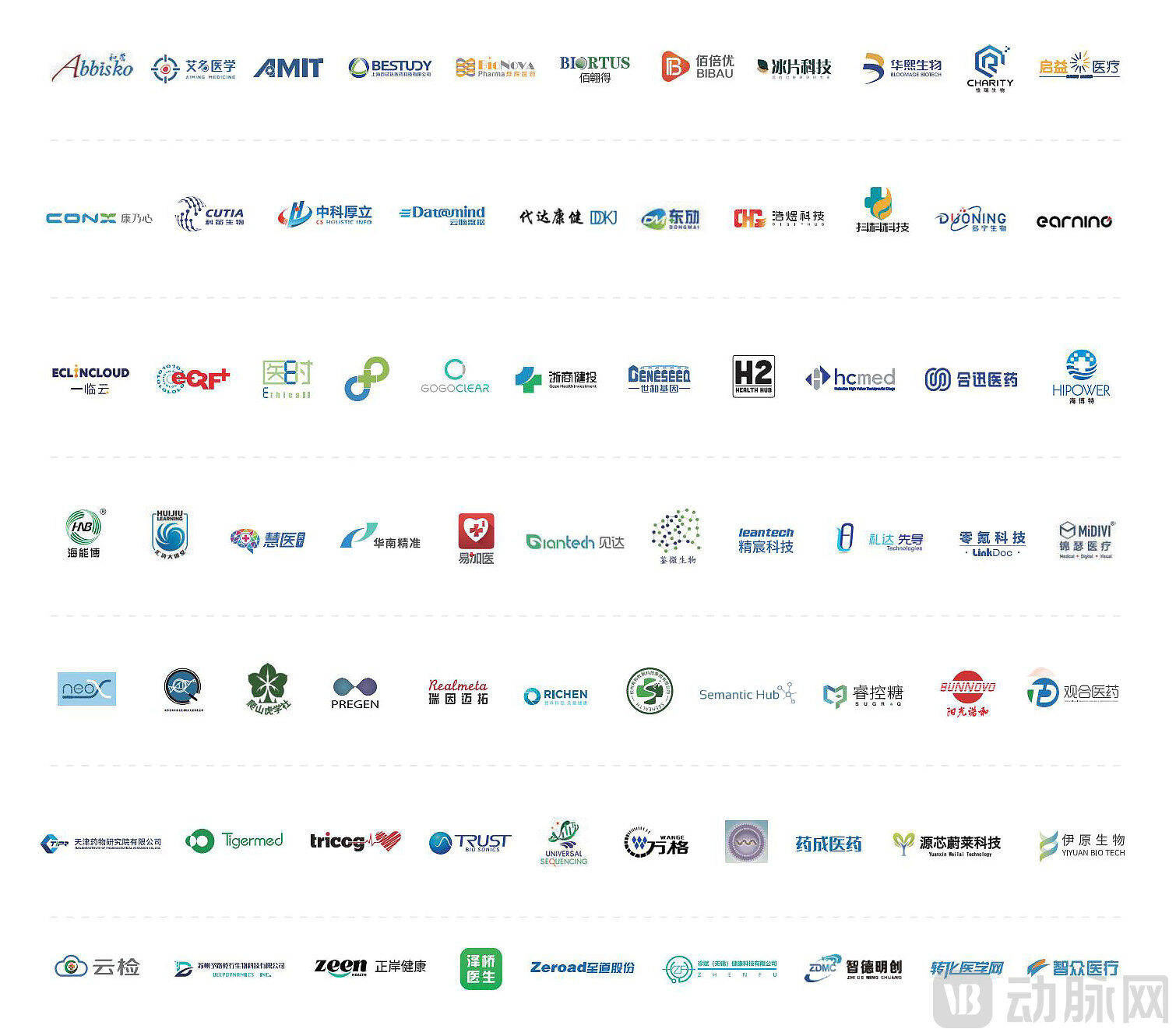 (Companies related to入驻iCampus)
Why is the innovation park model driven by AstraZeneca so welcomed by various forces such as the government, industry, academia, research, medical, and investment? What exactly did they do right? To address these questions, VCBeat attempts to uncover the answers through analysis, providing inspiration and insights for enterprises related to healthcare innovation.
At the "inflection point" of medical innovation, a great era of exploration with thousands of sails competing is approaching.
Data from Tianyancha shows that China currently has approximately 9.11 million enterprises with business scopes including "medical, health" related fields. Enterprises related to "medical health" established within 1-5 years account for 67.5%. Among them, more than 900,000 medical and health-related enterprises have been newly registered since 2022. It is evident that enterprises in the medical industry are experiencing vigorous development.
Behind this lies the enormous opportunity inherent in the healthcare industry. According to a PwC report, China's healthcare market has experienced continuous rapid growth over the past eight years, with the overall scale now increasing to 13 trillion yuan, representing a compound annual growth rate of 13%. It has risen to become the second-largest market globally. However, the challenges are equally significant. For instance, medical innovation faces extremely high barriers, exceedingly long research and development cycles, and substantial risks of failure, leading to entrepreneurial failure rates far exceeding those of many other industries.
Therefore, how to enable innovative companies to develop steadily and rapidly during their growth phase has become an important proposition that every medical innovation park must consider. In response to this, the solution brought by iCampus is to build "More efficient docking platform, faster cooperation promotion, deeper empowerment platform”。
How to understand? This requiresIn essence, iCampus is China's first industrial park co-built by a multinational leading life sciences enterprise and the government. This model allows入驻企业to simultaneously benefit from the support and resources provided by both parties.
In other words, iCampus, relying on AstraZeneca, not only has extensive innovation resources and a global network but also possesses an omnichannel commercialization platform. The advantage this brings is that iCampus can introduce foreign startups to China and also enable companies in the park to expand globally with the support of AstraZeneca's worldwide network.
On the other hand, with the support of local governments and the unique medical resources in each region, iCampus can integrate resources by leveraging the advantages of the park's location, amplify the potential of入驻企业, and help the local government implement more industrial projects.
Specifically, on the enterprise side, companies can leverage AstraZeneca's global network to push their businesses into the international market.This is backed by the extensive layout of AstraZeneca's Global International Innovation Hubs: with over 15 hubs currently established across countries such as the United States, Brazil, Argentina, Sweden, the United Kingdom, France, Israel, Russia, South Korea, India, and Singapore, covering a very broad range of resources.
In addition,Enterprises can also gain access to policy formulation, support, and industry guidance for the biopharmaceutical sector at various iCampus locations., as well as support in tax incentives, green approval processes, inter-enterprise communication, and investment-financing matchmaking. Taking Wuxi iCampus as an example, the Jiangsu Provincial Medical Products Administration and the Wuxi Municipal Government have established the "Wuxi High-Tech Zone Biomedical Industry Innovation and Development Service Center" within Wuxi iCampus to provide specialized guidance on the approval process. This has opened a "green channel for pharmaceuticals and medical devices access" for resident companies, creating a fast-track review and approval service that greatly enhances the efficiency of business settlement.
It is important to emphasize that iCampus also actively participates in the discussion of biopharmaceutical policies within the park. It organizes and provides feedback on the latest demands of enterprises regarding the industry, talent, and regulatory approvals, thereby aligning the most timely innovation needs of enterprises with the implementation pace of supportive policies.
Take HuiBaoyuan Biotech, which focuses on cancer and liver disease treatment, as an example. The company settled in Chengdu iCampus in September 2022. In terms of development direction, HuiBaoyuan Biotech aims to systematically enhance the level of traditional Chinese medicine (TCM) through cutting-edge biotechnology. Therefore, it chose to locate in Chengdu iCampus for two reasons: first, hoping to gain resource support from AstraZeneca; second, leveraging Sichuan Province's policy emphasis and cultural advantages in TCM development to assist in its continuous innovation in novel TCM drugs.
Another example is the integrated clinical evidence support SaaS platform, 1Lin Cloud, which, after settling into Shanghai iCampus in January this year, signed a cooperation agreement with AstraZeneca's Global R&D China Center to provide clinical services for the latter.
Of course,For medical innovation enterprises that prioritize research and development, funding issues can be a hurdle during the early stages of development.In response to this, AstraZeneca has taken two approaches: on one hand, it jointly established the AstraZeneca CICC Healthcare Fund with CICC Capital. This fund has successfully invested in more than 10 innovative healthcare companies and has a robust pipeline of potential investment projects. On the other hand, iCampus has collaborated with local governments, state-owned enterprises, and relevant social capital to establish the iCampus Fund, which primarily provides capital support to high-quality enterprises within the iCampus park and its ecosystem, accelerating the growth of innovative companies and fostering further cooperation.
For example, in October this year, Guangzhou Haibotuo Biotechnology received investment from the Wuxi Industry Development High-Creation Equity Investment Fund, jointly initiated by AstraZeneca, Wuxi Industrial Development Group, and Wuxi National High-Tech Industrial Development Zone. This round of investment will help Guangzhou Haibotuo Biotechnology further develop and promote the standard system construction for cultivating large-scale varieties of traditional Chinese medicine (TCM), evidence-based research on the secondary development of TCM, and the transformation of hospital formulations based on human experience into innovative TCM drugs, among other TCM technical service businesses, while collaborating with AstraZeneca.
On the government side, thanks to the resource coordination of iCampus, the number of local enterprises and the total output value have significantly increased. In addition, iCampus plays an important role in talent introduction, patent referrals, and the establishment of headquarters or subsidiaries of listed companies in various regions.
The results have been fruitful. In 2022 alone, iCampus attracted over 30 companies, covering various subfields such as biopharmaceuticals, smart healthcare, and innovative medical devices. Moreover, the Guangzhou International Life Science Innovation Park and the Qingdao International Life Science Innovation Park have also been successively launched this year.
In addition, the synergy between iCampus and CCiC (China Center for Intelligent Health Innovation) has become even closer this year, accelerating the formation of a more diverse and complete ecosystem.
In summary, it can be found that,It is under the joint efforts of multiple parties that iCampus continues to attract life science innovation forces from home and abroad, and delivered such brilliant results in 2022.
Why iCampus can rise rapidly? The core lies in the construction of AstraZeneca's health innovation ecosystem.
In this innovative ecosystem, the "three driving forces" — International Life Science Innovation Park (iCampus), China Smart Health Innovation Center (CCiC), and AstraZeneca-CICC Healthcare Industry Fund — have built a collective force to drive global healthcare innovation by linking resources from governments, industries, academia, research, medical institutions, and investment sectors.
For the companies that have settled in, joining iCampus means not only becoming a part of the park but also entering the health innovation ecosystem built by AstraZeneca.
· Firstly, during the growth process of入驻企业, they can have basic spatial carriers and infrastructure through iCampus, and also achieve resource integration to obtain resources including clinical insights, expert networks, channel platforms, etc., within AstraZeneca and its ecosystem, thereby accelerating development. For example, resource synergy with CCIC, capital empowerment from AstraZeneca-CICC Healthcare Industry Fund, and consulting internal experts from leading healthcare innovation enterprises, jointly visiting medical institutions and clinical experts for solution integration and initiating commercial cooperation, etc.
· Secondly, the companies that settle in can truly achieve "resonance" with global enterprises in terms of technology research and development and commercial promotion. This is because AstraZeneca is forming a new strategic layout in China, where its China headquarters in Shanghai and six regional headquarters (Wuxi, Hangzhou, Guangzhou, Chengdu, Beijing, Qingdao) promote and develop in tandem. While adapting to local conditions to drive the integration of the entire medical industry chain and stimulate the economic development potential of local areas, it also promotes international exchanges and cooperation in the local medical technology field, giving enterprises a global perspective.
By building an ecosystem, AstraZeneca is also actively contributing to the development of organizations and talent within the healthcare industry. For instance, the Huiwu Grand Forum, empowered by AstraZeneca's ecosystem, gathers outstanding leaders and experts in the field. Focused on organization and talent training, it helps leading technology companies strengthen their professional and management capabilities.
Notably, the launch of Wuxi Metabolic Industry Park (MCampus) and Hangzhou Urology Health Innovation Base (PC.Campus) in 2022 has enabled the continuous deepening of AstraZeneca's innovation ecosystem in disease areas, evolving towards a thematic focus on specific therapeutic fields.
First, let's look at Wuxi Metabolic Industry Park (MCampus), which officially launched in August this year. Initiated by Academician Ning Guang of the Chinese Academy of Engineering and based on the MMC Standardized Metabolic Diseases Management Center, it was jointly built through a strategic partnership between Wuxi High-tech Zone, AstraZeneca, and Zhizhong Medical.
In terms of positioning, the Metabolic Diseases Industrial Park will serve as an open ecosystem that integrates "clinical + industry" development, forming an innovative model where "clinical needs drive industrial growth, and industrial growth supports clinical treatment." This will help the Wuxi municipal government upgrade the medical industry and establish an innovative life sciences cluster centered on the diagnosis and treatment of metabolic diseases.
It can be found that MCampus has support from AstraZeneca's innovative health ecosystem: CCiC has facilitated the development of the MMC model; Zhizhong Medical, as a resident enterprise of Wuxi iCampus, has received innovative incubation from the platform and investment from AstraZeneca's CICC Healthcare Industry Fund.
Looking at the PC.Campus of Hangzhou Urology Health Innovation Base again, it was jointly created by Academician Zhang Xu of the Chinese Academy of Sciences and AstraZeneca. Its official completion and establishment in Hangzhou was announced at the "2nd Zhejiang Digital Healthcare Industry Hangzhou Summit" held in November.
In terms of development direction, PC.Campus,依托阿斯利康及杭州国际生命科学创新园创新生态所建立的科创基地, will start from the source of technological innovation and transformation such as clinical research, conduct cutting-edge technology research, technology transformation, innovation incubation, and industry collaboration. It aims to打通“临床-科研-产业”的临床双向协同及转化创新生态闭环,聚集泌尿健康领域内优秀的创新资源, thereby creating a leading scientific research innovation and industry hub for urinary health in China.
It is not difficult to see that, with the help of regional headquarters resources and the local implementation of academician-expert cooperation platforms/therapeutic area industrial parks, iCampus has achieved a new approach to the development of regional ecosystems focused on specific therapeutic areas, thereby generating more possibilities and potential.
Of course, the ecosystem is not static. From introducing and nurturing innovative companies, to extending into early-stage R&D, and focusing on specific therapeutic areas, the path explored by iCampus shows that only by addressing the pain points and challenges faced by healthcare innovation companies at critical junctures can their growth be effectively accelerated. This, in turn, attracts more companies to join the ecosystem, creating a synergistic effect and forming a continuous positive feedback loop.
China's medical innovation wave is gradually moving to the forefront of research and development.
Data Offers a Glimpse into the Trends. According to statistics from VCBeat, in the first half of 2022, there were 121 early-stage financing events in China’s medical and health sector, with a total financing amount nearing 10 billion yuan. In contrast, in the entire year of 2021, China’s medical and health sector witnessed 59 early-stage financing events, with a total financing amount of 2.5 billion yuan. This means that the financing data for China’s early-stage medical market in just the first half of the year has already surpassed that of the whole previous year.
The tide is surging, and the challenges faced by innovative enterprises are becoming increasingly daunting, butOne thing remains unchanged: clinical demand-oriented approach will always be the core focus of enterprise research and development, because addressing patients' pain points is the original intention and essence of medical innovation.Currently, AstraZeneca's business covers nine major therapeutic areas: oncology, cardiovascular, renal, metabolism, respiratory, gastrointestinal, vaccines and antibodies, autoimmunity, and rare diseases.
At the same time, AstraZeneca collaborates with various parties including government, industry, academia, research, medical institutions, and investment to drive the sustainable and steady development of the industry. It also supports the creation of innovative full-course management solutions in specific disease areas and promotes the expansion and penetration of high-quality medical resources through digitalization and grassroots strategies, thereby enhancing the accessibility of healthcare at the grassroots level.
It can be seen that AstraZeneca has been promoting original innovation and maximizing its clinical value.From this perspective, AstraZeneca has undoubtedly followed the industry trend.
Firstly, at the policy level. Since the 18th National Congress proposed the innovation-driven development strategy and placed innovation at the core of the national development strategy, China has set the tone for promoting the transformation of medical scientific research achievements. It has successively introduced a number of key policies around three dimensions: national strategy, laws and regulations, and industry guidance, completing the "three-part symphony" of achievement transformation at the policy end.
Secondly, at the hospital level. According to the "Notification on the National Monitoring and Analysis of the Performance Assessment of Public Hospitals in 2018" released by the General Office of the National Health Commission in July 2020, 80.34% of tertiary public hospitals received research funding support, with the amount of scientific research成果转化 per hundred health technicians reaching 13.0593 million yuan, indicating that both hospitals and doctors have an inherent motivation to promote innovation.
Finally, in the industry sector, there has always been significant anticipation for new therapies, with a large number of patient needs yet to be met. Taking multiple myeloma as an example, according to China's first "Quality of Life Survey Report for Multiple Myeloma Patients," nearly 50% of patients indicated that current treatments fail to meet their expectations regarding overall treatment efficacy and survival benefits, leading to high hopes for new therapeutic approaches.
This path is not easy and requires a continuous and gradual process.To this end, iCampus will continue to maintain its existing advantages next year, collaborate with all parties, and remain focused on core therapeutic areas, building an ecosystem platform for innovative cooperation among top experts.
In addition, iCampus will continue to deepen in six major aspects. First, the establishment of a science and innovation base in Guangzhou focusing on breast cancer tumors, as well as new developments in Wuxi MCampus; second, promoting regional headquarters’ learning platforms, currently in collaboration with MedSci; third, industry summits will continue to be held based on regional themes; fourth, forming a resource pool for BD partners; fifth, more innovative funds establishing innovation platforms; sixth, expanding international cooperation.
It can be foreseen that, under the wave of industrial innovation, AstraZeneca's health innovation ecosystem will continue to expand. By gathering the strength of all parties in the industry, it will build a new blueprint for the future of medical innovation.
And as more innovative companies join AstraZeneca's ecosystem, what exciting chapters will the story of healthcare innovation continue to write? Let's wait and see.