

Pumiri Bio Secures CASP15 Championship in Novel Ligand Complex Prediction Track, Accelerating PROTAC Pipeline Development

Primary Biotech
Computation-Driven Innovative Drug Developer
Critical Assessment of Structure Prediction (CASP)is internationally renownedProtein Structure Computer Prediction Competition, which has been held every two years since 1994,Aimed at determining and advancing protein structure modeling from amino acid sequencesThe latest technical level isOne of the most authoritative world competitions in the industry。
In 2020, introduced by DeepMindAlphaFold2 System Stuns at CASP14 Competition, this system completed the prediction of protein three-dimensional structure through the protein primary sequence and basically achieved consistency with the experimental resolution in terms of accuracy.Triggered significant attention from the global pharmaceutical industry and investment community towards deep learning algorithms in the field of drug discovery.。
On December 20, 2022, the latest CASP15 competition results were announced.,Primary(Changzhou) Biotechnology Co., Ltd.(hereinafter referred to as: Primary Biotech)Professor Chang Shan's team (CoDock) wins first place in the newly added protein/RNA-ligand complex structure prediction (Ligand) track this year.Good results.
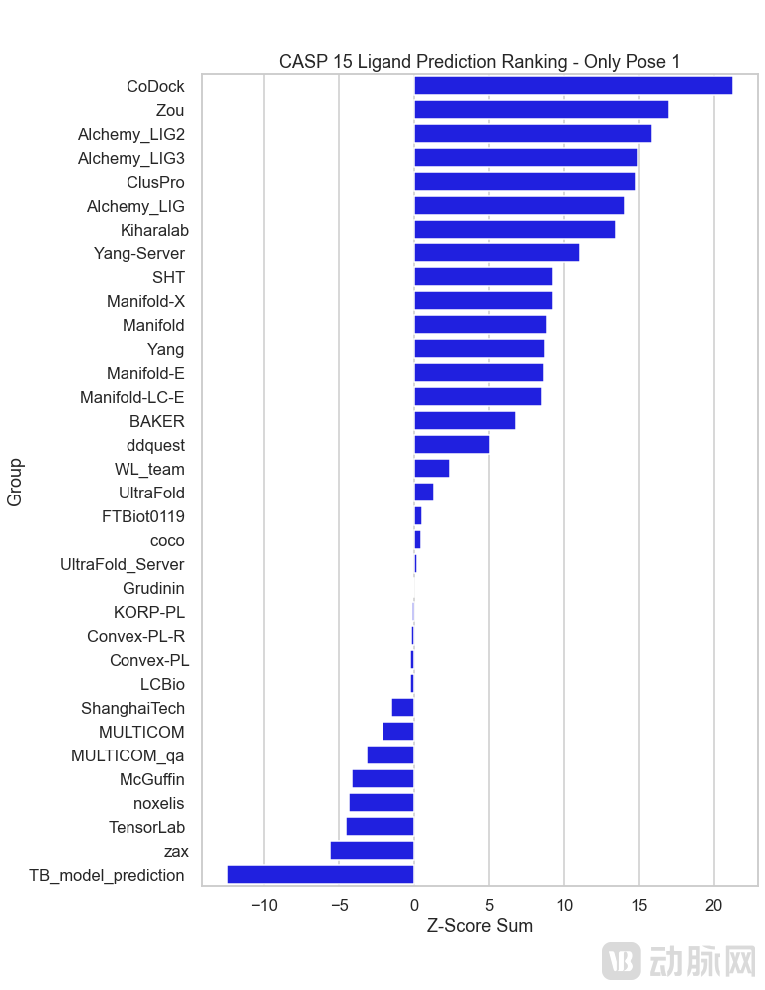
CASP15 Protein-Ligand Group Ranking (Image Source: Official Release by CASP15)
In this year's competition, the original "Refinement" and "Assistant Prediction" tracks were canceled, and new tracks "RNA" (RNA structure prediction) and "Ligand" (protein/RNA-ligand complex structure prediction) were added.From the changes in the competition, it can be seen that in the post-AlphaIn the Fold2 era, the problem of predicting the monomer structure of proteins has been basically solved, and the current challenges have shifted to "how to better predict protein/RNA-ligand complex structures" and "the prediction of nucleic acid structures, a cutting-edge R&D focus in the industry."
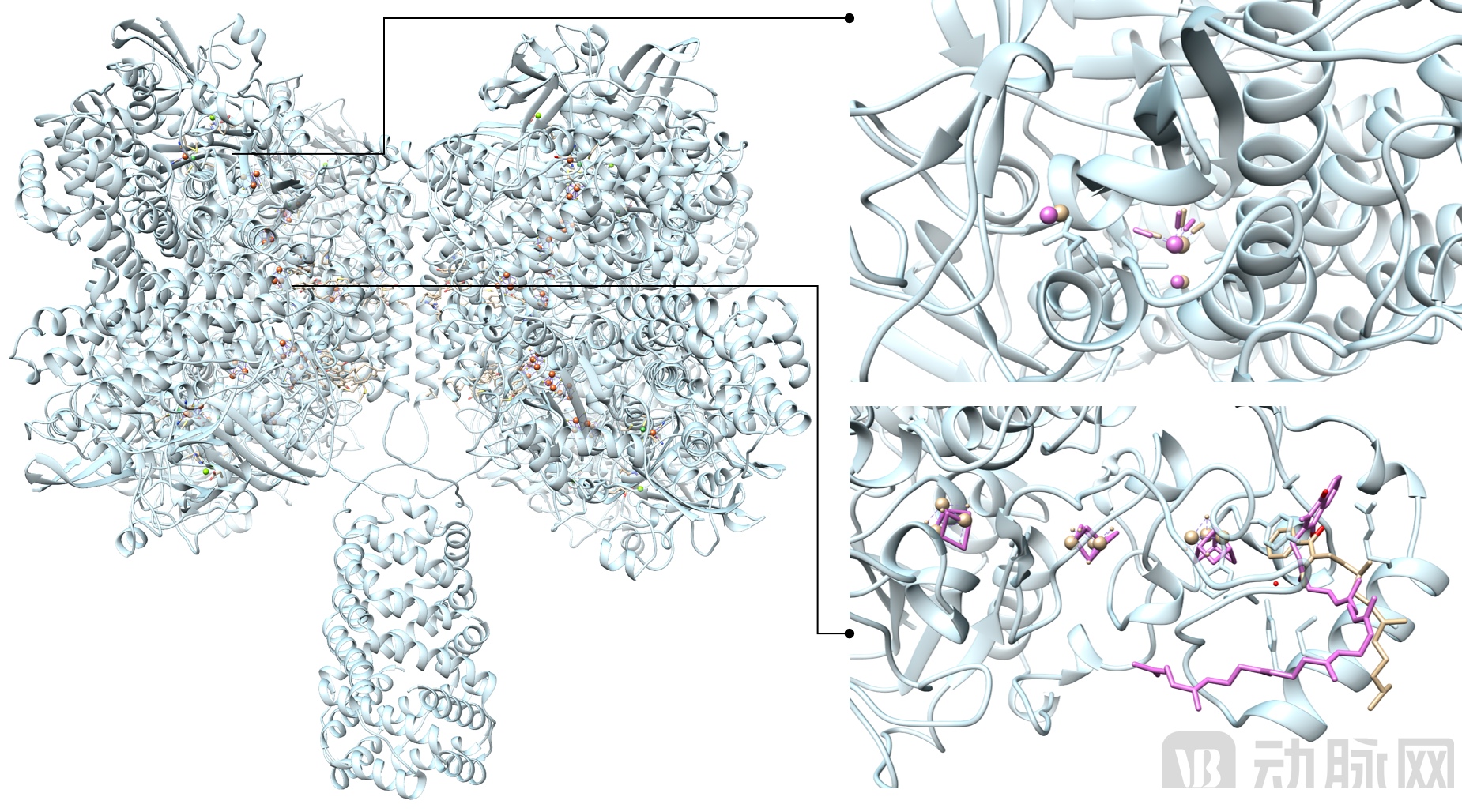
Comparison of H1114 Crystal Structure and CoDock Predicted Structure (Image provided by Primary Biotech)
Primary Biotech was founded in June 2020., fromComputational Mathematics、Computational ChemistryAndBasic Medical ScienceFounded by three scientists with completely different research backgrounds.The three founders began working together at the Bioinformatics and Pharmaceutical Engineering Research Institute of Jiangsu University of Science and Technology in 2015., the development of algorithms has been promoted through in-depth interdisciplinary integration, during which many project studies have been successfully completed.
2018, the team inCASP13-CAPRI Protein Complex Structure Prediction Trackin ChinaType of Difficulty Complex Ranked #1,Ranked 8th in the Full-category ComplexThe results.2020, the team then inCASP14-CAPRIObtained in ChinaProtein Complex Structure Scoring Group Ranked #1,Prediction Group Ranking 3rdThe results. The outcomes of authoritative third-party competitions over multiple consecutive years demonstrate that the team's capability in predicting protein complex structures is at an internationally leading level.
The three founders have accumulated decades of experience in their respective research fields, always believing that the deep learning capabilities of AI technology can bring about a revolution in innovative drug development. But when will this revolution arrive? What specific impacts and changes can it bring? The three believe that it still requires hands-on practice.
Algorithm technology-driven Primary Biotech accelerates the R&D process of innovative drugs.
In terms of innovative drug development, numerous academic teams are continuously exploring the discovery and validation of targets at the front end, while the IND application and clinical trials at the back end are standardized processes regulated by laws. Therefore, in the intermediate stage, how to quickly obtain the PCC becomes particularly crucial.
But when most target structures can already be accurately predicted using AlphaFold2 and RosettaFold, how to quickly obtain PCC?
By regarding drug molecules as ligands, they exert their therapeutic effects by binding to target proteins and subsequently influencing their biological functions. Therefore,Elucidating the binding mode of protein-ligand complexes and providing interaction details are of great significance for drug development.。
Based on this,Primary Biotech Focuses on Precise Prediction of Target-Ligand Interactions, independently developedCore Algorithm CoDock, AdoptTemplate Search Method, DevelopedStructural Similarity Comparison MethodThe algorithm uses the maximum clique search in graph theory to find the accurate template, and then performs deep learning based on the 3D-CNN method to extract structural features of the complex interface. Finally, it selects the near-native complex structure through network scoring.
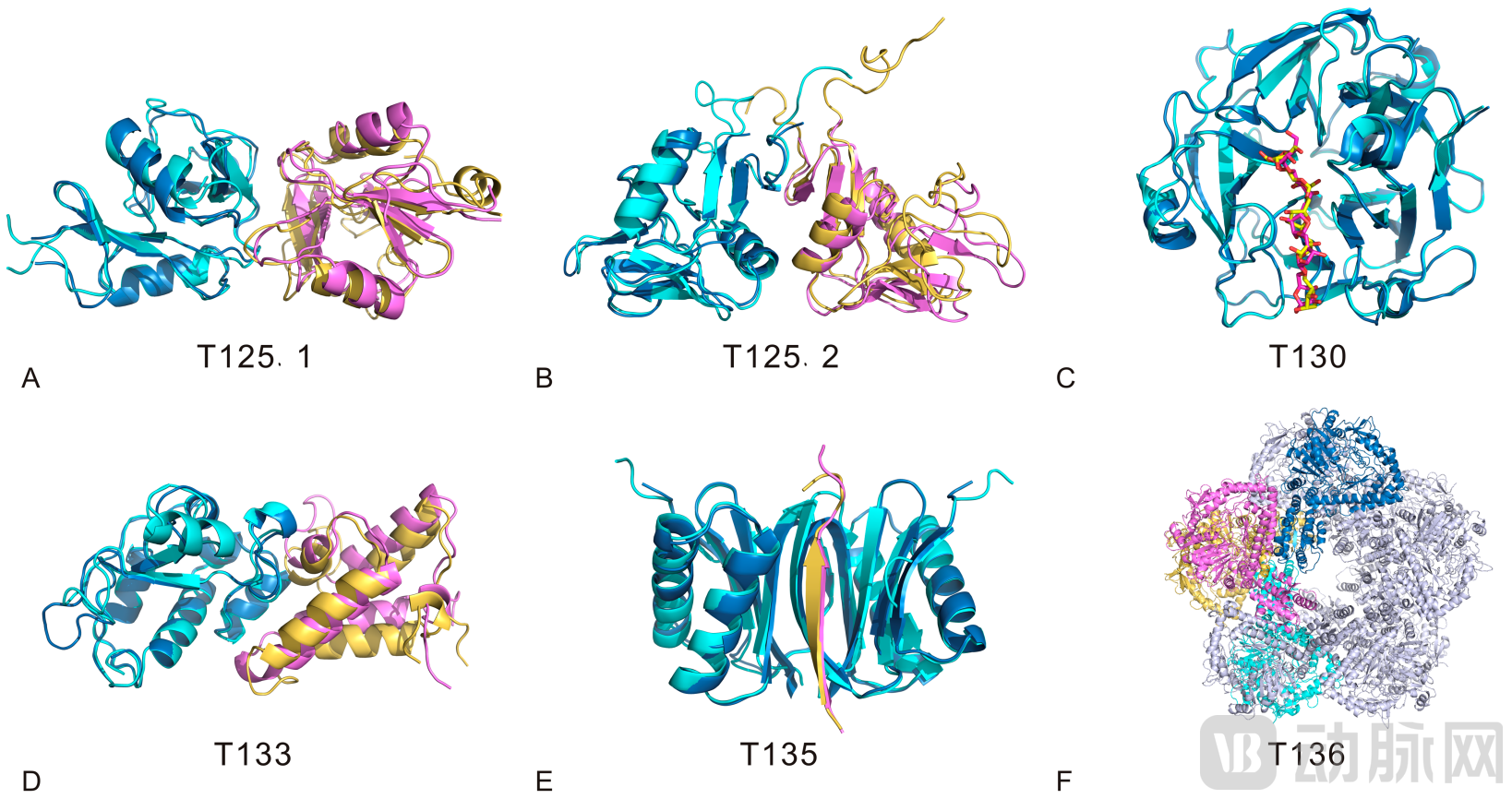
CoDock Algorithm Successfully Predicts 3D Structures of Multiple Protein Complex Systems (Image provided by Primary Biotech)
Currently,CoDock AlgorithmHas been able toProtein-Protein、Protein-Small Molecule、Protein-Nucleic Acid、Antigen-Antibody、Protein-Peptide, andPROTAC Ternary ComplexPredicting the structures of various complexes. Moreover, for different types of complexes, the team has developed and adjusted corresponding algorithms to ensure accuracy.The entire algorithm package contains specific algorithms corresponding to the structures of various complexes.。
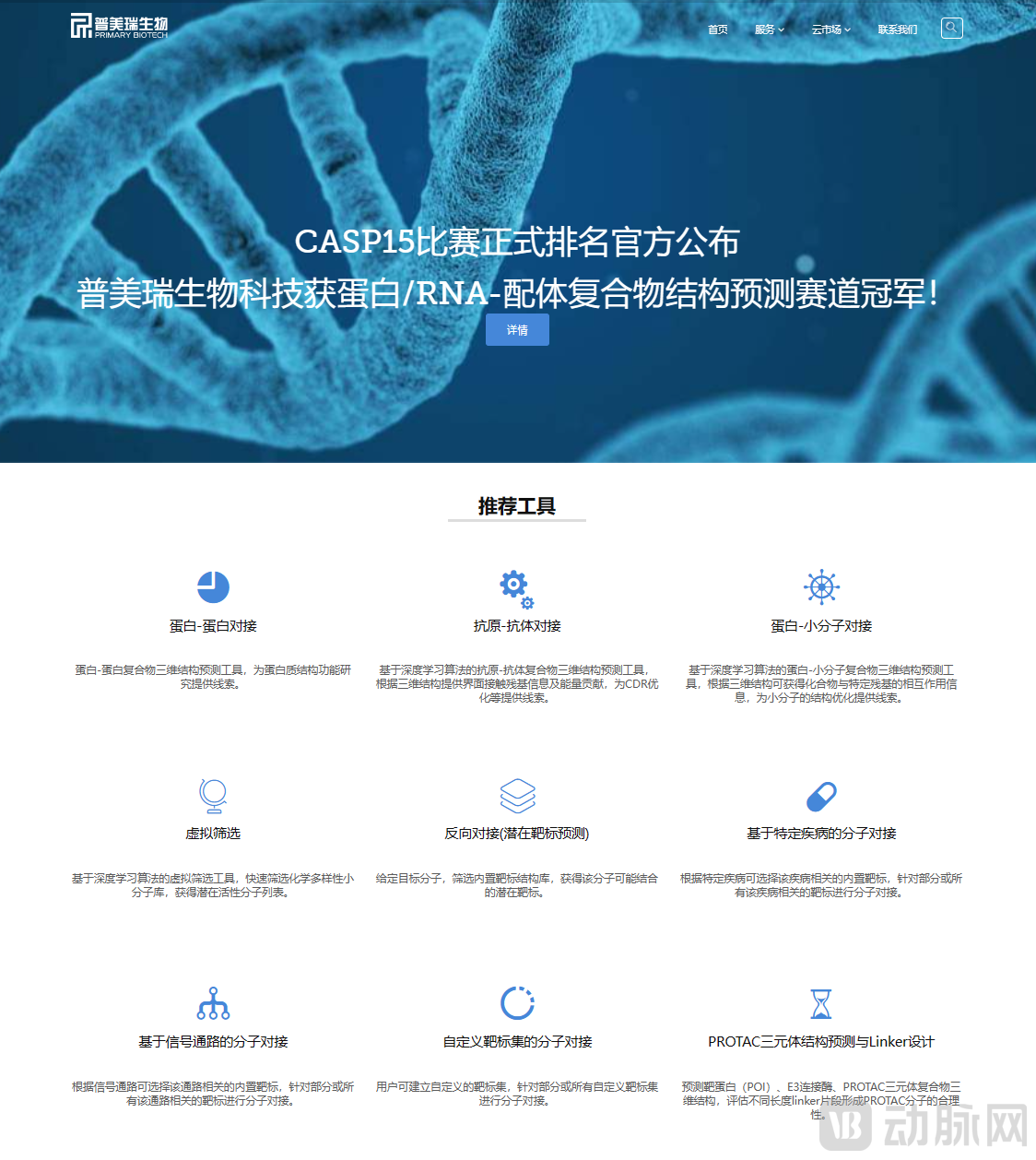
Screenshot of Primary Biotech Official Website
The algorithm package is based on the structural prediction technology platform for biomacromolecular complexes.MOL-Turingin the form of, currentlyPrimary Biotech Official Website Launched, and the platformAll related algorithms have now been upgraded to the latest version, which won the championship in this CASP15 competition.。
Primary BiotechThe core algorithm of CoDock is mainly applied to three major scenarios., ConventionalSmall Molecule Lead Compound Discovery Platform, PopularAntibody Discovery Platform, and all-newPROTAC (Proteolysis Targeting Chimera) Molecular Design Platform。
Globally, no PROTAC drugs have been officially approved yet, and due to their complex molecular structures, they are quite controversial in terms of drugability and safety. Twenty years ago, Professor Craig M. Crews first proposed...PROTAC, the molecule is aHeterobifunctional Small Molecule Compounds, the structure contains two different ligands, one of which isE3 Ubiquitin Ligase, and the other isLigands that bind to target proteins in cells, Between the two ligands throughLinker Connected, thereby forming“"Three-Body" Polymer——Target Protein Ligand-Linker-E3 Ligand。
In 2020, Arvinas (ARVN.US), founded by Professor Craig M. Crews, announced that two of its proprietary pipelines had entered the clinical trial stage.Demonstrated excellent pharmaceutical properties and efficacy in Phase I clinical data. This result undoubtedly unravels many of the industry's doubts about PROTAC,A large number of PROTAC companies and pipelines have also begun to emerge both in China and internationally.。
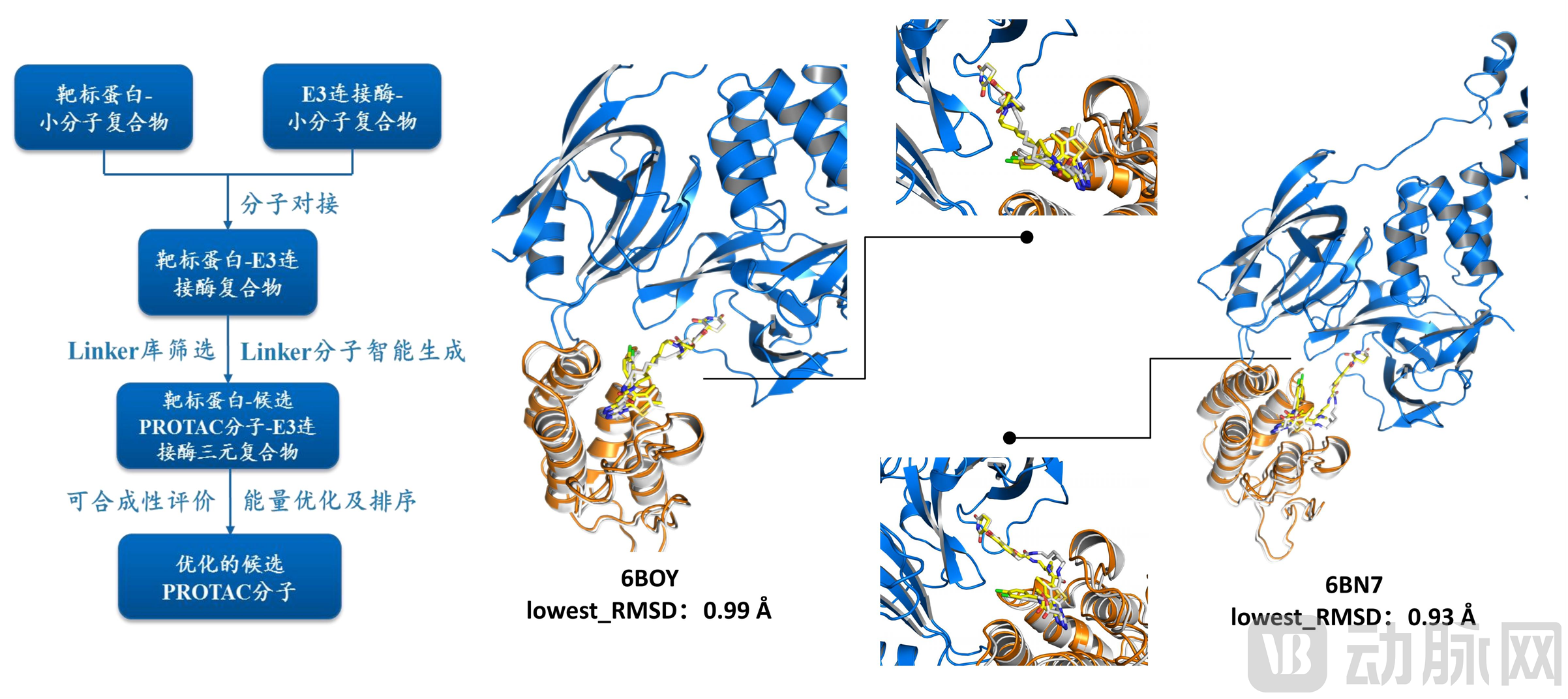
PROTAC Molecular Design Platform Process and Experimental Structure Reconstruction Effect (Image provided by Primary Biotech)
Primary Biotech has been focusing on PROTAC since 2019 and rapidly completed the PROTAC molecular design platform based on CoDock during 2020-2021.By predicting the complex structure, directlyEvaluate whether this PROTAC molecule can form a relatively stable complex with E3 ligase and the target protein., andPredict the degradation ability of this PROTAC moleculeIn actual project development, the platform can find one PROTAC with particularly good activity for every 2-3 molecules designed.
Similarly, includingSmall Molecule Lead Compound Discovery Platform、Antibody Discovery PlatformWithin, if it is possible to predict the binding mode and binding efficiency of the target and ligand complex through algorithms in the early stage, the corresponding screening and optimization can be completed. In addition, based on the team's extensive research experience in molecular biology and cell biology, Primary Biotech...Build up internallyPharmacodynamics and Pharmacology Platform, to support biological experimental evaluation of platform-designed molecules.
Primary Biotech's advanced algorithm-driven advantages enable it to respond to the research and development of various drug-type molecules, facilitating rapid molecular design and optimization.
The surprising performance of CASP15 has made Primary Biotech stand out, whether inSaaS Business, or inCRO Servicesin various aspects, there are opportunities to make significant strides within the industry. It is reported that the companyA New Round of Financing PlanIs also being actively prepared.
Currently, Primary BiotechPROTAC Pipeline with Independent Intellectual Property RightsInIn terms of proof of concept, the degradation of a completely new target has been achieved., and is steadily advancing in the optimization of pharmaceutical properties. Whether through collaborative development or commercialization via License Out, it is expected to become a promising candidate for this target.First in ClassPROTAC.
In the short term, Primary Biotech'sThe computing platform willContinue comprehensive development and optimization, new algorithm tools will also be continuously updated and launched. In terms of pipelines, the company also plansComplete the PCC or IND development of 1-2 innovative drug R&D pipelines within 1-3 years.。
Primary Biotech always adheres to driving and accelerating the innovation of drug development through algorithm technology, pursuing the advancement of algorithms while paying attention to the real-time pain points and opportunities within the industry. The company believes that in the future, protein design, retrosynthetic route prediction, indication track segmentation, clinical trial enrollment screening, and more, are all areas where AI technology can demonstrate its capabilities and expand.
Here, Primary Biotech will continue to invest in algorithm development.Leverage the differentiated advantages established by their own algorithmsOn the other hand, through accumulated experience and iterative optimization, the company hopes to leverage its multiple proprietary early drug discovery screening platforms.Build a one-stop innovative service platform for "AI computing + biological experiments"。
Thank you to the many companies and scholars who have worked with Primary Biotech to advance computational prediction of protein structures. We also look forward to the revolutionary changes AI technology will bring to drug development!