

Orasis Pharmaceuticals Submits NDA for CSF-1 Eye Drops Offering 20-Minute Onset for Presbyopia Treatment

Orasis Pharmaceuticals
Ophthalmic Drug Developer

FDA
U.S. Food and Drug Administration
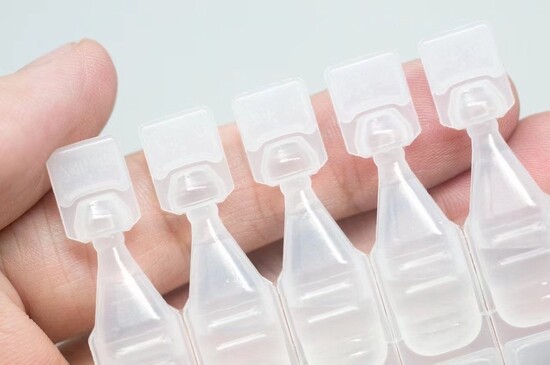 Image Source: Tuchong Creativity
1.8 Billion Presbyopia Patients Have Another Option for "Freedom from Glasses."
Recently, Orasis Pharmaceuticals, an Israeli ophthalmic drug developer (hereinafter referred to as "Orasis"), announced that it has submitted a New Drug Application (NDA) to the U.S. Food and Drug Administration (FDA) for its investigational presbyopia eye drop treatment, CSF-1.
According to the official website, CSF-1, developed by Orasis Pharmaceuticals, is a preservative-free ophthalmic solution formulated with a low dose of pilocarpine and multiple excipients. With a pilocarpine concentration of 0.4%, its primary mechanism of action is pupil constriction, which enhances depth of field and improves near and intermediate vision.
From the results, both Phase 3 clinical trials reached their primary and key secondary endpoints on Day 8, significantly improving the number of lines read on the eye chart by three lines, with a reduced proportion of patients experiencing less than one line of distance vision loss. Within one hour after receiving the first dose, 40% of patients could read three additional lines, and this proportion increased to 50% after the second dose (p<0.0001). Participants experienced vision improvement as early as 20 minutes post-treatment, with effects lasting up to 8 hours.
In terms of safety, the most common adverse events of CSF-1 were headache and infusion site pain, occurring in 6.8% and 5.8% of participants, respectively. Among all treated participants, only 2.6% reported moderate treatment-related adverse events, with the rest being mild adverse events.
Presbyopia, also known as "lao hua yan," is a natural physiological phenomenon and a visual problem that inevitably occurs as people enter middle and old age, according to a study published by the Ophthalmology Department of the Branch Hospital of Tongji University's Tongji Hospital. As age increases, the crystalline lens gradually hardens, its elasticity weakens, and the function of the ciliary muscle progressively declines, leading to a gradual decrease in the eye's accommodative ability. Around the age of 40 to 50, difficulties in close-range tasks such as reading begin to appear. This age-related decline in physiological accommodation is referred to as presbyopia.
The content from the National Elderly Care Network shows that presbyopia usually appears around the age of 38, with a peak incidence between 42 and 44 years old. Nearly all patients will experience presbyopia symptoms by the age of 52, with an incidence rate approaching 100%.
The Lead Drafter of the Industry Standard for "Quality Control of Excimer Laser Corneal Refractive Surgery," Central South UniversityAier Eye HospitalProfessor Wang Zheng, doctoral supervisor of the academy, once pointed out that data statistics show that among China's population aged 35 and above, there are 390 million people with presbyopia issues, accounting for nearly 30% of China's total population. Additionally, according to WHO data, nearly 1.8 billion people worldwide are affected by presbyopia.
From the current drugs and therapies for presbyopia, there are relatively few eye drop products similar to Orasis Pharmaceuticals' CSF-1. According to CNKI data, in October 2021, before Orasis Pharmaceuticals applied for its IPO, the U.S. FDA approved AbbVie's subsidiary Allergan's ophthalmic drug Vuity (Pilocarpine, 1.25% ophthalmic solution) for the treatment of presbyopia. This is the first FDA-approved eye drop for the treatment of presbyopia in the United States. Patients receiving once-daily Vuity treatment experienced improved near and intermediate vision without affecting their distance vision. After using Vuity, the effects were rapid, with sustained visual improvement lasting up to 6 hours.
In late October 2022, Eyenovia, a U.S.-based clinical-stage biopharmaceutical company, announced positive data from the Phase 3 clinical trial VISION-2 for its pilocarpine formulation MicroLine eye drops in treating presbyopia patients, significantly improving near vision in adults with presbyopia. In the earlier Phase 3 clinical trial VISION-1, MicroLine also met the primary endpoint of achieving a three-line improvement in distance-corrected near visual acuity (DCNVA) two hours after administration. Eyenovia stated that it is preparing to submit an application for the therapy's market approval to the U.S. FDA.
As early as August 2020, Artery Therapeutics, a Chinese ophthalmology therapy company, had reached a cooperation with Eyenovia, obtaining the development and commercialization rights of MicroLine in Greater China and South Korea.
From the perspective of currently researched and already marketed presbyopia eyedrops, they can only alleviate related symptoms but cannot completely cure presbyopia.
In terms of price, Era Finance saw from the official WeChat account of Ouryao that the selling price of Allergan's Vuity is $80/bottle (2.5 ml) (approximately RMB 542/bottle), and each bottle can be used for 30 days.
"Currently, the Vuity eye drop product has not yet been launched in China, and it is relatively expensive in terms of price. If any patients wish to purchase and use it, they can do so through proxy purchasing channels, but these channels also carry the risk of counterfeit products," an insider from a private ophthalmology hospital told Era Finance.
Currently, the treatment measures for presbyopia are mainly based on devices or surgeries, such as reading glasses, contact lenses, corneal surgery, and multifocal intraocular lens implantation, etc.
"Presbyopia cannot be treated with medication; the effective method is through surgery, which can achieve the effect of getting rid of glasses and is more convenient, but relatively expensive. Reading glasses are troublesome to put on and take off and may affect appearance, but it mainly depends on vision needs. If you feel that it does not impact your life or work, wearing reading glasses is also an option," an ophthalmologist from a tertiary hospital in North China told Era Finance.


Editor: Wei Zirong