

JPM2023: Digital Health IPOs Plummet by 97%, Biotech M&A Wave Resurges

Pfizer
Pharmaceutical R&D Developer
MGI
Gene Sequencing Instruments and Related Reagent & Consumables R&D Manufacturer
How Cold Was the Economy in 2022?
The recently concluded JPM2023 (41st Annual J.P. Morgan Healthcare Conference) released an equity capital R&D report: compared to 2021, when 310 projects in the U.S. successfully went public (excluding SPAC), raising a total of $151 billion, the equity market in 2022 was cut in half, with only 20 projects going public throughout the year. Among them, 11 were in healthcare, raising $700 million, marking a staggering 94% decline.
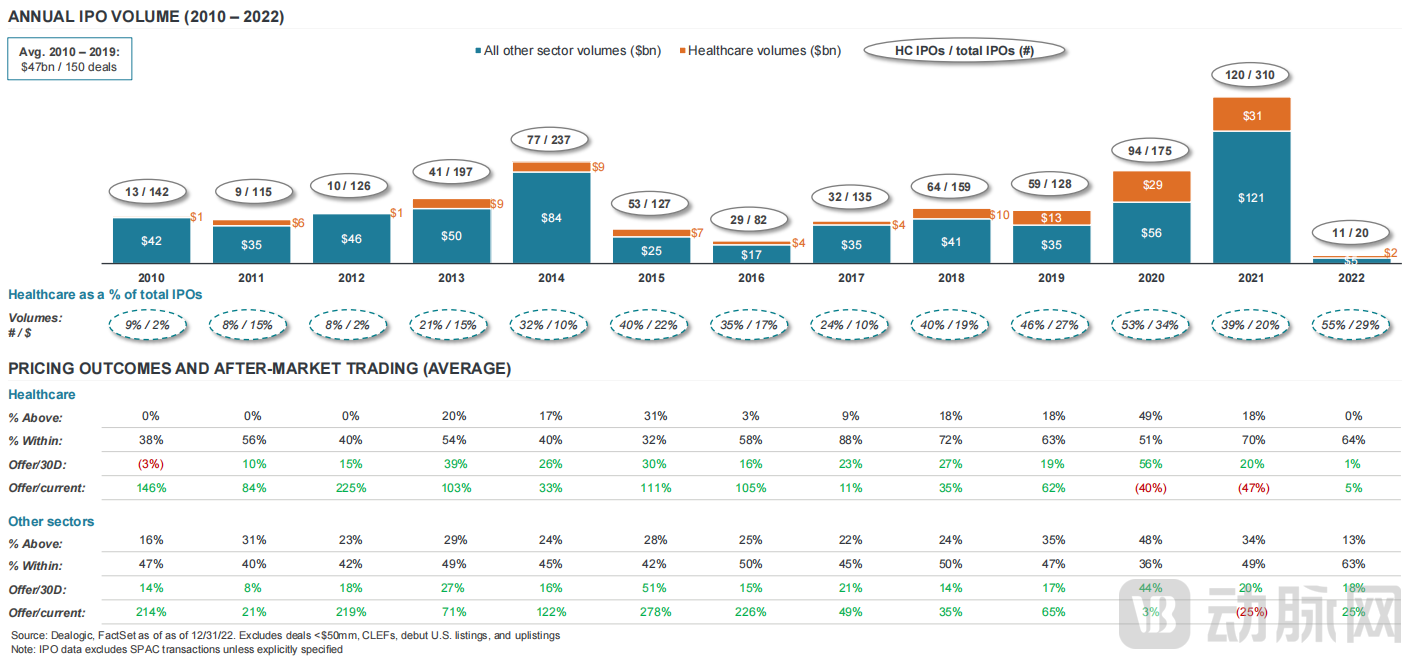
Trends in IPO Changes in the U.S. Market from 2010 to 2022
(Source: EQUITY CAPITAL MARKETS UPDATE 2022 Recap & 2023 Outlook; J.P. Morgan))
However, the data presented in this chart has another layer of meaning, emphasizing the resilience of the healthcare track. On one hand, healthcare contributed to 55% of the total annual IPOs; on the other hand, this track demonstrated far stronger risk resistance than the overall industry. While the S&P 500 returns fell to -19%, the healthcare sector maintained its value, delivering the best performance outside of the energy sector and standing shoulder-to-shoulder with industrial manufacturing and consumer-end consumption.
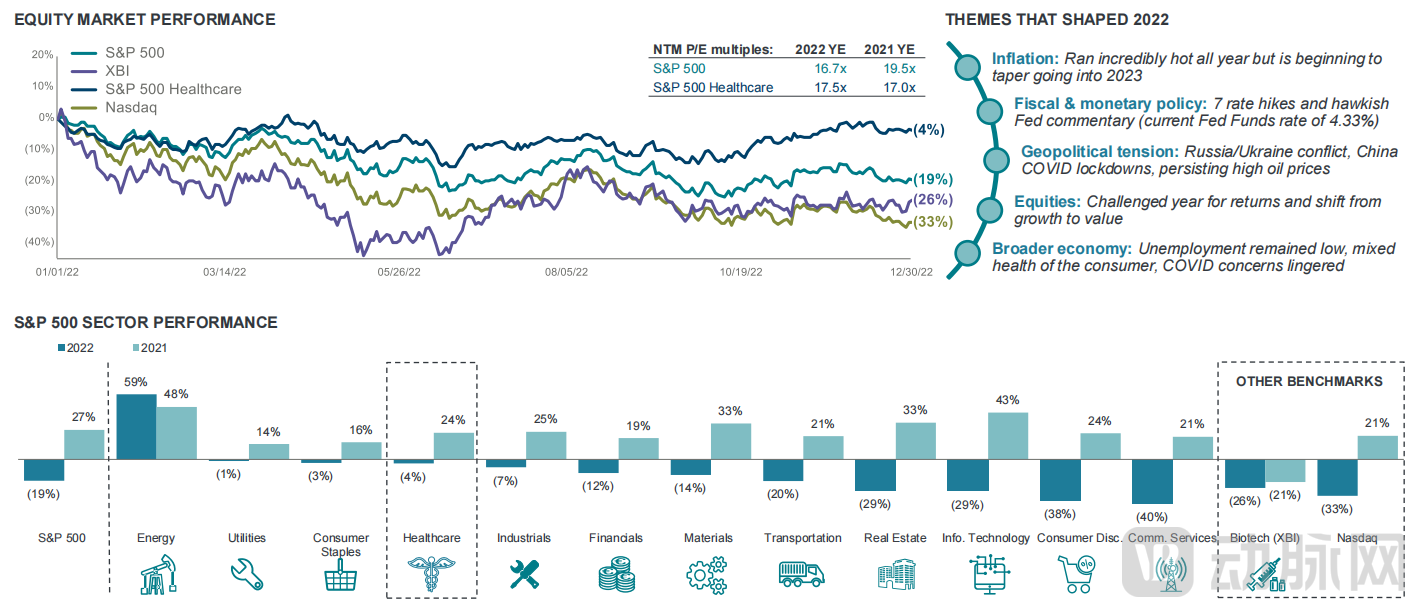
Trends in Various Industries in the U.S. Market: 2021-2022
(Source: EQUITY CAPITAL MARKETS UPDATE 2022 Recap & 2023 Outlook; J.P. Morgan)
Despite the somewhat harsh statistics, 2023 still holds promise. This year’s JMP finally broke through the spatial barriers imposed by the COVID-19 pandemic, resuming in-person communication; leading domestic companies once again set sail overseas together, with MGI, Junshi Biosciences, Antengene, Innovent Biologics, Illumina, and other enterprises successively delivering speeches to accelerate their expansion into overseas markets.
Under various details, the wind of recovery seems to have long swept through the medical field.
JPM is regarded as the beacon of the global life science trend because it always attracts the most significant medical transactions worldwide.
The acquisition spree at JPM2019 was louder than any previous year. After Eli Lilly announced the $8 billion acquisition of Loxo Oncology, Bristol-Myers Squibb unveiled its $74 billion mega-merger with Celgene, directly pushing cancer therapies to the forefront of the times.
In contrast, at the virtual Morgan Conference in early 2022, none of the M&A projects exceeded $1 billion. The most expensive deal was Medtronic's acquisition of cardiac ablation company Affera for $925 million, which seemed to foreshadow the bleak market that followed in 2022.
Through less rigorous reasoning, we might glimpse a shadow of hope from JPM2023.
On the first day of the conference alone, five companies announced mergers and acquisitions. Among them, AstraZeneca's acquisition of CinCor Pharma for a total of $1.822 billion, and Chiesi's acquisition of Amryt for $1.48 billion. The combined transaction amounts of these two deals have far exceeded JMP2022, marking a good start for the healthcare sector in 2023. In addition, Novartis CEO Vas Narasimhan also stated at the conference that he is evaluating various M&A opportunities, expressing optimism about projects below $4-5 billion that align with the company’s strategy and can truly add value.
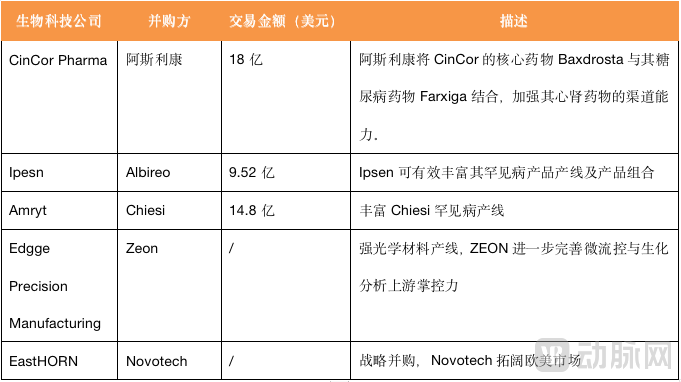
JMP First-Day M&A List
AstraZeneca Acquires CinCor Pharma
AstraZeneca's acquisition of CinCor, a U.S.-based company focused on developing novel therapies for treatment-resistant hypertension and chronic kidney disease, is expected to be completed in the first quarter of this year.
According to the terms of the agreement, AstraZeneca agreed to acquire CinCor shares at $26 per share in cash and pay $522 million for CinCor's contingent value rights (CVRs). This brings the total final transaction value to approximately $1.8 billion, representing a 206% premium over CinCor's closing market value on January 6.
The core of AstraZeneca's deal this time lies in CinCor's candidate drug Baxdrostat, an aldosterone synthase inhibitor (ASI) mainly used for treating resistant hypertension.
AstraZeneca aims to combine Baxdrostat with its diabetes drug Farxiga to further strengthen its cardio-renal drug pipeline capabilities.
Ipesn Acquires Albireo
Ipsen is a biopharmaceutical company headquartered in Boulogne-Billancourt, France, focusing on advancing drug research and development in the fields of oncology, rare diseases, and neuroscience. At JMP2023, Ipsen announced the acquisition of Albireo, a U.S.-based rare disease company specializing in acid regulators for the treatment of cholestatic liver diseases in children and adults.
According to the terms of the agreement and the merger plan, Ipsen will initiate a tender offer through a wholly-owned subsidiary to acquire all outstanding shares of Albireo at $42.00 per share, with a preliminary estimated value of $952 million plus CVRs.
Through this transaction, Ipsen can effectively enrich its rare disease product pipeline and portfolio. For instance, Albireo's clinical-stage A3907, a novel oral systemic apical sodium-dependent bile acid transporter (ASBT) inhibitor, can be used to treat adult cholestatic liver diseases such as primary sclerosing cholangitis (PSC).
A2342 from Albireo is also highly promising. It is an orally administered systemic sodium-taurocholate cotransporting polypeptide (NTCP) inhibitor for the treatment of cholestatic diseases, with an IND application currently submitted.
Chiesi Acquires Amryt
Italy-based Chiesi Farmaceutici Acquires Ireland's Amryt Pharma for $1.48 Billion, Including $1.25 Billion in Upfront Payment and Approximately $225 Million in Potential CVRs; Transaction Expected to Close in the First Half of 2023 if All Conditions are Met.
Chiesi Farmaceutici focuses on innovative treatment solutions in respiratory health, rare diseases, and specialty care, while Amryt specializes in therapies for rare diseases such as dystrophic and junctional epidermolysis bullosa (EB).
Zeon Acquires Edgge Precision Manufacturing
Japanese Company Zeon Corporation Acquires US Microfeature Thermoplastic Device Manufacturer Edge Precision Manufacturing During JPM2022.
ZEON's optical materials COP (product names ZEONEX® and ZEONOR®) are renowned for their unique properties such as low autofluorescence, high light transmittance, low biomolecular adsorption, low impurities, and low melt viscosity, and are widely used in microfluidics and biochemical analysis applications. After completing the acquisition, Zeon will obtain 100% equity of Edge Precision Manufacturing, further enhancing its presence in the healthcare sector.
Novotech Announces Acquisition of EastHORN
US CRO Novotech Announces Acquisition of EastHORN at JMP 2023 Conference. EastHORN, a European CRO with clinical, medical, and regulatory experts in multiple strategically important locations across the continent, has been collaborating with Novotech for 15 years.
This acquisition is part of Novotech's expansion strategy. Prior to the acquisition, Novotech was already one of the largest CRO companies in the Asia-Pacific region and had planned to list on the Hong Kong Stock Exchange. With the completion of the acquisition, Novotech can now expand its one-stop clinical CRO services to the European and U.S. markets, accelerating the commercialization process in global markets.
Overall: With external factors such as the COVID-19 pandemic and the European energy crisis gradually becoming more controllable, the global economy is recovering at a fairly significant pace. However, it will likely take more than a year to reach pre-pandemic levels. At the conference, some companies openly expressed their wait-and-see attitudes. For instance, Gilead's Chief Financial Officer Andrew Dickenson stated that he has little interest in large-scale M&A deals and would instead focus more on smaller acquisitions.
Consistent with the trends in the M&A market, executives of multinational pharmaceutical companies are also quite optimistic when discussing future strategies, R&D, and sales. For instance, Novartis predicted that the company would achieve a 4% compound annual growth rate from 2021 to 2027 and aim to increase its core profit margin by up to 40%; Pfizer showcased plans to launch 19 new drugs/supplementary indications by 2024, expecting to generate $20 billion in revenue by 2030; Eli Lilly referred to 2023 as "the year of new models and new drugs," anticipating the launch of five new drugs covering Alzheimer's disease, immunology, oncology, weight loss, and more.
Among Chinese pharmaceutical companies, BeiGene aims to enter the drug discovery era in its second decade after establishment; Zai Lab has set a profitability target by the end of 2025; China Biologic Products strives to rank among the top 30 pharmaceutical companies globally; and Innovent Biologics has ambitiously set a five-year revenue target of 20 billion yuan.
This positive sentiment spread rapidly within the industry to a certain extent. Many biotech companies attending the conference, which focus on innovative therapies, are also actively showcasing their pipelines through seminars. Quite a few projects have successfully gone public by betting on a single track, gaining a foothold in the highly competitive pharmaceuticals field.
Xenon Pharmaceuticals
In 2022, Xenon Pharmaceuticals successfully advanced its epilepsy treatment drug XEN1101 to Phase III clinical trials. President and CEO Ian Mortimer shared the subsequent development plans for XEN1101 at the conference. Specifically, the second Phase III trial (X-TOLE3) for XEN1101 in treating focal onset seizures (FOS) will commence in 2024, with an NDA submission planned after the completion of the first Phase III trial (X-TOLE2).
XEN1101 is a novel potassium channel opener that inactivates voltage-gated M-type currents. In previous clinical studies, XEN1101 did not form pigment dimers with blue discoloration side effects, making it safer compared to similar drugs.
In addition, XEN1101 shows high selectivity for Kv7 channels but no activity on Kv7.1 (cardiac channel). Phase I studies suggest that XEN1101 is well-tolerated, and transcranial magnetic stimulation-induced experiments lead to reduced cortical excitability. Currently, a Phase II randomized, double-blind, placebo-controlled study initiated in June 2022 is underway to investigate whether XEN1101 can serve as an adjunctive treatment for focal drug-resistant epilepsy.
President and CEO Ian Mortimer expressed high hopes for XEN1101 during the seminar. He stated at the meeting: Xenon is adopting a different development approach from previous epilepsy drugs, planning to use XEN1101 simultaneously for two indications, namely FOS and primary generalized tonic-clonic seizures (PGTCS).
PTC Therapeutics(PTCT)
Duchenne Muscular Dystrophy (DMD) is a rare, life-threatening hereditary muscle disease characterized by weakness and atrophy of muscle fibers, with an incidence rate of 1 in 3600 live male births. Currently, the mainstream treatment drugs in Europe and the United States include Ataluren, Eteplirsen, Emflaza, Viltepso, and Vyondys, of which Ataluren, Eteplirsen, and Emflaza belong to PTCT.
At JPM2023, PTCT Chief Operating Officer Matthew Klein opened with the company's 2022 unaudited total revenue of approximately $710 million, of which $507 million was contributed by the DMD franchise, reflecting a year-over-year revenue increase of over 30%. Matthew Klein expressed confidence in the future, believing that the company can maintain its growth momentum and achieve revenue of $940-$1 billion in 2023.
Currently, PTCT has five marketed products: Translarna, Upstaza, Waylivra (all approved outside the United States), Emflaza, and Tegsedi. By 2023, results from four ongoing clinical trials are expected in the first half of the year.
MGI
As a representative of Chinese enterprises, Rade Drmanac, Chief Scientist of MGI, brought a series of products based on the DNBSEQ platform to the event. DNBSEQ sequencing technology increases the copy number of target DNA through rolling circle amplification, thereby enhancing signal intensity and offering the prominent advantages of a low duplicate rate and high effective data utilization. Additionally, MGI's sequencers utilize patterned array chips, which, compared to non-patterned array chips, can generate uniform and well-organized signals with high chip utilization, lower costs, and excellent performance in various applications such as WGS (Whole Genome Sequencing) and WES (Whole Exome Sequencing).
At JPM2023, MGI launched a series of sequencing products for U.S. users, covering low-throughput to high-throughput applications, enhancing the sequencing capabilities of users across various fields and promoting scientific research and application transformation. These include the versatile desktop sequencer MGISEQ-2000, the ultra-high-throughput DNBSEQ-T7 gene sequencer, the DNBSEQ-T10x4 — one of the highest throughput customizable gene sequencers globally — and the flagship model of MGI’s E series sequencer, the DNBSEQ-E25.
This time, with the full-line products launching in the U.S. market, MGI has taken an important step toward global expansion. MGI's overseas customer experience centers have been successively put into operation in Australia, Japan, Latvia, the United Kingdom, and Germany. As the markets in Europe and America gradually take shape, MGI is theoretically expected to experience a period of strong growth.
2022 was extremely unfriendly to digital healthcare. The overall investment environment was already barren, and the IPOs in the biotech sector further squeezed the financing space for digital healthcare. According to J.P. Morgan research data, five digital healthcare-related tracks—Medtech, Dx, tools, HCIT, and Services—accounted for 46% of healthcare financing in 2021, totaling $20.24 billion. However, by 2022, this proportion shrank to 27%, amounting to only $5.5 billion.
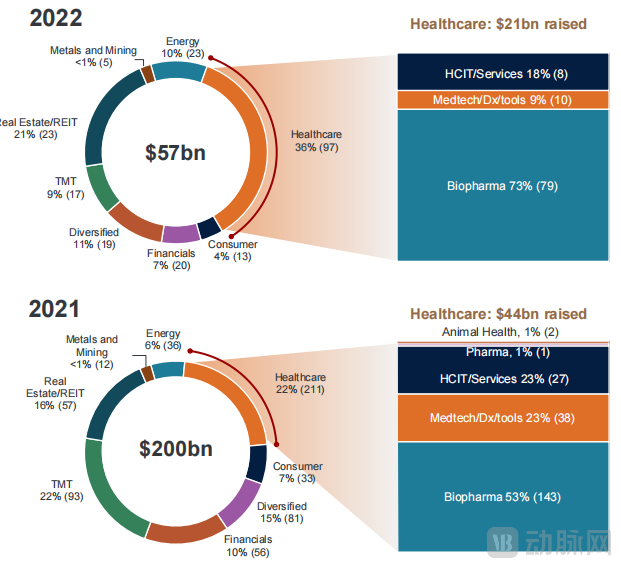
Composition of U.S. IPO Projects in 2021-2022
(Source: EQUITY CAPITAL MARKETS UPDATE 2022 Recap & 2023 Outlook; J.P. Morgan)
After a quiet year, digital healthcare seems to have finally gained momentum in early 2023.
Under the pandemic, telemedicine is one of the few industries that has managed to develop. At this year's JPM, More Health, which specializes in remote critical care diagnosis and treatment, and Phreesia, which focuses on building platforms for doctors, patients, and pharmaceutical companies, were present at the event. Both are highly representative companies in this field.
Over the past few years, MoreHealth's remote medical platform, which has been refined over many years, has benefited from its leading advantages in compliance and professionalism. In addition to the development of its own telemedicine business, it has continuously expanded into specialized fields and rare diseases, covering 180 countries worldwide. Furthermore, the telemedicine platform has been transformed into a SaaS product, becoming a digital partner for numerous hospitals and enterprises in the United States.
At this conference, MoreHealth expressed that it is considering raising funds through multiple channels, including a possible IPO. Currently, MoreHealth has completed meetings with JPM's investment banking team and JPM's clients.
For the industry, MoreHealth's IPO or further capital raising and market expansion will become a positive signal for the digital healthcare sector, potentially helping investors regain confidence in this track.
In addition, Digital Therapeutics (DTx) was also a frequently mentioned topic at the JPM conference.
Although the FDA and NMPA have approved the marketing of many digital therapeutics (DTx) products, and the in-depth development of artificial intelligence has enhanced the usability of DTx, most prescription regulations can only serve drug dispensing and usually do not apply well to DTx.
To address the challenges of commercial interoperability, many American DTx companies are attempting to integrate their products into the category of Durable Medical Equipment (DME). This approach allows them to bypass certain legal issues and enter the market more quickly. However, as a trade-off, DTx products are only eligible for relatively lower reimbursement rates.
A more ideal approach is to lobby regulators to expand payer coverage for Medicare and Medicaid. This is a key focus for U.S. DTx companies this year, but going global and navigating the complex and varied prescription regulatory rules in different countries remains a long and challenging road for DTx.
Looking at the entire JPM2023, we can summarize the trends from both macro and micro levels.
At the macro level:
In 2022, the global economy declined, but the healthcare sector experienced a smaller drop, thus attracting more financing. As Antoine Papiernik, Chairman and Managing Partner of Sofinnova Partners, put it: "Companies in the biotechnology and healthcare fields are still in a better position than they were a decade ago."
Despite the continued presence of the SARS-CoV-2 virus, the impact of the COVID-19 pandemic has gradually diminished across countries worldwide. After three chaotic years, global fear is progressively subsiding, communication between industries is gradually resuming, and sales costs are becoming increasingly manageable.
Digital healthcare cools globally, but with the resumption of offline exchanges, some developments are expected to restart with economic growth, and partial recovery is anticipated in 2023.
As the second-largest country for clinical trials after the United States, China's reopening is expected to help accelerate global drug development.
l The EU energy crisis has passed, the energy market has returned to calm, and more capital may flow into healthcare.
Micro level:
Multinational pharmaceutical companies are emerging from the shadow of 2022, with reduced collaboration between enterprises and potential increases in mergers and acquisitions. Pfizer, Novartis, and Eli Lilly have already presented clear strategic plans, and the next wave of integration is expected to begin in 2023.
Chinese pharmaceutical companies are accelerating their overseas expansion, but compared to foreign companies' decade-long dedication to a single track, innovative drug companies still need time to solidify their understanding of the market.
After enduring the low point of 2022, the move towards openness in 2023 brings a sense of anticipation. Having undergone the most challenging test in a decade, the companies that have survived are looking forward to shining even brighter in the new year.