

Xianwei Vision Completes Nearly RMB 50 Million Angel Funding Round; Key Project Listed in 2022 National Key R&D Program

Nanjing Innovation Capital Group
Innovative Industry Investment Institution
FineVision
Vision Solutions Developer

dingxin capital
Venture Capital Institution
VCBeat learned第一时间获悉,近日,FineVisionFineVision (Nanjing) Co., Ltd. (hereinafter referred to as FineVision)FineVision Announces Completion of Nearly RMB 50 Million Angel Round Financing. This round of financing was led by Shenzhen Dingxin Capital, with Nanjing Innovation Investment Group participating, and VCBeat serving as the exclusive financial advisor. The funds raised will be used for the research, development, production, and industrialization of the all-femtosecond myopia correction surgery device.
At the same time, the "Development Project of the Full-Flyer Laser Corneal Refractive Surgery Device," led by FineVision, a wholly-owned subsidiary of FineVision, was selected for the 2022 National Key Research and Development Program.
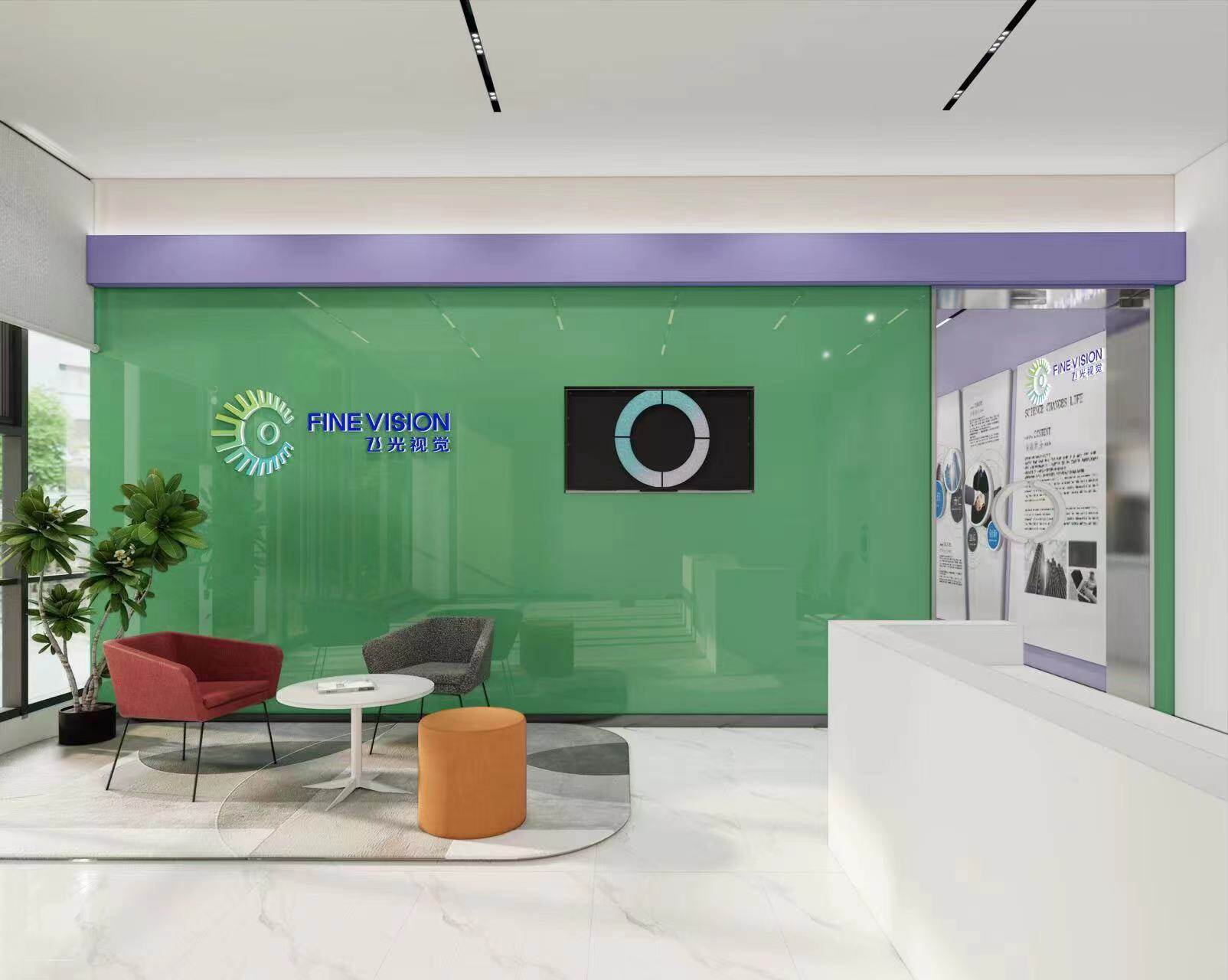
In 2022, FineVision was co-founded by life optoelectronics scientists from the Wuhan National Laboratory for Optoelectronics at Huazhong University of Science and Technology, ophthalmologists, and serial entrepreneurs.Focusing on the application research of femtosecond lasers in ophthalmic surgery and biomaterials processing, FineVision has R&D centers in Nanjing and Wuhan. Its first commercial product — a full femtosecond laser corneal refractive surgery device — originated from the technology transfer of Wuhan National Optoelectronics Laboratory at Huazhong University of Science and Technology.
In the past, the absolute leading position in the market for all-femtosecond laser refractive surgery equipment had long been occupied by Zeiss. Its product, VisuMax, is the world's only device capable of performing all-femtosecond laser refractive surgeries. According to FineVision, as of 2022, the number of installed VisuMax devices in China had exceeded 800, with over 4 million surgeries performed domestically and more than 6 million surgeries conducted globally. In other words, the Chinese market has contributed over half of the market value for Zeiss' all-femtosecond laser refractive surgeries.
But the successful transformation of FineVision's SMILE laser surgery equipment represents the localization of core technologies and key components in SMILE laser refractive surgery devices, which is expected to break the long-term monopoly of foreign enterprises in this field. Therefore, the project has also been selected into China's National Key R&D Program.
"Full-fledged femtosecond laser will definitely become the mainstream paradigm of refractive surgery in the future." The founders of FineVision appear to be very confident about the development of full-fledged femtosecond laser refractive surgery.
According to data from the National Health Commission, in 2020, China's myopic population was 660 million, with a myopia incidence rate of 47.1% nationwide. The overall myopia rate among children and adolescents was 52.7%, indicating a large base of myopic individuals.
Beyond the vast base of people with myopia, there is also a surge in demand for refractive laser correction due to factors such as special professional recruitment requirements and the aesthetics-driven economy.
For example, according to Cao Feng, General Manager of FineVision, from the age perspective, the largest proportion of myopia patients in China are students aged 20-24. The peak period for refractive surgery also tends to concentrate in the summer each year. The strong interest in refractive surgery among student groups may be attributed to meeting physical health requirements for "military enlistment, public security recruitment, and air force pilot selection" and other special professions. Beyond these needs, the rise in consumption levels and economic conditions has also made parents willing to pay for their children's demands.
Similarly, there is a growing demand for refractive surgery among working professionals. In Europe, for instance, the majority of people undergoing myopia surgery are working individuals with the ability to pay out-of-pocket, with 26% being between the ages of 25 and 29. The peak periods for myopia surgeries occur during the spring and autumn seasons each year. In China, an increasing number of working professionals are opting for laser surgery to eliminate the need for eyeglasses or contact lenses, driven by considerations of work convenience and improved appearance.
In the face of enormous demand, the market size for refractive surgery is also growing rapidly. Taking Aier Eye Hospital as an example, the number of effective eyes treated with myopia surgery in 2018, 2019, 2020, and 2021 were 250,000, 340,000, 430,000, and 530,000 respectively, showing not only a year-on-year increase but also achieving double growth (referring to the 2021 data compared to the 2018 data).
However, further细分 shows that refractive surgery can be further divided into small incision lenticule extraction (SMILE, 全飞秒), femtosecond laser-assisted LASIK (FS-LASIK, 半飞秒), and transepithelial photorefractive keratectomy (T-PRK, 准分子激光手术).
According to the "2022 China-Europe International Myopia Surgery White Paper" released by the Aier School of Ophthalmology, Central South University, and the Aier Eye Research Institute, from 2018 to 2020, patients with mild to moderate myopia predominantly chose the femtosecond LASIK procedure, accounting for 56.2% and 51.9%, respectively. However, starting in 2021, the SMILE procedure became the primary choice for patients with moderate myopia.
Although, statistically speaking, SMILE (Small Incision Lenticule Extraction) has only taken the lead in moderate myopia correction, many believe that with the emergence and development of trends towards minimally invasive, personalized, and precise refractive surgeries, the mainstream trend in refractive surgery has shifted from the previous LASIK (Laser-Assisted In Situ Keratomileusis) to SMILE. To explore the reasons, it is inevitable to compare the three.
Photorefractive Keratectomy (PRK)A corneal flap needs to be created with a microkeratome, followed by excimer laser ablation of the corneal stroma to alter the corneal curvature. Finally, the lifted corneal flap is repositioned. This surgical procedureHighly dependent on the doctor's technique, with a higher degree of corneal damage, prone to corneal complications while requiring the use of a bandage contact lens, and a longer recovery period.Therefore, this surgical procedure has been basically eliminated.
AndHalf-Femtosecond ProcedureThe procedure first uses femtosecond laser to create a corneal flap, followed by excimer laser for the ablation of the corneal stroma, aiming to alter the corneal curvature. After the surgery, the corneal flap needs to be repositioned. Although the semi-femtosecond technique is currently the most widely used method in refractive correction surgery, it still has certain limitations. For instance,There are problems such as large corneal flap incisions, numerous corneal complications, a higher probability of corneal displacement, and high surgical requirements (sufficient corneal thickness is needed).
AndAll-Fly SecondIt is the latest generation of laser corneal surgery techniques, which has been clinically practiced worldwide since 2012 and was widely approved for use in the United States in 2016. The procedure only requires a single deep-layer scan and a single shallow-layer scan of the corneal stroma using femtosecond laser, followed by the removal of a lenticule-shaped corneal slice formed after scanning through a 2-4mm small incision to complete the surgery.
Due to the absence of corneal flap creation, the likelihood of inducing cornea-related complications is lower, preserving more of the corneal biomechanical properties and stability. Moreover, since only a small incision of 2-4mm is required, not only is the procedure time relatively shorter compared to semi-femtosecond surgery, but the risks of inducing dry eye syndrome, corneal infection, and epithelial ingrowth are also reduced.
Not only that, but compared to femtosecond LASIK, the surgical process of SMILE is simpler. Both the corneal lenticule and the small incision are completed in a single treatment step, using just one laser and one computer program. However, femtosecond LASIK requires the use of two different laser devices during the procedure.
"In general, 'All-femtosecond, flapless, minimally invasive, painless, fast, and one-step completion are the essence and unique charm of the SMILE femtosecond laser surgery,'" said Cao Feng. "Not only that,In the future, all-femtosecond laser surgery can also be used to correct hyperopia and presbyopia, and the long-term market is also worth expecting."
The technical difficulty of the SMILE laser corneal refractive surgery equipment is at the pinnacle of the pyramid, which has become a basic consensus among experts in the laser field and clinical ophthalmology.
The reason why it is extremely difficult lies in the fact that the surgery requires the equipment to use femtosecond laser on the thin cornea, to cut a coin-sized convex lens with a three-dimensional precision of several micrometers within tens of seconds. It also demands the smooth separation and extraction of the convex lens to achieve the purpose of correcting vision and improving visual quality.
This means that the all-femtosecond laser surgery equipment needs to possess extremely high stability, consistency, and precision. Achieving these standards implies that more scientific and technical issues need to be resolved, thus making the R&D extremely challenging.
But FineVision has gathered a group of strong teammates — Wuhan Optoelectronics Industry, hospital resources, and relevant teams from Huazhong University of Science and Technology, etc.
Among them, Wuhan's China Optics Valley gathers universities, high-end research institutions, and high-tech optoelectronic enterprises in the optoelectronics field, especially high-tech enterprises that produce femtosecond lasers required for surgery. Moreover, Wuhan boasts strong medical resources, with Tongji and Xiehe Hospitals ranking among the top in China, providing significant medical support.
As for Huazhong University of Science and Technology, it has been conducting research on laser surgical equipment and laser medicine since the 1980s. Its biomedical engineering and optical engineering both received an A+ in the 2014 Ministry of Education disciplinary assessment, and its biomedical photonics research team has consecutively received innovative group funding from the National Natural Science Foundation of China for three terms (9 years).
AndChief Scientist of FineVision, Professor Shaoqun ZengOne of the pioneers in China in the interdisciplinary research of using femtosecond lasers in biomedicine.One of the core research achievements—two-photon random scanning imaging technology and instrumentation—enables femtosecond laser inertia-free rapid scanning microscopy imaging and control. The femtosecond pulse evolution formula and dispersion compensation schemes have been utilized by scientists from multiple countries for functional imaging of neuronal networks, as well as for femtosecond laser precision 3D processing.
Through the unremitting efforts of interdisciplinary researchers led by Professor Shaoqun Zeng over the years, the initial femtosecond laser scanning and imaging technology has gradually evolved into today's FineVision's all-femtosecond laser refractive surgery equipment. Breakthroughs have been made in several core technologies, with some forming self-owned original intellectual property rights, and performance indicators that can rival imported similar products.
And,Building on the basic performance of the product, FineVision has made two optimizations: First, the device incorporates biomechanical feedback parameters for the cornea; second, the laser's center positioning for corneal ablation is more scientifically and reasonably designed, with the ability to make a secondary adjustment to the laser ablation center.
In addition to product strength, FineVision also excels in engineering capabilities, commercialization abilities, and operational execution.
General Manager Cao Feng is a serial entrepreneur who worked at a university of traditional Chinese medicine for over 10 years. In 2017, he co-founded Nanjing Pumicro Medical Technology Co., Ltd. and in 2019 obtained the first Class III medical device registration certificate in China for a neurointerventional intermediate catheter, successfully commercializing the product. From transforming scientific research achievements in universities to entrepreneurship, including product registration and business operations, Cao Feng has accumulated extensive experience in operational management, registration submission, and quality management within the medical device industry.
The vice general manager and marketing director, Ling Lin, graduated from the Medical and Health MBA program at Shanghai Jiao Tong University. From 2001 to 2022, she served as the national sales manager in multiple international top 50 foreign enterprises and in Yuyue Ophthalmology Company, gaining extensive experience in market, customer, and channel management.
FineVision's product strength, team capabilities, and corporate philosophy have also earned it recognition in the capital market.
For example, Dingxin Capital, one of the investors in this round, whose founding partner Ms. Hu Hui led the investment team to make an investment decision shortly after contacting the founding team of FineVision; Mr. Chen Hong, Director of Nanjing Jiangbei New Area Biopharmaceutical Valley, Mr. Yang Tao, Minister of Industrial Promotion and Development Department, and other leaders have also provided strong support for the development of FineVision in terms of venue, financing, policies, and talent projects.
For future planning, FineVision is very clear — the first step is to achieve domestic substitution and solve the problem of being constrained by imported brands; the second step is to go global, compete with international brands in overseas markets, and demonstrate the strength of Chinese enterprises in the field of high-end medical equipment manufacturing.But no matter which step it is, enterprises need to have real independent research and development capabilities, especially for innovative companies in fields with extremely high technical barriers. Only then can the company achieve long-term development. As Professor Shaoqun Zeng chose femtosecond laser biomedical applications in the field of biophotonics as his research and development area — "Don't do what others can quickly achieve by investing money and hiring people; do what others cannot achieve in the short term even with investment and recruitment."
About Dingxin Capital
Dingxin Capital was established in 2014. The core team members possess a strong composite background in both finance and industry. With the corporate mission of driving social progress through investment, Dingxin Capital focuses on early-stage, specialized investments in healthcare and hard technology sectors. It has led and participated in the early investment of nearly 40 high-quality projects and has been ranked on important industry lists such as "China's Best Early-Stage Venture Capital Institution," "Best Investment Institution in Healthcare," and "China's Best Early-Stage Investment Institution in the Semiconductor and Integrated Circuit Field." Dingxin Capital currently manages over 10 billion yuan in cumulative assets under management. Its investors include government-guided funds, insurance companies, listed companies and their shareholders, large enterprise groups, market-oriented fund-of-funds, and other institutional investors. In both 2021 and 2022, Dingxin Capital was consecutively included in the annual A-Class evaluation list for private equity fund managers invested by insurance funds.
About Nanjing Innovation Investment Group
Nanjing Innovation Investment Group, with a registered capital of 5 billion yuan, was jointly initiated by Nanjing Zijin Investment Group, Xingu Group, City Construction Group, and Southeast Group in May 2018. It serves as a key investment platform for the construction of Nanjing's innovation hub. The group integrates and aggregates various Nanjing municipal resources, funds, and platforms related to technological innovation and industrial development. It currently manages, on behalf of the government, nearly 20 billion yuan in funds, including the Nanjing Emerging Industries Development Fund, Nanjing Municipal Science and Technology Innovation Fund, Nanjing Municipal Talent Innovation and Entrepreneurship Fund, and government-guided funds.
About Dingxin Capital
QuShi Capital, a subsidiary of QuShi Holdings Group, is the group's boutique investment banking service division. It has served dozens of top-tier companies, including Pulimon, Jinshi Technology, Jieti Medical, and Haijeya, securing billions in financing from renowned domestic and international funds. Investors include China Guoxin, Hillhouse Capital, Sequoia China, and Kangqiao Capital, among others. QuShi Holdings Group aspires to be a top-tier research-oriented holding group. The company’s businesses encompass boutique investment banking services (QuShi Capital), primary market equity investment (QuShi Growth Fund), secondary market equity investment (RedState Capital), research services (QuShi Research Institute), and physical and incubation industries (QuShi Industry). The company positions itself as a comprehensive service platform for China's top entrepreneurs.