

Qiming Venture Partners: Driving Medical Innovation from Point to Plane, Focusing on Cross-Industry Integration and Efficiency Enhancement
Atantares
Developer of DNA Synthesis Technology
Ailomics
Innovative Drug Developer
In 2022, the medical venture capital sector in China appeared somewhat subdued. Data shows that, compared to 2021 which started low but ended strong, investments and financing for healthcare innovation projects in China's primary market remained consistently sluggish throughout the year. Both the number of deals and the total amount shrank by more than one-third.
Therefore, people have higher expectations for 2023. Will the healthcare investment and entrepreneurship sector rebound in 2023? What is the underlying logic of such a rebound? What types of projects will step into the new spotlight? VCBeat attempts to answer these questions through a conversation with Dr. Chen Kan, Partner at Qiming Venture Partners.
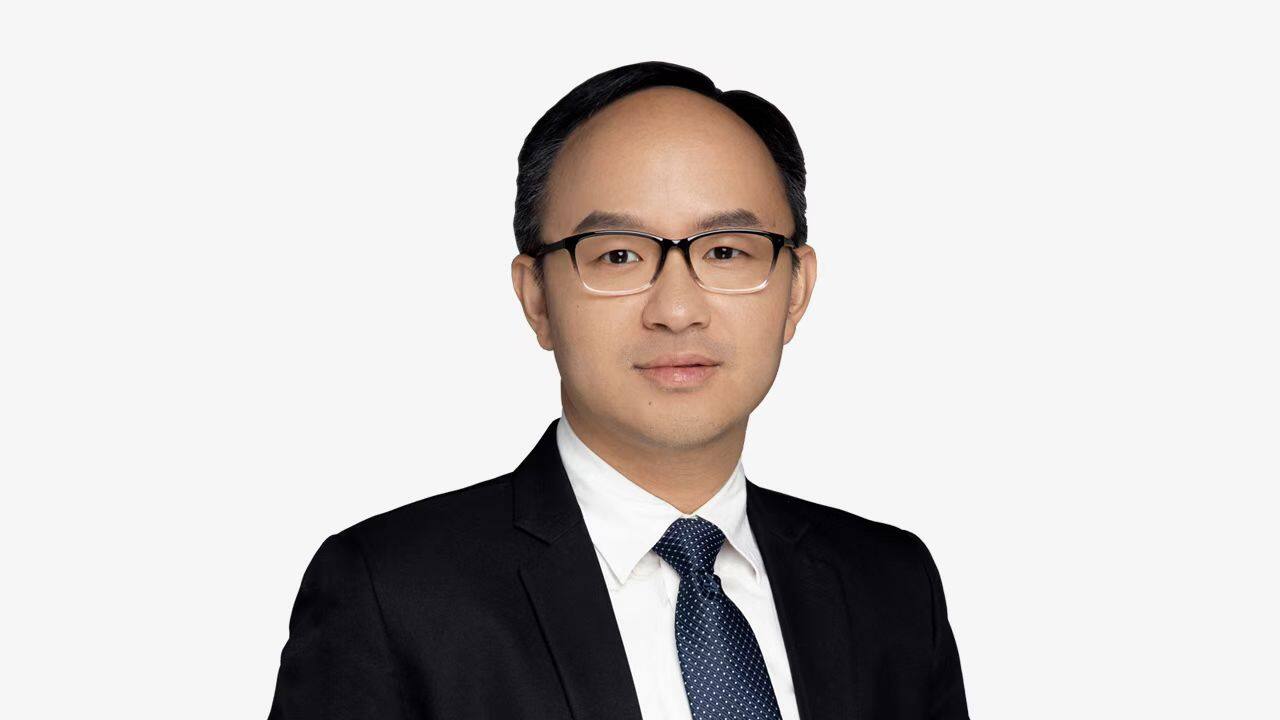
Dr. Chen Kan, Partner of Qiming Venture Partners
VCBeat:Looking Back at 2022: What Changes Occurred in China's Healthcare Investment Sector?
Chen Kan:First, the market is relatively cold, top funds hardly invest or rarely do so. Many companies fail to secure financing or only achieve flat rounds, making it quite difficult.
This reflects a shift in investment logic. Innovations in the life sciences industry ultimately need to materialize into developing a drug or medical device, creating clinical value. In previous innovations, there was a widely accepted assumption that the domestic market was large enough. However, as innovative drugs have been increasingly included in medical insurance, it has been realized that the market size is not as large as expected.
Secondly, it has been discovered that innovative products from China have already gained certain competitiveness globally. For instance, Nanjing Legend’s BCMA CAR-T and BeiGene’s BTK inhibitor have both reached best-in-class standards.
On this basis, the investment logic of pharmaceutical innovation has shifted from targeting the domestic market to products oriented toward the global market. To further extend this idea, such a change also implies that the standards for drug development have been raised. In the past, producing a "me-too" product might have gained capital recognition, then it evolved into "me-slightly-better," whereas now the requirement is to create "best-in-class" or even "first-in-class" products.
The third major change in 2022 was the significant slowdown in investment pace. In the past, multiple investment institutions competing for the same project created a certain degree of a seller's market, with the节奏 of due diligence, decision-making, and closing dictated by the invested companies. Now, the situation is returning to rationality, allowing investment institutions to conduct thorough due diligence again and carefully deliberate on key points.
VCBeat:Did this shift in underlying logic concentrate on occurring in 2022?
Chen Kan:By 2022, it was indeed a very clear turning point.
A very typical example is that in the past, everyone rushed to develop PD-1, in order to compete for the domestic market. After all, much earlier, Merck and BMS's PD-1 pipelines were already far ahead, meaning the opportunities for China-produced PD-1 in the global market had become very slim. As PD-1 drugs have successively entered the medical insurance system, the new pricing level is far lower than expected, almost only 1/10 of the U.S. market price, significantly below the originally envisioned market potential.
More importantly, if the domestic market space for such a rare and highly promising innovative drug like PD-1 is only this much, the commercial potential of other slightly more niche innovative drugs will undoubtedly face challenges once they hit the Chinese market.
The resulting shift in investment style is that attention will first be given to a company's global competitiveness. For drugs targeting the same point, they should at least rank among the global TOP 3, or even achieve uniqueness where others have none. Of course, at this stage, there are still more best-in-class cases, while first-in-class poses greater difficulty.
At the same time, there is an increasing emphasis on value investment. In the past, investment institutions might choose some very early-stage technology platforms, which had a long way to go before becoming actual drugs. Now, the focus is on the form of the final product.
VCBeat:In 2022, were there any projects that left a deep impression on you?
Chen Kan:In 2022, Qiming Venture Partners maintained its consistent pace in healthcare investment. Since its establishment, Qiming Venture Partners has invested in nearly 200 healthcare companies, of which 120 have grown into leading enterprises in niche markets, over 60 have become industry leaders, more than 40 have successfully gone public or been acquired, and nearly 40 have grown into unicorns. Additionally, in the past 17 months, over 70 healthcare portfolio companies have successfully completed new rounds of financing. Furthermore, in 2022, Qiming Venture Partners completed its largest fundraising effort since its inception, against the market trend.
Of course, since most of the projects we invested in 2022 have not yet reached the stage of public disclosure, there may be relatively little external knowledge about them. However, there are two projects that I find particularly interesting.
One is Ailomics, an innovative drug company that uses AI technology to develop entirely new drug targets. In new drug development, AI technology is more commonly used for the development of drug molecules targeting known targets. However, what this company does is build disease models based on single-cell sequencing and spatial omics technologies to provide richer data, enabling computers to more comprehensively simulate disease progression and identify appropriate drug targets. As more target and disease data accumulates, this disease model completes a significant portion of the validation work in the new drug development process.
Another project utilizes chip technology to achieve DNA synthesis, Shanghai Xinsu Medical Technology Co., Ltd, which belongs to the upstream raw material field of synthetic biology and represents a further optimization of the underlying technology of synthetic biology. The common feature of these two projects is that they are both in the hottest areas of current medical innovation, adopting the most cutting-edge technologies to address more fundamental issues in innovation, fully reflecting the value investment logic of Qiming Venture Capital.
VCBeat:What are the expectations for 2023?
Chen Kan:First, we will gradually see some recovery in the economy. Due to the adjustment of the COVID-19 prevention policies, many operations of medical innovation companies, including the most critical clinical research, will no longer be interrupted by personnel isolation or regional lockdowns, allowing them to proceed in an orderly manner.
Moreover, as entry and exit policies across the globe gradually ease, various international exchanges and business expansions will also resume.
Third, investors and founding teams will have more opportunities to meet offline, which may change many investment decisions. After all, the amount of information provided by online and offline communication is different. Many institutions, including Qiming Venture Partners, explicitly require meeting with the founding team for in-depth communication before making investment decisions. In 2023, as people have more chances to travel and meet, it will also make investments more active.
VCBeat: Which细分fields of medical innovation do you think will receive more attention in 2023?
Chen Kan: In 2023, we may increasingly witness the cross-sector integration of healthcare with other technology fields, such as using semiconductor technology to synthesize DNA, applying AI technology to discover drug targets, and automating laboratories. The underlying reason is that, due to high technical barriers, past medical innovations were mostly single-point breakthroughs. However, as technical challenges are progressively overcome, the overall threshold is correspondingly lowered. More consideration will be given to economies of scale, thereby leveraging advanced technologies to accelerate scaling and creating a new shift in the trend of healthcare innovation investment.