

Million-Dollar Salaries, Housing and Cars: Fierce Talent Wars Sweep China's Healthcare Industry

TowardPi
High-end Ophthalmic Medical Device Developer
This is a rather rare scene in recent years.
Since the end of pandemic controls and the return to work after the Lunar New Year, VCBeat has discovered that "cutthroat competition for talent" is sweeping across the entire medical industry:Including the government, industrial parks, research institutions, enterprises, investment organizations, and other medical parties, all have "mobilized en masse" to compete for talent, moving from south to north, and from coastal areas to inland regions in full force.
First, on the government side, cities such as Shenzhen, Tianjin, Jinan, Chongqing, and Haikou have successively carried out investment promotion activities and issued numerous policies, offering "free housing," "tax cuts," and "residency benefits" as part of attractive welfare packages. Following closely, research institutions, industrial parks, incubators, VC/PE firms, and enterprises have also joined the race, with everyone frequently traveling in a bid to secure their "ideal candidates."
"Since returning after the Spring Festival, I've been on five business trips. All I remember is that every few days, I'm at home packing my luggage.""This is the first sentence spoken by a person in charge of investment promotion in the biomedicine sector in Suzhou during an interview with VCBeat. Meanwhile, on social media, a well-known early-stage investor also remarked that everyone has started to 'intensify competition.'""After the New Year, I flew four times and feel like I've returned to my pre-pandemic work pace."
The reason behind this is that the impact of the three-year-long pandemic is gradually fading, and the entire medical industry is also showing signs of recovery: For every practitioner who has dedicated themselves to the field, a new beginning means a fresh start and opportunities, which has filled everyone with drive. This "drive" is vividly reflected in the entire medical industry's strong desire for talent.
Because with talent as the center, what extends outward is a project, or a company, and even the "recruiting party's" confidence and expectations for the entire industry.
This "talent grab" undoubtedly concerns every player in the medical circle.
"The Battle for Talent" Begins: Why the Competition? What's Different?
Liu Chenli, Vice President of Shenzhen Institute of Advanced Technology, has been very busy recently.
Since the "Health Code went offline" before the Spring Festival, Liu Chenli has led a delegation on a "non-stop" journey, visiting Berlin, Munich, Aachen in Germany, Zurich, Lausanne in Switzerland and other places, conducting academic visits along the way,Holding talent policy briefings locally, aiming to attract outstanding overseas scholars to develop in Shenzhen.
At the same time,Regions across China are also intensifying their recruitment of biopharmaceutical talents.For example, on February 11, a special recruitment fair for the Biomedical Industry Base was held in Daxing District, Beijing. Forty-two key enterprises participated in the on-site recruitment, offering 729 job positions. To expand the reach of the recruitment event, Daxing District actively "mobilized people" through phone calls, door-to-door visits, text messages, and WeChat.
According to data from Zhaopin Recruitment,At the beginning of February, the pharmaceutical/biomedical engineering sector ranked first among all positions with a 43.5% year-on-year growth rate in resume submissions.
"The scale of recruitment for companies in our park this year has increased by 70% compared to last year," a relevant official from a well-known park in Suzhou told VCBeat. The competition for biopharmaceutical talents is particularly fierce. "Rough calculations show that the average annual salary offered by biopharmaceutical companies in the park is over 250,000 yuan, which is higher than half of the local overall average salary. One CRO company is offering an annual salary as high as a million."
In addition to the expansion of teams by enterprises themselves, behind the "talent race" lies not only the factor of the domestic economic recovery this year but also the increased support for the healthcare industry from various regions.
For example, on the first working day after the Spring Festival (January 28), the State Council held an executive meeting, requiring to promote the steady recovery of the economy at the beginning of the year and support local investment attraction. Subsequently, local governments followed up one after another.
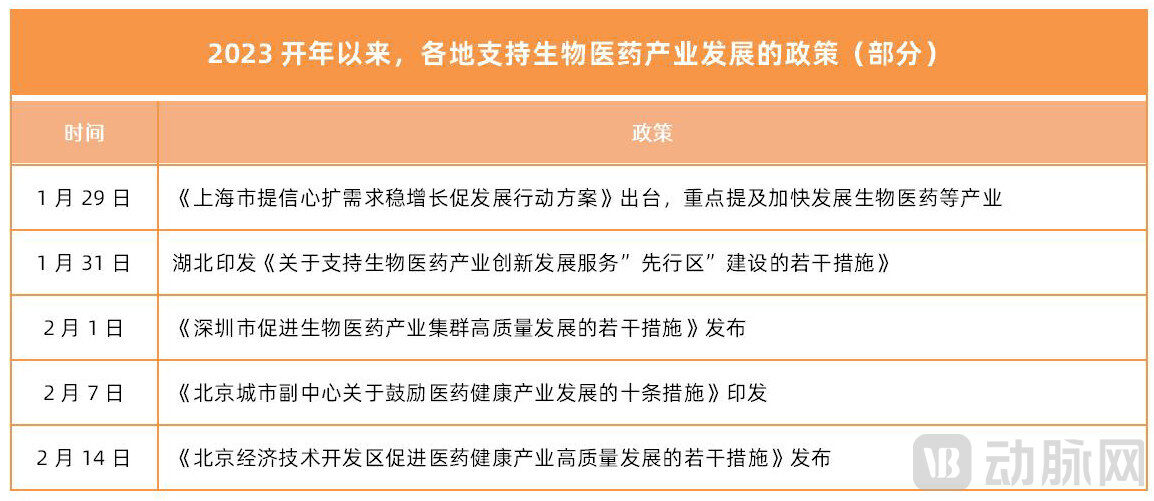
Figure 1. VCBeat collated and charted based on publicly available information.
So, what kind of talents are the focus of competition in this "talent grab" in the healthcare industry?The core is young scientists who stand in the forefront of technology and have research achievements.
The reason is that, over the past decade, China's medical industry has approached the end of its era of follow-up innovation, with original innovation and the transformation of scientific achievements now taking center stage as the main theme of the current Chinese healthcare sector. To drive original innovation, companies need to recruit talented young scientists.
Taking the recent recruitment situation at Westlake University as an example, it announced in late 2022 the addition of 14 new Principal Investigators (PIs) who joined the university in the third and fourth quarters. Observations show that all 14 PIs are returnees from overseas, having previously worked at top biopharmaceutical laboratories in the United States, Germany, Singapore, Australia, and other countries, with an average age of less than 40.
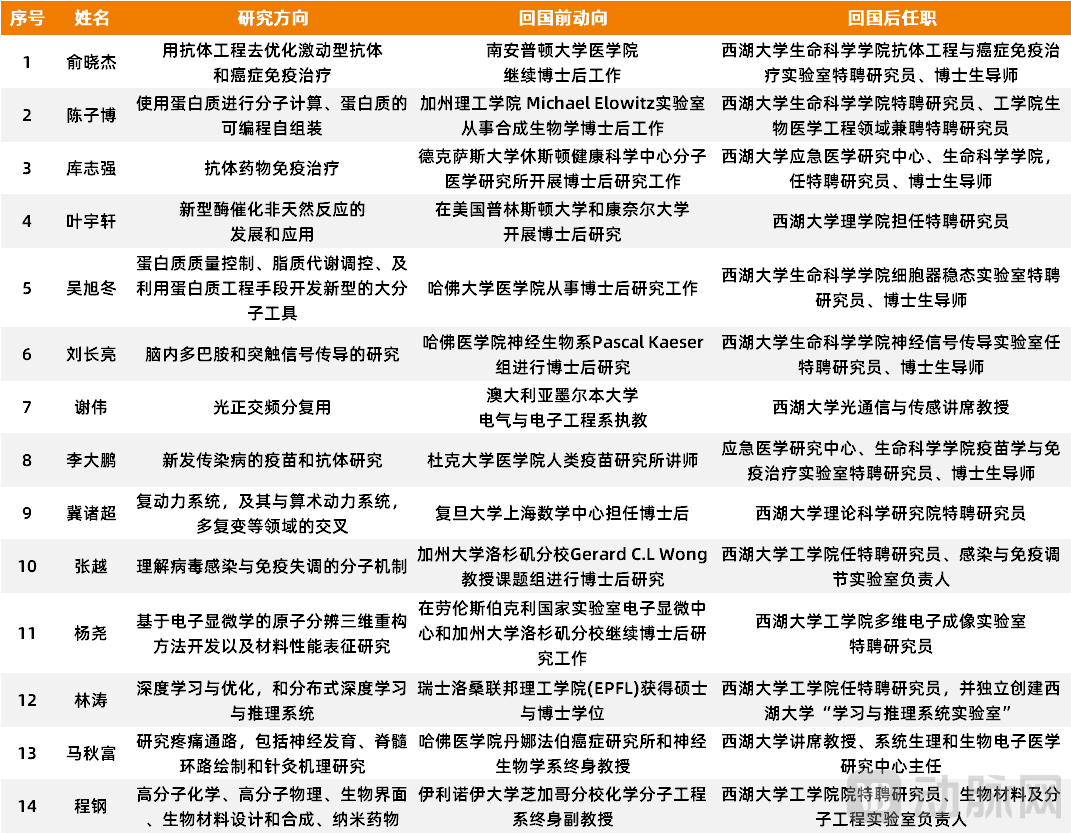
Figure 2. The 14 Principal Investigators (PIs) who joined Westlake University in the Third and Fourth Quarters of 2022
On Liepin, various pharmaceutical companies have recently successively posted recruitment demands for scientists and overseas returnees, with monthly salaries generally above 20,000 yuan. "Compensation for top-tier talent is negotiated on a case-by-case basis. Some regions offer benefits packages including hukou (residency permits), discounted home purchases, and monthly talent subsidies. Companies may also provide cars and stock options, bundling these incentives with salaries." A senior headhunter told VCBeat, "For those at the PI level, relocation bonuses can reach 600,000 to 3 million yuan, along with talent housing and research funding."
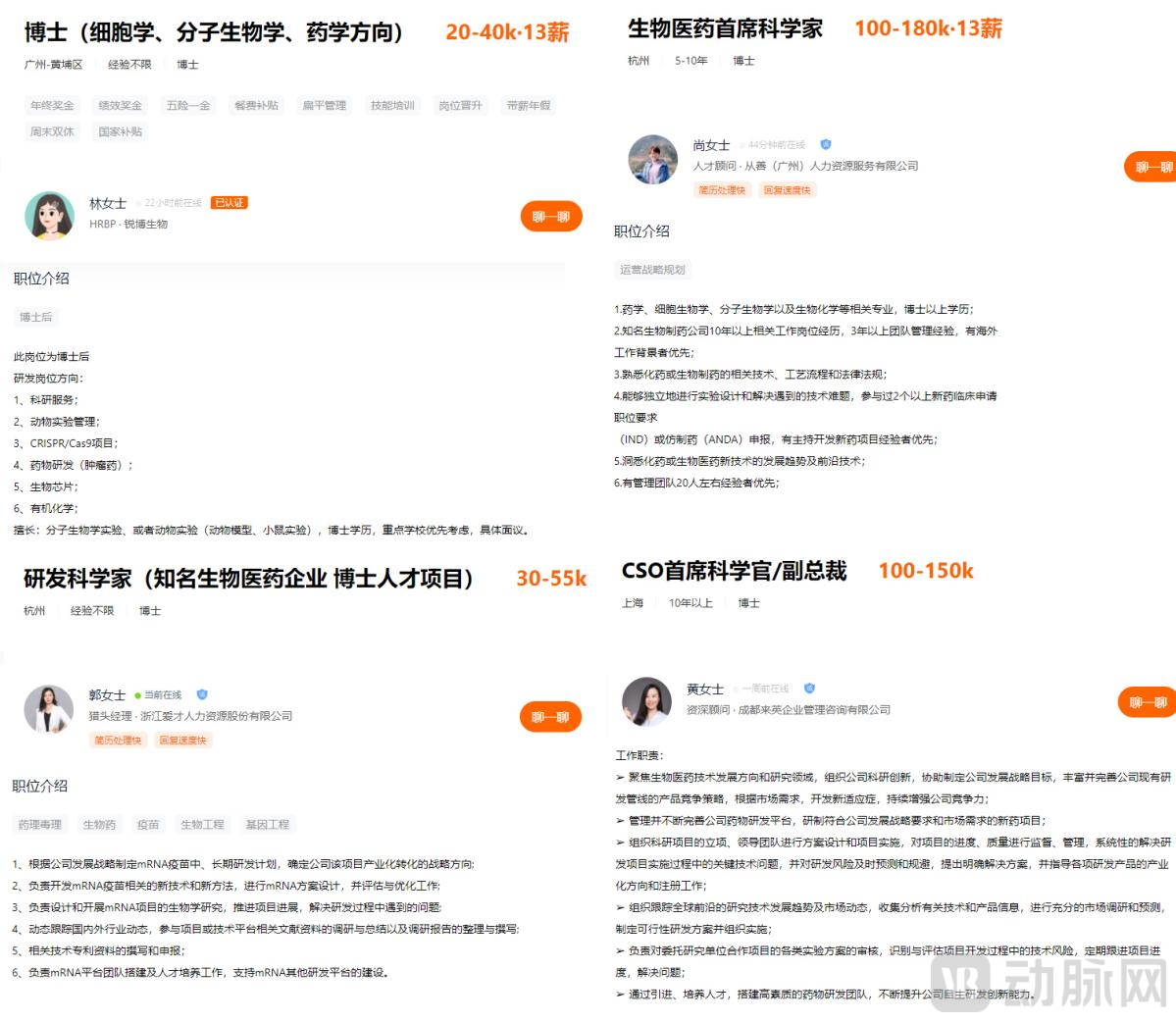 Figure 3. Job postings on the Liepin website
As for the specific implementation methods of "talent grabbing," all parties in the industry have also employed various creative and effective strategies.
"Intense Battle" in Progress: Unique Strategies Deployed, How to Attract Talent?
"The Battle for Talent" is in full swing, with all parties in the industry working tirelessly. So, how exactly is the "battle" being fought?
Let's start with the government.Local governments across China are convening numerous meetings related to economic recovery, with the core agenda focusing primarily on how to promote the development of the local healthcare and health industry. Based on the government's functions and responsibilities, the outcome of these discussions is the formulation of one policy after another.
According to VCBeat's observation, the final focus of these policies almost always falls on "people." However, how to "attract" them, local governments have their own plans. Take Nanshan District in Shenzhen, which has seen rapid development in the biopharmaceutical industry in recent years, as an example. For the introduction of talent in the life science and technology field, once evaluated and recognized, they can receive funding of up to 20 million yuan. On the other hand, Suzhou, where the biopharmaceutical sector has stabilized, will provide up to 50 million yuan in support for the introduction of major innovative teams or leading entrepreneurial and innovative talents.
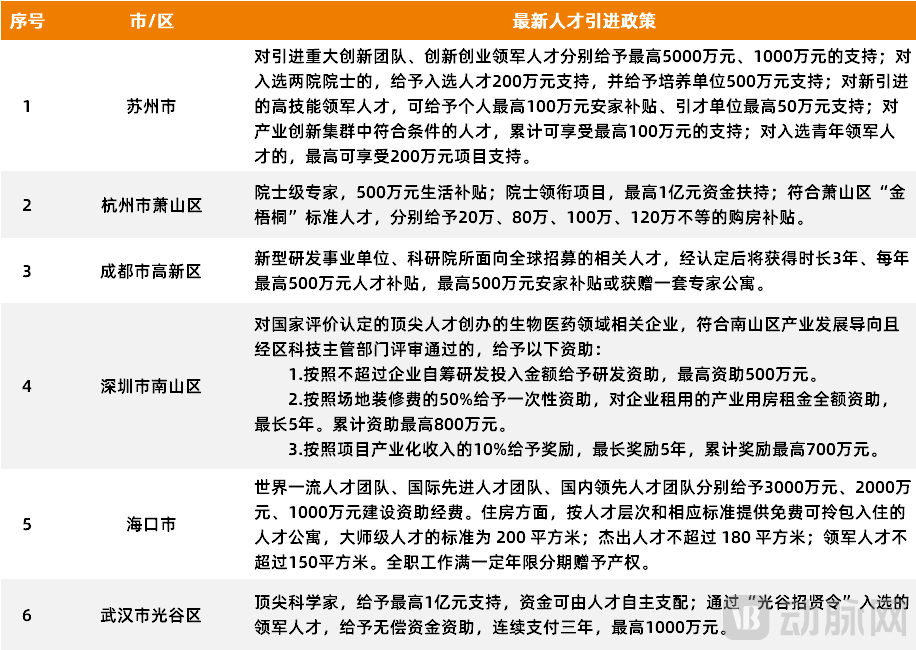
Figure 4. New Policies for Attracting Biomedical Talents in Various Regions
But to attract talent, having financial incentives alone is not enough; supporting policies are equally important. As early as 2021, Chengdu High-tech Zone launched the "Ming Mountain Action" plan, explicitly stating that it would invest 30 billion yuan in the next five years to build 50 new R&D institutions and released the first batch of 14 demand lists for "challenge-based" R&D institutions. It is reported that the list attracted 92 application teams, mainly from well-known universities and research institutes at home and abroad, including 18 teams led by academicians. In the end, six projects were successfully selected in the first batch, with the highest support for a single project nearing 100 million yuan. Currently, the third round of recruitment for the "Ming Mountain Action" plan has been initiated.
That's not all. In January this year, Chengdu High-tech Zone once again issued a "talent-grabbing" new regulation. The document stated that recognized researchers who settle in Chengdu High-tech Zone will receive a talent subsidy of up to 5 million yuan per year for a period of 3 years, as well as a maximum settlement subsidy of 5 million yuan orA set of expert apartments。
"Compared with Beijing, Shanghai, Shenzhen, and Suzhou, Chengdu still has some gaps in the accumulation of the biopharmaceutical sector. Therefore, it is more difficult to attract top experts. For experts, money is certainly one consideration, but the industrial foundation of the region is equally important. So, on the one hand, we are continuously improving our industrial foundation, and on the other hand..."We also hope to win them over by offering experts more benefits and preferential treatment."So far, the effect is quite obvious." Staff responsible for biopharmaceutical sector investment promotion at Chengdu High-Tech Zone revealed to VCBeat.
Incubators are also taking proactive actions. "We are full of confidence this year. In addition to continuing our efforts in the Guangdong-Hong Kong-Macao Greater Bay Area, we will also have new deployments in the Yangtze River Delta," Zhao Weiwen, Executive President of the Blue Rainbow Life Science Accelerator, told VCBeat. Building on the previously established comprehensive ecosystem service system covering financing, human resources, branding, patents, and business-related legal and tax services, the Blue Rainbow Life Science Accelerator will construct new physical incubation spaces and laboratories. Leveraging the industrial resource endowments of BGI, it will empower innovative enterprises by providing one-on-one on-site technical services and business coaching, thereby attracting more medical innovation companies to settle in and recruiting more talent.
Governments, parks, and incubators are "competing" to attract talent, and medical innovation companies are also "competing."
TowardPi General Manager Wang YingqiIn an interview with VCBeat, he said that from the start of the business until now,He has a total of nearly 200 flight/high-speed rail records, more than half of which were for recruitment purposes.Even during the pandemic, Wang Yingqi insisted on face-to-face communication. In his view, in-person exchanges help build trust between both parties. To further enhance this trust, every business trip aimed at recruiting talent, Wang Yingqi would bring along company introduction materials or souvenirs.
Recently, with the relaxation of entry and exit policies, Wang Yingqi visited Hong Kong, New York, Washington, Bangkok, and other places within a week. The main purpose was overseas market promotion and the establishment of overseas bases, which naturally included the recruitment and formation of talent teams. The busy schedule led Wang Yingqi to express in a social media post,"Give up adjusting to the time difference, basically in a state of sleeping and waking up as desired."
Of course, Wang Yingqi is not the only one who is working tirelessly in "recruitment."Zhao Xin, Founder of ChipHost TechnologyAlso caught in the "rat race," experiencing both pain and joy.
Zhao Xin told VCBeat that in order to recruit the desired talent, he and the other two founders, Dr. Wu Dan and Dr. Dong Yiming, at the end of a conference,The three immediately drove over 200 kilometers from Suzhou to Nanjing, just to have a meal and chat with the applicant after work.That night, after having a thorough conversation with the candidates, the three drove back to Suzhou in the middle of the night. Having rested for only a few hours before dawn, they continued working.
So, with everyone caught up in the "rat race" of hiring, what exactly should companies rely on to stand out?
Treatment seems to be a good breakthrough. Take TowardPi, mentioned earlier, as an example. Since its establishment, TowardPi has continuously issued ESOPs, expanded employee shareholding ratios, and promoted the "all-employee equity incentive plan" for many years in a row. The plan covers nearly 50% of the company's total workforce, aiming to form long-term and stable cooperative relationships with a large number of talented individuals.
There are still some biotech companies in the market that offer an annual salary of over a million for a drug safety specialist, which is already at the level of the chairman of many non-innovative pharmaceutical listed companies, and it's all in cash (excluding stock). Even so, if a biotech company is in a rush to push a project forward, many founders will still lower themselves to personally recruit talent.
Overall, compared with the government's more direct "talent-grabbing" approach, companies' "talent-grabbing" may carry a bit more human touch and might also be more strategic. After all, these are people they will work with in the future. While compensation is the foundation, there must also be room for growth and motivation.
Of course, a good project or a good team will also be very attractive. If you play one or two "emotional cards" or "future cards," the probability of successfully recruiting people will be higher. Therefore, it can be seen that "talent grabbing" is actually an art of comprehensive balancing.
"Only by working tirelessly and talking endlessly for talent can we build a better team and allow the company to go further and grow stronger," the headhunter mentioned earlier said.
Follow-up: What happens after the excitement?
The most complex things are always human affairs.
After the honeymoon period of the "talent-grabbing" frenzy, with a large flow and migration of talent, what will remain in the medical innovation industry? Will it end up in chaos or become a thriving hub? This is a difficult question to answer at present, but we can find some clues by looking at past cases.
Take the United States across the ocean as an example. In 2020, with the outbreak of the global pandemic, Americans re-realized the importance of personal health and began to contemplate how to access better medical services in the context of the pandemic. This indirectly sparked a new wave in the U.S. biotech sector. Subsequently, in subfields such as innovative drugs, liquid biopsy, gene editing, stem cells, synthetic biology, AI drug discovery, and digital healthcare, numerous startups emerged like the Cambrian explosion of life. These companies, despite being newly established, quickly secured substantial investments and saw their valuations soar. In this thriving market, a large influx of talent flowed into the biotech industry.
But starting from the second half of 2022, the U.S. biotech bubble began to burst on a large scale, with the secondary market cooling down and the primary market also falling into depression. Coupled with the impact of the pandemic leading to a decline in consumer spending among the American public, many startups began to face survival issues and had to cut labor costs to mitigate risks. Consequently, a wave of layoffs started surging through the U.S. healthcare market.Starting from the announcement by Illumina, the leader in gene sequencing, that it will lay off 5% of its global workforce, more than 70 biotech companies have carried out layoffs before the Christmas holiday. The layoff rate in some companies is as high as 60%, and the trend is still ongoing.
This is not all. Amid the hustle and bustle of this "talent-grabbing" trend, some institutions have reaped benefits. Not only have they remained unaffected by the "layoff wave," but they have also taken a step forward in the transition from this bustling period to a downturn. The secret to their success lies not only in luck but also in seeing through the essence of "talent" amidst the industry's excitement and understanding how "talents" align with their own future needs and those of enterprise development.
Therefore, for local governments, parks, and enterprises, finding the balance point for talent and industry to grow together is particularly important.
At present, with the opening of a new round of industrial cycles, the metamorphosis of people's health needs, and the gradual maturation of many cutting-edge technologies, China's medical innovation is in a golden period. A large number of key policies have been introduced, capital continues to flow in, and batches of overseas scientists are returning to China to start businesses. Industry conferences held around these developments are almost always packed with distinguished guests.
At this point in time, the latest sensational move in the competition for talent is undoubtedly Professor Yan Ning's announcement to leave the U.S. and return to China, joining Shenzhen — where she will assist in establishing the Shenzhen Medical Academy and serve as its founding president. When asked why she chose Shenzhen, she frankly stated that Shenzhen is a "city of dreams." "My dream is that through the joint efforts of our generation and future generations, in ten or twenty years, Shenzhen will occupy an important position on the world's biomedicine map." This is a typical case of mutual achievement between talent development and local progress.
In the midst of this bustling moment, everyone wants to seize the opportunity.Especially as the pandemic gradually fades, every individual or enterprise wants to work harder now in order to make up for the three years lost in the past. In this context, and against the macro backdrop of emphasizing original innovation, talent has naturally become the most precious strategic resource. However, how to collaborate with talent in a mutually comfortable state to strive for a jointly cherished cause has become a mandatory question for every player.
Since the starting gun for the talent competition has already been fired, it remains to be seen whether all parties in the medical industry can accelerate in 2023.