

Lixin Scientific's GAIABONE™ Receives FDA 510(k) Clearance as World’s First Moldable, Liquid-Resistant, and Highly Osteoinductive Absorbable Bone Graft Substitute

Corliber
Developer of Novel Biomaterials and Orthopedic Implant Medical Devices
Recently,Corliber GAIABONE™ Malleable Absorbable Bone Repair Material (hereinafter referred to as "Absorbable Regenerative Bone") has been approved by the FDA 510(K) for marketing, with the registration number K220337. This product is the world's first to simultaneously meet the requirements of malleability, anti-liquid...Artificial bone with phase collapse and high-efficiency induction of regeneration.
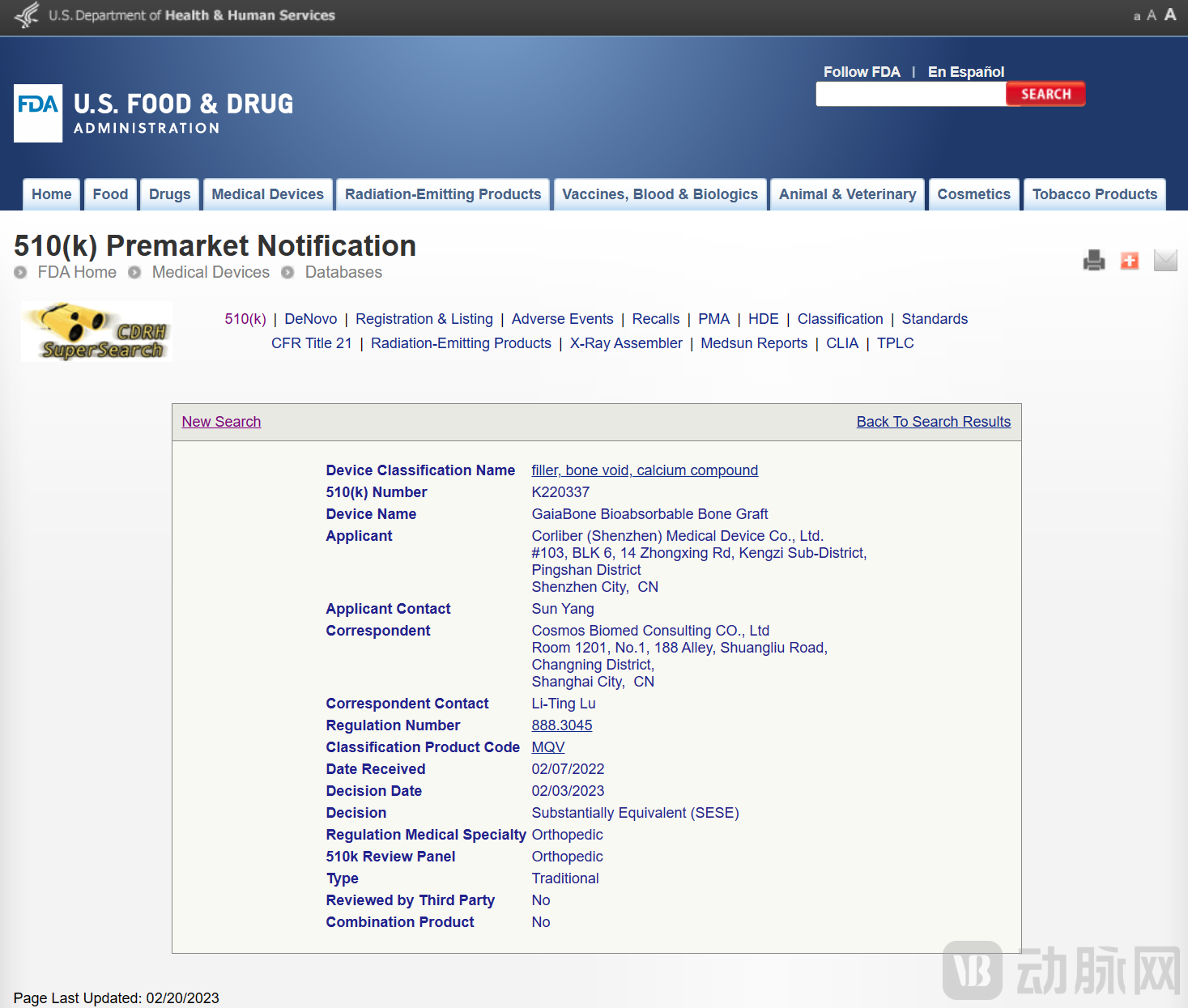
This approval not only affirms the value of the product but also represents another recognition of Corliber's innovation capability, marking the company's official entry into the international market and a crucial step in its globalization process.
Corliber GAIABONE™ Absorbable Regenerative Bone Product Introduction
In the bone filler market with multiple approved products, Corliber has provided an iterative solution. Its globally pioneering absorbable regenerative bone product is fully protected by independent intellectual property rights. Meanwhile, Corliber possesses the ability to custom-develop upstream materials and mass-produce downstream devices, which is expected to quickly access the international market and enhance the brand advantage of "Corliber."
Under the trend of aging, the demand for bone defect repair treatment is increasing, and bone grafting has become the primary treatment method. In the United States, approximately 500,000 bone graft surgeries are performed annually, with over 2.2 million procedures conducted globally each year. The large volume of surgeries has led to an insufficient supply of the "gold standard" autologous bone, which also faces limitations due to its "robbing Peter to pay Paul" nature and finite sources. On the other hand, artificial bone is unrestricted in terms of quantity and applicable sites, leading to a rapid increase in clinical applications in recent years.
According to statistics from the Southern Institute, the market size of bone repair materials in China was approximately 3.93 billion yuan in 2018, and it is expected to increase to 9.69 billion yuan by 2023. Currently, the FDA has approved more than 400 bone fillers, making the market seem saturated. However, in practical applications, clinical practice has put forward further demands.
First, clinical bone defects come in various shapes; bone fillers need to be malleable, allowing their form to be repeatedly adjusted before and during the surgical procedure to best match the defect area.
Secondly, the bone defect area may be accompanied by bleeding or require repair surgery in a liquid environment. Considering the stability of the product within the human body, it must be able to resist fluid flushing. If bone filling materials are washed away by fluids, two problems may arise: one is insufficient remaining filling material at the bone defect site, affecting bone regeneration; the other is that the washed-away material may reach non-bone tissues, such as skin or muscle, requiring the doctor to clean it. This not only prolongs the operation time and increases the patient's risk of exposure to infection, but inadequate cleaning may also lead to ectopic bone formation.
Moreover, the degradation and regeneration efficiency of bone filling materials in the human body can affect the final treatment outcome. In the field of bone repair, there are two different mechanisms: osteoconduction and osteoinduction. Osteoconduction is like "south-to-north water diversion," where bone grows from one side to the other; osteoinduction is about "creating something out of nothing," inducing the body to generate bone tissue in a non-bone environment.
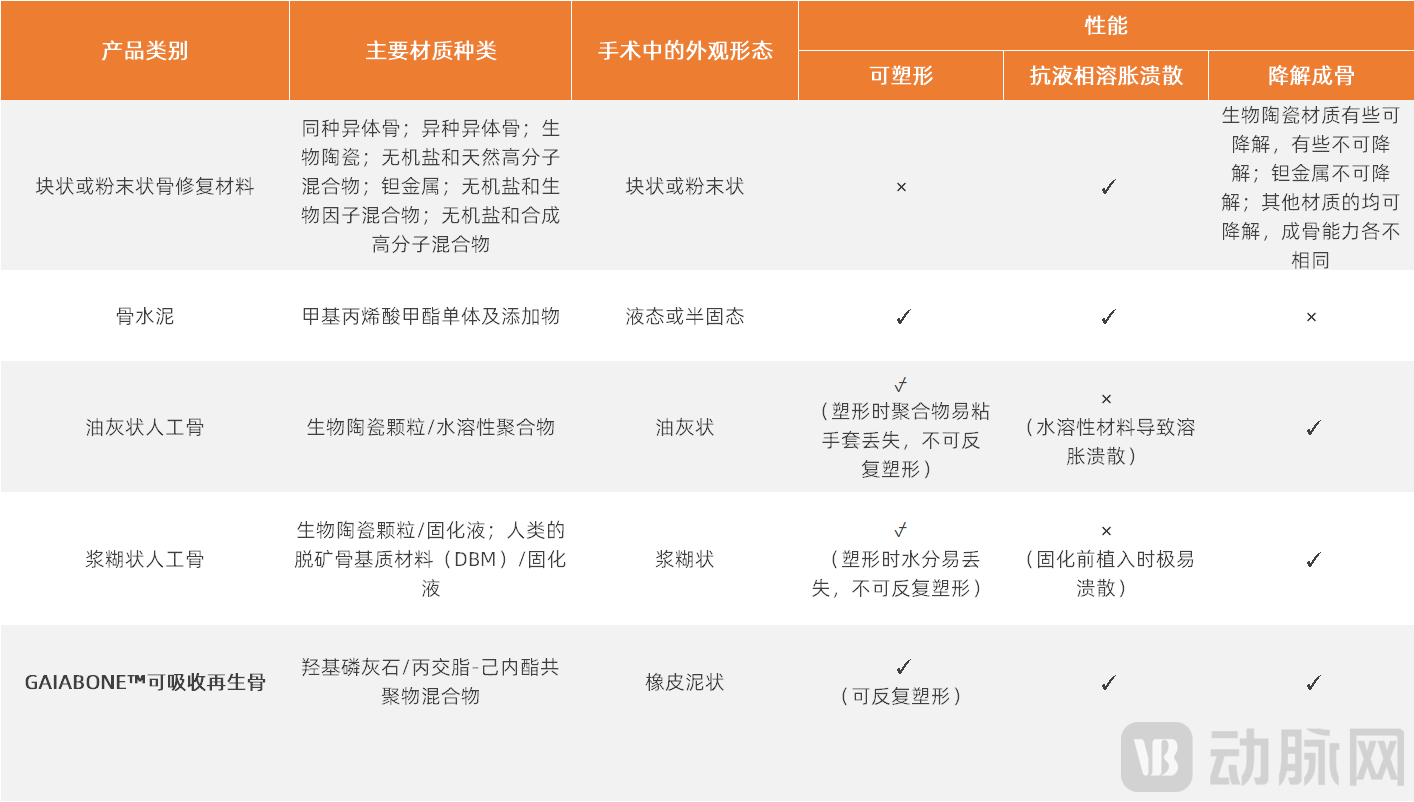
Comparison of Bone Defect Repair Materials
The existing bone defect repair materials in the market cannot fully meet the above requirements, and clinical practice is still awaiting innovative products. As a leading company in the field of absorbable regenerative biomaterials, Corliber has taken on the "military order." GAIABONE™ Absorbable Regenerative Bone has filled a global market gap.
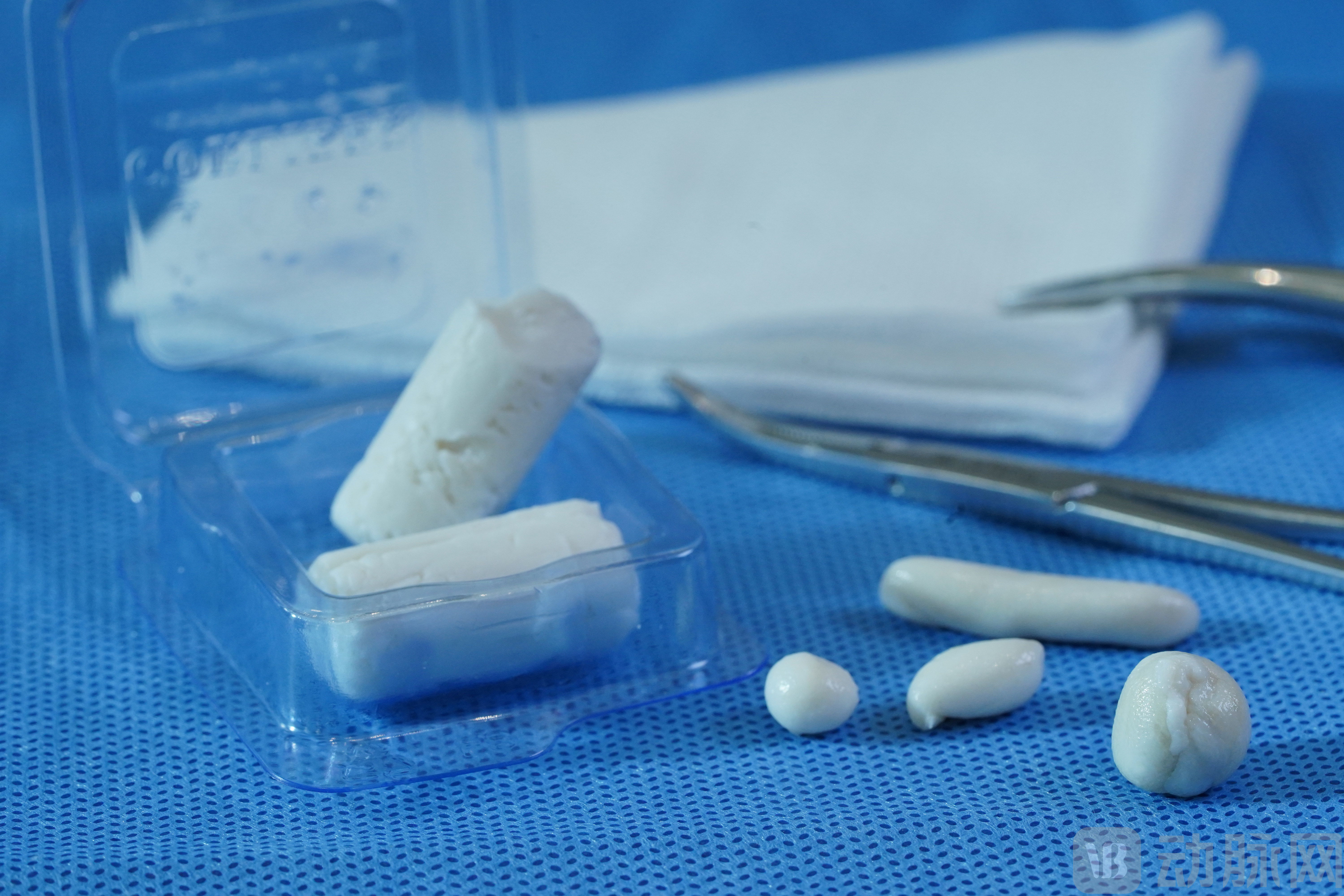 GAIABONE™ Absorbable Regenerative Bone
In terms of operability, Corliber's GAIABONE™ absorbable regenerative bone material is malleable like putty and can be shaped by hand or with tools. It provides a full filling effect and exhibits resistance to dispersion in liquid environments, ensuring stable application in aqueous surgical settings, heavy bleeding, or tissue fluid conditions. Moreover, GAIABONE™ demonstrates excellent osteoconductivity and osteoinductivity, achieving bone regeneration within 3-6 months post-implantation.Professor Zhao Jinzhong from the Sixth People's Hospital of Shanghai called it the "Activation Center."
This product has obtained one of the most valuable certifications globally, which also signifies Corliber's strong entry into the "vacant area" of global clinical needs.
Globally, Corliber has achieved innovation from the source and realized the first-of-its-kind creation. Instead of using new materials, the company adopts a conventional combination of polylactic acid (PLA) and hydroxyapatite (HA).
For a materials company, developing new materials is not a difficult task. However, Dr. Sun Yang, founder and CEO of Corliber, also mentioned: "Formal clinical trials and approval procedures are different from academic research. Healthcare is a serious industry, and the application of new materials is relatively cautious, requiring long-term safety observation. There is still a long way to go before innovative materials can be put into practice. Polylactic acid and hydroxyapatite are bone repair materials with rich clinical evidence and relatively mature applications. The focus of development lies in endowing these composite materials with the performance required by clinical practice. Corliber's 'secret weapon' is raw material technology and process innovation."
Polylactic acid has strong hydrophobicity, but its osteogenic performance is not ideal, and its degradation products are slightly acidic, which can easily cause aseptic inflammation in the body; hydroxyapatite has good biocompatibility and bone conductivity, and can release calcium ions during degradation to promote bone tissue regeneration, but its mechanical properties are poor and its osteoinductive efficiency is relatively low.
Corliber adjusts the softness of materials and creates composite materials with moderate hardness by optimizing the monomer ratio and molecular weight. Meanwhile, it reduces the carboxyl content formed after material degradation to control environmental acidity. Additionally, through super-dispersion technology, fine hydroxyapatite particles are evenly dispersed in polylactic acid material, with a content as high as 50%. This not only efficiently neutralizes acidic substances but also enables the sustained release of calcium ions when hydroxyapatite degrades, maintaining a relatively balanced calcium ion concentration in the surrounding tissue fluid, which is beneficial for bone formation.
The innovation of upstream materials and the customized development of downstream products are inseparable from the positive feedback mechanism within Corliber. Based on the application and feedback from the downstream market, upstream material processing can respond quickly. Before the launch of GAIABONE™ Absorbable Regenerative Bone, the company had undergone more than 10 iterations internally.
Under the trend of globalization, going overseas is a strategy for Chinese enterprises."Touchstone." This time, Corliber's absorbable regenerative bone obtainedFDACertification: The company's commercial qualifications have officially expanded from the domestic market to the international market.
The company's overseas layout is planned in two steps. The first step is to enter the Southeast Asian market, which meets the three major conditions of "FDA certification recognition, proximity to China, and similar market environment," making it a suitable first stop for going overseas. After accumulating certain market experience, the second step will be to enter the U.S. domestic market.
Dr. Sun Yang proposed that the focus of overseas development lies in localization. Corliber will primarily adopt a distribution model overseas, hoping to better integrate through a localized team based on familiarity with the local market environment. In terms of mass production, Corliber has completed the establishment of the GAIABONE™ absorbable regenerative bone production line, covering upstream raw materials and downstream products.Currently, the company's two factories in Shenzhen (one upstream raw material factory and one downstream equipment factory) are both under expansion.。
In China, GAIABONE™ artificial bone is applying for special approval as an innovative medical device, with the registration application expected to be submitted in the second half of this year.In response to the trend of centralized procurement of orthopedic consumables in China, Corliber is well-prepared. First, if Corliber's absorbable regenerative bone product enters the green channel, it will be unaffected by centralized procurement in the short term. Second, due to its mastery of upstream material development and customization technology, Corliber has significant advantages in cost control and bargaining power.
China's medical device industry has now evolved from domestic substitution to domestic innovation. Blind cost-cutting and expense control are not advisable, and the country is also improving relevant policies. Centralized procurement is becoming more "moderate." The National Healthcare Security Administration has explicitly stated that innovative medical devices will be temporarily excluded from centralized procurement. For the first time, the Beijing Healthcare Security Administration proposed that innovative medical devices may not be paid for under the DRG method.
It can be said that the bone defect repair markets both in China and abroad have opened their doors to Corliber.
Following the NMPA approval of absorbable interface screws in October 2022, another innovative product, artificial bone, has received FDA approval. How does Corliber manage to closely align with clinical needs and achieve efficient iteration?
Corliber's core team has深耕ed in the research of polymer materials, material processing technology, and medical devices for many years, accumulating experience in academic circles in the early stage and in the industry later on. The company owns more than 100 patents, including over 40 invention patents, with patent protection covering the entire field of absorbable medical device technology, including raw materials, composite materials, and device structures. Meanwhile, the company adheres to a development path of medical-engineering collaboration, cooperating with clinical experts from renowned hospitals such as Shanghai Sixth People’s Hospital, Peking University Third Hospital, Sun Yat-sen Memorial Hospital of Sun Yat-sen University, West China Hospital of Stomatology, and Peking University School of Stomatology.
Following the development trajectory of its products, we can identify Corliber's strengths at every key milestone.Built a full industrial chain closed loop from self-developed raw materials to product commercialization.。
In raw material R&D, Corliber has overcome process difficulties through patented technologies such as "continuous heating pyrolysis," "efficient solvent purification," and "ultra-high vacuum anhydrous anaerobic synthesis," achieving controllable synthesis and industrial application of two levels of medical-grade polylactic acid raw materials, forming a material library for the polylactic acid family. In composite material R&D, based on the founder's doctoral research combined with the PLA/HA system, core intellectual property rights for composite materials have been formed.
In terms of terminal product R&D and mass production, the company develops products based on clinical needs and possesses several core process technologies. It owns a self-operated factory with a capacity of 2 tons of raw materials, enabling seamless integration between upstream material customization and downstream product development with efficient feedback. When it comes to the commercialization of the final product, Corliber has, after years of exploration, successfully navigated the registration pathway. During the practical application of the product, Corliber can also identify new clinical needs, exploring broader application possibilities for the product.
On the one hand, through the closed-loop of the entire industrial chain, Corliber quickly responds to clinical needs and develops products; on the other hand, the company can also provide customized materials to other device enterprises, achieving success in both ToB and ToC businesses.
Dr. Sun Yang introduced: "The company will continue to advance the three product lines of absorbable internal fixators, bone fillers, and medical aesthetic absorbable polymers. In terms of product development, this year the company will develop more than five internal fixation products and submit them to the National Medical Products Administration (NMPA) for approval within the year; in terms of market promotion, the company will promote the application of absorbable interface screws in the domestic market and the entry into overseas markets. Next year will be an explosive period for the company's product registrations, with about six products expected to come to market. We have been waiting for this moment for five or six years."
It is precisely based on the earlier "thick accumulation" that Corliber can achieve future "thin release". The company is gradually advancing and implementing the vision of "establishing the heart for heaven and earth, and establishing the fate for the people".