

AI Imaging Breaks Through Early Screening Barriers, Offering New Hope for Fabry Disease Patients
Vistel
Artificial Intelligence Eye Health Product Developer

Takeda
Biopharmaceutical Manufacturer
ShanghaiFebruary 28, 2023PR Newswire -- Coinciding with International Rare Disease Day 2023, Vistel, a high-tech enterprise specializing in digital diagnosis and treatment applications, announced that it is conducting a validation pilot collaboration with Takeda China. The project aims to explore the use of artificial intelligence (AI) imaging recognition and analysis technology to develop an early screening solution for Fabry disease patients. In the future, the long-standing challenge of confirming Fabry disease diagnoses, which has troubled both doctors and patients, may be quickly, efficiently, and accurately addressed using just a smartphone, offering new hope for Fabry patients in China.
At the recently held 2022 Takeda China Innovation Challenge "Hackathon" closed-door roadshow, Vistel successfully advanced to the next stage of the competition due to the innovative nature of its solution and its potential to greatly benefit patients. Vistel hopes to use AI imaging technology in the field of rare disease screening to overcome the difficulty of early diagnosis of Fabry disease, accelerate the diagnostic process, and help patients receive precise treatment as soon as possible. As a global pharmaceutical company with influence in the field of rare disease treatment, Takeda China hopes that through the cooperation between the two parties, the further development of early screening and early diagnosis technology for rare diseases can be promoted, allowing Chinese Fabry disease patients to benefit from the digital innovation in the pharmaceuticals industry.
"Focus on" Rare Diseases,AIImaging Makes Disease Recognition "Clearer"
Fabry disease is a rare X-linked inherited lysosomal storage disorder, with an incidence rate of one in 100,000.[1], Severe cases may experience heart and brainBlood VesselComplications or end-stage renal disease, ultimately leading to death. As a rare disease, Fabry disease in China currently faces numerous challenges such as low disease awareness, low diagnosis rates, and low treatment rates, with patients' urgent needs yet to be met. With the rapid development of AI imaging recognition technology in the medical field, using this technology to identify specific lesions in particular areas of patients will become a new direction for improving the diagnosis rate of Fabry disease. By utilizing Vistel's AI imaging analysis technology combined with training deep learning models, doctors can quickly determine whether patients exhibit specific lesions associated with Fabry disease, prompting them to conduct screenings.
This method has the advantages of simple operation, non-invasive, fast, and high accuracy, which will significantly reduce the operational difficulty for doctors. It is beneficial for the early detection and diagnosis of Fabry disease, allowing for early intervention and treatment of patients. At the same time, it will effectively reduce screening costs and alleviate the financial burden on patients.
AIEmpower, Explore the "Future Model" of Rare Disease Diagnosis
Takeda China's Innovation Incubator, TakedaSpark+, offers a collaborative incubation model that provides Chinese technology innovation companies with an innovation practice platform that has an international perspective. Benefiting from Takeda's professional insights accumulated in the field of Fabry disease treatment, Vistel has been able to further analyze and label specific site-specific lesions in Fabry patients during the pilot collaboration between both parties. At the same time, Vistel will also build a complete and clear product scenario application system to better guide doctors in making precise diagnoses of patients across different scenarios.
Vistel CEO Sun Yuhui said, "This pilot collaboration with Takeda China on the screening and diagnosis of Fabry disease represents a new attempt in Vistel's technology development model. We hope that by innovating the application scenarios of AI technology in the medical field, we can create innovative healthcare solutions with practical value, ensuring that the achievements of digital technology truly benefit patients with rare diseases in China."
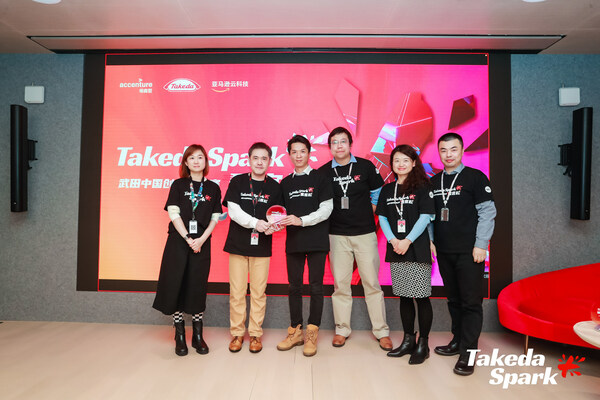
At the 2022 Takeda China Innovation Challenge "Hackathon" closed-door roadshow, Vistel successfully advanced.
With the widespread application of artificial intelligence technology in medical scenarios, the process of medical imaging acquisition will gradually simplify, and the use of portable, compact medical devices for medical imaging will become a reality. This can help medical institutions and professionals make early assessments of specific diseases while enabling patients to access equitable and accessible healthcare services more conveniently. Vistel, based on Fabry disease characteristic imaging technology, will collaborate with Takeda China to advance the implementation and commercialization of the validation project. Together, they will explore the "future model" of AI technology in medical imaging and rare disease diagnosis, pushing the early screening and diagnosis of rare diseases into a digital process and benefiting more patients with rare diseases.
1. Chinese Fabry Disease Expert Collaboration Group. Chinese Expert Consensus on the Diagnosis and Treatment of Fabry Disease (2021 Edition) [J]. Chinese Journal of Internal Medicine, 2021, 60(4): 321-330.