

Top 10 Failed Clinical Trials in February 2023: Key Setbacks Across Oncology, Immunology, and Infectious Diseases

Roche
Oncology Drug Research, Development, and Manufacturing
In February, two key products from Merck & Co. suffered major setbacks: Molnupiravir failed in its Phase III trial for post-exposure prophylaxis of COVID-19, following in the footsteps of Pfizer's drug, and both Phase III trials of pembrolizumab for prostate cancer and non-small cell lung cancer missed their co-primary endpoints. The Phase III survival data for trilaciclib, introduced by Simcere for first-line combination therapy in colorectal cancer at a cost of $171 million, was a huge disappointment. IL-2 therapy also received a fatal blow in its Phase II trial for systemic lupus erythematosus, prompting Eli Lilly to halt development. Additionally, the failure of a Phase III trial blocked the path to market for filgotinib, a JAK1 inhibitor for Crohn's disease. Here, we have selected 10 such cases for your reference.
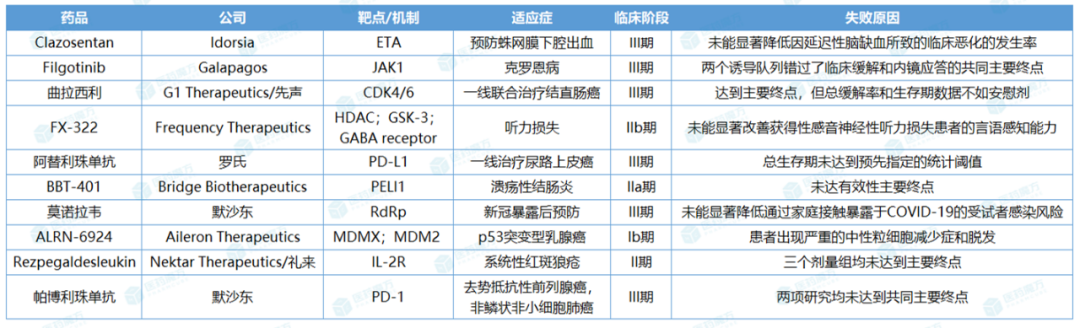
1. Phase III REACT Study on the Prevention of Subarachnoid Hemorrhage with ETA Antagonists
On February 6, Idorsia announced that the Phase III REACT study of its endothelin A receptor (ETA) antagonist clazosentan did not meet the primary endpoint. The study aimed to evaluate the safety and efficacy of clazosentan in preventing clinical deterioration due to delayed cerebral ischemia in patients with aneurysmal subarachnoid hemorrhage (aSAH). Idorsia stated that it would conduct a comprehensive analysis of the data to understand this "unexpected result."
The development journey of Clazosentan has spanned more than 20 years. The drug was originally developed by Roche and later transferred to Actelion. In 2017, when Johnson & Johnson acquired Actelion for $30 billion, the drug was abandoned and eventually taken over by Idorsia, a spin-off company of Actelion.
Notably, Clazosentan was approved for marketing in Japan in 2022 to prevent cerebral vasospasm, cerebral infarction related to cerebral vasospasm, and cerebral ischemic symptoms caused by aneurysmal subarachnoid hemorrhage.
The approval by Japan's Ministry of Health, Labour and Welfare was based on the results of two Phase III studies (JapicCTI-163368 and JapicCTI-163369) conducted in Japan. These two studies followed the same research design, with one enrolling 221 patients whose aneurysms were secured with surgical clips and the other enrolling 221 patients whose aneurysms were secured with endovascular coiling. Both studies demonstrated that, compared to placebo, clazosentan significantly reduced the incidence of cerebral vasospasm-related morbidity and all-cause mortality in patients (p<0.01), with no unexpected safety events observed.
2. Phase III DIVERSITY Study of JAK1 Inhibitor for the Treatment of Crohn's Disease
On February 8, Galapagos NV announced the results of the Phase III DIVERSITY trial of filgotinib for the treatment of moderate to severe Crohn's disease. Both induction cohorts (100mg and 200mg) missed the co-primary endpoints of clinical remission and endoscopic response at week 10.
At week 58 of the maintenance phase, a significantly higher proportion of patients receiving 200mg filgotinib achieved clinical remission (43.8% vs. 26.4%; p=0.0382) and endoscopic response (30.4% vs. 9.4%; p=0.0038) compared to the placebo group. Based on these data, Galapagos decided not to pursue a marketing application in Europe.
Filgotinib, an oral JAK1 inhibitor, has been approved in Europe and Japan for two indications: rheumatoid arthritis and ulcerative colitis. Over the past few years, filgotinib has faced a challenging journey. In 2020, just months after the FDA rejected the drug’s marketing application, Galapagos’ partner Gilead returned most of the rights to filgotinib and announced it would no longer pursue regulatory approval for the treatment of rheumatoid arthritis in the United States, while retaining the rights related to Crohn's disease. The recent clinical trial results suggest that the prospects for filgotinib’s approval for Crohn's disease may now be bleak.
Dr. Daniele D'Ambrosio, the company's head of immunology therapy, stated: "We are very disappointed with this outcome, but Galapagos remains committed to the approval of filgotinib for rheumatoid arthritis and ulcerative colitis, and will initiate a Phase III clinical trial for axial spondyloarthritis later this year."
3. Trilaciclib as First-Line Treatment for Colorectal Cancer: PRESERVE 1 Phase III Study
On February 13, G1 Therapeutics announced the key results of the Phase III PRESERVE 1 study on the triple therapy of CDK 4/6 inhibitor trilaciclib + FOLFOXIRI + bevacizumab for the treatment of metastatic colorectal cancer.
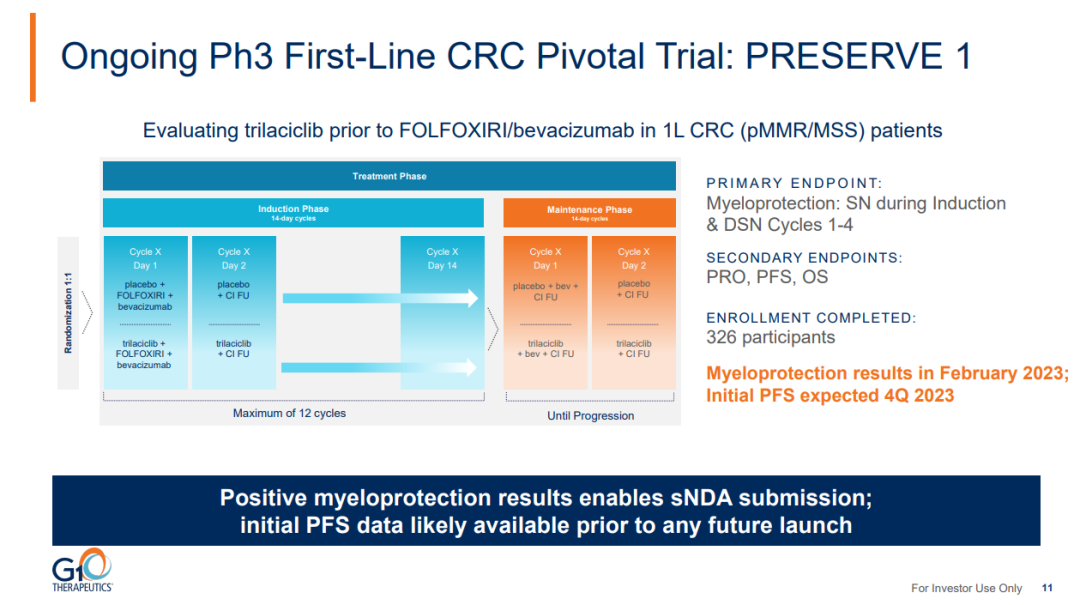
The trial met the co-primary endpoint for severe neutropenia (placebo: 20% vs. Trilaciclib: 1%; p<0.001), indicating that Trilaciclib provided bone marrow protection. However, early anti-tumor efficacy data for the drug, including overall response rate (ORR) and preliminary survival data, were inferior to placebo.
In view of this, G1 Therapeutics decided to terminate the study. Affected by this news, the company's stock price fell 53% on the same day, and its market value is currently hovering around 180 million US dollars.
Trilaciclib is a highly efficient, selective, and reversible CDK4/6 inhibitor. When administered prophylactically before chemotherapy, it can induce temporary cell cycle arrest of bone marrow hematopoietic stem/progenitor cells in the G1 phase, reducing damage from exposure to chemotherapy.
In August 2020, Simcere Pharmaceutical acquired the Greater China rights to Trilaciclib for a total of $170 million, including a $14 million upfront payment and $156 million in milestone payments. In July 2022, Trilaciclib was conditionally approved for marketing in China, indicated for the prophylactic administration in patients with extensive-stage small cell lung cancer who have not previously received systemic chemotherapy, prior to treatment with a platinum-based drug combined with etoposide regimen, to reduce the incidence of chemotherapy-induced myelosuppression.
In addition, the Phase III study of Trilaciclib as a first-line treatment for triple-negative breast cancer and the Phase II study as a first-line treatment for bladder cancer are currently ongoing.
4. Weekly Hearing Therapy IIb Phase Study
On February 13, Frequency Therapeutics announced that its hearing therapy FX-322 failed to significantly improve speech perception in patients with acquired sensorineural hearing loss (SNHL) in a Phase IIb study, and therefore decided to terminate the development of the product. SNHL accounts for approximately 90% of all hearing loss cases, and there are currently no related therapies available on the market.
Following the announcement, the stock price of Frequency Therapeutics plummeted by 80% on the same day, leaving its current market value at approximately $26 million.
FX-322 is a once-weekly combination drug containing two active ingredients, CHIR-911 and sodium valproate. The former is a glycogen synthase kinase 3 (GSK-3) inhibitor developed by Novartis, and the latter is a histone deacetylase (HDAC) inhibitor and GABA receptor agonist. Theoretically, FX-322 can stimulate the proliferation of inner ear progenitor cells and generate new auditory hair cells to restore patients' hearing.
Another SNHL hearing therapy in the Ib phase of clinical trials, FX-345, has also not been spared, and Frequency Therapeutics will halt this project as well. In addition, Frequency Therapeutics plans to cut its workforce by 55% to extend its cash flow until 2025, ensuring the advancement of its clinical program for a new multiple sclerosis drug.
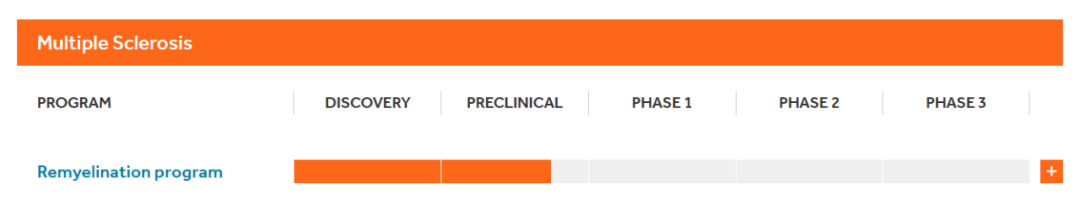
Frequency Therapeutics Pipeline
5. Atezolizumab as First-Line Treatment for Urothelial Carcinoma in the Phase III IMvigor130 Study
At the 2023 American Society of Clinical Oncology Genitourinary Cancers Symposium (ASCO-GU), researchers presented the final overall survival (OS) data from Roche's Phase III IMvigor130 study on atezolizumab as a first-line treatment for urothelial carcinoma.
IMvigor130 is a Phase III clinical trial evaluating atezolizumab alone or in combination with platinum-based chemotherapy (cisplatin or carboplatin) for the treatment of previously untreated patients with locally advanced or metastatic urothelial carcinoma, including three treatment groups: A (atezolizumab + platinum + gemcitabine), B (atezolizumab), and C (placebo + platinum + gemcitabine).
The preliminary analysis of the study indicates that the progression-free survival (PFS) benefit of atezolizumab + platinum + gemcitabine (Group A) as first-line treatment for metastatic urothelial carcinoma is significantly superior to that of placebo + platinum + gemcitabine (Group C).
However, the interim analysis showed that OS was improved in patients in group A compared with group C, but did not exceed the prespecified significance threshold. As of the data cutoff on August 31, 2022, there was no statistically significant OS benefit in the intent-to-treat (ITT) population (HR=0.85, 95% CI: 0.73-1.00). Additionally, there was no significant OS benefit in the ITT population in group B compared with group C (HR=0.98, 95% CI: 0.82-1.16).
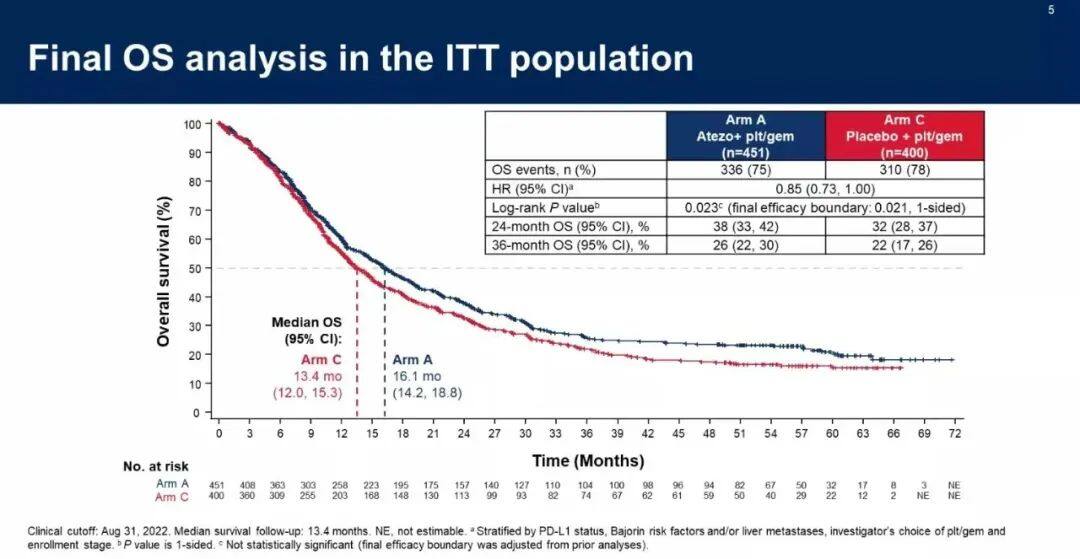
In November 2022, Roche voluntarily withdrew the indication for atezolizumab in the first-line treatment of advanced or metastatic urothelial carcinoma in the United States.
6. A Phase IIa Study of PELI1 Inhibitor for the Treatment of Ulcerative Colitis
On February 20, Bridge Biotherapeutics announced that the oral PELI1 inhibitor BBT-401 failed to meet the efficacy endpoint in a Phase IIa study for the treatment of ulcerative colitis, meaning that the candidate drug did not achieve a better clinical response compared to placebo.
BBT-401 is a gastrointestinal-restricted small molecule PELI1 inhibitor. PELI1 acts as a scaffold to bind with targets such as IRAK4, MyD88, and RIPK1 in inflammatory signaling pathways under various physiological and pathological conditions.
The Phase IIa clinical study included a total of 38 patients. At day 57, the clinical remission rate was 63.6% for the twice-daily placebo group, 54.5% for the once-daily placebo and BBT-401 treatment group, and 54.5% for the twice-daily BBT-401 group. The study met its primary safety endpoint.
Bridge Biotherapeutics remains steadfast, stating that it will continue to advance the development of BBT-401, further improving drug delivery and therapeutic efficacy.
7. Phase III MOVe-AHEAD Study on Molnupiravir for Post-Exposure Prophylaxis of COVID-19
On February 21, Merck announced that the Phase III MOVe-AHEAD study of molnupiravir for post-exposure prophylaxis of COVID-19 failed to meet its primary endpoint, meaning molnupiravir did not significantly reduce the risk of infection in subjects exposed to COVID-19 through household contact in a statistically meaningful way.
Molnupiravir is the world's first approved oral antiviral drug for COVID-19. In December 2022, the drug received emergency conditional approval from the China National Medical Products Administration for the treatment of adult patients with mild to moderate COVID-19 infections who have a high risk of progressing to severe disease.
The results showed that, compared with placebo, treatment with molnupiravir reduced the risk of subjects being infected with COVID-19 (positive SARS-CoV-2 test after baseline with symptoms and signs) by 23.6%, but it was not statistically significant and did not reach the primary endpoint.
This is not the first setback for oral COVID-19 medications in post-exposure prophylaxis. Pfizer's Paxlovid encountered a major failure in the Phase II/III EPIC-PEP study as early as April 2022. Compared to placebo, the risk of infection in adults receiving 5-day and 10-day treatments of Paxlovid was reduced by 32% and 37%, respectively, but without statistical significance, failing to meet the primary endpoint of the study.
8. Phase Ib Study of MDM2/MDMX Dual Inhibitor in p53-Mutant Breast Cancer Patients
On February 21, Aileron Therapeutics announced the termination of its MDM2/MDMX dual inhibitor ALRN-6924 as a chemotherapy protectant for patients with p53-mutated breast cancer in a Phase Ib clinical trial due to severe neutropenia (Grade 4) and alopecia observed in patients.
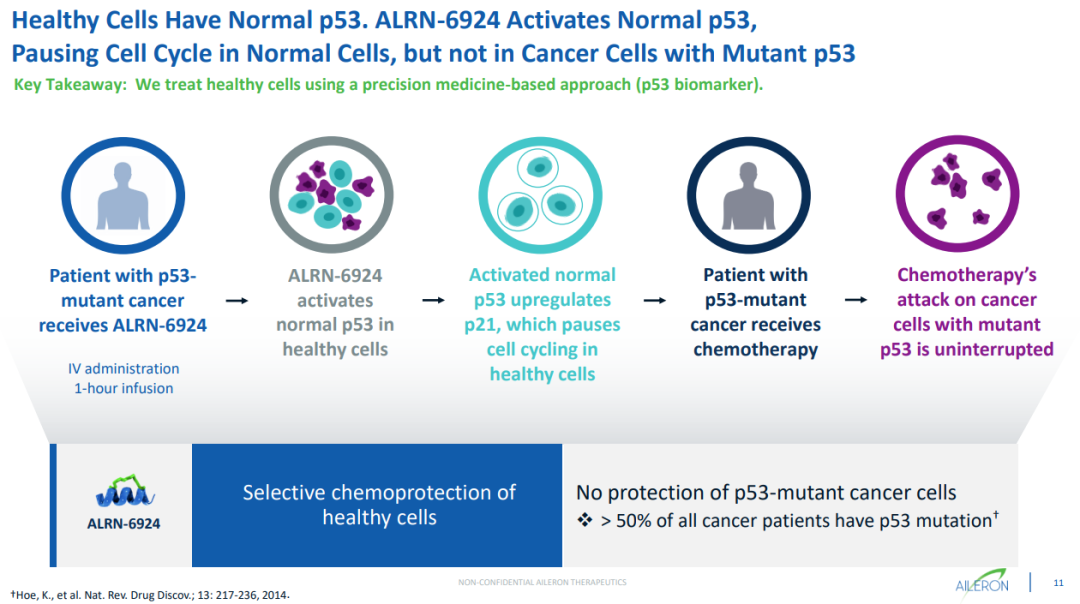
This study evaluated the efficacy and safety of ALRN-6924 in breast cancer patients receiving neoadjuvant or adjuvant chemotherapy with docetaxel, doxorubicin, and cyclophosphamide. The primary endpoint was the duration and incidence of severe neutropenia in the first cycle; the secondary endpoint was the incidence of chemotherapy-induced alopecia.
Currently, Aileron is exploring a range of strategic options to maximize shareholder value, which may include, but are not limited to, acquisitions, mergers, business reorganization, asset sales, or other transactions. Aileron has also decided to reduce its workforce from 9 employees to 3, with the remaining staff assisting in the execution of the strategic review process. These measures all suggest that this Biotech company is not far from closing its doors.
9. Phase II ISLAND Study of IL-2 Therapy for Systemic Lupus Erythematosus
On February 23, Nektar Therapeutics announced that the Phase IIISLAND study of the biased IL-2 therapy Rezpegaldesleukin (NKTR-358) for the treatment of Systemic Lupus Erythematosus (SLE) did not meet its primary endpoint. This marks the 10th failure for Nektar in IL-2 therapy. Collaborator Eli Lilly has decided not to advance this indication into Phase III clinical trials.
NKTR-358 is the second novel IL-2 conjugate designed by Nektar using polymer conjugation technology. Traditional IL-2 has a half-life of only 1-2 hours, whereas NKTR-358 exhibits a significantly extended half-life, requiring only 1-2 injections per month.
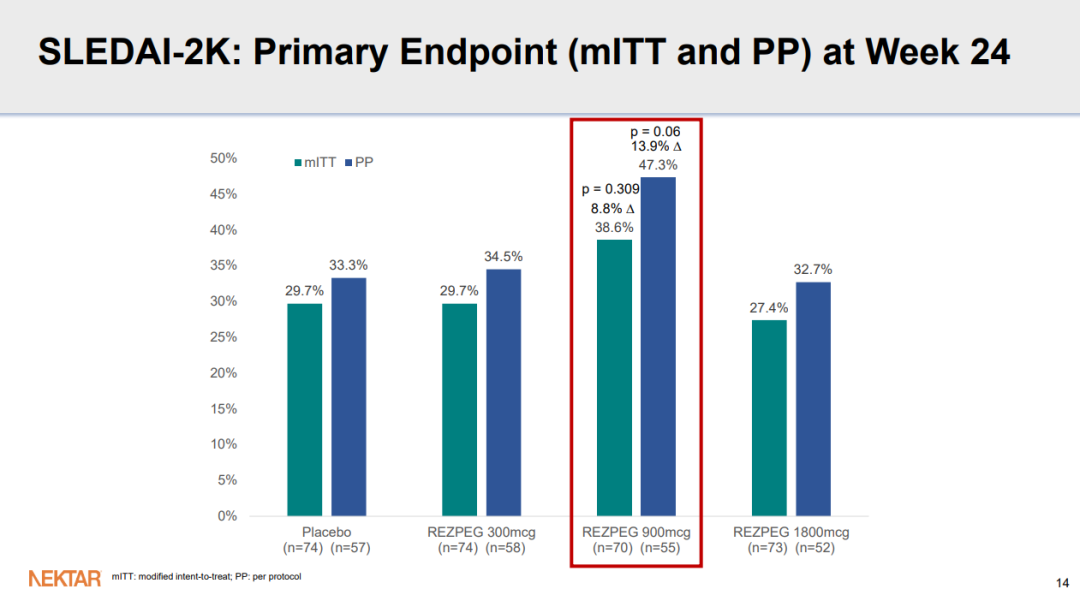
The ISLAND study enrolled 291 patients with moderate to severe SLE, aiming to evaluate the therapeutic effects of low, medium, and high doses of NKTR-358 on SLE patients. The primary endpoint was the proportion of patients achieving a reduction of ≥4 points in the SLEDAI-2K score.
The results showed that, compared with the placebo group, there was no significant difference in the proportion of patients with a reduction of ≥4 points in SLEDAI-2K scores in all three dose groups. Among the three dose groups, the medium-dose group demonstrated the most pronounced improvement in data, but it still did not reach statistical significance.
Previously, the IL-2 therapy NKTR-214 for cancer treatment, jointly developed by Nektar and BMS, has failed, including in melanoma, renal cell carcinoma, and bladder cancer. After terminating the clinical development of the NKTR-214 project, Nektar cut 70% of its team, with the Chief Medical Officer and Chief Commercial Officer also on the layoff list.
The setback of NKTR-358 in the SLE indication is undoubtedly a further blow to Nektar and has also severely impacted the IL-2 field.
10. Two Phase III Studies of Pembrolizumab in Prostate Cancer and Non-Small Cell Lung Cancer
On February 28, Merck announced that two Phase III studies (KEYNOTE-641 and KEYNOTE-789) of the PD-1 inhibitor pembrolizumab did not meet their co-primary endpoints. The former study targeted metastatic castration-resistant prostate cancer, while the latter was for treating tyrosine kinase inhibitor (TKI)-resistant, epidermal growth factor receptor (EGFR)-mutated metastatic non-squamous non-small cell lung cancer (NSCLC).
KEYNOTE-641 Study Aims to Evaluate the Efficacy and Safety of Pembrolizumab Combined with Enzalutamide and Androgen Deprivation Therapy (ADT) in Patients with Metastatic Castration-Resistant Prostate Cancer (mCRPC).
In the interim analysis, compared with the placebo group, the pembrolizumab group did not show improvement in the co-primary endpoints of radiographic progression-free survival (rPFS) or overall survival (OS), and crossed the pre-specified OS futility boundary. Based on the recommendation of the independent data monitoring committee, Merck will terminate this study.
Notably, this is not the first setback for the combination therapy of pembrolizumab with enzalutamide and ADT. On January 25, the Phase III KEYNOTE-991 study evaluating this combination for treating metastatic hormone-sensitive prostate cancer (mHSPC) also failed to meet its primary endpoints of improving OS and rPFS. Consequently, Merck decided to terminate the KEYNOTE-991 study.
KEYNOTE-789 Study Aims to Evaluate the Efficacy and Safety of Pembrolizumab Combined with Pemetrexed and Platinum Chemotherapy in Treating Patients with Metastatic Non-Squamous NSCLC Who Carry EGFR Genomic Tumor Mutations and Have Experienced Disease Progression After TKI Treatment, Including Osimertinib.
In the final analysis of the study, compared with the pemetrexed and platinum chemotherapy group, the OS of patients receiving pembrolizumab combined with pemetrexed and platinum chemotherapy was improved, but according to the pre-specified statistical plan, these improvements were not statistically significant. In an earlier interim analysis, the pembrolizumab group also failed to show statistically significant improvement in another co-primary endpoint—progression-free survival (PFS)—compared to chemotherapy alone.
On one hand, pembrolizumab generated $20.9 billion in revenue in 2022, bringing it close to the throne of the "blockbuster drug"; on the other hand, as the low-hanging fruits are nearly exhausted, pembrolizumab has frequently hit roadblocks in the exploration of new indications.