

"Together in Care, Early Check" Initiative and Public Education Program on Breast Cancer Screening Officially Launches

Daiichi-Sankyo
Pharmaceutical R&D Developer
Call for Women40Annual breast examination is required for individuals over a certain age.
XiamenMarch 8, 2023PR Newswire -- In celebration of International Women's Day 2023 and in response to this year's theme "Embrace Equity," the "Love Together · Early Detection" initiative, a public education project on early breast cancer screening led by the Beijing Aiping Cancer Patient Care Foundation and supported by companies including Daiichi Sankyo, has officially launched. The initiative aims to enhance contemporary women's awareness of early breast cancer screening and calls on women to take proactive steps to care for their breast health in daily life by "acting one step earlier." The event, held on this special day, also seeks to encourage women to equally pursue the right to embrace health. Professor Shi Anli, Chairperson of the Management Committee of the Beijing Aiping Cancer Patient Care Foundation, Professor Yin Yongmei, Vice President of Jiangsu Maternal and Child Health Hospital, Uchida Yoshihiko, President of Daiichi Sankyo (China), and Wang Yingyi, General Manager of the Oncology Business Headquarters of Daiichi Sankyo (China), attended the event. Through warm interactions and cross-disciplinary discussions, they addressed various topics including early detection and diagnosis of breast cancer, and called on society and women to truly implement the "Early Detection" initiative, thereby improving awareness of breast health protection among women.
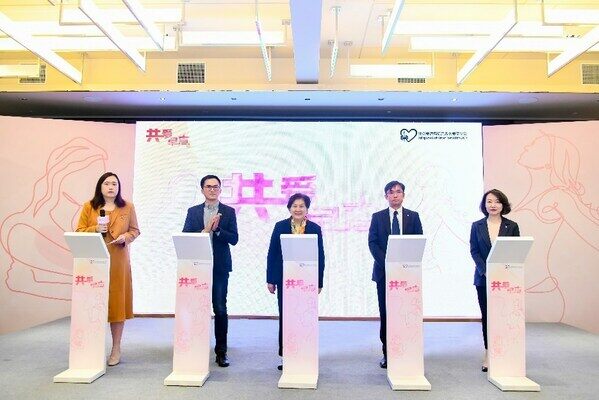
"Love Together - Early Check" Campaign and Breast Cancer Early Screening Public Education Project Officially Launched
Breast cancer is one of the leading causes of cancer-related deaths globally, with over 2 million confirmed cases worldwide in 2020, resulting in nearly 685,000 deaths.[1]."The Outline of the 'Healthy China 2030' Plan" has elevated the prevention and control of malignant tumors and early diagnosis and treatment to a national strategy, while proposing the important goal of increasing the overall 5-year cancer survival rate by 15%.[2]In China, the incidence rate of breast cancer ranks first among malignant tumors in women.[3], but because it is screenable, preventable, and treatable, it has become one of the cancers with a relatively good prognosis.[4]Studies have shown that effective screening can reduce the breast cancer mortality rate by 20%.[5]Early screening and early diagnosis are crucial in the treatment of breast cancer. Through early breast cancer screening, early-stage patients can move from treatment towards a cure, while late-stage patients can discover abnormalities sooner, gaining more possibilities for a cure, thereby improving the overall cure rate and survival rate of breast cancer. As awareness of early breast screening among women increases and diagnostic methods continue to evolve, it will help achieve the goal of "increasing the overall five-year cancer survival rate by 15%" step by step. Moreover, from the perspective of health economics, earlier detection and intervention through early screening will effectively reduce the economic costs required to prolong patient survival, thus alleviating the national healthcare payment and the financial burden on patients. Therefore, the "early detection" initiative for breast cancer holds both social and economic value.
Professor Shi Anli has battled cancer three times, having been diagnosed with left-sided breast cancer, colorectal cancer, and later, right-sided breast cancer, enduring a grueling anti-cancer journey spanning over thirty years. The unpredictable "ups and downs" of fate have allowed her to deeply empathize with each patient's resistance and struggle. She stated: "Through early screening, early diagnosis, and early treatment, we can take back control of our lives from the clutches of disease. Having lived with cancer for many years and interacted with numerous cancer patients, I understand the critical importance of public education. In the case of breast cancer, some patients may miss the best chance for a cure due to a lack of awareness about disease prevention and treatment. By launching the 'Together in Love · Early Detection' initiative, I hope to help women develop a rational understanding of breast cancer and build confidence in fighting it with a positive attitude."
Event Site Screens Women's Care Social Observation Short Film "Time Already Has the Answer," Using Group Street Interviews to Deeply Explore the Stress and Anxiety Underlying Modern Women’s Multiple Roles. It was found that women often neglect breast health issues while juggling their roles in career, life, and family. Moreover, the whole society pays little attention to breast health issues. "No time," "Not concerned," and "Feel there’s no problem" were some of the responses from participants regarding their physical health; several interviewees even directly refused the interview due to being busy. Professor Yin Yongmei, Vice President of Jiangsu Provincial Maternity and Child Healthcare Hospital, appealed from a female perspective and professional standpoint on breast cancer diagnosis and treatment: modern women should respond promptly when facing calls for attention to life and health; this applies similarly when facing breast cancer. The action of "early detection" can offer more opportunities for doctors to treat and for self-healing. A scientific understanding of breast cancer risks also helps with prevention and treatment. When noticing changes in the breasts, women should promptly carry out early screening actions and transform early screening awareness into practice.
Professor Yin Yongmei, also a medical professional, stated: "Breast cancer is a health issue that women cannot avoid. Paying attention to early breast cancer screening is a responsible act towards oneself and one's family. By launching the 'Love Together · Early Detection' initiative, we hope that women who are diligently working and excelling in different fields will come to understand and recognize that while balancing busy work lives, valuing early breast cancer screening and diagnosis will ultimately lead to healing both physically and mentally."
Mr. Yosiwo Uchida, President of Daiichi Sankyo (China), as a representative of the supporting company, stated: "As a pharmaceutical enterprise with a century-old history, Daiichi Sankyo hopes that through this collaboration with all parties in the ‘Love Together · Early Detection’ campaign for breast cancer, we can provide cutting-edge science popularization information to breast cancer patients and even the general public. We aim to enhance their understanding of breast cancer diagnosis and treatment, promote the transformation of early screening concepts into routine actions, and contribute to the realization of the ‘Healthy China 2030’ strategic goals."
Ms. Wang Yingyi, General Manager of the Oncology Business Headquarters of Daiichi Sankyo (China), stated: "We are committed to becoming a global pharmaceutical innovator with competitive advantages in the field of oncology, centered on patients, and making positive contributions to improving awareness and health education regarding breast cancer diagnosis and treatment. Through this initiative of launching the 'Love Together · Early Detection' campaign for breast cancer, we hope to provide patients with more care and encourage everyone to become their own primary health guardian."
[1] Sung H, et al. CA Cancer J Clin. 2021; 10.3322/caac.21660.
[2]"Healthy China 2030" Planning Outline. (n.d.). Retrieved March 1, 2023, fromhttp://www.otcmoh.org.cn/info/183.html
[3]He Jie, Chen Wanqing, Li Ni, Shen Hongbing, Li Jiang, Wang Yong... & Zhou Baosen. (2021). Guidelines for Breast Cancer Screening and Early Detection and Treatment in Chinese Women (2021, Beijing).Cancer in China(03),161-191.
[4]Yang Siyu, Lu Zhenqi. Research progress on delayed medical treatment in breast cancer patients [J]. Chinese Journal of Practical Nursing, 2016, 32(12): 957-960. DOI: 10.3760/cma.j.issn.1672-7088.2016.12.023
[5] OeffingerKC, FonthamET, EtzioniR, et al. Breast cancer screening for women at average risk: 2015 guideline update from the American Cancer Society[J]. JAMA, 2015(15),314:1599-1614.