Currently, with the rapid development of global precision medicine, big data infrastructure, and artificial intelligence technologies, high-throughput sample research based on cohorts is receiving increasing attention and application in China; at the same time, the application of multi-omics big data has greatly promoted new discoveries and breakthroughs in the healthcare field. Against this backdrop, Illumina hosted an event on March 4.China Population Genetics Research and Precision Medicine Transformation Summit (Beijing Station). This summit, centered on the theme of "Cohort Studies Based on Multi-Omics Big Data," brought together numerous experts and scholars in the fields of population genomics projects and cohort studies. The venue was fully packed with a lively atmosphere, as attendees jointly explored the profound intersection of epigenetic technologies and clinical medicine, as well as the translation into precision medicine.
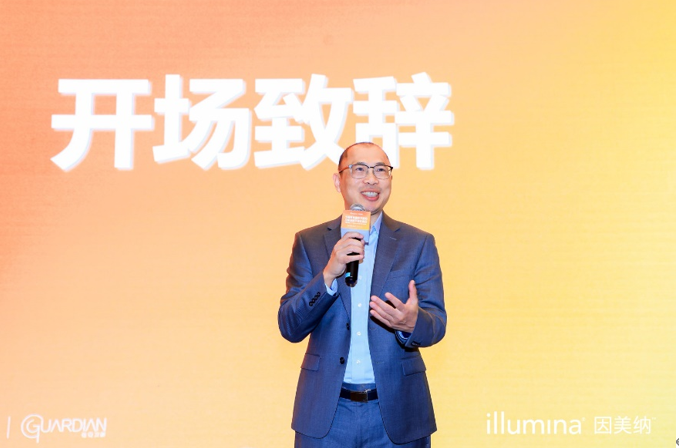
The summit was opened with a speech by Mr. Wang Biao, Senior Marketing Director of Illumina Greater China.Mr. Wang Biao"As a global leader in gene sequencing, Illumina's data quality has gained widespread recognition from researchers worldwide,Globally, there are over 300,000 peer-reviewed academic research articles based on data generated by the Illumina platform.; and Illumina will continue to innovate and make breakthroughs, introducing more new technologies and products in China simultaneously to support scientific research."
Mr. Wang Biao, Senior Marketing Director of Illumina Greater China
The first sharing guest is from the Institute of Basic Medical Sciences, Chinese Academy of Medical Sciences.Professor Guangliang ShanProfessor Shan is a tenured professor and distinguished teaching expert at Peking Union Medical College, and also the principal investigator of several national key projects. The topic of Professor Shan's sharing this time is "The Concept and Practice of Modern Cohort Studies". First, Professor Shan explained the characteristics that a high-quality cohort should possess and clarified the selection criteria for basic phenotypic indicators. In the report, Professor Shan also used large-scale cohort studies in China as examples to analyze the key factors to consider in cohort study design, common misconceptions about cohort research concepts, and the current issues faced by cohort studies along with coping strategies. He also proposed several future perspectives on cohort studies, including the integration of natural population cohorts with clinical cohorts."
Professor Guangliang Shan from the Institute of Basic Medical Sciences, Chinese Academy of Medical Sciences
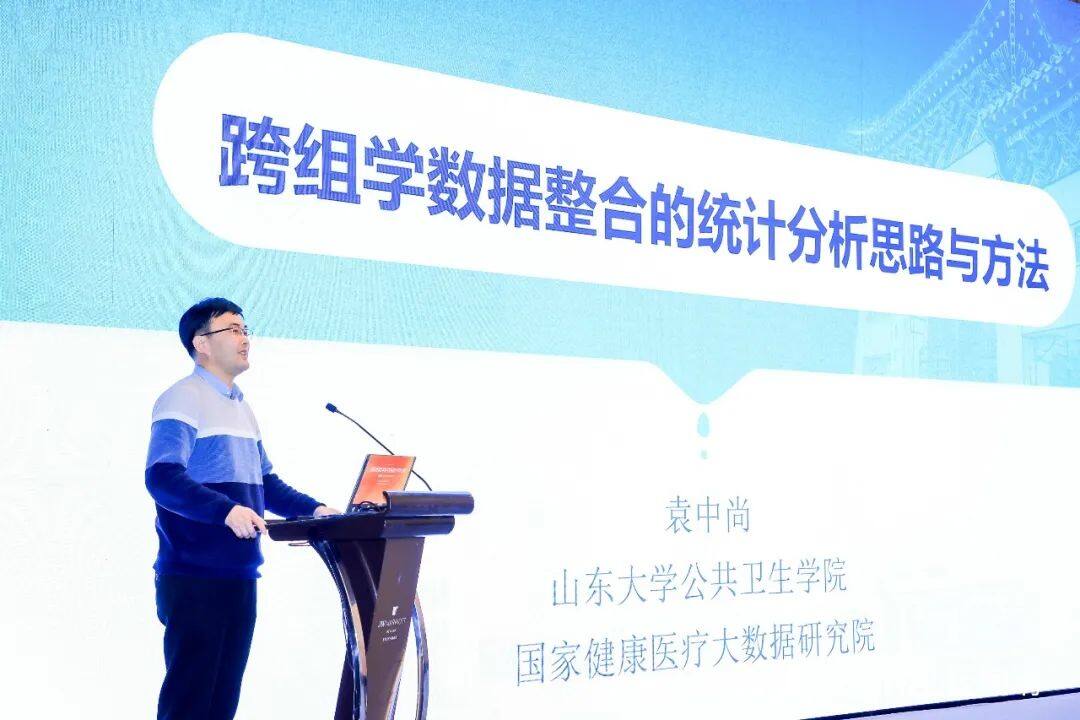
The second speaker is from the Department of Biostatistics, School of Public Health, Shandong University.Professor Zhongshang YuanProfessor Yuan serves as the Director of the Cross-Omics Big Data Research Center at the National Health Medical Big Data Institute. He has long been engaged in research on statistical theory, methods, and applications for cross-omics data integration. The topic of Professor Yuan's presentation is "Statistical Analysis Ideas and Methods for Cross-Omics Data Integration"Professor Yuan introduced the design concepts and applications of different models in the statistical analysis of cross-omics data integration, using the research framework of 'biomedical problem - refined statistical problem - mathematical model solution - feedback to biomedical problem interpretation'."
Professor Zhongshang Yuan, Department of Biostatistics, School of Public Health, Shandong University
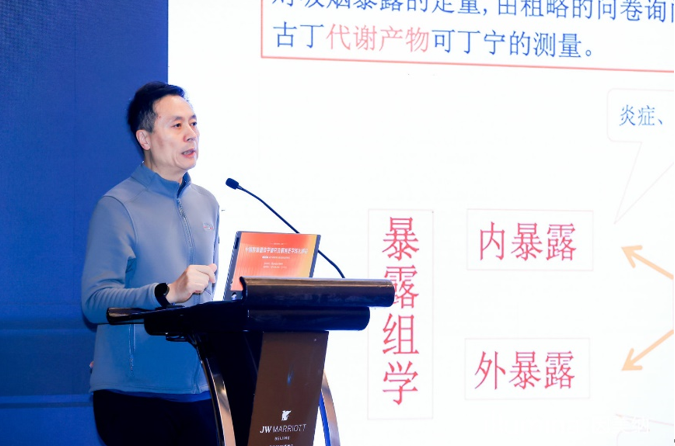
The third speaker is an assistant professor in the Department of Occupational Health and Environmental Health at the School of Public Health, Peking University.Professor Gao XuProfessor Gao Xu has long been engaged in epidemiological research on environmental exposure and elderly health by utilizing epigenomics and integrating other multi-omics data. The theme of Professor Gao's sharing this time is "Research on Methylation Mechanisms of Environment and Aging in Populations". Professor Gao, taking smoking exposure assessment as an example, indicated that DNA methylation is a relatively stable and accurate indicator for evaluating environmental exposure, serving as the molecular mechanism (bridge) connecting environmental risk exposure to health outcomes. In addition, Professor Gao shared recent related research, revealing the strong predictive ability of DNA methylation age for the aging degree of human organs and the body as a whole. Professor Gao stated that predicting, assessing, and delaying aging is crucial for extending the healthy years of life and represents a field worth focusing on in future research."
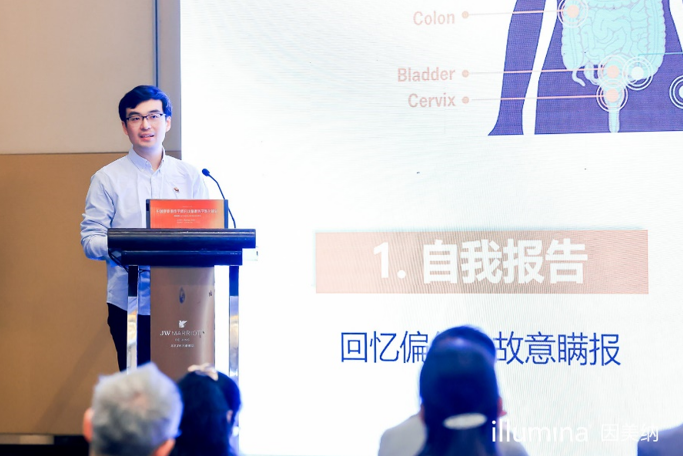
Professor Gao Xu, Department of Occupational Health and Environmental Health, School of Public Health, Peking University
The fourth speaker is the Vice President of the Sixth Hospital of Peking University (Institute of Mental Health).Professor Yue WeihuaProfessor Yue simultaneously serves as the Deputy Director of the National Clinical Research Center for Mental Disorders, Boya Professor at Peking University, and Principal Investigator at the McGovern Institute. The topic of Professor Yue's presentation is "Epigenetics of Schizophrenia Genetic Susceptibility and Antipsychotic Drug EfficacyProfessor Yue emphasized the impact of gene-environment interactions on the genetic susceptibility to schizophrenia, and stated that pharmacogenomic studies could uncover novel pharmacological mechanisms and susceptibility genes for antipsychotic drugs. Functional exploration and multi-omics data analysis can help elucidate mechanisms and translational applications. In the future, multi-omics strategies will contribute to achieving objective diagnosis and personalized treatment for schizophrenia, addressing the current issues of "subjective diagnosis and empirical treatment," and promoting objective diagnosis and effective treatment.
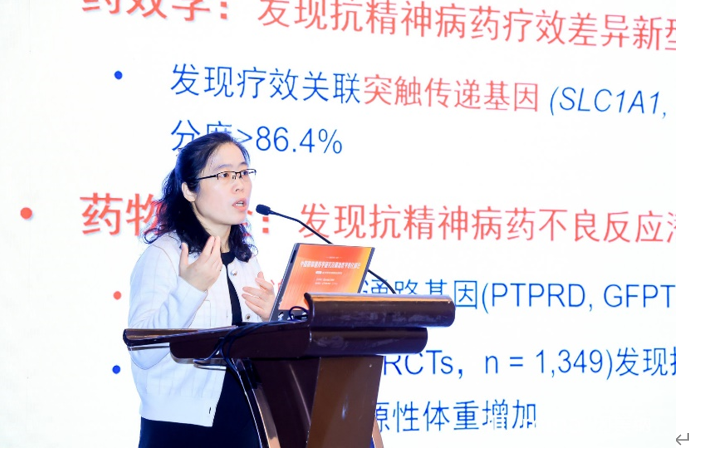
Professor Wei-Hua Yue, Vice President of the Sixth Hospital of Peking University
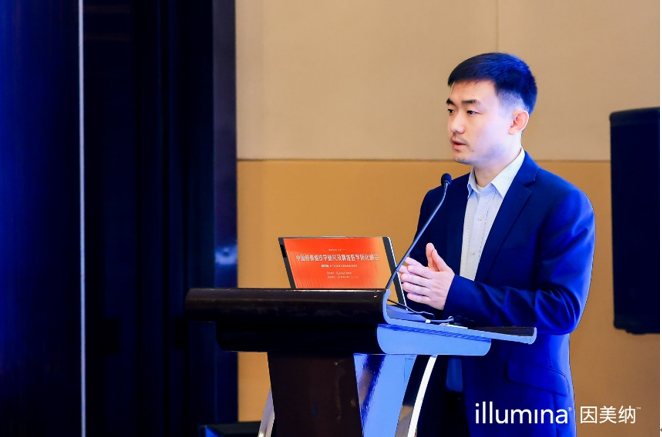
Moreover, Illumina's pre-sales technical expertDr. Zhang WeiAlso introduced to everyone the new generation of Illumina methylation chips.InfiniumTMMethylationEPICv2.0BeadChipHigh accuracy and precision, cost-effectiveness, scalability, and other related product advantages, combined with specific research cases, illustrate the diversified application scenarios of EPICv2.0 in the field of epigenetics.
Dr. Zhang Wei, Pre-sales Technical Expert at Illumina
This summit was supported byBiomiao Biotech, Jiaan WeikangWith strong support, the conference discussion atmosphere was enthusiastic, and the guests had in-depth exchanges and interactions with experts on-site. In the field of cohort studies, China started relatively late, but under the relentless efforts and exploration of many Chinese scholars and experts, significant progress has been made in related scientific research, showing great potential for future breakthroughs and innovation. The advancement of such research will also greatly promote the development of precision medicine, ultimately benefiting patients and society. This year marks the 25th anniversary of Illumina's establishment as a global leader in gene sequencing and chip technology.Illumina will continue to innovate and provide professional and reliable technologies and products to customers in the research, clinical, and applied markets.
The replay of this summit is now available on Illumina Classroom. RegisterIllumina ClassroomAvailable for viewing and learning.
Scan the QR code to follow the lecture and watch the conference replay