

Xeltis AG Files for IPO: Pioneering Endogenous Tissue Restoration Platform Built on Nobel Prize-Winning Supramolecular Chemistry

Xeltis
Cardiovascular Treatment and Repair Device Developer
The Lancet, a world-authoritative medical journal, once published a research report on global chronic kidney disease from 1990 to 2017. The report showed that in 2017, there were 697.5 million patients with chronic kidney disease (CKD) globally, accounting for 9.1% of the global population. Its prevalence is increasing due to the simultaneous rise in global cardiovascular diseases (including diabetes, hypertension, and diabetes).
The number of deaths caused by CKD exceeds the total of breast cancer and prostate cancer. Traditional hemodialysis is overwhelmed by demand, and patients need to wait a long time to receive the required treatment.
Xeltis AG is developing restorative devices based on supramolecular polymers for cardiovascular treatment in collaboration with academic research, aiming to provide longer-lasting and more transformative therapeutic options for patients worldwide.
On February 21, 2023, Xeltis AG announced that it had raised €32 million in its Series D financing round, with participation from investment institutions such as Grand Pharmaceutical, DaVita Venture Group, EQT Life Sciences, and Invest NL.
With this financing round, Xeltis AG has completed 7 rounds of financing, totaling 147.5 million euros (approximately 1.082 billion RMB).
Xeltis AG is a medical technology company from Eindhoven, Netherlands. It was originally established as Xeltis, a spin-off from the University of Zurich in 2006. In 2012, it merged with Qtis/e from the Netherlands to become today's Xeltis AG.
Xeltis AG's laboratory is located in a building at TU/e (Eindhoven University of Technology). This building provides basic laboratory facilities for enterprises in the medical field, offers various supports for business development, promotes university-enterprise joint research, and serves as an "incubator" for medical companies.
Xeltis AG Focuses on Developing Endogenous Tissue Restoration (ETR) Devices Based on Supramolecular Polymers for Research and Treatment in the Vascular and Heart Valve Fields.
Endogenous Tissue Restoration (ETR) is a new treatment method that enables a patient's own body to self-regenerate new blood vessels or heart valves.
Endogenous Tissue Restoration Surgery
In 1987, Jean-Marie Lehn was awarded the Nobel Prize in Chemistry for pioneering supramolecular chemistry, which is the foundational science behind Xeltis technology.Supramolecular chemistry provides solutions to problems that traditional materials have faced for decades by offering unique biomechanical properties, creatively achieving the absorbability of biomaterials, thus making Xeltis technology possible.
Xeltis AG has three main products, including the Xeltis valve, the coronary artery bypass graft XABG, and the hemodialysis graft aXess. All three products are based on ETR technology and have entered the clinical trial stage.
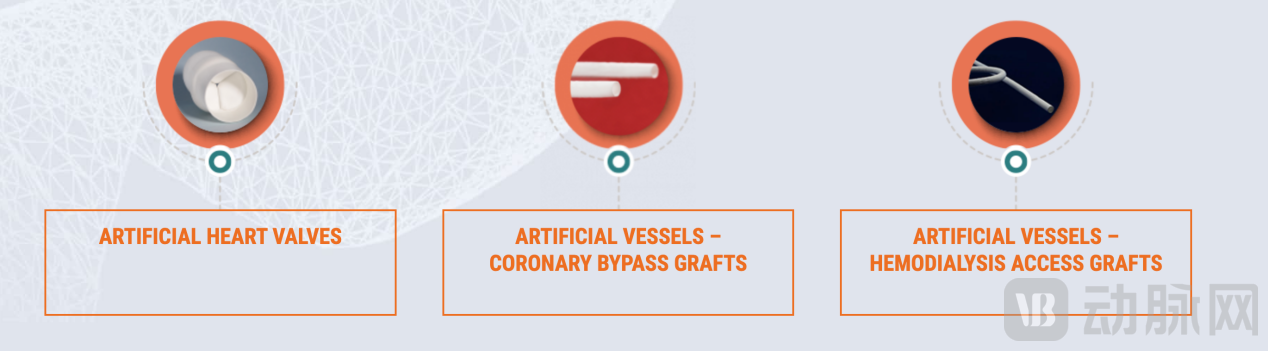
Figure 1: Xeltis AG Products
Xeltis Valve: Heart Valve Suitable for Pediatric Patients
Xeltis valves include restorative pulmonary heart valves and aortic heart valves.Xeltis Restorative Pulmonary Heart Valve: A fully synthetic restorative pulmonary heart valve used for the reconstruction of the right ventricular outflow tract, which will gradually develop into a living heart valve made from the patient's own tissue. Currently, three clinical trials involving pediatric patients are underway.
Xeltis Aortic Heart Valve Implanted via Apical and Potential Transcatheter Approach to Become Living Heart Valve Made from Patient’s Own Tissue.
Cardiac valves are highly sought-after medical devices, with numerous high-quality companies in the industry. However, most cardiac valves are only suitable for elderly patients and cannot be used by pediatric patients.
This is because the current bioprosthetic valves have a limited lifespan, and most heart valves are fixed in size, making them unsuitable for pediatric patients who are still growing. As a result, pediatric patients can only undergo multiple valve surgeries to match changes in their physiological structure, which brings dual physical and psychological harm through traditional treatment methods.
Xeltis has developed a heart valve suitable for pediatric patients by leveraging its technological and material advantages to address this issue.
Xeltis performed implantation surgeries of the Xeltis pulmonary heart valve on 18 pediatric patients, followed by one year of clinical follow-up and echocardiographic evaluation. All these patients had prior valve surgery experiences.
Results showed that 17 of the 18 patients exhibited no signs of progressive stenosis, dilation, or aneurysm formation. Of the 18 patients, 17 did not require surgical reintervention after one year, demonstrating favorable early clinical outcomes for the Xeltis PV.
Following this clinical trial, Xeltis received FDA approval for the Xeltis PV Xplore2/Pivotal clinical trial.Xplore2/Pivotal is a prospective, non-randomized clinical study designed to evaluate the safety and efficacy of Xeltis PV in up to 50 patients treated with Xeltis PV. This clinical trial began in 2021 across up to 15 centers in the United States, Europe, and Asia, with patients receiving five years of follow-up.
Coronary Artery Bypass Grafting with Artificial Vessel XABG: The Possibility of Replacing Saphenous Vein Treatment
XABG Device is a restorative synthetic electrospun vascular device used for Coronary Artery Bypass Grafting (CABG), which can also become a living blood vessel made from the patient's own tissue.
Currently, its proof-of-concept and preclinical trials have been completed. The one-year XABG results demonstrated patent transplants without dilation (n=5), unlike the saphenous veins in the control group (n=3). Rigorous preclinical CABG studies can show that restorative synthetic small-diameter grafts are superior to the animal's own saphenous vein grafts.
The trial utilized the most sophisticated analytical techniques, including angiography, OCT, and IVUS imaging modalities. The published data also revealed new tissue formation within animal subjects a year post-trial, confirming the regenerative capacity of the vascular internal lining while preventing thrombosis and other adverse effects. This material further demonstrated long-term durability and successfully achieved endothelialization.
Today, over 80% of CABG surgeries worldwide use the saphenous vein, making the clinical trial of XABG highly anticipated. If successful, it will offer significant benefits to patients currently unable to undergo surgery.
Hemodialysis Artificial Vessels: Simulating the Shape and Structure of Patient’s Blood Vessels to Establish Graft Arteriovenous Fistula
aXess Graft is a restorative synthetic electrospun vascular graft that can become a living blood vessel made from the patient's own tissue, used for vascular access in end-stage renal disease patients undergoing hemodialysis.
The treatment methods for end-stage renal disease mainly include kidney transplantation, hemodialysis, and peritoneal dialysis. Good vascular access is a necessary condition for performing dialysis and is therefore also referred to as the patient's "lifeline."
Arteriovenous fistula (AVF) and arteriovenous graft (AVG) are the main types of vascular access for hemodialysis patients.
However, AVF technology often presents complications such as fistula failure, long maturation time, stenosis, and thrombosis. In recent years, numerous studies on AVF maturation and dysfunction have been conducted both in China and internationally, but there has been no significant improvement in the patency rate of AVFs.
According to statistics, among dialysis patients who have established AVF access, more than 40% will experience arteriovenous fistula stenosis within one year, and the proportion of stenosis will further increase with prolonged use of the access, becoming an intractable pain for many dialysis patients.
The advent of artificial vascular fistulas has emerged as a solution. However, the products currently available in clinical practice are still of the older generation of artificial blood vessels, which present various unresolved clinical issues, such as short patency time, susceptibility to complications, and a higher infection rate.
aXess is an innovative endogenous tissue repair product developed specifically to address this clinical pain point, enabling the creation of arteriovenous grafts (AVG) for hemodialysis treatment in patients with end-stage renal disease.
aXess can simulate the shape and structure of a patient's own blood vessels, regulate cell aggregation, and assist in new tissue reconstruction.After implantation, the supramolecular polymer can promote the repair of the body's own cells and autologous tissues while degrading, helping the patient's own tissue to rebuild autologous blood vessels for the purpose of hemodialysis. This effectively reduces postoperative complications and improves the quality of life for dialysis patients.
aXess is currently conducting its first human trial overseas.Latest research results show that 11 patients have been implanted with aXess, with a median follow-up time of 6.5 months. Some of these patients began puncture or dialysis as early as two weeks after implantation. Current data shows 100% functional patency and safety, with no reports of aneurysms or infections. The likelihood of reaching the primary clinical endpoint is extremely high, and it is also very easy for doctors and nurses to manage.
Eliane Schutte initially joined Xeltis in 2015 as Chief Development Officer, leading its clinical trial programs, product development strategy, and regulatory functions. She has been serving as the CEO of Xeltis since 2018. Under her leadership, the company has expanded its strategic focus to include valve and vascular applications.
Schutte has extensive expertise in global product development and regulatory affairs for medical devices, with over 20 years of experience in the biotechnology industry.
Before joining Xeltis, she served as the Global Product Development Vice President for Perioperative Care at The Medicines Company. She also acted as the Chief Development Officer at ProFibrix and as the Vice President of Regulatory Affairs and EU Operations at IsoTis Orthobiologics.
Schutte was named one of the Top 50 CEOs in MedTech in 2021.
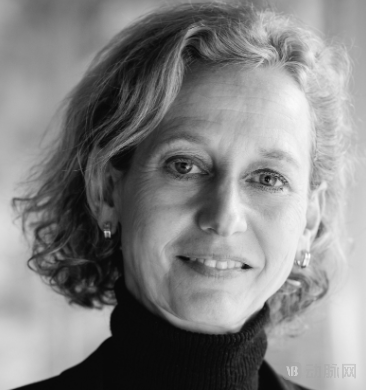
Figure 2: Xeltis CEO Eliane Schutte
Martijn Cox is the Chief Technology Officer and co-founder of Xeltis, with extensive experience in Endogenous Tissue Restoration (ETR) for cardiovascular systems.Cox has been one of the key contributors to Xeltis' technological development.
Before Xeltis, Cox founded and led the startup QTIS/e, which was spun off from Eindhoven University of Technology, until its merger with Xeltis.
Through QTIS/e, he secured millions of euros in public funding and participated in numerous national and international research projects on cardiovascular tissue engineering and ETR, collaborating with distinguished industrial and academic partners. Cox holds a Ph.D. in Cardiovascular Tissue Engineering and a Master’s degree in Business Innovation from TiasNimbas Business School.
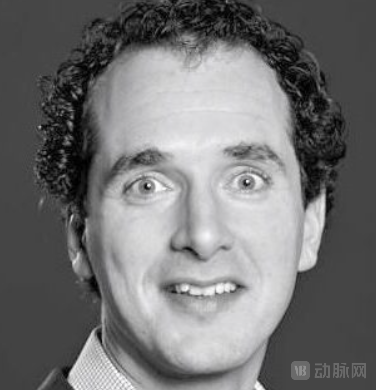
Figure 3: Martijn Cox, Chief Technology Officer and Co-founder of Xeltis
Xeltis AG not only has cardiovascular experts from multiple top universities and hospitals providing medical consultation and support, but also numerous material experts, offering strong momentum for Xeltis AG's future development.
Jean-Marie Lehn was awarded the 1987 Nobel Prize in Chemistry for his work in supramolecular chemistry, which is the scientific basis for Xeltis' self-healing implant technology.
Jean-Marie Lehn is recognized as a pioneer in supramolecular chemistry, a term he coined.
Professor Lehn is currently active on several scientific advisory boards, including Xeltis, Novartis Venture Fund, and Reliance Industries Ltd. He is the director of the Laboratory of Supramolecular Chemistry at the Institute of Supramolecular Science and Engineering in Strasbourg, France, and until recently, led the chemistry laboratory at the Collège de France.
Figure 4: Winners of the 1987 Nobel Prize in ChemistryJean-Marie Lehn
Michael Colson is the chairman of Xeltis' Scientific Advisory Board. Colson previously served as the head of business development at Medtronic, where he supported their R&D, including the coronary/structural heart team.
Colson has over 35 years of experience in the medical device business, including leading large R&D organizations, internal venture groups, research/innovation groups, and a few investment/business development groups. He founded MC Biomedical Consulting, LLC to support startups, established biomedical device companies, and focused on venture capital/private equity groups targeting biomedical devices and diseases.
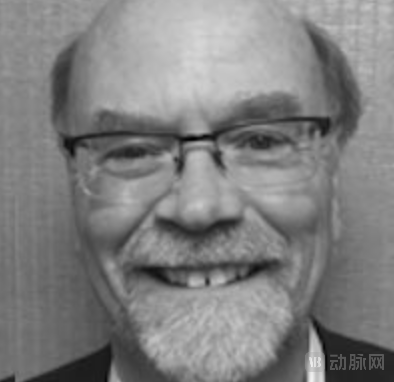
Figure 5: Chairman of Xeltis Scientific Advisory BoardMichael Colson
Although CKD is a global issue, China is considered the country with the largest number of CKD patients in the world.
A study published in JAMA Internal Medicine, a JAMA internal medicine journal, by Zhou Maigeng from the Chinese Center for Disease Control and Prevention, Academician Hou Fanfan from Nanfang Hospital of Southern Medical University, and others showed that there were 82 million adults with chronic kidney disease (CKD) in China from 2018 to 2019. The prevalence rates of CKD, impaired renal function, and proteinuria were 8.2%, 2.2%, and 6.7%, respectively, but the awareness rate was only 10%.
On July 18, 2022, Grand Pharmaceutical announced that it had reached an equity investment and product introduction strategic cooperation agreement with Xeltis AG. For 15 million euros, the company acquired approximately 11% of XELTIS's shares and obtained the global innovative endogenous tissue repair product, aXess, used for creating arteriovenous grafts (AVG) for hemodialysis treatment in patients with end-stage renal disease (ESRD), as well as exclusive development, production, and commercialization rights in Greater China for other new products in the hemodialysis field under the same technology platform that may be developed in the future.
According to the agreement, Grand Pharmaceutical also has the priority negotiation rights for XELTIS’ products in other indication fields in the Greater China region. As more products are introduced in the future, it is also expected to help address the shortage of domestically produced artificial blood vessels and other related issues.
Frank Zho, CEO of Grand Pharmaceutical Group, stated: "Grand Pharmaceutical is building an interventional diagnosis and treatment platform for cardiovascular and cerebrovascular diseases in China. Xeltis' aXess device will be an excellent addition to our extensive product portfolio and is expected to have a significant clinical impact in China."