

Fermion Announces First-in-Class CNS Drug Candidate FZ002 Completes First-in-Human Dosing in Phase I Trial
Fermion
AI Drug Discovery Developer
In the past two years, multiple AI drug pipelines worldwide have entered clinical trials, and the AI pharmaceuticals industry is transitioning from concept to clinical validation. VCBeat learned第一时间.AI Biotech Guangzhou Fermion Technology Co., Ltd.(Fermion, hereinafter referred to as: Fermion)The First AI-Designed Non-Addictive Chronic Pain Relief Pipeline FZ002(Preclinical data show efficacy equivalent to morphine),The first healthy subject has been dosed in the Phase I clinical trial at Zhujiang Hospital, Southern Medical University, marking that Fermion has become an AI pharmaceutical company entering the clinical validation stage.
Currently, the company has two other pipelines, FZ008-non-addictive acute analgesic and FZ007-autoimmune, which are about to file IND applications in both China and the US. A Phase I clinical trial is expected to be initiated by the end of the year. In the next 2-3 years, Fermion will continue to deliver more projects in clinical Phases I and II, building a strong pipeline matrix in key therapeutic areas.
Fermion began operations in 2019,Developing differentiated BIC/FIC products targeting early innovative pathways in the central nervous system (CNS) and autoimmune fields., committed to becoming an innovative drug research and development company driven by AI and data. The company's self-developed Drug Studio AI drug discovery platform has achieved industrial application and built an integrated AI-driven drug R&D solution. The differentiated technical advantages of Fermion's Drug Studio AI drug discovery platform are mainly reflected in target selectivity and tissue targeting, improving the safety of clinical drugs by reducing off-target effects and enhancing precise distribution in target tissues.
Currently, the company has developed 12 small-molecule drug pipelines focused on ultra-high selectivity and tissue targeting.Since its establishment, Fermion has gained recognition and support from investment institutions such as Innovation Works, Eguang Venture Capital, Panda Capital, Challenger Capital, Tosheng Capital, iFlytek Venture Capital, and Zhengxuan Investment.Cumulative financing reached hundreds of millions of yuan。
As one of the earlier companies in China to explore the commercial implementation of AI in pharmaceuticals, how does Fermion choose its form of commercial implementation? What matters should AI pharmaceutical companies focus on in their commercial development? What are Fermion’s thoughts on pipeline layout? What role does AI technology play in pipeline advancement? Regarding these questions, VCBeat interviewed...Dr. Deng Daiguo, Founder of Fermion。
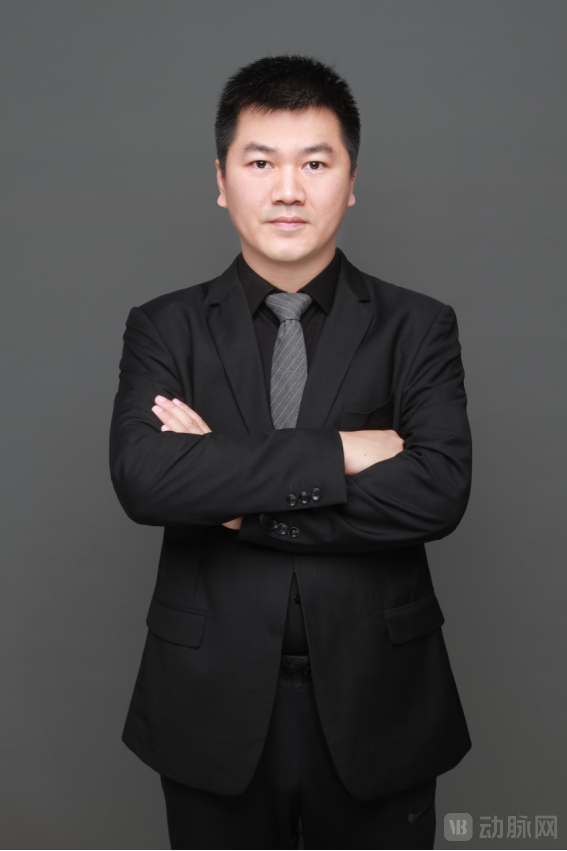
Dr. Deng Daiguo, Founder of Fermion
VCBeat: As one of the earlier companies to explore the AI pharmaceutical business model, why did Fermion choose the AI Biotech model?
Dr. Deng Daiguo:The chain of new drug research and development is very long, and the required capabilities are also extensive. Only a few top pharmaceutical companies in the industry possess comprehensive capabilities ranging from mechanism research, clinical translation to commercial operation. As a team of serial entrepreneurs, we have always been focused on the commercial implementation of AI-driven drug discovery. Looking at the company's development history, we initially planned to build an AI-powered drug discovery software platform, then briefly attempted AI CRO services (delivering 4 PCC/optimized compound pipelines). However, we believe that standalone technical services or CRO services offer too little value and poor commercial viability. The core commercial value of new drug R&D lies in the later stages of the chain.The characteristics of this industry determine that we must develop our own pipelines and advance them to clinical trials and market launch to achieve higher value.。In the past two years, AI pharmaceuticals have gone through a period of overheating in capital and industry and are gradually returning to rationality. From the analysis of multiple levels such as creating commercial value and user value, AI Biotech is the best choice. This also aligns with the capabilities and advantages of our team.
VCBeat: As a serial entrepreneur in the application of AI technology, what do you think are the key considerations for the development of AI Biotech?
Dr. Deng Daiguo:The application of AI has boundaries. Focusing on mining knowledge and data in specific fields, closely integrating AI technology with commerce, and becoming more vertically oriented to form a stronger core competitiveness—small breakthroughs and rapid iterations are the key to the commercial implementation of AI technology.The research and development of innovative drugs is a systematic project, and there are still many basic scientific research problems to be explored and solved. Regardless of the new technology, the essence of drug development remains unchanged: to provide patients with more effective and safer treatment options. As far as AI pharmaceuticals are concerned, at this stage, using AI as a tool, selecting AI application scenarios with higher certainty, and developing products with differentiated clinical value are more important than the AI technology itself. Leveraging the advantages of AI technology to address unmet clinical needs by choosing promising indications and targets for drug development will be more beneficial to the commercial development of AI Biotech.
VCBeat: Compared with other disease fields, why did Fermion choose to focus on the CNS field?
Dr. Deng Daiguo:The main reasons for Fermion's focus on the CNS field are threefold. Firstly, compared to other disease areas,Limited therapies are available in the CNS field, and the existing drugs are mainly older ones that have been on the market for a long time. Both efficacy and safety need significant improvement, representing a huge unmet clinical need., while affected by factors such as aging and living environment, the number of CNS disease patients worldwide is increasing year by year, indicating a very large development space in both the Chinese and international markets. Secondly,We have been developing and accumulating for a long time in the research on the safety of CNS products based on the underlying algorithms of the AI platform, especially with unique algorithmic advantages in target knowledge graph construction, candidate compound optimization, and safety screening evaluation.We have developed a molecular heterogeneous graph algorithm with ultra-high selectivity for higher prediction accuracy, and a substructure heterogeneous graph algorithm based on structural information and physicochemical properties for higher tissue targeting. These algorithms can efficiently screen out candidate molecules with prominent target selectivity and tissue targeting, thereby...Enhance the Safety of Clinical Medication. Third,Most of our team members come from a background of researching and developing CNS drugs., with a certain "know-how" and accumulation, has over 20 project development experiences in this field and possesses complete preclinical and clinical development capabilities. At the same time, it should also be good at leveraging external resources, especially the participation and guidance of clinical experts, adhering to the strategy of "beginning with the end in mind," paying close attention to cutting-edge technologies, deeply exploring application scenarios, continuously optimizing and upgrading pipeline layouts, and steadily advancing projects with clear differentiation to truly meet unmet clinical needs.
VCBeat: How does Fermion's Drug Studio AI drug discovery platform work, and what pipelines has the company developed using this platform?
Dr. Deng Daiguo:Fermion, as an AI-driven small molecule innovative drug R&D company, has been committed to combining AI technology with classical drug development since it began operations in 2019, aiming to enhance the efficiency of preclinical development for innovative drugs.Fermion Drug Studio AI drug discovery platform has achieved industrial application, with a complete theoretical and technical foundation.Specifically, after identifying the target, a proprietary molecular OCR tool named Img2Chem is used to automatically extract real-world molecules from patents and journals related to the target, constructing a structured database for that target. Focusing on target selectivity and tissue targeting, the TOP10 molecules with optimal comprehensive parameters are obtained through molecular generation, patent conflict detection, virtual screening, and property prediction. By establishing stable partnerships with well-known CROs both domestically and internationally, multiple PCCs (Preclinical Candidate Compounds) meeting the set technical criteria are efficiently screened through multiple rounds of rapid "design-test" feedback and iteration.
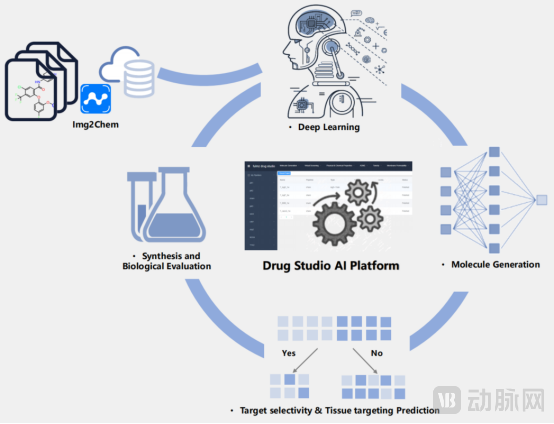
▲Figure|Drug Studio AI Drug Discovery Model (Source: Fermion)
Currently, the Fermion Drug Studio AI drug discovery platform hasVerified by more than a dozen projects, the delivery of PCC takes about 10 months and costs around 4.5 million yuan. Compared with the traditional R&D model, the cycle is shortened by 50%, the cost is reduced by 70%, and the preclinical development efficiency is significantly improved.Excluding the four pipelines that have completed external commercial licensing in the early stage, we currently own eight self-developed pipelines, all of which are differentiated BIC/FIC products developed around early innovative targets in the central nervous system (CNS) and autoimmune fields. The fastest progressing non-addictive chronic pain pipeline, FZ002, has just completed the first dosing of Phase I clinical trials in China. Additionally, FZ008 for non-addictive acute pain and FZ007 for autoimmune diseases have advanced to the late IND-enabling stage. It is expected to complete the IND application in both China and the US in Q3 this year and initiate Phase I clinical trials in China in Q4.By the end of this year, the company will have three clinical-stage pipelines, and the FZ002 project is also planned to initiate Phase II clinical research.At the same time, some projects are also in talks with multiple potential buyers at home and abroad for licensing cooperation. 2023 will be a year of significant progress on the company's path to commercialization.